
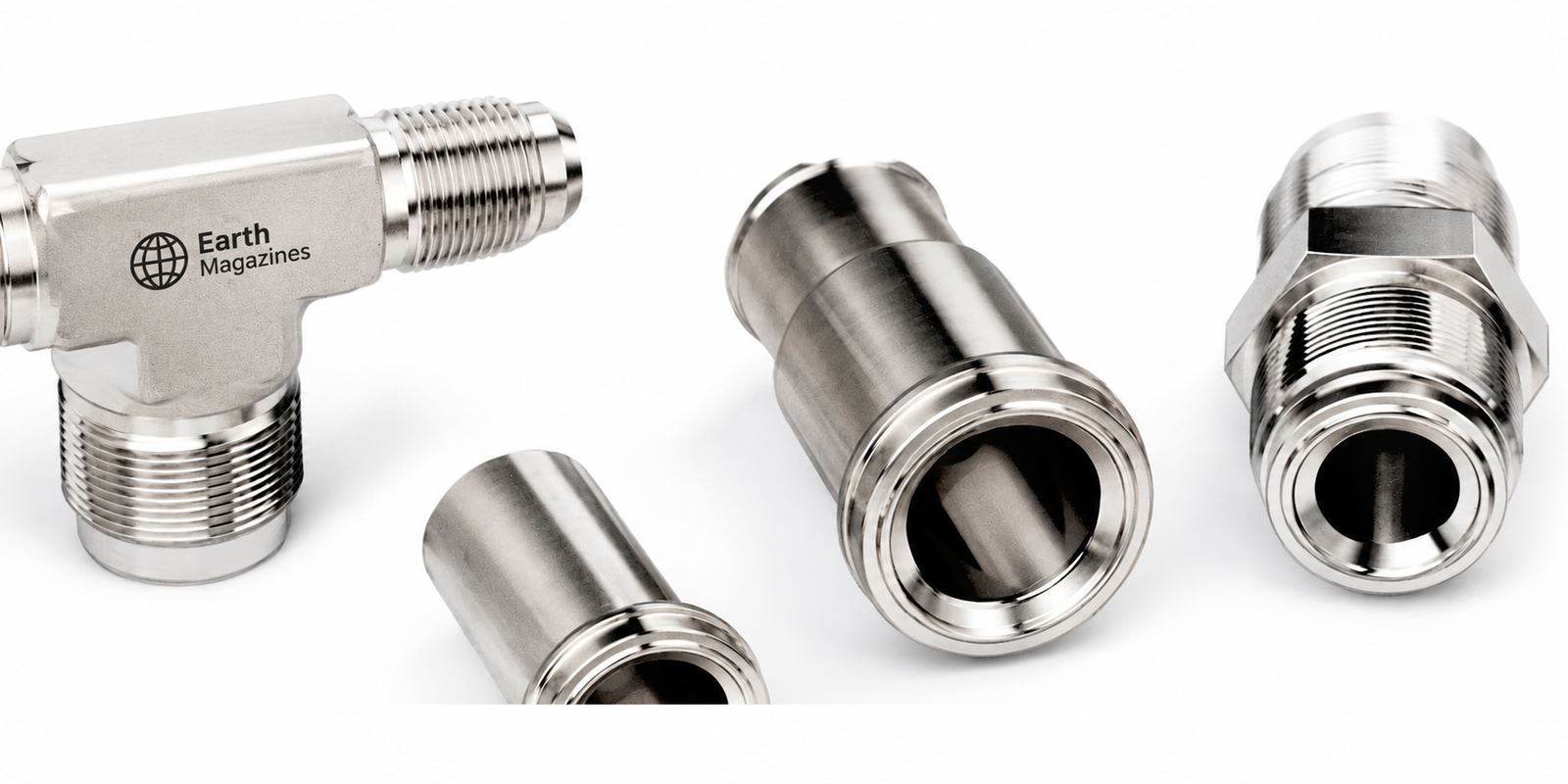
If you work with fluid systems, gas lines, or process piping, you have probably come across the name Swagelok. It is one of the most trusted names in industrial fittings, and for good reason. Swagelok fittings are known for their leak tight seals, durability, and consistent performance across some of the most demanding environments in the world.
But if you are new to the topic, choosing the right fitting can feel overwhelming. There are dozens of types, multiple materials, and a sizing system that does not always make sense at first glance. This guide breaks it all down in plain language so you can pick the right Swagelok fitting with confidence.
What Are Swagelok Fittings
Swagelok fittings are precision engineered connectors used to join sections of tubing or piping in fluid and gas systems. They create a leak tight seal without the need for welding in most cases, which makes them popular in industries where safety, cleanliness, and reliability matter most.
The company itself was founded in 1947 in Cleveland, Ohio, and the original tube fitting design introduced back then is still the foundation of the modern product line. Since that time, Swagelok has expanded into valves, regulators, hoses, and complete fluid system assemblies, but fittings remain the core of its reputation.
You will find these components in oil and gas facilities, semiconductor plants, pharmaceutical labs, power generation stations, and food and beverage processing lines. Anywhere a system needs to move liquid or gas safely under pressure, there is a good chance Swagelok fittings are doing the job.
Why Engineers Trust This Brand
Reliability is the main reason. A fitting failure in a high pressure gas line or a corrosive chemical system is not just inconvenient, it can be dangerous. Swagelok fittings are manufactured to tight tolerances and tested extensively before they reach the market.
Another reason is consistency. Once a technician learns how to install one Swagelok tube fitting, they can apply that same knowledge across the entire product range, since the core two ferrule design stays the same regardless of size or material.
How Swagelok Tube Fittings Actually Work
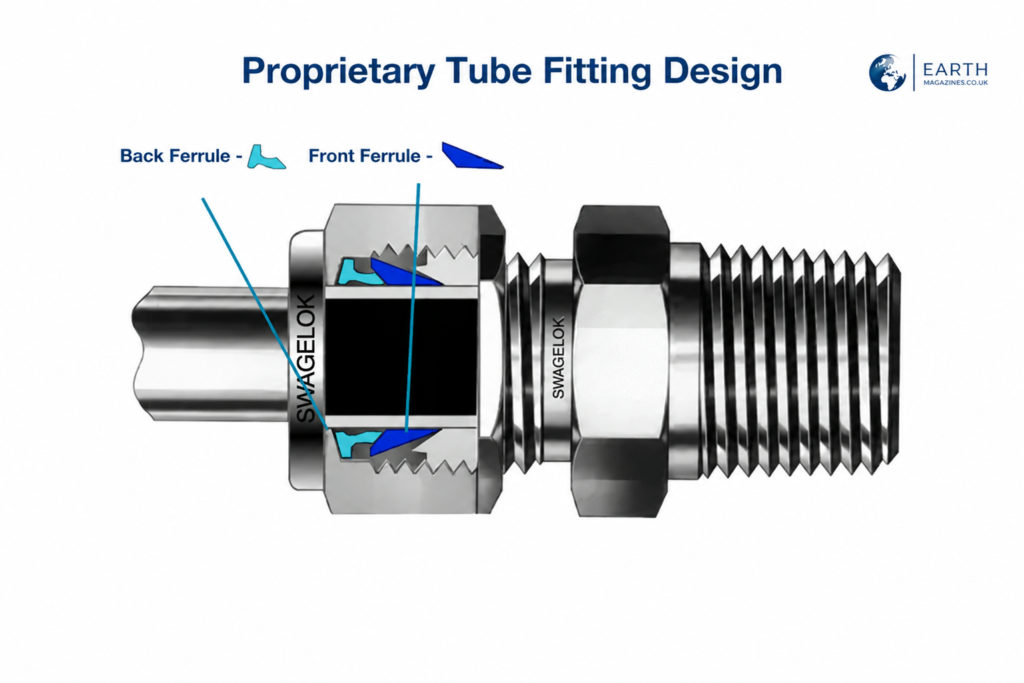
At the heart of most Swagelok products is a design called the two ferrule tube fitting. Understanding this mechanism makes everything else in this guide much easier to follow.
A standard tube fitting has four main parts. There is the body, which the tube slides into. There is a nut that threads onto the body. Inside the nut sit two ferrules, commonly called the front ferrule and the back ferrule.
When you tighten the nut, it pushes the front ferrule forward. This causes the back ferrule to flex and grip the tubing tightly while the front ferrule creates a seal against the fitting body. The result is a connection that resists vibration, pressure changes, and repeated assembly without losing its seal.
The Advantage of the Two Ferrule Design
Many competing fitting brands use a single ferrule or a different gripping mechanism. Swagelok’s approach spreads the stress across two points of contact rather than one, which reduces the chance of tube damage and improves resistance to vibration over time.
This is also why Swagelok fittings can often be disassembled and reassembled multiple times without losing their leak tight performance, something that is much harder to achieve with simpler compression fitting designs.
Main Types of Swagelok Fittings
Swagelok offers a wide catalog, but most projects only need a handful of core categories. Here is a breakdown of the most common types you are likely to encounter.
Tube Fittings and Adapters
These are the classic two ferrule fittings described above. They come in straight unions, elbows, tees, crosses, male connectors, female connectors, and reducers. This category covers the vast majority of everyday fluid system connections.
Pipe Fittings
Pipe fittings use NPT or ISO threaded connections rather than the tube gripping system. They are common where a system transitions from tubing into standard pipe, or where threaded connections are already part of the design.
VCR Metal Gasket Face Seal Fittings
These fittings use a metal gasket compressed between two faces to create an extremely clean, high purity seal. They are widely used in semiconductor manufacturing and analytical instrumentation where even microscopic contamination cannot be tolerated.
VCO O Ring Face Seal Fittings
Similar in concept to VCR fittings, but sealing with an O ring instead of a metal gasket. These are quick to assemble and popular in vacuum and gas sampling systems.
Weld Fittings
When a permanent, welded connection is required, Swagelok offers socket weld and butt weld fittings designed to integrate cleanly with orbital welding equipment.
Ultra Torr Vacuum Fittings
These are built specifically for vacuum applications, using an O ring seal that allows quick assembly without special tools, ideal for lab and research environments.
Sanitary and Specialty Fittings
Industries like food, beverage, and pharmaceuticals often need sanitary clamp fittings that meet strict hygiene standards. Swagelok also produces snubber fittings, dielectric fittings, and flange adapters for more specialized needs.
Materials Used in Swagelok Fittings
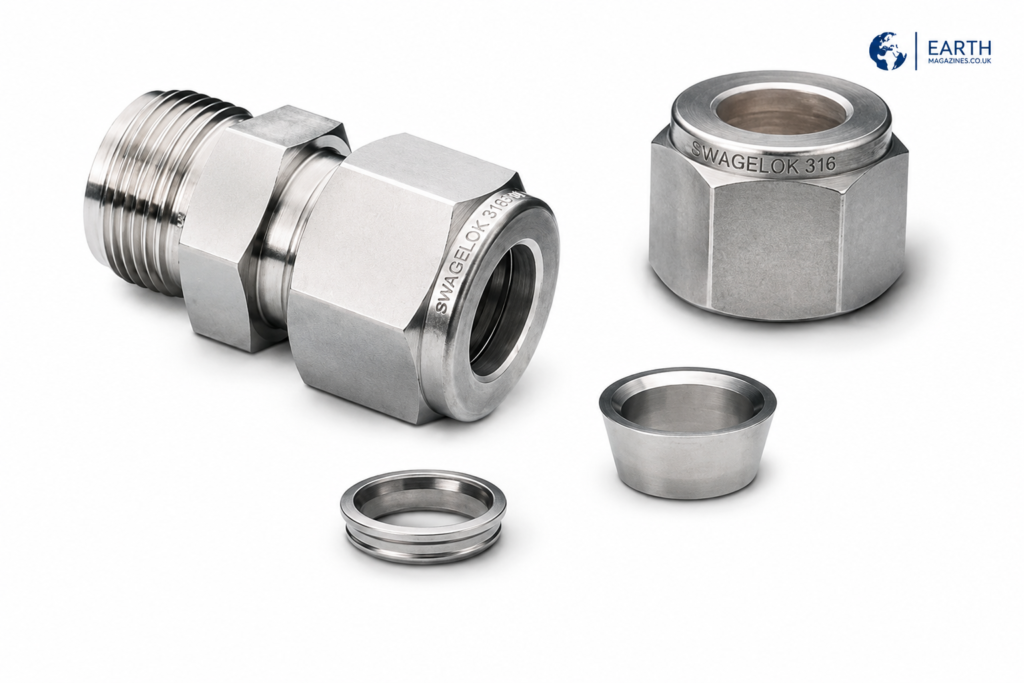
Choosing the right material is just as important as choosing the right fitting type. Material compatibility affects safety, longevity, and system performance.
- 316 Stainless Steel: The most common choice, valued for corrosion resistance and strength across a wide temperature range.
- Brass: Cost effective and suitable for lower pressure, non corrosive applications such as compressed air or water systems.
- Alloy 400 and Alloy C 276: Used in highly corrosive environments, including certain chemical processing applications.
- PFA and PTFE: Ideal for ultra pure or highly reactive fluid systems where metal contact is not acceptable.
- Carbon Steel: Chosen for general industrial use where high corrosion resistance is not the top priority.
Selecting the correct material comes down to three questions: what fluid or gas is running through the system, what temperature range it will experience, and what pressure it needs to withstand safely.
Understanding Swagelok Fitting Sizes
Sizing is often where beginners get confused, mostly because Swagelok fittings are available in both imperial and metric measurements.
Tube fittings are sized by outer diameter, ranging from as small as one sixteenth of an inch up to two inches, or from two millimeters up to fifty millimeters on the metric side. It is important to match this to your tubing’s actual outer diameter, not its inner diameter.
Threaded connections, such as NPT or ISO threads, follow standard pipe thread sizing conventions. These are typically listed alongside the tube fitting size when a product has two different connection types, such as a male connector joining tube to pipe thread.
A Simple Way to Avoid Sizing Mistakes
Always measure your existing tubing with calipers rather than relying on a label or memory. A small mismatch, even by a fraction of a millimeter, can result in a poor seal or a fitting that will not grip properly.
If you are unsure, most authorized distributors and the Swagelok website provide sizing charts and part number lookup tools that can confirm compatibility before you order.
How to Choose the Right Swagelok Fitting
With so many options available, narrowing down the right choice comes down to a few practical considerations.
- Identify your system type. Are you working with liquid, gas, or vacuum applications? This narrows down whether you need standard tube fittings, VCR fittings, or Ultra Torr connections.
- Check your pressure and temperature requirements. High pressure systems may require medium pressure or high pressure rated fittings rather than standard tube fittings.
- Confirm chemical compatibility. Match the fitting material to the fluid or gas being used to avoid corrosion or degradation over time.
- Match your existing tubing size exactly. Mixing imperial and metric components without the correct adapters can cause leaks.
- Consider your industry’s compliance standards. Sanitary, high purity, or NACE compliant fittings may be required depending on your sector.
Taking a few extra minutes to confirm these details before ordering saves time, money, and potential safety issues down the line.
Installation Tips and Common Mistakes
Even a well chosen fitting can fail if it is installed incorrectly. Following a few best practices makes a noticeable difference in performance and longevity.
Best Practices for Installation
Always cut tubing squarely and remove any burrs before inserting it into the fitting. A poor cut prevents the ferrules from gripping evenly, which can cause leaks even with a correctly sized fitting.
Insert the tubing fully into the fitting body until it touches the shoulder, then tighten the nut according to the manufacturer’s recommended number of turns rather than guessing by feel.
Use proper tools, including a wrench rather than pliers, to avoid damaging the nut or applying uneven pressure during assembly.
Common Mistakes to Avoid
One frequent error is mixing components from different fitting brands. Swagelok explicitly advises against interchanging its two ferrule tube fitting components with other manufacturers’ parts, since even small design differences can prevent a proper seal.
Another common mistake is over tightening. More torque does not always mean a better seal, and excessive force can damage the ferrules or the tubing itself.
Finally, skipping a leak test after installation is a mistake many beginners make. A simple leak detection solution applied to the connection can catch a small issue before it becomes a bigger problem.
Swagelok vs Other Fitting Brands
It is natural to compare Swagelok fittings with alternatives from brands like Parker, Ham Let, or generic compression fitting manufacturers, especially when budget is a factor.
Swagelok generally commands a higher price point, but this reflects its manufacturing tolerances, extensive testing, and long standing reputation for reliability in critical systems. For high pressure, high purity, or safety critical applications, many engineers consider this a worthwhile investment.
Compatible or generic alternatives can work well for lower stakes applications, such as general workshop air lines or non critical water systems. However, mixing brands within the same connection point is generally discouraged, since ferrule geometry and thread tolerances can differ even when parts look similar.
If budget is a concern, a practical approach is to use Swagelok fittings on critical, high pressure, or safety sensitive points in a system, while considering compatible alternatives on lower risk sections, as long as each connection uses matching components throughout.
Where to Buy Swagelok Fittings
Swagelok fittings are sold through a global network of authorized sales and service centers rather than through open retail alone. This distribution model helps ensure genuine parts, proper technical support, and access to training resources.
Authorized distributors can also help with part number verification, bulk ordering, and application specific advice, which is especially useful for complex or large scale projects.
Marketplaces like eBay and Amazon do list Swagelok branded products, often through third party sellers. While convenient, it is worth confirming authenticity and checking seller reputation before purchasing critical components this way, since counterfeit or mismatched parts can compromise safety.
For compatible alternatives, industrial suppliers such as McMaster Carr offer Swagelok style tube fittings designed to work with similar tubing sizes, which can be a useful option for less critical applications.
Conclusion
Choosing the right Swagelok fitting does not have to be complicated once you understand the basics. Knowing how the two ferrule design works, recognizing the main types of fittings, and matching materials and sizes to your specific application puts you in a strong position to make a confident decision.
Whether you are building a high purity gas system, a general industrial pipeline, or a lab scale vacuum setup, the right fitting comes down to understanding your system’s pressure, chemical compatibility, and sizing requirements. Taking the time to get these details right protects both your equipment and the people working around it.
Swagelok fittings have earned their reputation through decades of consistent, leak tight performance, and with the knowledge from this guide, you are now better equipped to choose, install, and maintain them correctly for your own project.
Frequently Asked Questions
Are Swagelok fittings reusable?
Yes, in most cases. The two ferrule design allows for disassembly and reassembly multiple times without losing sealing performance, as long as the tubing and ferrules are not damaged.
Can I mix Swagelok fittings with other brands?
This is not recommended. Swagelok advises against interchanging its tube fitting components with other manufacturers’ parts, since ferrule design and tolerances can differ enough to cause leaks.
What is the difference between a tube fitting and a pipe fitting?
Tube fittings grip the outside of tubing using ferrules, while pipe fittings connect through threaded NPT or ISO connections, typically used where standard pipe is already part of the system.
Do Swagelok fittings need special tools to install?
Most standard tube fittings only require a wrench and, in some cases, a gap inspection gauge to confirm proper tightening. Specialty fittings like VCR connections may require a torque wrench for precise assembly.
How do I know what size fitting I need?
Measure the outer diameter of your tubing directly rather than assuming based on labels. Matching this measurement to the fitting’s rated tube size is the most reliable way to avoid sizing errors.