
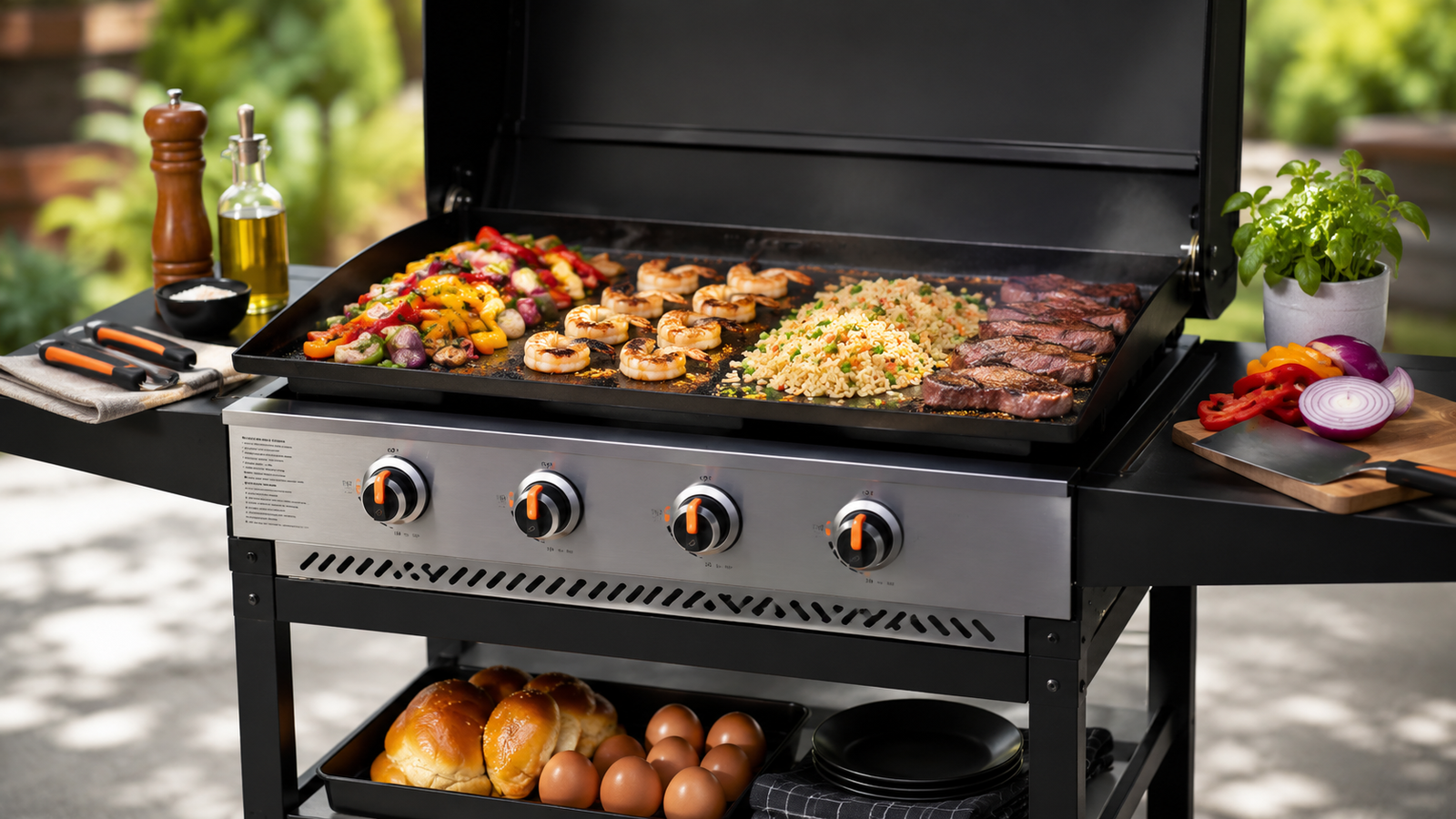
If you have spent any time scrolling through backyard cooking videos or walking the outdoor section of a hardware store, you have probably noticed how popular the Blackstone grill has become. It is not a traditional grill in the classic sense. It is a flat top griddle, and that single design choice changes almost everything about how you cook, what you can cook, and how much you will enjoy using it.
This guide is built for people who are actually trying to decide what to buy, not just window shopping. We will walk through how a Blackstone grill works, which size and features actually matter for your household, what it costs to own one long term, and how to season, clean, and maintain it so it lasts for years instead of months. By the end, you should be able to make a confident decision without needing to bounce between five different retailer pages to piece the information together.
What Makes a Blackstone Grill Different
A Blackstone grill uses a solid steel cooking surface instead of grates. There is no open flame touching your food directly, which means you get a completely different cooking experience compared to a standard gas grill.
Because the surface is flat, you can cook multiple foods at once without them falling through grates or dripping onto a flame. Eggs, pancakes, stir fry, smash burgers, quesadillas, and seared steaks can all happen on the same cooktop, sometimes in the same session. That versatility is the main reason the brand has grown so quickly since it launched in 2008.
The heat comes from burners underneath the steel plate, controlled by independent knobs. This lets you create different temperature zones on one griddle, so you can keep something warm on one side while actively cooking on the other.
Blackstone Grill Sizes Explained
Blackstone griddles typically come in four main sizes, and picking the right one is probably the single most important decision you will make.
17 Inch Griddles
These are compact, tabletop style units designed for small spaces, dorms, apartments, or as a secondary cooking station. They are portable enough to take camping but limited in cooking surface for larger groups.
22 Inch Griddles
A step up in size, still portable and often used for tailgating, camping trips, or smaller households that do not need a large cooking area. Two burners typically give you enough zone control for basic meals.
28 Inch Griddles
This size hits a sweet spot for many buyers. It offers enough surface area to cook breakfast for a family of four or five while still being manageable on a patio or small backyard. Most 28 inch models include two or three burners.
36 Inch Griddles
The largest common size, built for people who cook often, host regularly, or simply want maximum flexibility. With four burners, you get more precise heat zone control, which matters if you are cooking several dishes with different temperature needs at once.
Choosing the Right Model for Your Lifestyle
Instead of picking based on price alone, it helps to think about how you actually plan to use the griddle.
If you host big family breakfasts or weekend cookouts regularly, a 36 inch model with four burners gives you room to work without feeling cramped. If you are cooking mainly for one or two people, a 22 or 28 inch griddle will feel more appropriately sized and will heat up faster.
Campers and tailgaters should lean toward the 17 or 22 inch tabletop models, since portability and lower weight matter more than raw cooking space in those situations.
Buyers who want a permanent outdoor kitchen setup should look at drop in or built in griddles, which are designed to be installed into a custom island rather than used as a standalone cart. These tend to cost significantly more but integrate cleanly into a finished outdoor space.
Features Worth Paying Attention To
A few features consistently make a noticeable difference in day to day use:
- A hood or lid helps trap heat, speeds up cooking, and protects the surface between uses.
- A rear grease management system keeps drippings contained and makes cleanup faster.
- Piezo ignition means instant lighting without fumbling for a match or lighter.
- A bottom shelf adds storage for tools, propane tanks, or accessories.
These features are not just marketing extras. They genuinely change how convenient the griddle is to use once it becomes part of your regular routine.
Blackstone Grill vs Traditional Gas Grill
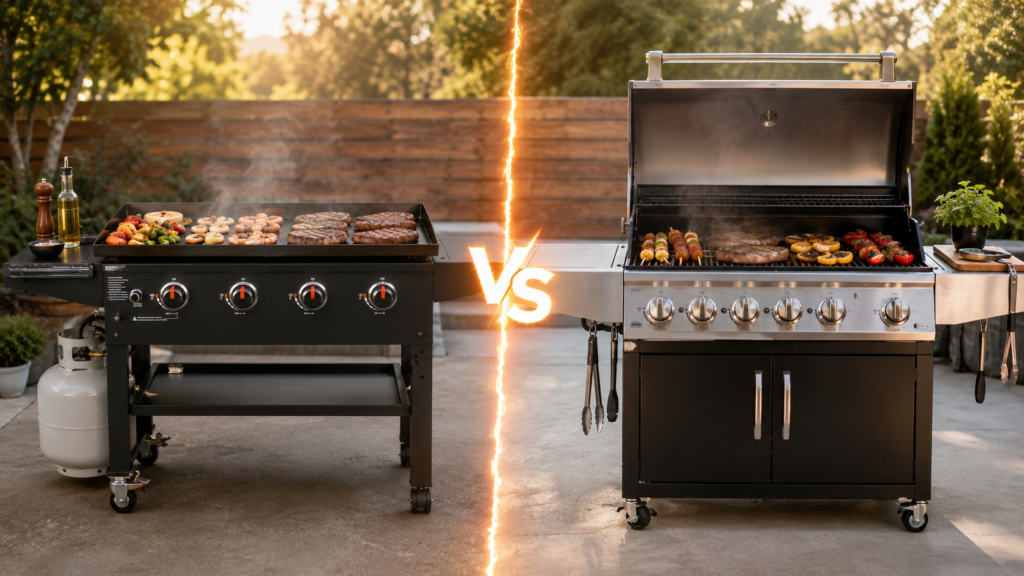
This is one of the most common points of confusion for first time buyers, so it is worth addressing directly and honestly.
A traditional gas grill uses open flame and grates, which gives you those classic char marks and a smokier flavor profile. It is well suited for steaks, burgers, and foods where grill marks matter.
A Blackstone grill trades that char for versatility and control. Because there is no direct flame contact, fatty drippings do not burn and create flare ups, which also means fewer potentially harmful compounds forming on your food compared to high heat open flame grilling. You also gain the ability to cook foods that would normally fall apart on a grate, like fried rice, pancakes, shrimp, or delicate vegetables.
Cleanup differs too. A griddle surface can be scraped and wiped down in a few minutes, while grill grates often need a wire brush and more elbow grease.
Neither option is objectively better. If you want smoky, char grilled flavor, a traditional grill still has an edge. If you want flexibility, easier cleanup, and the ability to cook full meals in one place, a Blackstone grill is the stronger choice.
What It Actually Costs to Own One
The griddle itself is only part of the budget. Entry level tabletop models start under two hundred dollars, while full size 36 inch units with hoods and cabinets can run well past six hundred dollars, and premium drop in models can exceed two thousand dollars.
Beyond the initial purchase, plan for a few recurring or one time costs:
- A fitted cover to protect the cooktop from weather when not in use, usually thirty to seventy dollars depending on size.
- Seasoning oil, which you will use regularly during the first few cooks and periodically afterward.
- A basic tool set including a spatula, scraper, and squeeze bottles, often sold as a starter kit.
- Propane refills or a natural gas conversion kit if you plan to hook into an existing gas line.
Factoring these extras in upfront helps you avoid surprise costs after the initial purchase and gives you a more realistic picture of total ownership.
Setting Up and Seasoning Your Blackstone Grill
Seasoning is the process of building a natural, slightly dark, nonstick coating on the steel surface using oil and heat. Skipping this step is one of the most common mistakes new owners make, and it leads to sticking, rust, and uneven cooking down the line.
Here is a simple approach that works well for most models:
- Wash the new cooktop with warm soapy water to remove the factory protective coating, then dry it completely.
- Turn all burners to high and let the surface heat until any remaining moisture evaporates.
- Apply a thin layer of high smoke point oil, such as flaxseed, canola, or a blend made specifically for griddle seasoning, and spread it evenly with a cloth or paper towel using tongs.
- Let the oil smoke and burn off completely, which usually takes ten to fifteen minutes, then repeat the oil application two or three more times.
- Allow the griddle to cool before your first cook.
You do not need a perfectly jet black surface before you start cooking. The seasoning layer builds and improves naturally over the first several uses, so treat the initial seasoning as a foundation rather than a finished product.
Cleaning and Long Term Maintenance
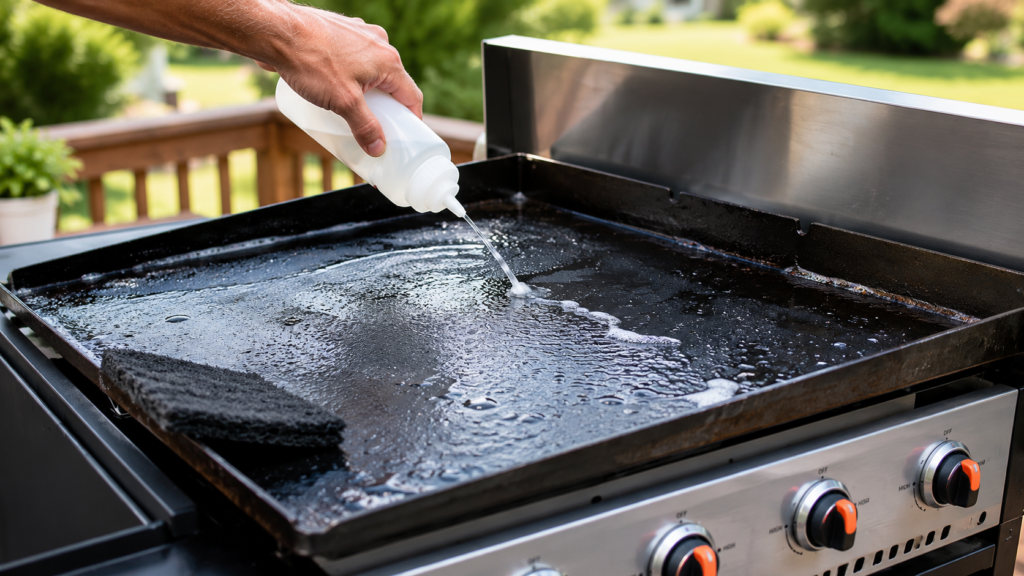
Good habits after each cook matter more than any deep cleaning session. While the surface is still warm, scrape off food debris toward the grease trap, then wipe the area with a paper towel.
For a more thorough clean, add a small amount of water to a warm section of the griddle and use a scraper to loosen stuck on residue, working it toward the grease management system. Repeat across the surface, dry it fully, then apply a very thin layer of oil before storing.
Long term care comes down to a few consistent habits:
- Always dry the surface completely before covering it, since trapped moisture is the main cause of rust.
- Store the griddle under a fitted cover, especially in humid or coastal climates.
- Re season the surface periodically, particularly if you notice food starting to stick more than usual.
- Check and clean the burners occasionally to keep flame distribution even.
A griddle that is cared for consistently can easily last a decade or longer, while neglect tends to show up within the first year in the form of rust spots or uneven heating.
Common Problems and How to Fix Them
Even well built griddles run into occasional issues. Knowing what causes them makes troubleshooting far less stressful.
Rust spots usually come from moisture left on the surface before storage. Scrub the affected area with a scouring pad, rinse, dry thoroughly, and re season that section before your next cook.
Sticking food often means the seasoning layer has worn thin, or you are cooking at too low a temperature for the food you are preparing. Re seasoning and adjusting your heat usually resolves this quickly.
Uneven heating can happen if burner ports become clogged with debris or grease. Turning off the gas supply and gently cleaning the burner tubes with a soft brush typically restores even heat distribution.
Ignition issues are frequently caused by a weak battery in the piezo igniter or a loose connection. Replacing the battery or checking the wiring is an easy first step before assuming the unit needs repair.
Accessories Worth Buying First
You do not need to buy everything on day one, but a few accessories genuinely improve the experience early on.
A quality metal spatula and scraper combo makes flipping and cleaning noticeably easier than using whatever kitchen tools you already own. Squeeze bottles for oil give you better control than pouring directly from a bottle, especially when seasoning.
A fitted cover should be near the top of your list if you live somewhere with rain, snow, or high humidity, since it directly protects your investment. Finally, a basic griddle caddy or storage bin keeps tools organized and easy to grab each time you cook.
Final Thoughts
Choosing the right Blackstone grill comes down to matching the size and features to how you actually plan to use it, rather than simply picking the biggest or cheapest option available. A smaller tabletop model suits campers and small households, while a full size 36 inch griddle rewards families who cook often and want maximum flexibility.
Once you bring one home, proper seasoning and consistent cleaning habits will do more for its long term performance than any single accessory. Treat those early steps seriously, stay ahead of maintenance, and a Blackstone grill can become one of the most used pieces of outdoor cooking equipment you own for many years to come.
Frequently Asked Questions
Is a Blackstone grill better than a regular gas grill?
It depends on what you value most. A traditional grill offers smoky flavor and char marks, while a Blackstone grill offers more cooking versatility, easier cleanup, and fewer flare ups since there is no open flame touching the food.
What size Blackstone grill should I buy for a family of four?
A 28 inch model is usually enough for everyday family meals, though a 36 inch griddle gives you more breathing room if you frequently host guests or cook multiple dishes at once.
Do I need to season a Blackstone grill before first use?
Yes. Seasoning builds a natural nonstick layer on the steel surface and helps prevent rust, so it is an important step before your first cook rather than something to skip.
Can a Blackstone grill be used indoors or in a garage?
No. These griddles are designed strictly for outdoor use and should never be operated in enclosed spaces, including garages, apartment balconies, or covered patios without proper ventilation.
How often should I re season my griddle?
There is no fixed schedule, but re seasoning whenever food starts sticking more than usual or after a deep clean will keep the surface performing well over time.