
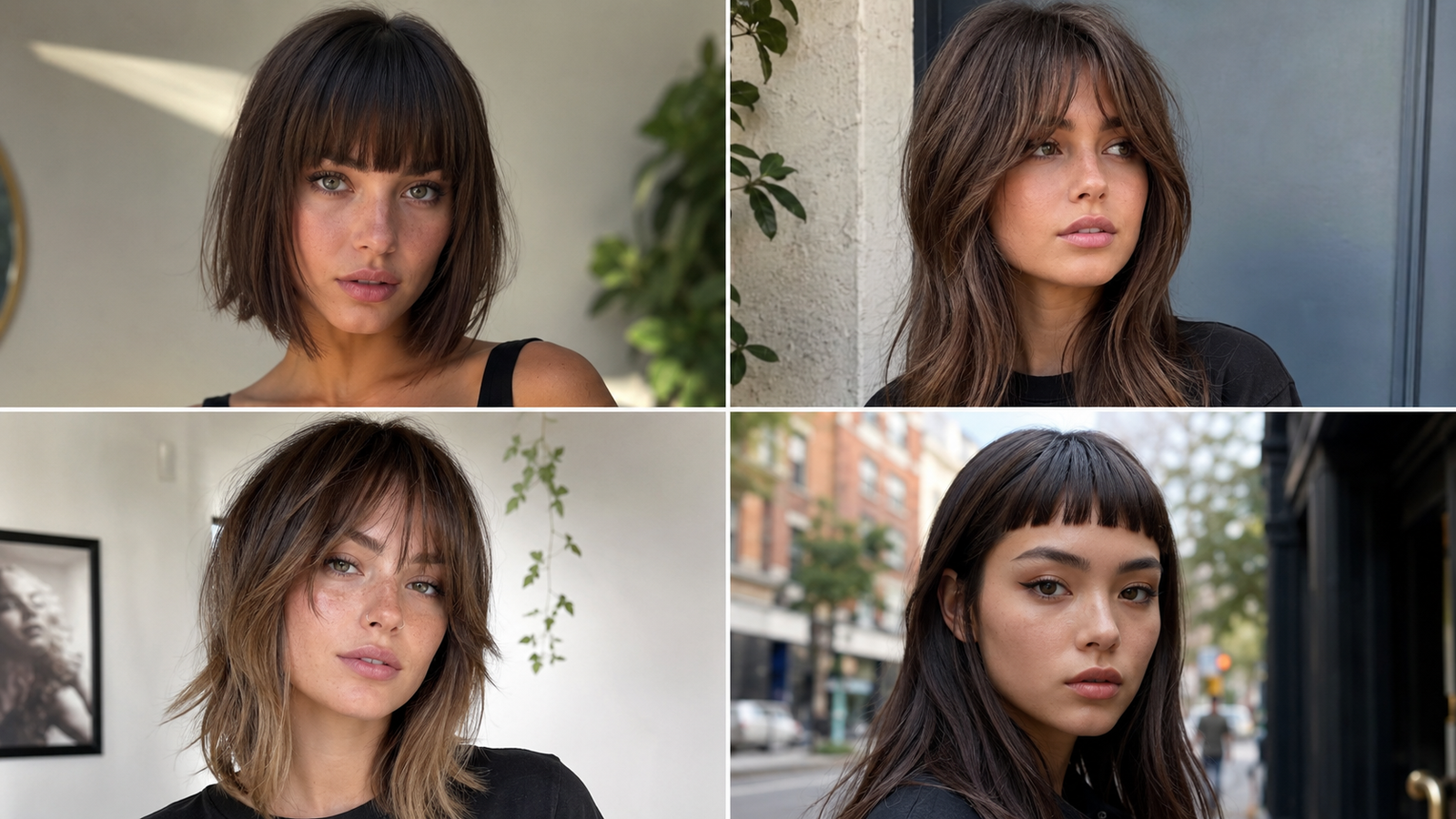
A fringe haircut can completely change the way your face looks, sometimes in just a few snips. Whether you are considering your first fringe or thinking about switching to a different style, understanding your options before you sit in the salon chair makes all the difference.
This guide walks through every major fringe haircut style, how to choose one based on your face shape, what to expect during the cutting process, and how to keep your fringe looking fresh between appointments. By the end, you will know exactly what to ask for and why it will suit you.
What Is a Fringe Haircut
A fringe haircut, often called bangs in American English, refers to hair that is cut to fall forward over the forehead. It can be full and blunt, soft and wispy, or split into sections that frame the face.
Fringes are not a single style. They are a category of cuts that can be adapted to almost any hair length, texture, or face shape. That flexibility is exactly why the fringe haircut has remained one of the most requested styles in salons for decades.
Unlike a full haircut, a fringe is often added or adjusted independently. This means you can experiment with the look without committing to a major change in your overall hairstyle.
Popular Fringe Haircut Styles
There is no single fringe that suits everyone, which is why stylists offer so many variations. Here are the most popular options being requested today.
Blunt Fringe
A blunt fringe is cut straight across in one clean line, usually sitting just above the eyebrows. It creates a bold, graphic look and works especially well with straight, thick hair.
This style demands regular trims since even a small amount of growth changes the shape. It also draws strong attention to the eyes and brow line.
Curtain Fringe
The curtain fringe parts down the middle and sweeps to either side of the face, similar to how curtains frame a window. It has become one of the most requested fringe haircut styles because it suits nearly every face shape.
Curtain fringes soften the forehead without hiding it completely, and they grow out gracefully compared to blunt styles.
Wispy Fringe
A wispy fringe is textured, feathered, and lighter in density than a blunt cut. Strands are often cut at different lengths to create a soft, undone finish.
This style is popular with people who want the benefits of a fringe without the high maintenance schedule that a blunt fringe requires.
Side Swept Fringe
Side swept fringes are longer and angled to one side rather than falling straight down. They blend easily into longer layers and are a gentle way to introduce a fringe if you have never had one before.
Micro Fringe
Also known as a baby fringe, this ultra short style sits high on the forehead. It is a striking, fashion forward choice that requires confidence and a face shape that can handle a lot of forehead exposure.
Bottleneck Fringe
The bottleneck fringe is longer at the sides and shorter in the center, creating a shape that narrows near the nose bridge before widening out again. It is a trend driven style that works well with center parted hair.
Choosing a Fringe Based on Face Shape
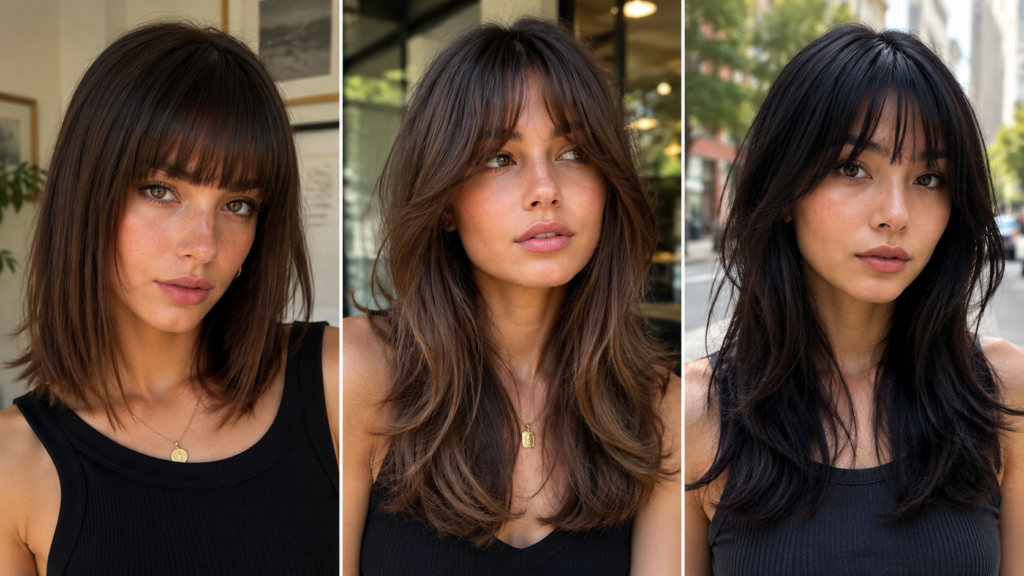
Getting the fringe haircut right often comes down to matching the style to your face shape. A skilled stylist will assess your features, but knowing the basics helps you communicate what you want.
Oval Face Shape
Oval faces are considered the most versatile, meaning almost any fringe style will suit you. Blunt, curtain, and wispy fringes all work well here.
Round Face Shape
For round faces, a longer, side swept fringe or a curtain fringe adds height and helps elongate the face. Avoid full blunt fringes cut straight across, as they can emphasize width.
Square Face Shape
Square faces benefit from softer, wispy fringes that break up strong jawlines. A curtain fringe also works nicely by softening the angles near the temples.
Heart Face Shape
Since heart shaped faces are wider at the forehead and narrower at the chin, a side swept or curtain fringe helps balance proportions without adding extra width up top.
Long Face Shape
A blunt, thicker fringe cut just above the brows can visually shorten a long face by drawing the eye horizontally rather than vertically.
Diamond Face Shape
Diamond faces, which are widest at the cheekbones, tend to look great with wispy or curtain fringes that soften the cheekbone area while keeping the forehead visible.
Fringe Cutting Techniques Explained
The technique a stylist uses matters just as much as the style itself. Here are the core methods used to cut a fringe haircut.
Point Cutting
Point cutting involves holding the scissors at an angle and snipping into the ends of the hair rather than cutting straight across. This softens the line and is commonly used for wispy or textured fringes.
Blunt Cutting
Blunt cutting uses horizontal, straight across snips to create a clean, defined edge. It is the technique behind classic blunt fringes and requires precision since there is little room for error.
Razor Cutting
A razor is sometimes used instead of scissors to create a softer, more feathered finish. This technique thins the hair slightly while cutting, which suits people with thick or coarse hair.
Texturizing
Texturizing involves cutting small notches into sections of the fringe to reduce bulk and add movement. It is often the final step after the main shape has been established.
Dry Cutting Versus Wet Cutting
Many stylists now prefer cutting a fringe when the hair is dry, since hair shrinks as it dries and a fringe cut wet can end up shorter than intended once it air dries or is styled. Dry cutting allows the stylist to see exactly how the fringe will sit and fall in real time.
Fringe Haircuts for Different Hair Textures
Hair texture plays a bigger role in how a fringe behaves than most people expect.
Straight Hair
Straight hair holds a blunt fringe shape well and shows off clean lines. It also tends to separate easily, so a bit of texturizing helps prevent a flat, curtain like appearance where you do not want one.
Wavy Hair
Wavy hair naturally softens a fringe, making curtain and wispy styles look effortless. It usually requires minimal styling to maintain movement.
Curly Hair
Curly hair shrinks noticeably once it dries, so stylists typically cut curly fringes longer than the final desired length. A curly fringe should always be cut dry to account for natural shrinkage and curl pattern.
Thick Hair
Thick hair can support a fuller, blunt fringe, but it often benefits from thinning or texturizing to prevent the fringe from looking heavy or bulky.
Fine Hair
Fine hair works well with wispy or curtain fringes since these styles do not rely on density. A blunt fringe on fine hair can sometimes look sparse unless cut with care.
How to Maintain a Fringe Between Salon Visits
Committing to a fringe haircut means committing to some level of ongoing maintenance, especially with shorter or blunt styles.
- Trim every three to four weeks for blunt or micro fringes to keep the shape sharp.
- Curtain and side swept fringes can typically go six to eight weeks between trims.
- Use a small amount of dry shampoo at the roots of your fringe, since this area gets oily faster than the rest of your hair.
- A round brush and low heat from a blow dryer will help train your fringe to fall in the direction you want.
- Sleeping with your fringe pinned back or wrapped can reduce awkward creases in the morning.
If you are not ready for frequent salon visits, learning to trim your own fringe safely between appointments can help. Section the hair, use sharp hairdressing scissors, and always cut less than you think you need, since hair is easy to shorten further but impossible to add back.
Common Fringe Mistakes to Avoid
Even a well planned fringe haircut can go wrong if a few key details are overlooked.
One common mistake is cutting the fringe too short on the first attempt. It is always safer to start slightly longer and adjust gradually during a follow up appointment.
Another mistake is ignoring your natural hair part. A fringe that fights against the direction your hair naturally falls will require far more daily styling effort to look intentional.
Skipping regular trims is another issue, particularly with blunt fringes. Even a week or two of extra growth can change how the style frames your face and eyes.
Finally, choosing a fringe based purely on a photo without considering your own hair texture and face shape often leads to disappointment. What works beautifully on straight, fine hair may behave completely differently on thick, curly hair.
Styling Tips for Your Fringe
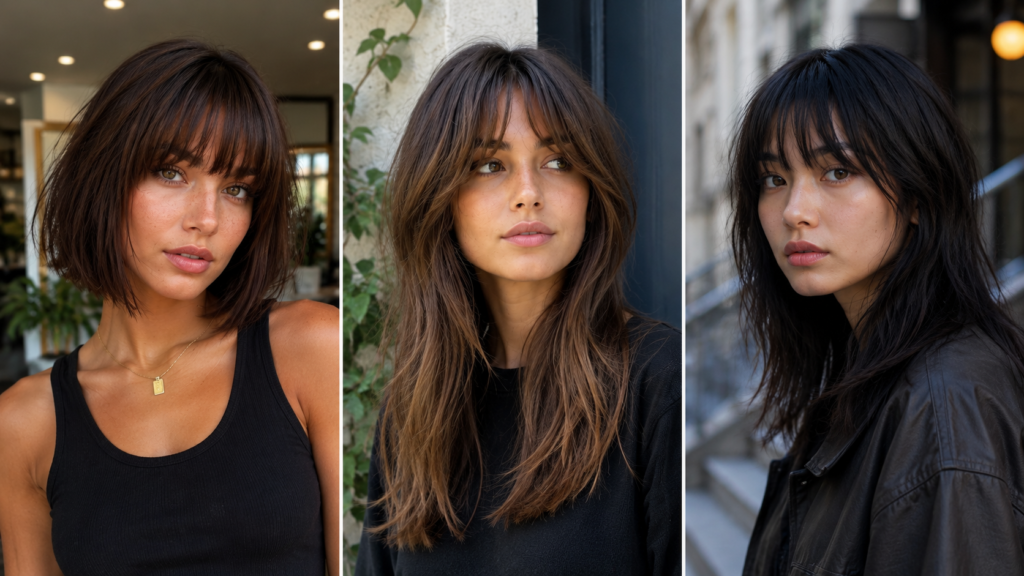
A great cut is only half the equation. Styling brings the fringe haircut to life day to day.
Blow drying your fringe downward and slightly to the side, using a round brush, creates a smooth, polished finish that lasts through the day. For curtain fringes, direct airflow outward from the center part to encourage the natural sweep.
A light hold hairspray or a small amount of styling cream can keep flyaways under control without weighing the fringe down. Avoid heavy products near the roots, as this can make fine hair look greasy quickly.
If you want to change up your look occasionally, fringe clips or a headband can push your fringe back for a temporary change without any commitment.
Frequently Asked Questions
How often should I trim my fringe haircut?
Blunt and micro fringes usually need a trim every three to four weeks, while curtain and side swept styles can last six to eight weeks between cuts.
Will a fringe suit me if I have a round face?
Yes, though a longer, side swept or curtain fringe tends to work better than a full blunt fringe, since it adds height rather than width.
Can I cut my own fringe at home safely?
It is possible with sharp scissors and a careful, gradual approach, but it is safer to have your first fringe shaped by a professional stylist so you understand the correct angle and length for your face.
Does a fringe make hair look thinner or thicker?
A well cut fringe can actually make fine hair appear fuller near the front, while texturizing techniques help prevent thick hair from looking heavy.
How long does it take to grow out a fringe?
Most fringes take between six months and a year to blend fully into the rest of your hair, though curtain fringes grow out more gracefully than blunt styles during that transition period.
Final Thoughts
A fringe haircut is one of the easiest ways to refresh your look without changing your overall hairstyle. The key is choosing a style that suits your face shape and hair texture, then committing to the maintenance it requires to look its best.
From bold blunt fringes to soft curtain styles, there is a version of this cut for almost everyone. Bring reference photos to your next salon visit, be honest with your stylist about your hair texture and daily styling habits, and you will walk out with a fringe that feels tailor made for you.