

Learning how to ask for a deposit from a client is one of the most profitable skills a freelancer or small business owner can build. Every project that starts with nothing paid up front puts all the risk on you: your time, your materials, and the calendar space you turned down other work for. If the client disappears halfway through, you absorb the loss.
Yet most people dread the conversation. They rewrite the sentence in their head, soften it, and wonder if asking for money up front makes them look unprofessional or distrustful. The good news is that a deposit request almost never scares off a good client. What turns people off is a request that arrives late, with no warning, in wording that sounds defensive. This guide shows you how to ask for a deposit from a client with natural wording, exact scripts you can copy, and a process that makes the whole thing feel routine instead of awkward.
Why Asking for a Deposit Feels So Awkward
Most of the discomfort comes from a story we tell ourselves: that asking for money up front implies we expect the client to behave badly. It can feel like an accusation wearing a business suit. In reality, your client is not reading the request that way at all.
Think about how often you pay deposits yourself. You pay one to book a venue, to hold a hotel room, to schedule a contractor, to reserve a table at a busy restaurant. None of those felt like an insult. You read them as a sign that the thing you were booking was in demand and that the business behind it was organized. Your clients read your deposit request exactly the same way.
The hesitation is also expensive. Remote workforce research has found that the vast majority of freelancers have invoices paid late at least some of the time. A deposit is the simplest protection you have against that pattern, because it shifts some of the commitment to the client before you start spending your own hours.
How to Ask for a Deposit From a Client: The 5 Step Process
The full method for how to ask for a deposit from a client comes down to five steps: decide your number in advance, mention it early in the proposal, use wording tied to scheduling rather than trust, put the terms in writing, and plan how you will collect the final balance. Do those five things and the conversation stops feeling like a negotiation and starts feeling like a normal part of your process.
Each of the sections below breaks one of those steps down with exact wording, so you can lift what you need and use it this week.
What a Deposit Really Is: A Commitment Device
Before you learn the scripts, it helps to reframe what you are actually asking for. A deposit is not a trust test. It is a commitment device, and it works in both directions.
For the client, paying something up front turns a vague plan into a real project. Your work moves from “something we are planning to do” to “something we have started.” Approvals move faster, feedback comes back sooner, and your emails stop sitting at the bottom of the inbox. For you, the deposit covers the cost of blocking out your calendar and saying no to other work. It filters out people who were never going to move forward, and it sets the tone: this is a professional relationship with clear terms, not a favor.
When you believe that framing, your voice changes. You stop asking for a favor and start describing how your business works. Clients can hear the difference.
How Much Deposit Should You Ask For
There is no universal number, but there are sensible ranges that clients in most industries already expect. Pick your number before the conversation, not during it. A figure you decided on calmly, in advance, comes out very differently than one you are calculating live while someone waits.
For fixed fee project work such as design, development, writing, or consulting, 30 to 50 percent up front is standard. Half is common and rarely questioned. For long or multi phase projects, take 25 to 33 percent to start and tie the rest to milestones instead of a single payment at the end. For ongoing retainers, bill the first month in advance and keep every month on the same advance schedule.
Work with hard costs deserves a different rule. If a project includes materials, printing, travel, subcontractors, or venue fees, cover those costs in full plus a portion of your own fee. You should never be financing someone else’s purchases out of your own pocket. For very small jobs under a few hundred dollars, it is often simpler to ask for the whole amount up front than to split it.

If a client ever questions the percentage, tie it back to scheduling. “To reserve your start date, I take 50 percent up front” lands better than any explanation of your cash flow. You are describing how bookings work, not defending a policy.
When to Bring Up the Deposit
Timing is the single biggest factor in how your request lands. Mention the deposit early, in your first proposal, on your pricing page, or in the initial scoping call, and it reads as simply part of how you work. Mention it after the client has already said yes, and it reads as a new condition added late. It is the same policy in both cases, but the reaction is completely different.
The best sequence is simple. Describe how you work before you talk numbers. Put the deposit in writing in the proposal. Then reference it as a known fact when it is time to start. By the time the invoice goes out, the client has seen the terms twice and nothing is a surprise.
This early mention also gives you a quiet business benefit: deposits reduce cancellations. Clients who have paid to hold a date show up, which is one of the simplest ways of cutting down no shows for appointments without chasing anyone.
Exact Scripts You Can Use Word for Word
The most effective phrasing is short, matter of fact, and framed around scheduling. Notice that none of these examples apologize for the request. You can adapt them to email, calls, or messaging without changing the meaning.
On a first call, said out loud
“Before we talk dates, the way I work is a 50 percent deposit to get started and the rest on completion. Does that work on your side?” Short, warm, and impossible to misread. “The way I work” sounds like a fact about your business, not a rule imposed on them.
In a proposal or scope document
“To reserve your start date, I ask for 50 percent up front, with the balance due on delivery. Once the deposit is received, I will block the dates on my calendar and send over the kickoff materials.” This states the full payment structure at once, so there is no second surprise later.
Email template for a new client

Subject: Next steps and booking your project
Hi [Name],
Thanks for confirming the scope. I am excited to get started on [project]. To lock in your start date, I take a [50 percent] deposit of [$X]. This goes toward your final balance and covers the time I am reserving for your project.
You can pay securely here: [payment link]. Once the deposit is in, I will send over the contract and kickoff details so we can begin right away.
Let me know if you have any questions.
Best regards,
[Your Name]
What to leave out of every version: “I hope this is okay,” “I know it is a lot to ask,” and any story about clients who burned you in the past. Apologizing invites negotiation. Explaining your history makes it personal.
Short text or direct message
“Great, happy to book you in. I take a 50 percent deposit to reserve the date, which goes toward your total. I will send the payment link now and we can get started once it is sorted.” Keep it breezy. Long explanations over text look anxious.
On your booking page
“A [percentage] deposit is required to book. This deposit is non refundable and the remaining balance is due on the day of service. Thanks for respecting the time we set aside for you.” Clear, professional, and it reinforces the boundary before money ever changes hands.
Put It in Writing: Your Contract and Invoice
Spoken agreements fade. Written terms do not. The fastest way to stop dreading the conversation is to remove the decision from it entirely: when a deposit is a documented part of your process, you are describing how the engagement runs instead of asking for a favor each time.
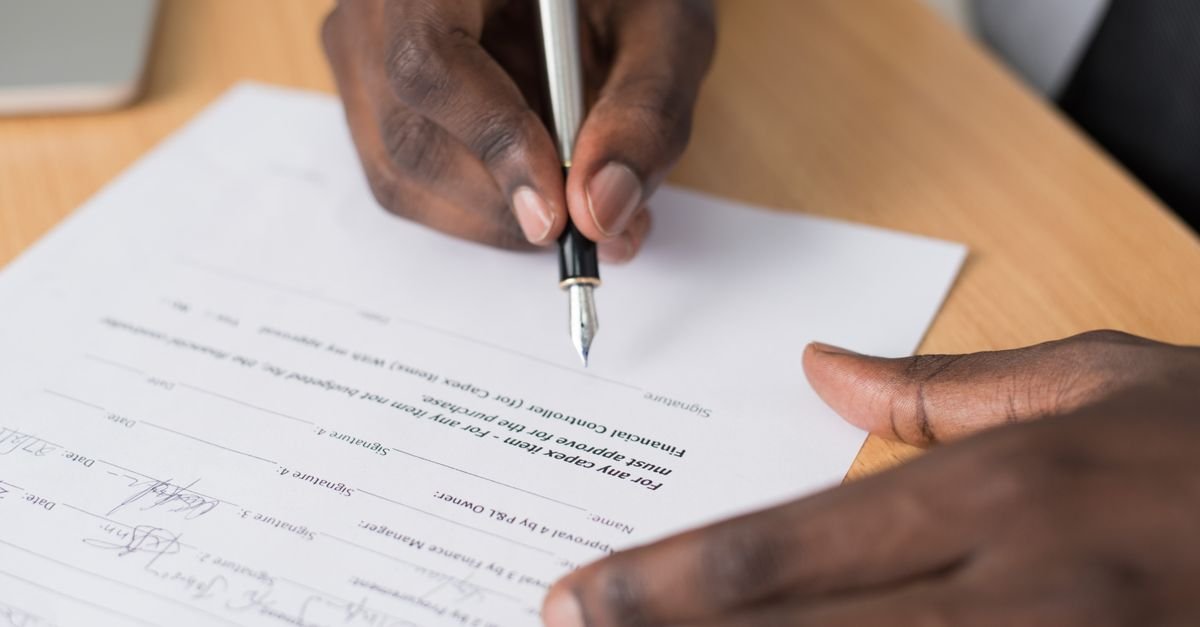
Put the same terms in three places. Your proposal template states the deposit percentage and when it is due. Your contract includes a short payment clause, for example: “Client will pay a deposit of [50 percent] of the total fee before work begins. The deposit is non refundable except as stated in the cancellation section below. Work will commence on receipt of the deposit.” Your invoice shows the deposit as its own line item, so the paper trail is clean from day one.
Use the same numbers every time. Consistency is what turns a policy into a brand signal. Clients who return for a second project already know the drill, and new clients sense the confidence of a system that has clearly worked before.
Clean paperwork has a tax benefit too. Deposits, invoices, and receipts that are filed properly from the start make year end far less painful, which is why keeping business receipts for tax is worth doing alongside every project, not just at filing time.
Should Your Deposit Be Refundable
This is the question clients ask most, so decide your answer before they do. Most service providers make deposits non refundable, because the money compensates for time reserved and other work turned down. Whatever you decide, put it in writing in the contract before the project starts, along with what happens if the client cancels partway through.
A middle ground works well for longer engagements: make the deposit non refundable but allow it to be transferred to a rescheduled date within a set window, such as 60 days. This protects your calendar while giving the client flexibility, and it reads as fair rather than punitive.
Be careful with one edge case. If a client cancels and you keep a large deposit for work you never started, some regions treat that differently under consumer protection rules. A short cancellation section that explains exactly what is refundable, what is not, and the deadline for each keeps you on solid ground. When in doubt, a local business adviser can review your clause in minutes.
What to Say When a Client Pushes Back
Pushback is rarer than you fear, and when it happens it is almost always one of three objections. Each has a clean answer that keeps your boundary intact.
“We don’t pay deposits.” Some larger organizations genuinely have procurement rules about this. Ask whether they can issue a purchase order instead, or offer to split the work into smaller phases invoiced on completion, so your exposure at any moment stays small. You have kept a payment gate in place without arguing.
“Can we do it after we see the first draft?” This is the most common one. A fair response: “I can start on a smaller first phase and invoice at the end of it. That way you see real work before committing to the full scope.” You kept a payment gate and gave them the reassurance they asked for.
“That seems like a lot.” Often the objection is cash timing, not the principle. Offering to split the deposit across two dates, or to reduce it slightly in exchange for a shorter payment window on the balance, resolves it more often than dropping the request entirely.
And if someone refuses every version of a payment gate on a project of real size, treat that as information. The pattern behind that answer rarely improves after you have delivered. Walking away from a red flag client is cheaper than chasing the money later, and our guide to chasing unpaid invoices shows just how costly that chase can get.
Do Not Forget the Final Balance
A deposit protects the beginning of a project, but the balance is where money usually slips. The work is delivered, the client is happy, and the final invoice quietly ages while everyone moves on. Two habits close that gap.
First, tie the final payment to a specific event rather than a vague endpoint: on delivery of final files, on launch day, or on the last day of the month. Second, decide your follow up schedule in advance. A short note a few days before the due date, another the day after, then a firmer one a week later. Deciding the cadence ahead of time means you never have to sit and rewrite an awkward email while annoyed.
Simple tools make this painless. Most invoicing software lets you request a deposit as a percentage or fixed amount on the invoice itself, and booking platforms can collect it automatically at the time of booking. Set those up once and the system handles the awkward part for you.
Conclusion: Make Deposits Part of Your Process
Learning how to ask for a deposit from a client is less about finding the perfect sentence and more about building a process where the sentence is never a surprise. Decide your number in advance. Mention it in the proposal, not after the yes. Use short, schedule focused wording with no apology attached. Put the same terms in your proposal, contract, and invoice. Plan your follow up for the balance before you need it.
Do that consistently and something shifts: clients stop treating the deposit as a favor you are asking and start treating it as simply how you work. That is the real payoff. A deposit is a commitment device that makes projects real for both sides, protects your calendar, and sets a professional tone from the very first email. Start with the next proposal you send.
Frequently Asked Questions
Is it normal to ask a new client for a deposit?
Yes. Deposits are standard practice in design, development, consulting, photography, events, and most other project based service work. Clients who hire freelancers regularly expect to be asked, and many are surprised when they are not.
What percentage should a deposit be?
For fixed fee projects, 30 to 50 percent is the common range, with 50 percent being the most frequent. Longer multi phase projects often use 25 to 33 percent up front with milestone payments after. If the job includes hard costs like materials or travel, cover those in full plus a portion of your fee.
How do I ask for a deposit without sounding like I do not trust the client?
Frame it around scheduling rather than risk: “To reserve your start date, I ask for 50 percent up front.” Mention it in the proposal before the client says yes, state the full payment structure at once, and skip any apology. Trust never enters the sentence.
What should I do if a client refuses to pay a deposit?
Offer an alternative that still limits your exposure: split the project into smaller phases invoiced on completion, request a purchase order, or divide the deposit across two dates. If someone rejects every form of payment gate on a substantial project, treat it as a signal about how the rest of the engagement will go.
Should a deposit be refundable?
Most providers make deposits non refundable since the money covers reserved time and turned down work. Whatever you decide, put it in writing in the contract before work starts, including what happens if the client cancels partway through.