Kyoto has a reputation problem. Ask anyone about a weekend there and they will picture expensive ryokan rooms, long taxi rides and a schedule so packed that you spend more time in transit than in front of the temples. The truth is kinder. If you know how to plan a weekend trip to Kyoto on a budget, two days and a modest wallet are enough to see the city properly, eat very well and come home with money still in your pocket. This guide shows you how, with real 2026 prices, a day by day route that actually works on foot, and the money saving choices that matter most.
The story: two days, one wallet, and a city that rewards slow travel
Picture this. You land in Japan with a Friday night and a Sunday evening to spare. Kyoto is two hours away by train from Tokyo, and every guidebook throws twenty famous sights at you at once. The temptation is to book a hotel near the station, buy every pass on offer and sprint from temple to temple with a camera in one hand and a map in the other. That is exactly how a Kyoto weekend gets expensive and exhausting at the same time.
A better story starts with a decision. Kyoto rewards the traveller who picks one area, walks it slowly and lets the city come to them. The bamboo grove at dawn, the smell of fresh tofu near a temple gate, an evening walk through lantern lit lanes, these are the moments people remember, and almost all of them cost nothing. The plan below is built on three simple points. First, choose one base and stay put. Second, build your days around free and nearly free sights, because the best of Kyoto is open to everyone. Third, eat where local people eat and let the transport pass do the quiet work. Get those three right and the budget takes care of itself.
Step 1: Pick your base before you book anything
Where you sleep decides how much your weekend costs more than any other single choice. A room near Kyoto Station is the cheapest central base, with hostels from about ¥2,800 to ¥4,200 a night and business hotels from about ¥6,000. Stay in the Higashiyama temple district and you can pay 40 to 50 percent more for the same bed, just for the pleasure of waking up near the temples. For a weekend on a budget, the station area wins. You get the best train and bus links in the city, cheap food at every hour and a straight route to both days of the plan below.
Book a hostel dorm bed or a capsule room if you are travelling alone, and a small business hotel room if you are travelling as a pair. Business hotels in Japan are compact but clean, quiet and honest about what they offer, and many include a simple breakfast. Avoid booking near Arashiyama. It looks peaceful on the map, but it sits a 30 minute train ride from the evening life of central Kyoto, and that distance quietly eats your time and your money every single day.
Before you travel, sort out your phone. Maps, train times and translation apps are the tools that keep a budget trip moving, and getting online the moment you land saves the kind of wandering that burns an afternoon. Our guide on how to stay connected in Japan as a tourist covers pocket WiFi, local SIM cards and free WiFi spots so you can step off the train already connected.
How to plan a weekend trip to Kyoto on a budget day by day
The route below covers the sights that matter most, in an order that avoids backtracking. Each day mixes one famous place with quiet streets and free time, so you see the icons without queuing for hours or paying for transport you do not need.
Day 1: East Kyoto on foot
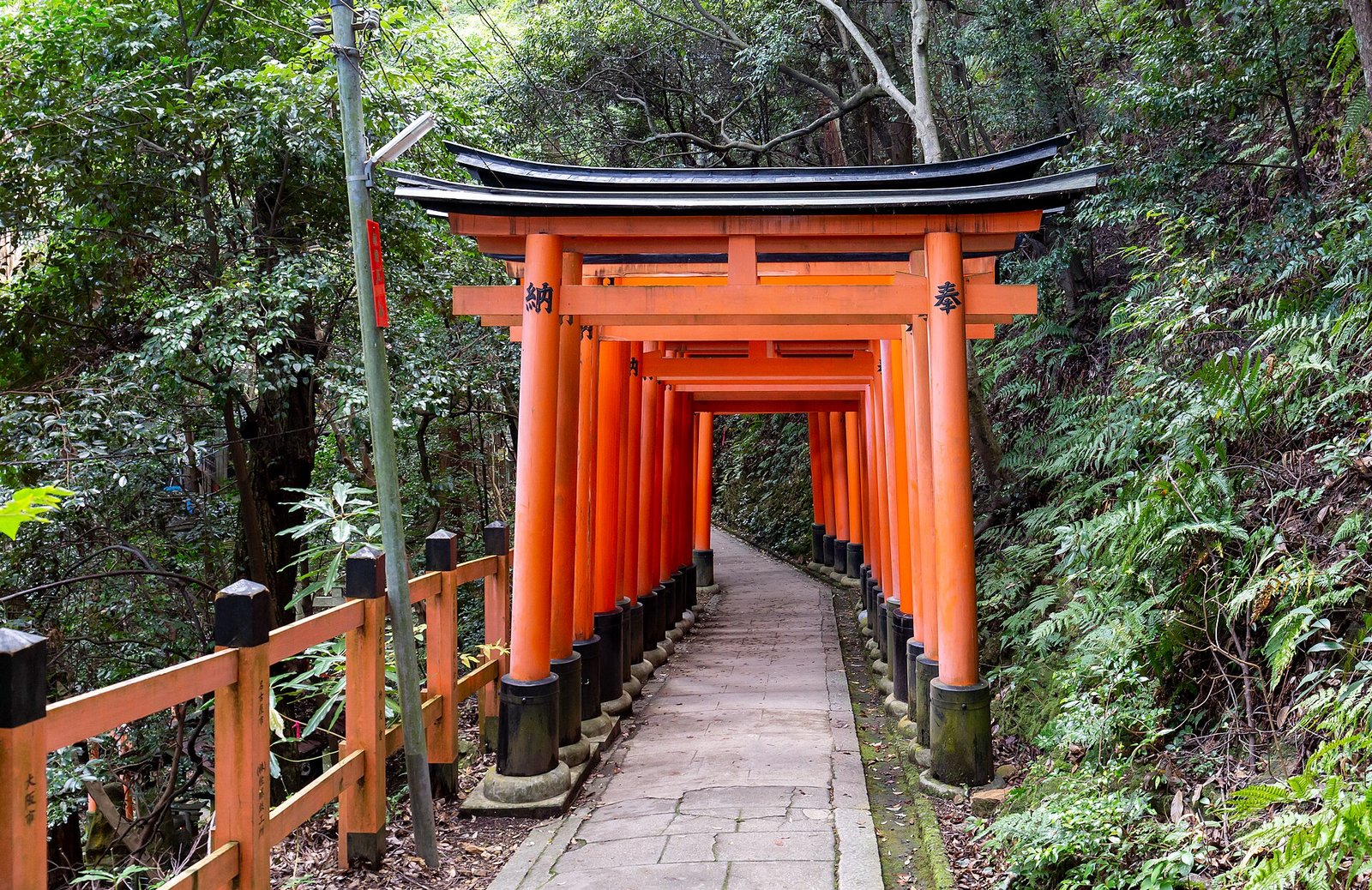
Start early at Fushimi Inari Shrine. Arrive by 7 am and the famous tunnel of vermilion torii gates is almost empty, which is a completely different experience from the midday crowd. Entry is free, the walk up the mountain takes about two hours if you go all the way, and the views over the city from the upper shrine are worth every step. Go in the morning, because the light is softer and the air is cooler, and because you will want your afternoon free for the east side of the city.
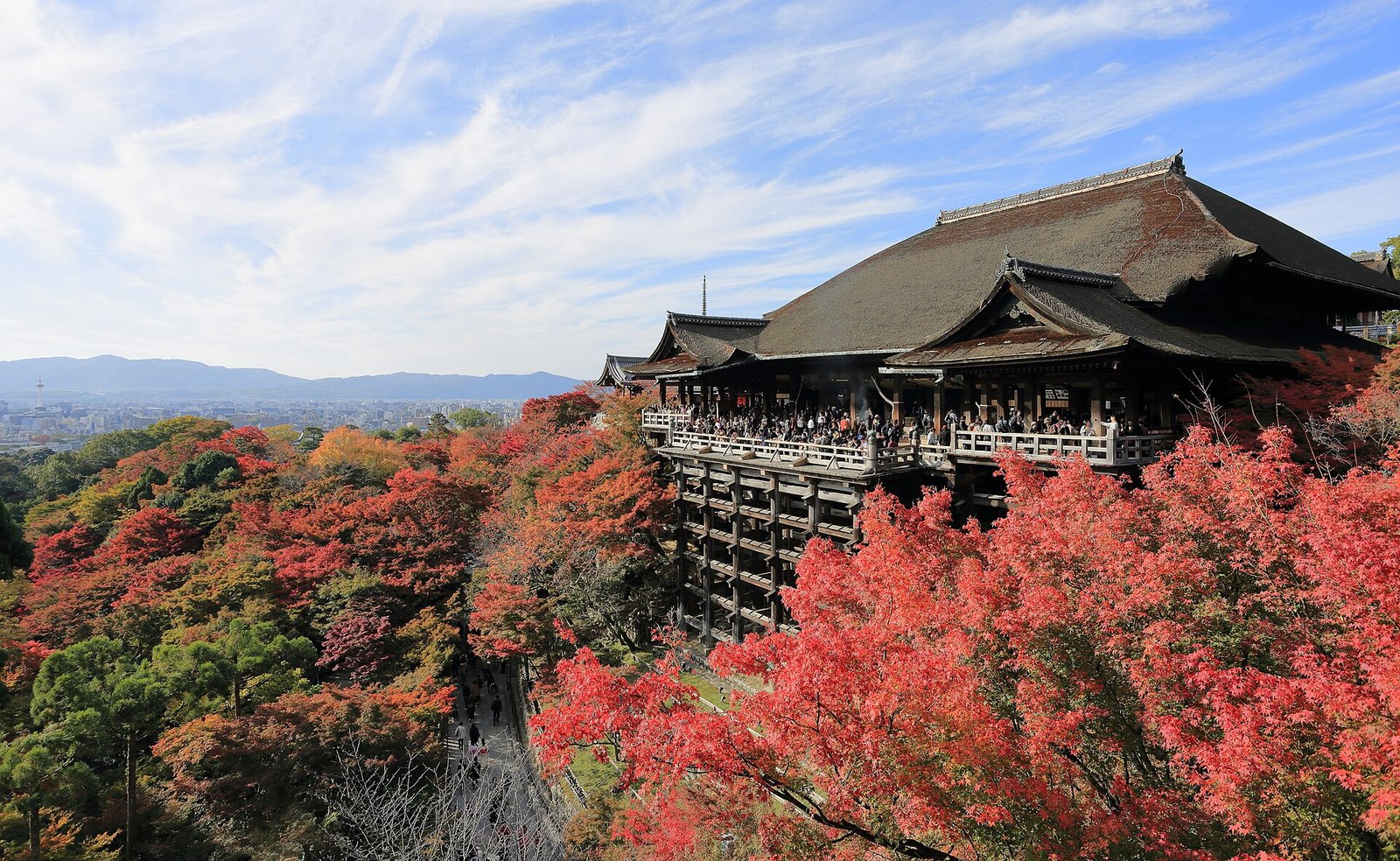
From Fushimi Inari, take the train to Gion and walk north into Higashiyama. This is the old Kyoto of wooden townhouses, tea shops and stone lanes, and walking it costs nothing. Visit Kiyomizu Temple in the afternoon. Entry is ¥400, and the wooden stage above the maple trees is one of the finest views in Japan, especially in November when the leaves turn red and gold.
Finish the day in Gion and Pontocho as the lanterns come on. The narrow alley of Pontocho is lined with small restaurants and bars, and simply walking it is free entertainment. If you want dinner here, look for the set lunch style menus that many restaurants serve in the early evening, or eat at a standing noodle bar where a full bowl of ramen costs about ¥900. Sit down restaurants on the main street charge twice that for the same food, so step one lane back and the price drops.
Day 2: Arashiyama and the west
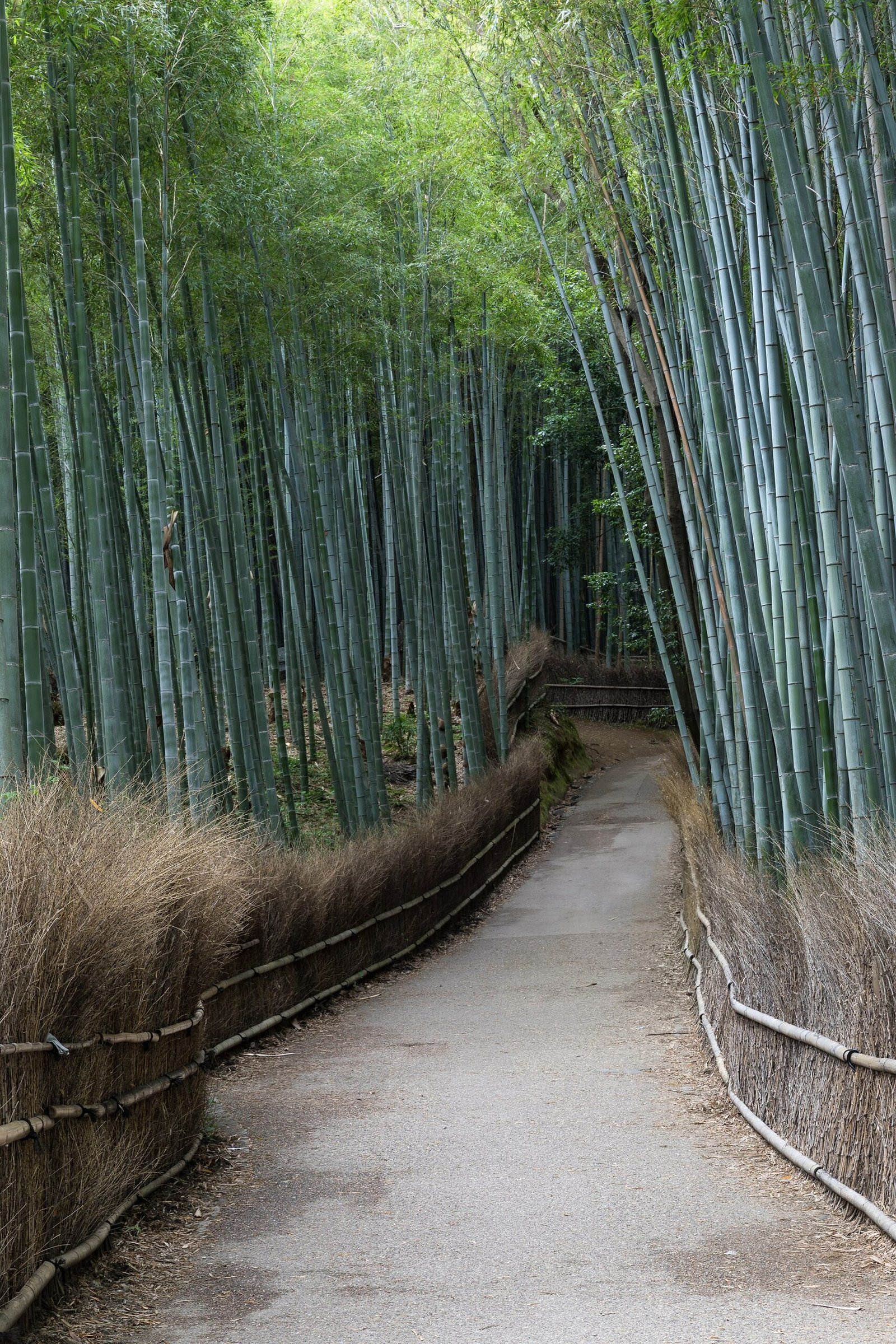
Day two starts even earlier. Take the JR Sagano Line from Kyoto Station to Saga Arashiyama, about 15 minutes and ¥240, and walk straight into the Bamboo Grove before 8 am. The grove is free, open all day, and the main path runs about 500 metres between towering green stalks. At dawn it is quiet enough to hear the wind in the leaves. By 10 am the same path is shoulder to shoulder, so the early start is the whole trick.
From the grove, walk to Tenryu Temple. Entry to the garden is ¥500 and the pond garden is one of the calmest places in Kyoto, a good counterweight to the busy path you just left. Then cross the Togetsukyo Bridge and walk along the river. The riverbank is free, the mountain views are wide, and there are benches where you can sit with a snack from a convenience store and watch the boats go by.
Your bags do not need to slow you down. If you checked out of your hotel in the morning, leave your luggage in a station locker and collect it on the way to your evening train. Our guide on how to use coin lockers in Japan stations explains sizes, prices and how to find a free locker when the station is busy. Spend the last afternoon in central Kyoto, walking the covered shopping arcades and picking up souvenirs at local prices, then catch your train home with the evening light still on the city.
Step 3: Eat well without paying tourist prices
Food is where most Kyoto budgets quietly break, and it is also where the city is most generous. The rule is simple. Eat breakfast and lunch like a local, and save the sit down dinner for one evening only.
Start at Nishiki Market, the covered food street locals call the kitchen of Kyoto. Go in the morning when the stalls are setting up, and graze your way along it. Grilled skewers, fresh tofu, pickles and sweet bean snacks cost a few hundred yen each, and tasting as you walk is a meal in itself. The market also shows you what is in season, which is the cheapest way to eat well anywhere in Japan.
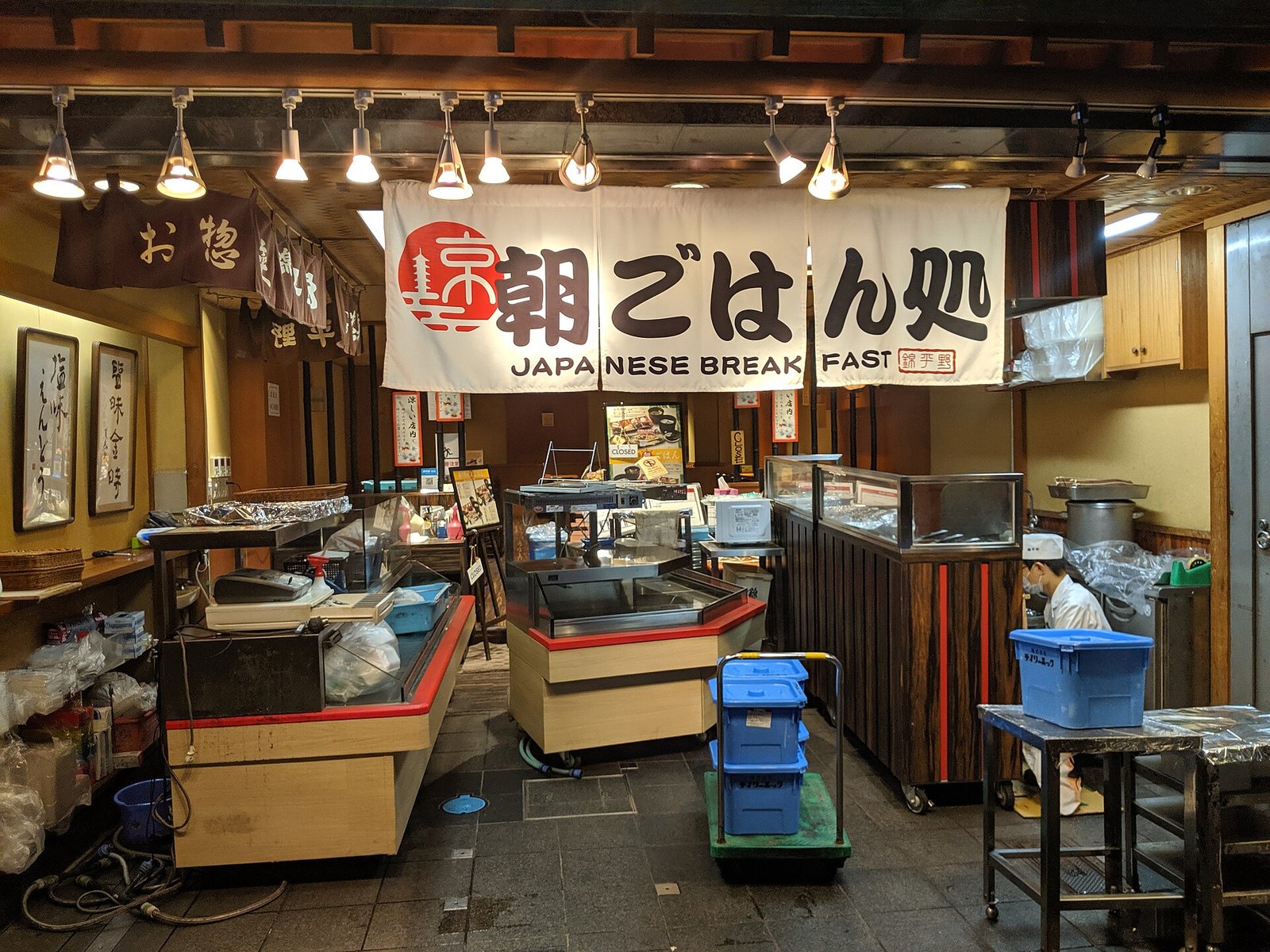
For lunch, look for teishoku set meals. A tray with rice, miso soup, grilled fish or meat and pickles costs about ¥1,000 to ¥1,500 in a local restaurant, and it is filling enough to carry you to dinner. Convenience stores are the other secret weapon. A rice ball, a sandwich and a drink cost about ¥600, the quality is genuinely good, and you can eat on a bench in a temple garden instead of paying for a table.
Ordering and paying is part of the fun, and a little preparation makes it smooth. If you are unsure what to say when the bill arrives, our guide on how to ask for the bill in Japanese gives you the exact phrases so you can pay with confidence. Many small restaurants take cash only, so carry yen. A good rule is to keep about ¥5,000 in cash on you at all times and top it up at a convenience store ATM, which is the cheapest way to get cash in Japan.
What a weekend in Kyoto really costs
Here is an honest budget for one person on a two day weekend, using 2026 prices and the plan above. Prices are in yen with dollar equivalents at about ¥150 to the dollar.
Hostel dorm bed for two nights: ¥5,600 to ¥8,400, about $37 to $56. Business hotel for two nights: about ¥12,000 to ¥16,000, about $80 to $107. Food, eating the local way: about ¥3,000 to ¥4,000 a day, about $20 to $27. Transport, trains plus the Kyoto City Bus One Day Pass at ¥1,100 for the bus heavy day: about ¥2,500 for the weekend. Temple entries, Kiyomizu Temple and Tenryu Temple garden: ¥900 in total. Small extras, snacks, drinks and souvenirs: about ¥2,000.
Add it up and a careful traveller spends about ¥17,000 to ¥22,000 per person for the whole weekend excluding flights, roughly $113 to $147. Traveller data from Budget Your Trip puts the average three day trip at about $331 per person, so this plan sits well below the average while still covering the famous sights. The gap between the two figures is the difference between planning and drifting. Every yen in the table above is a choice, not an accident.
Money saving tips that actually work
Buy an ICOCA card at the station and load it with ¥2,000. It works on trains, buses and in convenience stores, and it stops the small waste of buying single tickets all day. Use the Kyoto City Bus One Day Pass on your bus heavy day, at ¥1,100 it pays for itself after five rides, since a single bus ride is ¥230. Walk whenever the distance is under 30 minutes. Kyoto is flat in the centre, the streets are safe and pleasant, and walking is how you find the small shrines and food stalls that no guidebook lists.
Visit the free sights first and pay only for the ones that earn it. Fushimi Inari, the Bamboo Grove, the Gion lanes, the riverbank in Arashiyama and the Philosopher Path are all free. Pay for Kiyomizu Temple and the Tenryu Temple garden, because those two are worth the entry fee, and skip the rest unless you have time to spare. Travel in the shoulder seasons if you can. Late November brings the red maples, late March brings the cherry blossom, and both are busy, but a weekday in mid November or early April is calmer and cheaper than a holiday weekend.
Finally, book your accommodation early and check the cancellation terms. Kyoto prices rise sharply in cherry blossom season and in the autumn leaf season, and the cheapest rooms go first. A room booked two months ahead can cost half what the same room costs in the final week.
Common mistakes that blow the budget
The first mistake is trying to see everything. Kyoto has over 1,600 temples, and a weekend cannot cover them. Pick five sights and enjoy them properly instead of collecting ten in a blur. The second mistake is taking taxis. A short taxi ride in Kyoto costs about ¥1,000, and three rides a day quietly add ¥6,000 to a weekend. Trains and buses reach every sight in this plan. The third mistake is eating every meal in a sit down restaurant on a main street. Those menus are written for tourists, and the same food one lane away costs half as much. The fourth mistake is buying a Japan Rail Pass for a Kyoto only weekend. The pass is good value for long distance travel across Japan, but it does not pay for itself on a short stay in one city, so save it for a longer trip.
Conclusion
Learning how to plan a weekend trip to Kyoto on a budget comes down to three choices you make before you go. Pick one base near Kyoto Station and stay put. Build your days around free sights and pay only for the two or three places that truly earn an entry fee. Eat where local people eat, use the bus pass and the ICOCA card, and walk the distances that are worth walking. Do that and two days in Kyoto cost about ¥17,000 to ¥22,000 per person, the bamboo grove at dawn is quiet, the torii gates at Fushimi Inari are yours alone for a little while, and the city gives you its best moments without asking for your whole wallet. Kyoto is not expensive. Rushing it is.
Frequently Asked Questions
How much money do I need for a weekend in Kyoto?
About ¥17,000 to ¥22,000 per person for two days, excluding flights. That covers a hostel bed, local food, transport and two temple entries. A business hotel instead of a hostel adds about ¥6,000 to ¥8,000 to the total.
Is two days enough for Kyoto?
Yes, for a first visit. Two days cover Fushimi Inari, Higashiyama, Kiyomizu Temple, Gion, Arashiyama and Nishiki Market at a relaxed pace. You will not see everything, but you will see the best of the city, and the plan leaves room for slow mornings and long lunches.
What is the cheapest way to get around Kyoto?
Walk for short distances, use the bus with a One Day Pass at ¥1,100 on your bus heavy day, and use trains for the longer trips to Fushimi Inari and Arashiyama. An ICOCA card loaded with ¥2,000 covers fares and small purchases in one card.
Where should I stay in Kyoto on a budget?
Near Kyoto Station. Hostel dorm beds cost about ¥2,800 to ¥4,200 a night and business hotels start from about ¥6,000. The station area has the best transport links and the cheapest food, while rooms in the temple districts cost 40 to 50 percent more.
What is free to do in Kyoto?
Fushimi Inari Shrine, the Arashiyama Bamboo Grove, the Gion and Pontocho lanes, the Togetsukyo riverbank and the Philosopher Path are all free. Many temples also have free grounds, with a small fee only for the inner garden or hall.