You step off the plane after a 12 hour flight, you reach the arrivals hall, and your shoes feel strangely tight. Your ankles look puffy, your feet feel heavy, and the socks you put on that morning now leave deep marks on your skin. If this has happened to you, you are far from alone. Learning how to reduce swelling in feet after a long flight is one of the most useful travel skills you can pick up, because this problem affects almost every frequent flyer at some point.
The good news is that in most cases the swelling is harmless and temporary. It usually fades within a day or two once you are moving around normally again. The better news is that a few simple steps can bring it down much faster, and a little planning before your next flight can stop most of it happening at all. This guide explains why your feet swell in the air, what to do the moment you land, and the warning signs that mean you should see a doctor instead of waiting it out.
Why feet swell on a long flight
Swelling in the feet and ankles after flying has a medical name, oedema, but the reason behind it is simple. Your body relies on movement to push fluid back up from your feet toward your heart. When you sit still for hours, that system slows down and fluid pools in the lowest part of your body.
Your calf muscles act like a second heart for your legs. Every time you walk, they squeeze the veins in your lower legs and push blood upward. Sit in an aeroplane seat for eight or ten hours and those muscles barely move. Gravity keeps pulling fluid down, nothing pushes it back up, and your feet and ankles slowly fill like a sponge left in water. A systematic review of flight studies found swelling in around 97 percent of passengers on flights longer than seven hours, so if your feet puff up on a long journey, your body is doing what almost every body does.
Cabin pressure adds to the problem. An aeroplane cabin at cruising altitude is pressurised to the equivalent of 6,000 to 8,000 feet above sea level, which is lower pressure than you feel on the ground. Lower pressure lets a little more fluid shift out of your blood vessels and into the surrounding tissue. It is a small effect on its own, but combined with hours of sitting still it makes a real difference.
The dry cabin air plays a part too. Humidity inside an aeroplane is often below 20 percent, far drier than most rooms on the ground. Many travellers drink less water than usual on a flight because they want to avoid the toilet, and some drink alcohol or coffee instead. Mild dehydration thickens the blood slightly and slows circulation further, which gives fluid even more reason to settle in your feet.
A few everyday habits make it worse. Crossing your legs compresses the veins behind your knee. Tight clothing around the waist or thighs can do the same. A seat with very little legroom leaves you no space to stretch or shift position. And some people are simply more prone to it than others. Pregnancy, varicose veins, older age, a previous blood clot, heart or kidney problems, and some medicines all raise the chance of noticeable swelling after a flight. If any of those apply to you, the advice in this guide still helps, but it is worth mentioning the pattern to your doctor before a long trip.
How to reduce swelling in feet after a long flight
Once you are on the ground, the goal is simple: get fluid moving again. Walking, elevation, and gentle movement are the three tools that matter most, and they cost nothing. Work through the steps below in order and most mild swelling starts to ease within a few hours.
Walk as soon as you land
The single most effective thing you can do after landing is walk. Skip the moving walkway, take the long route through the terminal, and keep walking until you reach your transport. A steady 10 to 15 minute walk wakes up your calf muscles and restarts the pumping action that was switched off during the flight. If you have a wait before your next connection, use it. Walk the length of the terminal and back rather than sitting at the gate. Even a slow stroll beats sitting still, and it also helps your body clock adjust after a long journey. If your body clock also feels scrambled, our guide on how to beat jet lag on a long haul flight without sleeping pills has a practical plan for the first day after landing.
Once you reach your hotel or home, keep the momentum going. A gentle walk outside in fresh air does more than sitting on the bed scrolling through your phone. Aim for a short walk every hour or two for the rest of the day if you can. Your feet will usually feel noticeably lighter by the evening.
Put your feet up
Elevation uses gravity in your favour. Lie down and prop your feet on pillows so they sit higher than your heart, then stay there for 20 to 30 minutes. This lets pooled fluid drain back toward the centre of your body. It sounds too simple to work, but it is one of the fastest ways to reduce visible puffiness.

The best position is lying flat on your back with your feet resting on a stack of pillows or against a wall, a pose often called legs up the wall. Keep your knees soft, not locked, and breathe normally. If you are in a hotel room, use the spare pillows from the bed. At home, a sofa arm or a footstool works just as well. Repeat the elevation two or three times during your first day back on the ground, especially before bed. Sleeping with your feet slightly raised on a pillow can help too.
Keep moving your ankles
Small movements add up. While you are sitting, try ankle circles: lift one foot slightly off the floor and draw slow circles with your toes, ten in each direction, then switch feet. Follow that with ankle pumps, pointing your toes away from you and then pulling them back toward your shin, ten times on each side. Finish with heel lifts and toe curls, pressing the ball of your foot into the floor and then curling your toes as if you were picking up a small towel.
These exercises work because they switch the calf muscle pump back on without needing you to stand up. Do a set every hour while you are awake on your first day after landing. They are also the same moves worth doing during the flight itself, which we cover below. If your ankles feel stiff, move slowly and stop if anything hurts. Gentle is enough. You are encouraging fluid to move, not training for a race.
Drink water and go easy on salt and alcohol
Hydration helps your circulation recover. Drink water steadily through the day after landing rather than gulping a large amount all at once. Keep a water bottle with you and sip from it often. Herbal tea counts too, but plain water is the simplest choice. Avoid alcohol on the day you land if you can, since alcohol disrupts sleep and can worsen dehydration, which slows recovery.
Salt deserves a mention as well. A very salty meal after a flight encourages your body to hold on to water, which can keep swelling around for longer. You do not need a strict diet, just a little awareness. Choose a lighter meal with some fruit and vegetables for your first meal after landing, and save the salty snacks for another day. Foods rich in potassium, such as bananas, oranges, and leafy greens, can help your body balance fluids, but no single food will fix swollen feet on its own. Water, movement, and elevation do the heavy lifting.
Try a warm soak or a gentle massage
A warm foot bath can feel wonderful after a long flight and it helps in a practical way too. Fill a basin with warm water, not hot, and soak your feet for 10 to 15 minutes. The warmth relaxes tight muscles and encourages blood flow. Some travellers like to finish with a brief cool rinse, alternating warm and cool water to stimulate circulation. Dry your feet well afterwards and put your feet up for a while.
A gentle massage can help as well, but only when the swelling is mild, equal on both sides, and clearly linked to the flight. Use slow upward strokes from your toes toward your calves, with a little moisturiser to help your hands glide. Never massage a leg that is painful, warm, red, or swollen on one side only. That combination can signal a blood clot, and massaging it could be dangerous. When in doubt, skip the massage and get medical advice instead.
Wear compression socks on your next flight
Compression socks are the most reliable way to prevent swelling on your next long flight. Graduated compression stockings apply gentle pressure that is strongest at the ankle and lighter further up the leg, which supports the veins and helps push fluid upward while you sit. The standard recommendation for travellers is 15 to 20 mmHg, which is the mild to moderate strength sold in most pharmacies and travel shops without a prescription.
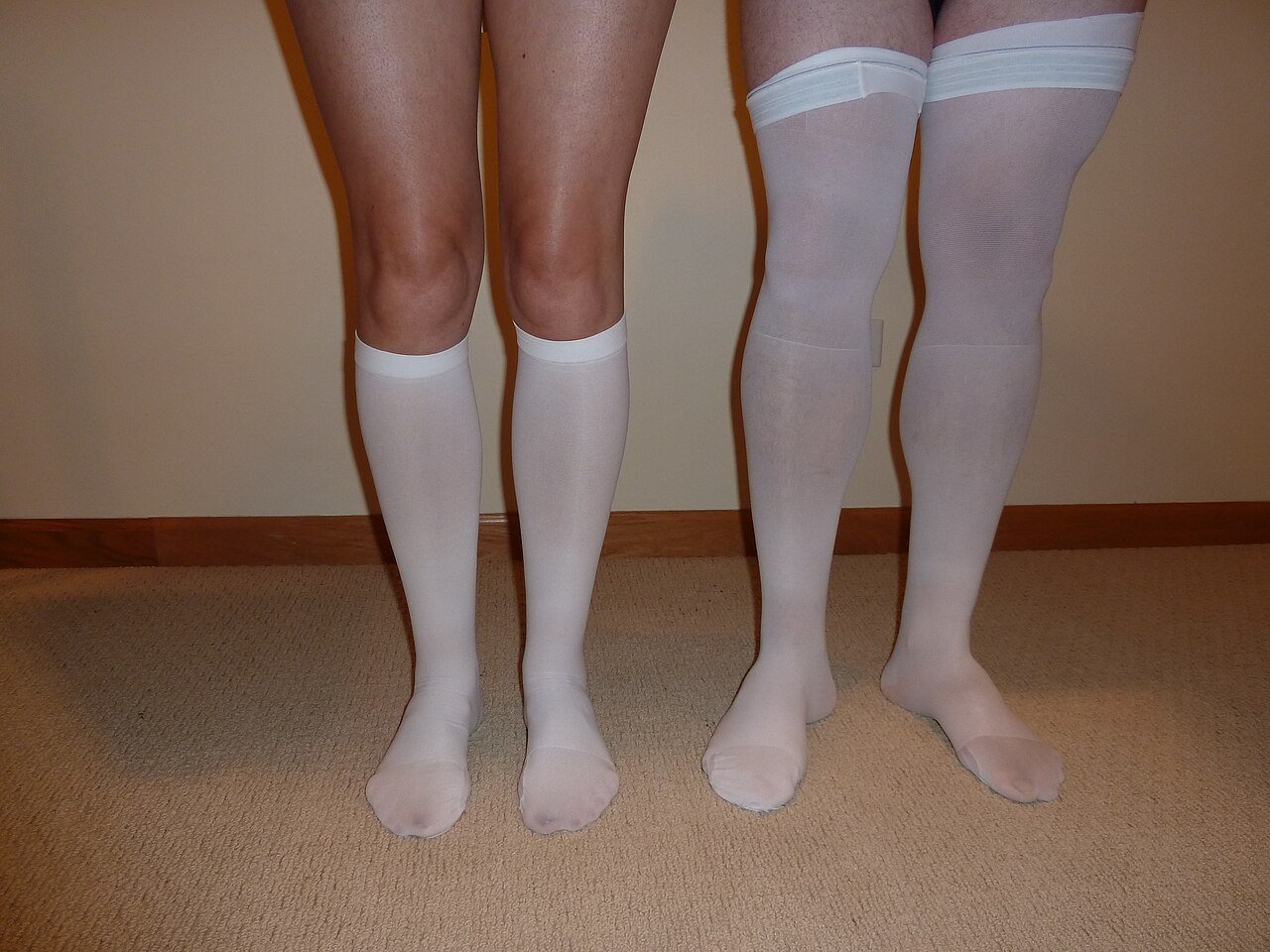
Put them on before you reach the airport, not after swelling has already started. They work best as prevention. Choose knee high stockings unless a doctor has advised thigh high ones, and make sure they fit properly. They should feel snug, not painful, and they should not cut into your skin or leave deep ridges. If you have diabetes, circulation problems, or a history of blood clots, ask your doctor or pharmacist which strength is right for you before buying a pair. Pack them in your hand luggage so they are easy to reach, and wear them for the whole flight and for a few hours after landing.
What to do during the flight to stop swelling before it starts
Prevention beats treatment, and most of the steps that help after landing also help in the air. A little effort during the flight means you arrive with feet that still fit your shoes.
Choose an aisle seat when you can. It makes it far easier to stand up and walk without disturbing your neighbours, and you are more likely to move often when getting up is easy. Get up and walk the aisle every hour or two when the seat belt sign is off. Even a short stroll to the back of the plane and back counts. If you are on an overnight flight and do not want to disturb others, a few minutes of standing near your seat still helps.
Do ankle exercises in your seat every hour. Ankle circles, ankle pumps, and calf contractions take a minute and you can do them without anyone noticing. Avoid sitting with your legs crossed for long stretches, and try not to keep a heavy bag under the seat in front of you where it presses against your shins. Loose, comfortable clothing and shoes that allow a little extra room are worth choosing for travel days. Tight shoes feel even tighter when your feet swell, so many frequent flyers travel in shoes they can loosen easily.
Drink water regularly during the flight. Ask for water each time the crew comes round, and refill your bottle at the airport before boarding. Limit alcohol and coffee, both of which can add to dehydration. Eat lightly rather than having a heavy, salty meal on board. A light meal is easier on your digestion at altitude and gives your body less reason to hold on to fluid.
Wear your compression socks for the full flight if you have them, and put them on before boarding. Keep your feet flat on the floor or on a footrest rather than tucked under you. Small choices like these add up over ten hours in the air, and they are the difference between stepping off the plane feeling normal and stepping off with feet that barely fit your shoes.
How long does swelling last after a flight
For most healthy travellers, mild swelling in both feet and ankles after a flight clears within 24 to 48 hours. You will often notice a clear improvement after a night of sleep with your feet slightly raised, and the puffiness usually fades completely once you are walking around normally again.
After a very long flight, or if you are prone to swelling, it can take a little longer. Some people find their ankles stay slightly puffy for three days or even up to a week, especially after a journey of 14 hours or more. That is still usually normal, as long as the swelling is mild, affects both legs equally, and keeps improving day by day.
Watch the trend rather than the clock. Swelling that is steadily going down is reassuring. Swelling that stays the same after several days, gets worse, or appears in only one leg deserves medical attention. The same applies if the swelling comes with pain, warmth, redness, or a feeling of heaviness that does not ease with walking and elevation. Trust your instincts. If something feels wrong, it is always better to ask a doctor than to wait and hope.
Normal swelling or a warning sign
Most post flight swelling is ordinary and harmless, but the same symptom can occasionally signal something serious. Knowing the difference matters, because the action you take is completely different.
Normal travel swelling affects both feet and both ankles roughly equally. It feels tight or puffy rather than painful. The skin looks normal in colour, it is not hot to the touch, and it improves when you walk or put your feet up. It shows up after a long period of sitting still and fades within a day or two.
A blood clot, known as deep vein thrombosis, is the condition to watch for. It usually affects one leg only. Warning signs include swelling in one calf or ankle but not the other, pain or tenderness in the calf, warmth or redness over one area, and a feeling of heaviness that does not improve with elevation. Flights longer than four hours carry a higher clot risk, and the risk is greater still if you have had a clot before, have recently had surgery, are pregnant, have cancer, or have a known clotting disorder.
Seek same day medical care if you notice one sided swelling with pain, warmth, or redness after a flight. Call emergency services straight away if you develop chest pain, breathlessness, or coughing up blood, as these can signal that a clot has travelled to the lungs. This is rare, but it is a genuine emergency and fast treatment saves lives. Do not try to massage the leg, do not take a hot bath, and do not simply wait to see if it passes.
A short note on honesty: this article is general information, not medical advice. It describes the usual pattern for healthy travellers. If you have a medical condition, take regular medicine, or have had a clot before, talk to your doctor before a long flight and ask what prevention is right for you. That conversation is worth more than any article.
A simple plan for your next long flight
Put everything together and the routine is easy to remember. It has three parts: before, during, and after the flight.
Before you fly, pack compression socks in your hand luggage and put them on before you board. Choose loose clothing and comfortable shoes with room to spare. Fill a water bottle after security. Pack light so you can move through the airport easily. Our guide on how to pack light for a weekend trip without checking a bag shows how to fit a whole trip into one small bag, which also means less standing in queues with heavy luggage. If you are heading to Japan, our guide on how to plan a weekend trip to Kyoto on a budget can help you plan the days after you land.
During the flight, stand up and walk every hour or two. Do ankle circles and ankle pumps in your seat. Drink water steadily, eat lightly, and skip alcohol. Keep your feet flat on the floor and avoid crossing your legs for long periods.
After landing, walk through the terminal instead of taking the moving walkway. Put your feet up for 20 to 30 minutes when you reach your hotel or home. Keep drinking water, eat a light meal, and take a short walk every hour or two for the rest of the day. Repeat the ankle exercises and a second round of elevation before bed.
Follow that plan and most of the swelling never appears. What does appear will fade fast, and you can spend your first day at your destination enjoying it instead of nursing sore feet.
Conclusion
Learning how to reduce swelling in feet after a long flight comes down to understanding one simple fact: your legs need movement to move fluid. Hours of sitting still switch off the calf muscle pump, gravity pulls fluid down, and your feet pay the price. Walking, elevation, ankle exercises, water, and compression socks switch the system back on again.
Most swelling after a flight is mild, affects both feet, and clears within 24 to 48 hours with the steps in this guide. Walk as soon as you land, put your feet up, keep moving your ankles, drink water, and wear compression socks next time. Know the warning signs too. One sided swelling with pain, warmth, or redness needs same day medical care, not home remedies.
Pack the socks, drink the water, and take the walk. Your feet will thank you when you step off the plane and your shoes still fit.
Frequently asked questions
How long do swollen feet last after a flight?
Most mild swelling clears within 24 to 48 hours once you are walking around normally and putting your feet up. After a very long flight it can take up to a few days. See a doctor if it has not improved after several days or if it keeps getting worse.
Is it normal for feet to swell after a long flight?
Yes. Studies report swelling in around 97 percent of passengers on flights longer than seven hours. It is usually harmless, affects both feet equally, and fades with walking and elevation.
Do compression socks help with swollen feet after flying?
Yes. Graduated compression stockings rated 15 to 20 mmHg are the standard recommendation for travellers. Put them on before boarding, wear them for the whole flight, and keep them on for a few hours after landing.
Should I worry if only one foot is swollen after a flight?
Yes, take it seriously. Swelling in one leg only, especially with pain, warmth, or redness, can signal a blood clot and needs same day medical care. Do not massage the leg or wait to see if it passes.
What is the fastest way to reduce swelling in feet after a long flight?
Walk for 10 to 15 minutes as soon as you land, then lie down with your feet raised above heart level for 20 to 30 minutes. Repeat the walking and elevation through the day, drink water, and do ankle circles and ankle pumps every hour.