

Dan is a self employed electrician in Manchester. He drives to six jobs most weeks, from a boiler repair in Salford to a full rewire in Stockport. At the end of every job he tosses the fuel receipt into the glovebox and tells himself he will sort the miles out later. Later never comes. When January arrives and his Self Assessment is due, he sits at the kitchen table with a pile of faded receipts and tries to rebuild a whole year of driving from memory. He guesses low, because guessing high feels risky, and he claims far less than he actually drove. That guess costs him around £800 in tax relief he was entitled to. Dan is not careless. He is busy. And his story is the story of thousands of self employed people across the UK who lose real money every year for one simple reason: nobody showed them how to keep track of business mileage UK drivers can actually stick to.
This guide fixes that. You will learn what counts as business mileage, what HMRC expects to see in your records, the three systems that actually work, and a daily habit so small it survives even your busiest week. By the end you will have a log you can trust and a claim you can defend.
What Counts as Business Mileage in the UK
Before you log a single mile, you need to know which journeys count. HMRC draws a clear line, and getting it wrong is the most common mistake in mileage claims.
Business mileage is travel you make wholly and exclusively for your business. That includes driving to a client, travelling between job sites, visiting a supplier to collect materials, going to a training course, and driving to a temporary workplace where you do not normally work.
What does not count is just as important. Your daily commute from home to your regular workplace is not business mileage. If you have an office, a workshop, or a salon where you work most days, the drive from your house to that place is private travel. The same applies to trips to the shops for personal reasons, the school run, and any journey that mixes business with a personal errand unless you can split the miles fairly.
There is one useful exception. If your home is your main place of work, for example you are a tradesperson who works from a home office and travels out to clients, then trips from home to clients usually do count. The test is whether the journey is to a temporary place of work rather than your regular base. When in doubt, record the purpose of every trip. A short note written on the day is worth far more than a confident memory twelve months later.
HMRC Mileage Rates for 2026/27
HMRC sets approved mileage rates that tell you how much you can claim per business mile without paying tax on it. These are called approved mileage allowance payments, and for the 2026/27 tax year the rates are:
- Cars and vans: 55p per mile for the first 10,000 business miles in the tax year, then 25p per mile after that
- Motorcycles: 24p per mile
- Bicycles: 20p per mile
Note the change. Before 6 April 2026 the car and van rate for the first 10,000 miles was 45p. From 6 April 2026 it rises to 55p. If you are working out a claim that spans the change, split your miles at that date and apply the right rate to each part.
The rate is designed to cover the full cost of running the vehicle for business: fuel, insurance, servicing, repairs, and wear and tear. That is why you cannot claim the mileage rate and also claim the same fuel and repair costs separately. You choose one method or the other for each vehicle. For most self employed people, the mileage rate is simpler and often worth more than adding up actual costs.
What HMRC Wants to See in Your Mileage Log
HMRC does not ask for a specific form, but it does expect your records to be complete, accurate, and kept for long enough. If HMRC ever asks about your claim, your log needs to answer four questions for every trip: when, where, why, and how far.
For each business journey, record the date, the starting point, the destination, the purpose of the trip, and the number of miles driven. A running total at the end of each week or month makes the year end claim much easier. Keep your log for at least 5 years after the 31 January deadline for the tax year it relates to. That means records for the 2025/26 tax year, filed by 31 January 2027, should be kept until at least 31 January 2032.
Paper, spreadsheet, or app, the format does not matter. What matters is that the record was made at the time, or close to it, and that it is consistent. A log rebuilt from memory in January looks exactly like what it is, and HMRC knows it. A log with gaps, round numbers on every trip, and no purposes recorded invites questions you do not want to answer. If you want a wider system for keeping all of your tax paperwork in order, our guide to creating a digital filing system for small business shows how to store logs, receipts, and invoices together so nothing goes missing.
How to Keep Track of Business Mileage UK: Three Systems That Work
There are three proven systems. None of them is perfect for everyone, so pick the one that fits how you work and then stick to it. Switching systems every month is worse than using a simple one badly.
Option 1: The Paper Log
The paper log is a notebook kept in the glovebox, or a printed mileage sheet clipped to the sun visor. At the end of each trip you write the date, where you went, why, and the miles from the trip meter or odometer. That is the whole system.

Its strength is simplicity. It needs no battery, no signal, and no subscription. Its weakness is that paper gets lost, coffee gets spilled, and handwriting fades. A notebook that lives in the car for a year will look rough by January, and adding up twelve months of handwritten miles by hand is slow work. The paper log suits people who drive for business only a few times a week and who like a physical record they can see.
Make it work by keeping the notebook in the same place every day, writing the entry before you walk away from the car, and adding up the miles every Friday. Never let a full month pass without totalling the log. A month of unadded trips is where most paper logs fall apart.
Option 2: The Spreadsheet Log
A spreadsheet is the middle ground, and for many self employed people it is the best balance of control and cost. You set up a simple sheet with columns for date, start, destination, purpose, miles, and a running total. A formula multiplies your miles by the HMRC rate and shows the value of your claim as it grows.

Its strength is that the maths takes care of itself and you can search, sort, and back up the file. You can keep it on your phone, update it at the kitchen table each evening, and hand a clean printout to your accountant. Its weakness is that it still depends on you remembering to enter each trip. A spreadsheet with three weeks of blank rows is no better than a lost notebook.
Make it work by keeping the file somewhere you open every day, like Google Sheets on your phone, and by entering trips the same evening rather than saving them up. Set a weekly reminder on your phone for Sunday evening. Ten minutes a week keeps the sheet honest. If you already track other costs this way, a spreadsheet log fits naturally alongside them, and our guide to tracking business expenses as a freelancer in the UK shows how mileage sits next to your other claims.
Option 3: A Mileage Tracker App
A mileage tracker app uses your phone GPS to record trips automatically. You drive, the app logs the route and the miles, and at the end of the day or week you swipe each trip as business or personal and add a purpose. Some apps generate a report that is ready to hand to your accountant.
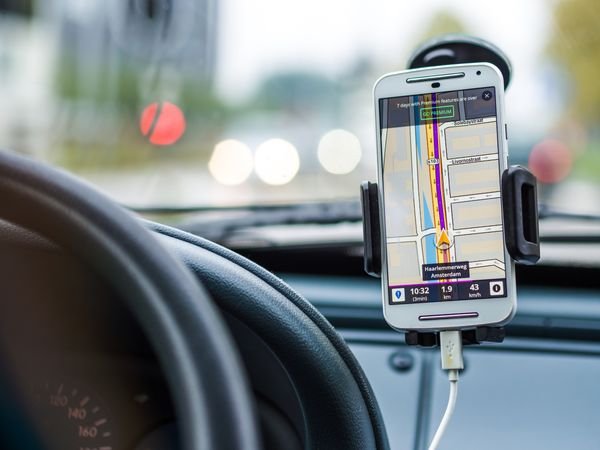
Its strength is that it removes the remembering. Trips are captured even on days when you are rushed, and the route map gives you proof that a spreadsheet cannot. Its weakness is cost, since the best apps charge a monthly fee, and battery drain on long driving days. You also need to review trips regularly, because an app will log every drive, including the school run and the trip to the supermarket, and those personal miles must be marked as personal.
Make it work by reviewing trips at least once a week, before the list grows too long to remember. Check that the app lets you export your data, so your records are not trapped inside one company. Try a free version for a month before paying, and compare the miles it records with your odometer to make sure it is accurate.
Here is how the three systems compare at a glance. Paper costs nothing and takes about five minutes a week, but it offers the weakest proof and is easy to lose. A spreadsheet also costs nothing and takes about ten minutes a week, with stronger proof and a backup if you store it online. An app takes about five minutes a week once it is set up, offers the strongest proof, but costs a monthly fee and needs regular review. Most people who try all three end up with the spreadsheet or the app. The paper log wins only for very light drivers.
The Two Minute Daily Habit That Makes It Stick
The system matters less than the habit. Every logging method fails in the same way: a busy week passes, nothing is recorded, and the gap never gets filled. The fix is a habit so small it feels silly to skip.
When you switch the engine off at the end of a business trip, take two minutes before you get out of the car. Write the date, destination, purpose, and miles in your notebook, or open your app and classify the trip. Do it while the journey is still fresh, not tonight, not tomorrow. Tonight becomes next week, and next week becomes January.
Then add one weekly check. Every Friday, or Sunday evening if that suits you better, spend ten minutes adding up the week, checking for missing trips, and making sure the log matches your diary. Your calendar is your backup memory. If your diary says you visited a client in Leeds on Tuesday and your log has no Leeds trip, you have caught the gap while you can still fix it. This Friday check is the single habit that separates people who claim every mile from people who guess.
Common Mistakes That Cost You Money
Most mileage claims go wrong in the same few ways. Avoid these and your claim will be stronger than most.
- Claiming the commute. Driving from home to your regular workplace is private travel, not business mileage, even if you sometimes work from the van.
- Guessing the miles. Round numbers on every trip, like 20 miles again and again, look invented. Use the trip meter or a route planner and record the real figure.
- Forgetting the purpose. A list of places with no reason for the trip proves nothing. Write one short line: client meeting, supplier collection, site survey.
- Mixing personal trips in. If you claim every mile you drive, including holidays and school runs, the whole claim looks unreliable. Keep personal miles out.
- Losing the log. A notebook left in a sold car or a spreadsheet on a broken laptop with no backup means a year of miles gone. Back up your records.
- Claiming fuel as well as mileage. The mileage rate already covers fuel. Claiming both is double counting and HMRC will disallow it.
Sole Trader or Limited Company: The Rules Are Not the Same
Your business structure changes what you can claim, so check which rules apply to you before you build your log.
If you are a sole trader or in a partnership, you can use simplified expenses. That means you claim the HMRC mileage rate for your business miles and you do not need to track every fuel receipt and repair bill for that vehicle. It is simple, and for most small businesses it is the best choice.
If you run a limited company, simplified expenses are not available to you. The company owns the tax position, not you personally, and the rules work differently. If you use your own car for company business, the company can pay you the approved mileage rate tax free, but the company must keep its own records. If the company owns the car, that is a company car, and benefit in kind rules apply instead. Company car rules are more complex and the tax cost can be high, so talk to your accountant before you assume the mileage rate applies.
Freelancers and sole traders should also remember that mileage is only one of the costs you can claim. Fuel, tools, phone, and home office costs all have their own rules, and getting the full picture matters. Our guide to tracking business expenses as a freelancer in the UK walks through the rest of the claim so your mileage log sits inside a complete system.
Turning Your Log Into a Tax Claim
At tax time your log becomes a number on your Self Assessment return. Add up your total business miles for the year, split them at 10,000 miles, and apply the rates. The first 10,000 miles at 55p and anything above that at 25p gives you your total mileage claim. Enter that figure as a business expense on your return.
Keep the log itself safe. You do not send it to HMRC with your return, but you must be able to produce it if HMRC asks. That is why the 5 year rule matters. Store a copy away from the car, ideally a digital copy, so a lost notebook does not wipe out a year of claims. Keep fuel receipts too, not because you claim them separately, but because they back up your log if your miles are ever questioned. Our guide to keeping business receipts for tax in the UK explains which receipts to keep and for how long.
If an accountant files your return, hand them the log early, not in the last week of January. A clean log in November gets you a better result than a shoebox of receipts in January, because there is still time to fix gaps and check the figures.
A Worked Example: What 8,000 Business Miles Is Worth
Numbers make the point better than advice. Imagine you are a self employed plumber who drives 8,000 business miles in the 2026/27 tax year. At the HMRC rate of 55p per mile, your claim is worth £4,400. That is £4,400 of business expense that reduces your taxable profit.
Now imagine you only log 6,500 of those miles because the rest were scribbled on receipts that got lost, or trips you forgot to write down. Your claim drops to £3,575. You have lost £825 of allowable expense, which at basic rate tax is roughly £165 of tax you pay that you did not need to pay. And that is a modest example. A courier or a care worker driving 15,000 business miles could lose twice as much from the same habit.
The point is not the exact figure. It is that every unlogged trip is money left on the table, and the cost of logging it is two minutes at the end of the drive. Dan the electrician lost around £800 in a year. Your number will be different, but the maths is the same.
Conclusion
Learning how to keep track of business mileage UK style is not complicated, but it does need a decision and a habit. Know what counts and what does not, pick one system, paper, spreadsheet, or app, and log every trip before you get out of the car. Add a ten minute weekly check to catch the trips you missed, keep your records for at least 5 years, and use the HMRC rates for your tax year so your claim is right.
Start today, not in January. Open a notebook, a spreadsheet, or an app right now and log your next trip. In twelve months you will have a complete record, a claim you can defend, and money in your pocket that would otherwise have stayed with HMRC. That is what a simple log is worth.
Frequently Asked Questions
How do I keep track of business mileage for HMRC?
Record the date, start point, destination, purpose, and miles for every business trip, either in a notebook, a spreadsheet, or a mileage tracker app. Keep the record up to date and store it for at least 5 years after the 31 January filing deadline.
What is the HMRC mileage rate for 2026?
From 6 April 2026 the rate for cars and vans is 55p per mile for the first 10,000 business miles in the tax year, then 25p per mile. Motorcycles are 24p per mile and bicycles are 20p per mile.
Can I claim mileage if I am self employed?
Yes. Sole traders and partners can claim the HMRC approved mileage rate for business travel using simplified expenses. Limited companies cannot use simplified expenses, and company car rules apply instead.
Is driving from home to work business mileage?
No. Travel from home to your regular workplace is a private commute and cannot be claimed. Trips from home to clients or temporary workplaces usually can be claimed, if your home is your main place of work.
How long do I need to keep mileage records?
Keep mileage records for at least 5 years after the 31 January Self Assessment deadline for the tax year they relate to. Keep a backup copy away from your vehicle so a lost notebook does not wipe out a year of claims.