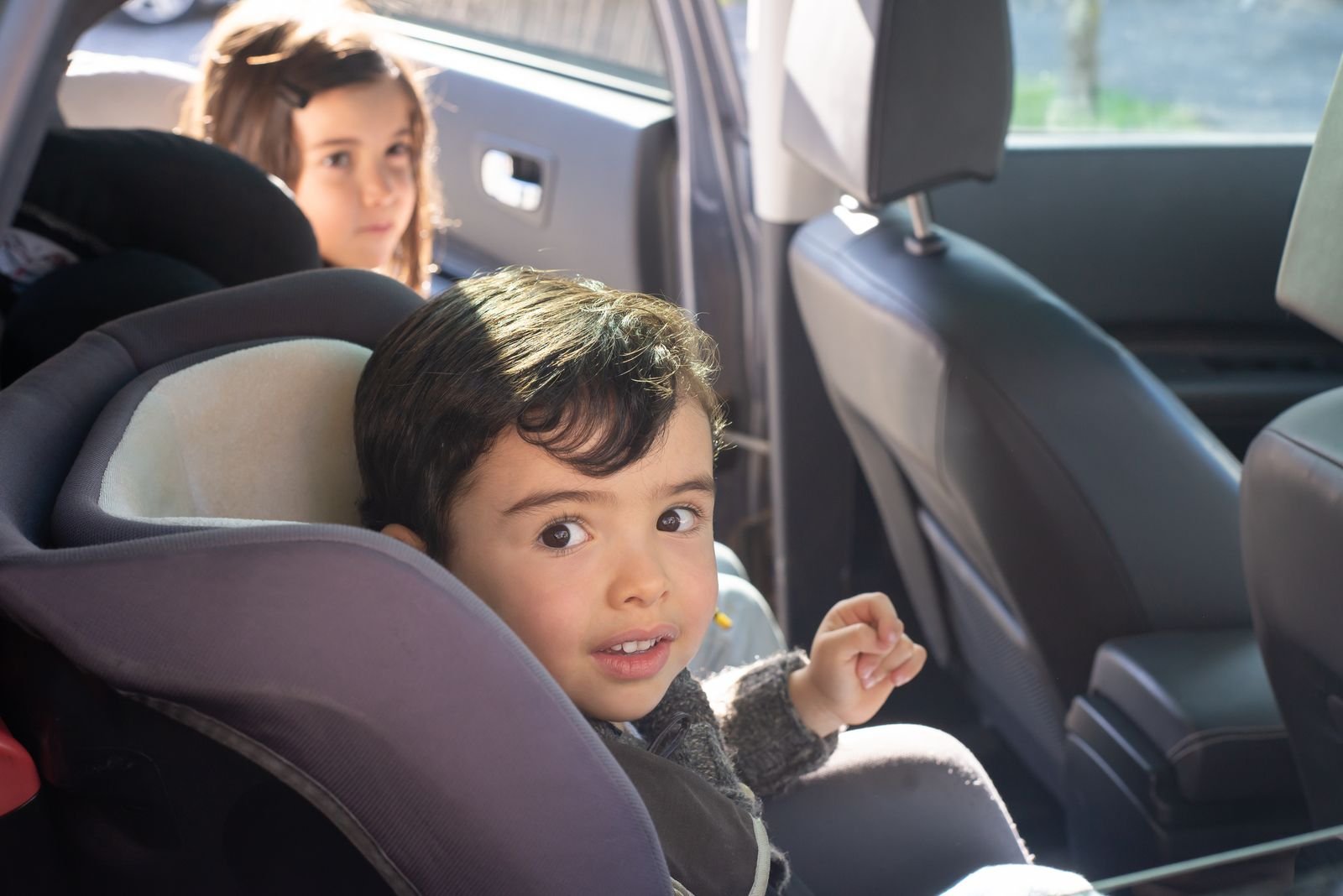
The first time I flew across the country with my four year old, I made every mistake a parent can make on a plane. I packed a huge bag full of toys that did not fit under the seat. I brought a craft kit with tiny pieces that rolled into the aisle before we even pushed back from the gate. I handed over a tablet during boarding and then spent the next five hours watching the battery drain while my daughter asked, in a voice the whole cabin could hear, why the screen had gone dark. By the time we landed in Boston, I was tired, she was bored, and I had promised myself I would never fly that way again.
The next trip was different. I packed one small bag the night before, I chose five quiet activities that fit on a tray table, and I planned the whole flight in short blocks of time instead of hoping one toy would last for hours. The flight was calm. My daughter colored, played cards, told stories, and watched the clouds for a long stretch near the end. Nobody around us looked annoyed. That is the whole secret to learning how to keep kids entertained on a long flight without screens. It is not about buying the perfect toy. It is about a small plan, a small bag, and a steady rotation of simple activities.
This guide gives you that plan. You will learn what to pack, which activities work best on a plane, how to time them by age, and what to do when the flight runs long or the layover stretches out. Everything here is quiet, mess free, and sized for a tray table. No tablet required.
How to Keep Kids Entertained on a Long Flight Without Screens Starts Before You Board
The calmest flights start the night before. Sit with your child and talk about the trip in simple terms. Tell them how long the flight will be, what the plane will feel like, and what will happen at takeoff. Children handle new things much better when they know what is coming. Show them a photo of an airplane window and a tray table so the cabin does not feel strange on the morning of the trip.
Let your child help pack the activity bag. When a child chooses two or three items herself, she is far more likely to play with them on the plane. Put the choices in her hands, but keep the final say yourself. A coloring book she picked is worth more than a toy you guessed at. A small notebook she decorated at home becomes a treasure on the plane.
Practice the quiet rule at home the day before. Sit at the kitchen table and play one of the games you plan to use on the plane. A card game played once at home is easy to start in a cramped seat. A sticker book tried once at the table will not surprise you with pieces that fall everywhere. This short practice run also shows you which activities your child actually enjoys, and which ones only looked good in the store.
Charge nothing and download nothing for this plan, because the whole point is a flight without screens. That also means you should tell your child the plan in advance. Say that this trip will be a no tablet trip, and that you have packed fun things instead. Children accept a clear rule much better than a surprise. If a tablet usually appears the moment you sit down, the first ten minutes without one will be the hardest part of the whole flight.
Pack a Small Activity Bag That Fits Under the Seat
One small bag beats a big bag every time on a plane. You have one seat, one tray table, and one small space under the seat in front of you. A backpack that fits in that space keeps everything within reach and keeps the aisle clear. Pack it the night before so the morning stays calm.
Use clear zip top bags inside the backpack to separate activities. One bag holds coloring supplies, one holds card games, and one holds small surprises. When your child finishes one activity, you can put the whole bag away and pull out the next one. This keeps the seat area tidy and makes the rotation feel like a new event every time.
Here is a packing list that works for most children between the ages of two and ten. Adjust the items to your child, but keep the total small. If the bag feels heavy on your shoulder at home, it is too full for a plane.
- A small coloring book and a pack of colored pencils, not markers, because pencils do not dry out and do not mark the seat
- A reusable sticker book with stickers that peel off and stick again
- A small deck of cards for Go Fish, matching games, or simple sorting by color
- A travel size magnetic game, such as tic tac toe or checkers, where the pieces stay on the board
- A thin notebook and a pen for drawing, writing, and travel games
- Two small surprises wrapped in paper, such as a tiny puzzle or a new pack of stickers, saved for the hardest part of the flight
- A favorite comfort toy, small enough to fit in the bag, such as a soft teddy bear
- Snacks in small bags, plus an empty water bottle to fill after security
Leave the bulky toys at home. A big toy takes up the space of three quiet activities and usually ends up on the floor. Leave anything with sound at home too. A toy that beeps or sings will annoy the passengers around you and will be hard to turn off in a hurry. Leave anything with more than twenty small pieces at home as well. Pieces that roll under a seat are gone for the rest of the flight.
If you want to pack light for a weekend trip as a family, the same rule applies to your own bag. A light bag means less stress at the gate and more room for the things your child actually needs. The less you carry, the easier the whole trip feels.
Quiet Activities That Work on a Tray Table
The tray table is your child activity center for the flight. It is about the size of a school desk, and every good plane activity should fit on it with room to spare. Test each activity at home on a surface of the same size. If it spills over the edges at the kitchen table, it will spill over the edges at thirty thousand feet.
Coloring is the most reliable plane activity ever invented. A coloring book and colored pencils need no batteries, make no noise, and keep a child focused for twenty minutes or more. Choose a book with large pictures and thick lines for younger children, and a book with detailed pictures for older children. Colored pencils are better than crayons on a plane because they do not melt in a warm cabin and do not roll as easily. Put a rubber band around the pencil pack so it stays closed in the bag.
Sticker books are the second best tray table activity. Reusable stickers let a child build a scene, change her mind, and build it again. A sticker book with an airplane or travel theme feels special on a flight. Avoid stickers that leave marks on the seat or the tray table. Test one sticker on a table at home first. If it peels off cleanly, it is safe for the plane.
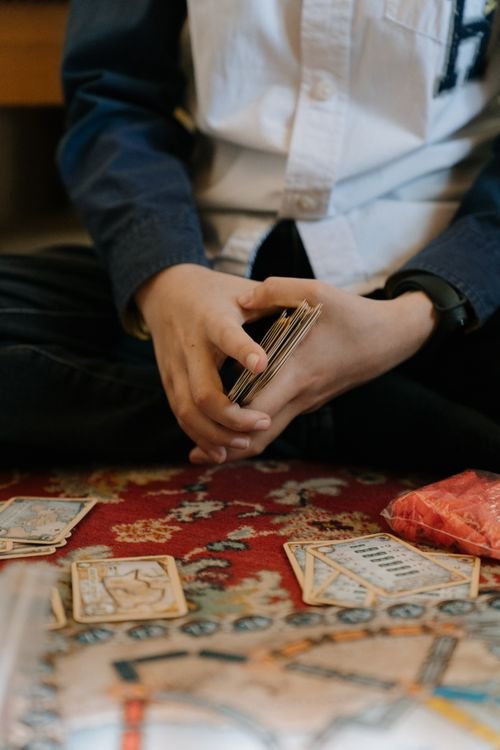
Card games work well once your child is four or older. Go Fish is easy to learn and plays well in a small space. A simple matching game works for younger children. Sorting cards by color or number is a quiet game for a toddler who cannot play a full game yet. Keep the deck small and keep a rubber band around it when the game is done. Cards that fall on the floor are hard to find under a seat.
Magnetic travel games solve the biggest problem of playing on a plane. The pieces stay on the board when the plane shakes. A magnetic tic tac toe set or a magnetic checkers set fits in a pocket and plays for a long time. A small magnetic puzzle works the same way. These games are worth their place in the bag because they never scatter.
Drawing is a free activity that needs only a notebook and a pen. Ask your child to draw the view from the window, or to draw the place you are flying to. Older children can draw a comic strip about the trip. A travel journal works well too. Your child can write or draw one thing about each hour of the flight, and by landing she will have a small book about her own trip.
Games You Can Play Together Without Any Supplies
Some of the best plane games need no supplies at all. These games are perfect for the moments when the tray table is up for takeoff or landing, or when you need a change of pace between quiet activities. They also work when your child is tired of coloring and needs your attention for a while.
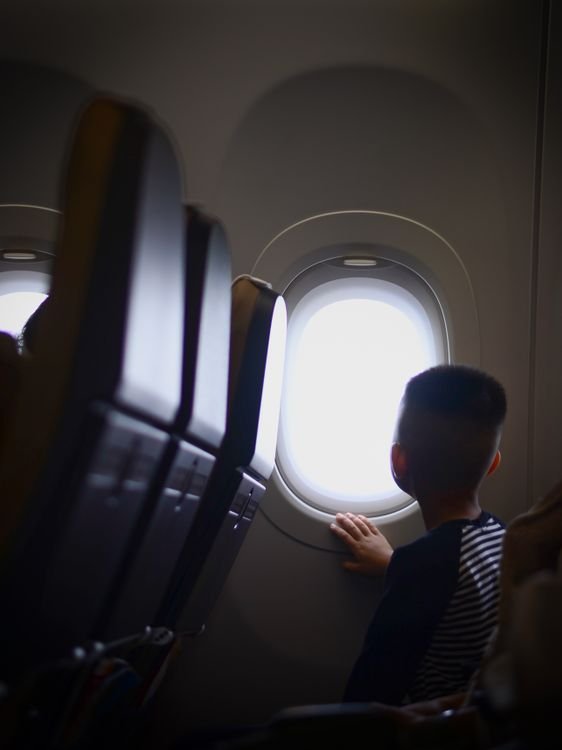
I Spy is the classic plane game for a reason. Look around the cabin and pick something your child can see, then give a clue about its color. Younger children love the simple version with colors only. Older children enjoy the harder version with shapes and positions. Keep the game short and take turns so your child gets to choose too.
Twenty Questions is a good game for children aged six and older. Think of an animal, a food, or a place, and let your child ask yes or no questions to guess it. The game builds thinking skills and it fills time surprisingly fast. Start with easy answers so your child wins the first round and wants to play again.
Storytelling is the most flexible game on a plane. Start a story with one sentence and let your child add the next sentence. Take turns until the story ends. A story about a bear who misses his flight or a cat who hides in a suitcase can keep a child laughing for a long time. You can also tell a story about a trip you took as a child. Children love hearing about their parents as kids.
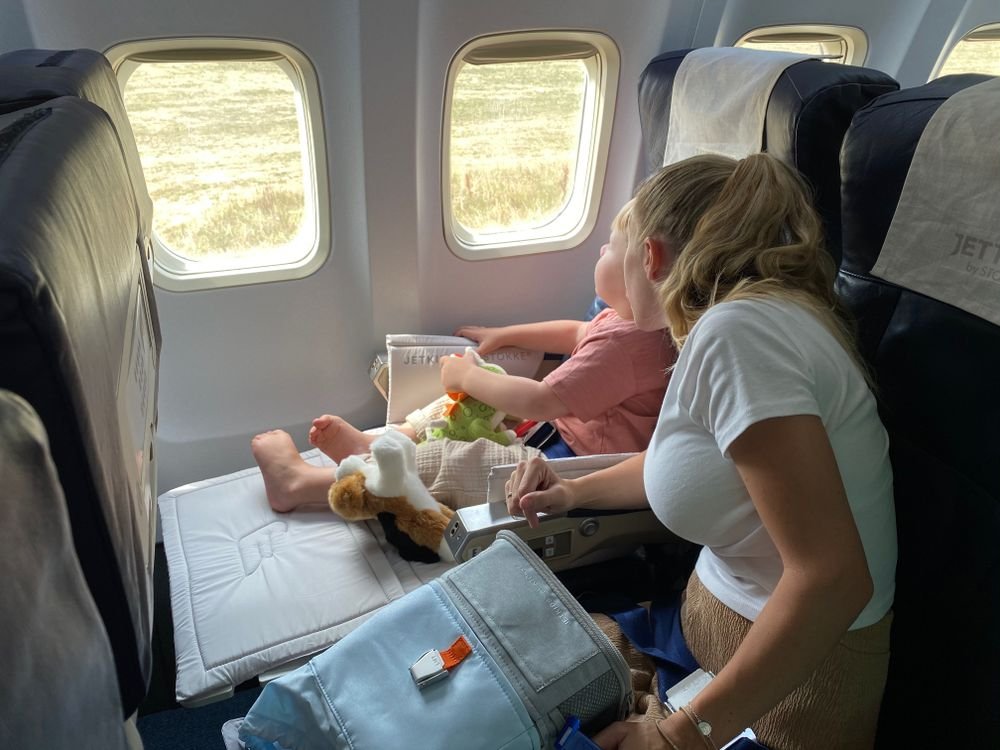
Counting games work well for younger children. Count the rows of seats, count the windows, or count the clouds you can see. A scavenger hunt is a counting game with a list. Write a short list before the flight: find a red bag, find someone wearing a hat, find a plane outside the window. Your child checks each item off the list as she finds it. The game keeps her looking around and noticing the world instead of asking when the flight will end.
Singing quietly together is a good backup when your child is restless. Choose soft songs and keep your voices low. A lullaby or a favorite song from home can calm a tired child near the end of a long flight. Save singing for the moments when the cabin is relaxed, not during the quiet stretch when other passengers are sleeping.
How to Rotate Activities So Nothing Gets Boring
Rotation is the real skill behind a screen free flight. No single activity holds a child attention for five hours. A new activity every twenty to thirty minutes keeps the flight feeling fresh. The change itself is the entertainment. When one activity ends, the next one feels like a gift.
Bring four to six small activities and introduce one at a time. Do not put everything on the tray table at once. A tray table covered in toys feels messy and your child will not know where to start. Put one activity out, play with it until it runs its course, then pack it away completely before you bring out the next one. Out of sight really does mean out of mind for a young child.
Match the timing to your child age. Toddlers between two and four need a new activity every fifteen to twenty minutes. School age children between five and seven can focus for twenty to thirty minutes. Children between eight and ten can often focus for forty minutes on an activity they enjoy. Watch your own child rather than the clock. When she starts fidgeting or looking around, it is time to switch.
Save one wrapped surprise for the hardest part of the flight. On most long flights, the hardest stretch is the middle, around hour three, when the excitement of takeoff has faded and landing still feels far away. That is the moment to pull out a small new toy, a new sticker pack, or a tiny puzzle. A surprise that appears at the right moment buys you more calm than any activity you started with.
Build in breaks between activities. A walk to the back of the plane, a look out the window, or a snack break all count as activities. Children need to move, and a short walk down the aisle resets their patience. Let your child stand up, stretch, and look around before you start the next quiet game.
Snacks, Comfort Items, and the Takeoff and Landing Plan
Snacks are an activity, not just food, on a long flight. Pack snacks that take time to eat and do not make a mess. Crackers, dried fruit, cheese cubes, and small sandwiches all work well. Avoid anything sticky, crumbly, or strong smelling. A snack that needs to be opened slowly, one small bag at a time, can fill ten quiet minutes.
Time the snacks with the flight. Offer a snack during takeoff, when your child needs something to chew or swallow. Offer another snack in the middle of the flight, when energy dips. Offer a final snack before landing, when patience runs low. Small portions work better than one big bag. A child who finishes a snack in two minutes will ask for the next one right away.
Takeoff and landing deserve their own plan. The change in air pressure can hurt small ears, and a child who is scared or in pain will not play with any activity. Give your child something to chew or swallow during takeoff and landing. A snack, a drink of water, or a lollipop all help. A baby can nurse or take a bottle. Tell your child before takeoff that her ears might feel funny and that it will pass quickly. A child who expects the feeling handles it much better than a child who is surprised by it.
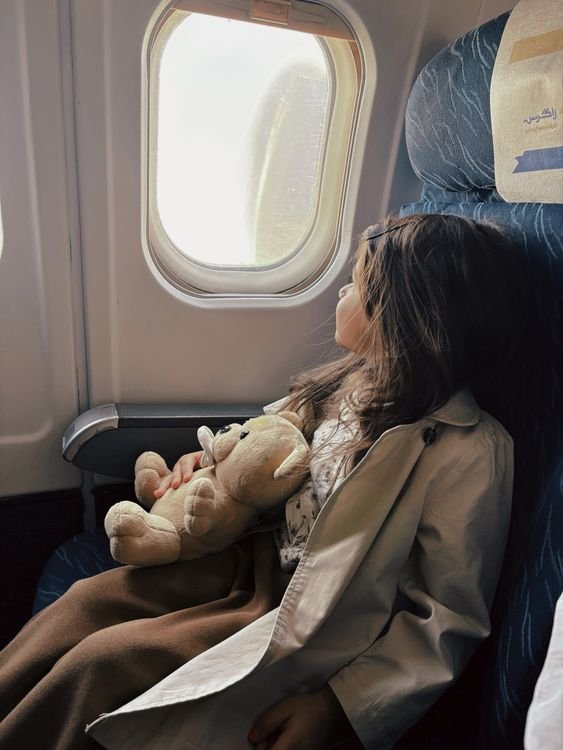
A comfort item is worth more than any toy on a long flight. A favorite teddy bear, a small blanket, or a soft toy your child sleeps with at home can calm her when she is tired or overwhelmed. Let her hold it during takeoff and landing, and let her cuddle it when she naps. Do not pack it at the bottom of the bag where it is hard to reach. Keep it where your child can grab it herself.
If your child falls asleep, let her sleep. A nap on a plane is a gift. Do not wake her for an activity. Put a light blanket over her, lower the window shade a little, and enjoy the quiet. A child who naps for an hour lands in a much better mood than a child who was kept awake for the sake of the schedule.
Parents need to look after themselves too on a long flight. Stretch your legs when your child walks the aisle, drink water, and eat something yourself. If your flight crosses time zones, a simple plan to beat jet lag can help the whole family recover faster once you land. A tired parent and a tired child make every small problem feel bigger than it is.
What to Do on a Long Layover
A long layover is a different problem from a long flight, and it needs a different plan. On the plane your child must sit still and stay quiet. In the airport she can move, talk, and make noise. Use the layover for movement before the next flight traps her in a seat again.
Find the longest empty hallway in the terminal and walk it together. Play follow the leader, count the gates, or race to a distant window. A ten minute walk burns more energy than an hour of sitting, and a child who has moved will sit more calmly on the next flight. Walking helps parents too, and it is one simple way to reduce swelling in feet after a long flight. Look for a play area if the airport has one. Many large US airports now have small play spaces near the family gates.
Run a scavenger hunt in the terminal. Make a quick list on a scrap of paper: find a plane with a red tail, spot someone wearing a baseball cap, count five rolling suitcases. The hunt gives your child a mission and turns a boring wait into a game. It also keeps her walking and looking instead of sitting at the gate asking when the plane will board.
Eat a real meal during a long layover. Airport food costs more than food at home, but a sit down meal resets everyone mood. A child who has eaten well and moved around will handle the next flight far better than a child who has been sitting at a gate for two hours. Use the meal as a break from the activity bag. The bag stays packed until the next flight.
Do not start a new activity at the gate that cannot be packed up in a minute. Boarding can be called with little warning, and a game spread across three seats is hard to gather in a hurry. Keep the gate time simple: walk, eat, and watch the planes. Save the activities for the air.
What to Leave at Home
A good packing list is only half the job. Knowing what to leave behind matters just as much. The wrong items cause more trouble than they are worth, and a plane is the worst place to discover that.
Leave messy crafts at home. Play dough, paint, glue, and glitter do not belong on a plane. They spread to the seat, the tray table, and the clothes of the passenger next to you. A craft that needs a table at home will not work on a tray table at thirty thousand feet.
Leave noisy toys at home. Anything that beeps, sings, or talks will disturb the cabin. Even a toy with a volume control is risky, because a child can press the button at the wrong moment. If a toy makes sound at home, leave it at home.
Leave tiny pieces at home. Small building blocks, tiny dolls, and games with pieces smaller than a coin will end up on the floor. Once a piece rolls under a seat, it is gone. A game with a few large pieces is always better than a game with fifty small ones.
Leave anything your child has never played with before. A new toy that looks fun in the store can be confusing or boring on a plane, and you will have no backup plan in the air. Test every activity at home first. If your child does not enjoy it at the kitchen table, she will not enjoy it in a cramped seat.
The Simple Plan in Short
Learning how to keep kids entertained on a long flight without screens comes down to three things. Pack a small bag the night before, with four to six quiet activities that fit on a tray table. Rotate the activities every twenty to thirty minutes, and save one surprise for the hardest part of the flight. Use the layover for movement, and let your child sleep when she is tired. That is the whole plan, and it works on a two hour flight just as well as on a five hour flight.
The story at the start of this guide is a common one. Most parents learn the hard way that a tablet and a big bag of toys do not make a calm flight. The parents who fly calmly are not lucky. They are prepared. They pack light, they plan the time in short blocks, and they play with their children instead of hoping a screen will do the job.
Your next flight can be the calm one. Pack the bag tonight, practice one game at the kitchen table, and tell your child the plan before you leave for the airport. When the plane lifts off, you will be glad you did. And if your child asks for the tablet, you will have something better to offer: a new sticker book, a card game, and your full attention for the next few hours.
Frequently Asked Questions
What can kids do on a plane without a screen?
Coloring books, reusable sticker books, card games, magnetic travel games, drawing in a notebook, storytelling, I Spy, and Twenty Questions all work well without a screen. The best activities are quiet, fit on a tray table, and have no small pieces that can roll away.
How do I keep a toddler busy on a five hour flight?
Pack four to six small activities and rotate them every fifteen to twenty minutes. Toddlers need frequent changes. Sticker books, simple coloring, snacks, a comfort toy, and short walks down the aisle work best. Save one wrapped surprise for the middle of the flight when patience runs low.
What should I pack in a kids flight activity bag?
Pack a small backpack with a coloring book and colored pencils, a reusable sticker book, a small deck of cards, a magnetic travel game, a thin notebook, two small wrapped surprises, a favorite comfort toy, and snacks in small bags. Everything should fit under the seat in front of you.
How often should I switch activities on a plane?
Switch every fifteen to twenty minutes for toddlers, every twenty to thirty minutes for children aged five to seven, and every forty minutes for children aged eight to ten. Watch your child rather than the clock. When she starts fidgeting, it is time for a new activity or a short walk.
Are sticker books allowed on planes?
Yes, sticker books are allowed on planes in the US and on most international flights. Choose reusable stickers that peel off cleanly and do not leave marks on the seat or tray table. Test one sticker on a table at home first. Avoid stickers with glitter or strong glue.