If you have spent any time on social media lately, you have probably seen someone sipping a warm, slightly jiggly drink before dinner and calling it their secret weapon for weight loss. That drink is almost always some version of a gelatin weight loss recipe, and it has quickly become one of the most talked about pre meal rituals in the wellness world.
But here is the thing most videos leave out: the ratios matter, the timing matters, and the type of gelatin you use matters. Get any of these wrong and you end up with a lumpy, unpleasant drink that does very little for you. Get them right and you have a genuinely useful, low cost habit that can support a calorie deficit.
This guide walks through the exact measurements, several tested variations, the honest science behind why this works, and who should think twice before trying it.
What Is the Gelatin Weight Loss Recipe
At its core, a gelatin weight loss recipe is a simple mixture of unflavored gelatin and a liquid, taken about fifteen to thirty minutes before a meal. Some people drink it warm before it sets. Others let it chill into soft cubes and eat a spoonful as a light snack.
The goal is straightforward. Gelatin is almost pure protein, and protein taken before eating tends to increase feelings of fullness. That fullness can translate into eating a little less at the meal that follows, which over time supports a calorie deficit.
It is not a magic potion, and it will not melt fat on its own. Think of it more like a small, inexpensive nudge that makes portion control feel a little easier.
Why Gelatin Became a Weight Loss Trend
Gelatin’s sudden popularity is not really about gelatin itself. It sits at the intersection of two much bigger trends that were already gaining steam: high protein eating and low cost, do it yourself wellness hacks.
Collagen supplements had already built a reputation for supporting skin, joints, and gut health. Since gelatin is simply cooked collagen, creators realized it delivers a very similar amino acid profile for a fraction of the price. A tub of plain gelatin costs a few dollars and lasts for weeks, while collagen powders can run considerably more per serving.
There is also a psychological piece worth mentioning. A short, visually satisfying ritual, like watching gelatin bloom and dissolve, feels productive in a way that simply eating smaller portions does not. That sense of doing something tangible is part of why the trend spread so quickly.
The Base Gelatin Weight Loss Recipe (Exact Ratios)
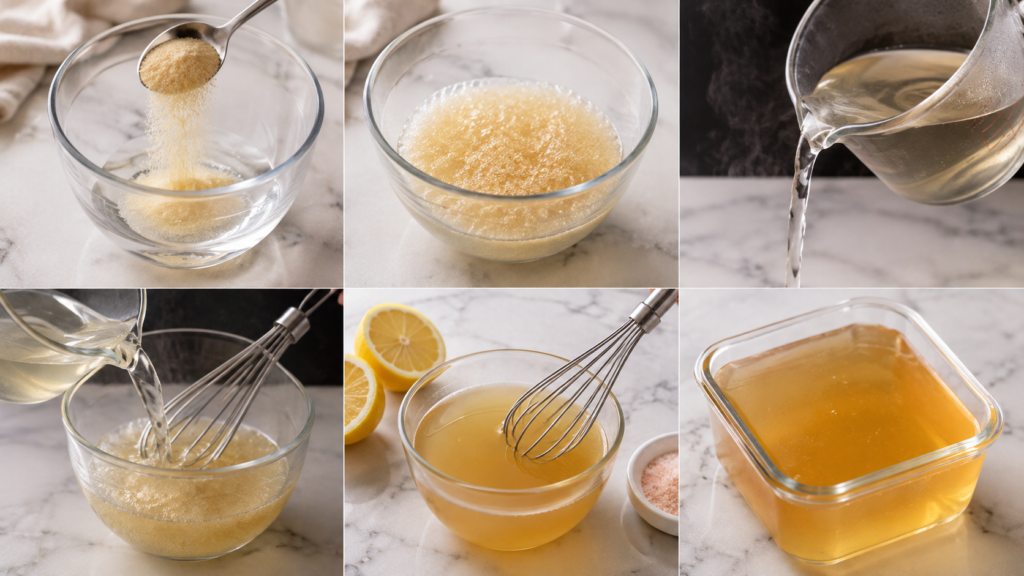
This is the foundation you can build every variation from. It uses standard kitchen measurements so you do not need a scale, though a scale will give you slightly more consistent results.
Ingredients:
- 1 tablespoon unflavored gelatin, about 7 grams
- 2 tablespoons cold water, for blooming
- 6 ounces hot water or hot herbal tea, not boiling
- Optional: a squeeze of fresh lemon juice
- Optional: a small pinch of salt
Instructions:
- Pour the cold water into a small glass or bowl.
- Sprinkle the gelatin evenly across the surface. Do not dump it in a clump. Let it sit undisturbed for five minutes so it can bloom.
- Heat your water or tea until it is hot but not boiling. Boiling can slightly reduce gelatin’s gelling ability.
- Pour the hot liquid over the bloomed gelatin and whisk continuously until it is completely smooth. There should be no visible granules.
- Add lemon juice or salt if you like, then either sip it warm right away or pour it into a small container and refrigerate for two to three hours to set.
One serving made this way delivers roughly six to seven grams of protein and about twenty five calories, depending on what else you add. That is a meaningful amount of protein for such a low calorie snack.
A Note on Timing
Most people who use this recipe drink or eat it fifteen to thirty minutes before their meal. This window gives the protein enough time to start triggering fullness signals without being so far removed from the meal that the effect wears off.
Six Variations and How to Make Each One
Plain gelatin water is functional, but it is not exactly exciting. These variations keep the same core ratio while changing the flavor profile, so you can find one that actually fits into your routine long term.
1. Pink Gelatin with Cranberry
Replace two tablespoons of the hot water with unsweetened cranberry or pomegranate juice. This gives the drink its signature pink color and a pleasant tart edge, without adding much sugar.
2. Green Tea Gelatin
Brew a cup of green tea and use it in place of plain hot water. The small amount of caffeine can add a mild energy lift, and the flavor pairs nicely with a squeeze of lemon.
3. Coffee Gelatin
Use freshly brewed coffee instead of water. This version works especially well chilled, since the coffee flavor becomes more pronounced once it sets into a soft gel.
4. Lemon and Apple Cider Vinegar
Add one teaspoon of lemon juice and one teaspoon of apple cider vinegar to the base recipe. This combination is popular for its tang, though it is worth noting there is no solid evidence that vinegar itself boosts metabolism.
5. Protein Boosted Gelatin
Once your gelatin mixture has cooled slightly, whisk in half a scoop of unflavored or vanilla protein powder. This roughly doubles or triples the protein content, which can make the fullness effect more noticeable.
6. Vegan Friendly Version
Traditional gelatin comes from animal collagen, so it is not suitable for vegans or vegetarians. Agar agar, a seaweed based gelling agent, sets in a very similar way. Use one teaspoon of agar agar powder per cup of liquid, and bring it to a gentle simmer for two minutes rather than just blooming it in cold water. Keep in mind that agar agar does not provide protein, so you lose the satiety benefit that makes the original recipe useful. Pairing it with a small amount of plant based protein powder is a reasonable workaround.
The Science: What Gelatin Can and Cannot Do
It is worth separating the honest research from the social media hype, because the two tell fairly different stories.
What research supports. Multiple studies on pre meal protein preloads, using whey, casein, or gelatin, show that protein taken before a meal can reduce how much food people eat afterward. In one often cited study, participants who ate a gelatin based breakfast reported feeling fuller and consumed noticeably fewer calories at lunch compared to those who had a whey or soy based breakfast. Other research has found that a gelatin based drink can raise post meal levels of GLP1 and insulin, two hormones tied to appetite regulation and satisfaction after eating.
What the evidence does not support. Longer trials tell a more sobering story. When researchers compared several months of high protein diets, some built around gelatin and others around milk based proteins like casein, the results were nearly identical. There was no extra fat loss and no metabolic advantage from the gelatin specifically. In other words, gelatin can help you feel full in the short term, but it does not appear to outperform other protein sources for sustained weight loss.
The most accurate way to think about it: a gelatin weight loss recipe is a satiety tool, not a fat burning tool. It can make a calorie deficit feel more manageable, but the deficit itself still has to come from your overall eating pattern.
Gelatin vs Collagen: Which One Should You Use
People often ask whether they should use gelatin or collagen peptides for this recipe, since the two are closely related.
| Factor | Gelatin | Collagen Peptides |
|---|---|---|
| Source | Cooked, unbroken collagen | Collagen broken into smaller peptides |
| Dissolves in | Hot liquid only | Hot or cold liquid |
| Texture | Gels when chilled | Stays liquid, does not gel |
| Protein per 10 grams | About 8 to 9 grams | About 9 grams |
| Cost | Roughly ten cents per 10 grams | Often eighty cents to over a dollar per 10 grams |
| Best for | This recipe, since gelling is part of the appeal | Coffee, smoothies, or anyone who dislikes the texture |
If your goal is the traditional warm drink or chilled cube version, plain gelatin is the better and cheaper choice. If you simply want the protein and satiety benefit without the gel texture, collagen peptides dissolved into a cold drink will give you a very similar amino acid profile.
Common Mistakes That Ruin the Recipe
A surprising number of people try this once, end up with a clumpy or gritty drink, and give up entirely. Most of the time, the issue comes down to one of these mistakes.
- Skipping the bloom step and adding gelatin straight into hot liquid, which causes clumping
- Using boiling water instead of hot water, which can weaken the gelatin’s structure
- Not whisking continuously while combining the bloomed gelatin with the hot liquid
- Using too much gelatin, which creates a rubbery, unpleasant texture rather than a smooth drink or soft gel
- Expecting dramatic weight loss results within days, which sets unrealistic expectations and often leads to abandoning the habit
How to Fix Texture and Taste Problems
If your last attempt did not turn out well, a few small adjustments usually solve the problem.
Too clumpy: Make sure you are blooming the gelatin in cold liquid first and giving it the full five minutes before adding heat. Whisk vigorously once the hot liquid goes in.
Too rubbery when chilled: Reduce the gelatin slightly, to about two teaspoons instead of a full tablespoon, or increase the liquid volume.
Unpleasant plain taste: Plain gelatin water genuinely does not taste like much on its own. Adding lemon, a splash of juice, herbal tea, or a small amount of stevia makes a noticeable difference without undoing the point of the recipe.
Gritty texture even after whisking: Your liquid may not have been hot enough. Reheat gently and whisk again until the mixture looks fully translucent with no visible flecks.
A Simple Weekly Meal Prep Plan
Making a single serving every day works, but batching it saves time and keeps you consistent.
- On a Sunday, quadruple the base recipe using four tablespoons of gelatin and the appropriate liquid amounts.
- Pour the finished mixture into an ice cube tray or several small containers.
- Refrigerate until fully set, then pop the cubes out and store them in an airtight container for up to four days.
- When you are ready for a pre meal snack, eat one or two cubes as is, or gently warm a portion in a small saucepan to turn it back into a drink.
This approach removes the daily decision making and makes the habit far easier to stick with over time.
Who Should Avoid the Gelatin Trick
This recipe is generally safe for most healthy adults, but a few groups should check with a doctor before adding it to their routine.
- Anyone with kidney disease or a history of kidney stones, since gelatin is very high in protein relative to its volume
- People taking blood thinning medication, since gelatin contains compounds that may modestly affect clotting
- Pregnant women, who already have elevated protein needs that are better met through complete food sources
- Anyone with a history of disordered eating, since pre meal appetite suppressing rituals can sometimes reinforce restrictive patterns
- Post bariatric surgery patients, who should confirm with their care team before adding any new protein source to their protocol
Conclusion
A gelatin weight loss recipe is not a shortcut, and it will not replace the basics of eating well and staying active. What it offers is something smaller but genuinely useful: a cheap, simple, high protein habit that can take the edge off hunger before a meal and make portion control feel a little more natural.
The keys to actually making it work are the ones most videos skip past. Bloom the gelatin properly, use the right ratio of gelatin to liquid, time it fifteen to thirty minutes before you eat, and choose a variation you will actually enjoy often enough to stick with. Whether you prefer the classic pink version, a green tea twist, or a protein boosted upgrade, the habit only pays off if it becomes something you keep doing.
Used with realistic expectations, alongside balanced meals and consistent movement, this small ritual can be one more tool that supports the bigger picture of sustainable weight management.
Frequently Asked Questions
How much weight can I expect to lose from a gelatin weight loss recipe alone?
There is no reliable number specific to gelatin. Pre meal protein preloads in general are linked to modest reductions in calorie intake, often in the range of five to fifteen percent per meal, which can support gradual weight loss when combined with an overall calorie deficit.
Can I use flavored Jell-O instead of unflavored gelatin?
It is not recommended. Flavored gelatin mixes are mostly sugar, which works against the goal of a low calorie, high protein snack. Unflavored gelatin with your own flavoring keeps sugar and calories low.
Is it safe to drink this every day?
For most healthy adults, yes, as long as it is fully dissolved before drinking and treated as a snack rather than a meal replacement. If you have kidney issues, are on blood thinners, or are pregnant, speak with your doctor first.
What is the difference between this and the pink gelatin trick?
The pink version is simply the base recipe with cranberry or pomegranate juice added for color and a slight tartness. The mechanism and protein content are essentially the same.
Can I make a vegan version of this recipe?
Yes, agar agar can replace gelatin and sets in a similar way, though it does not contain protein. Adding a plant based protein powder to the agar agar version helps restore the satiety benefit.