
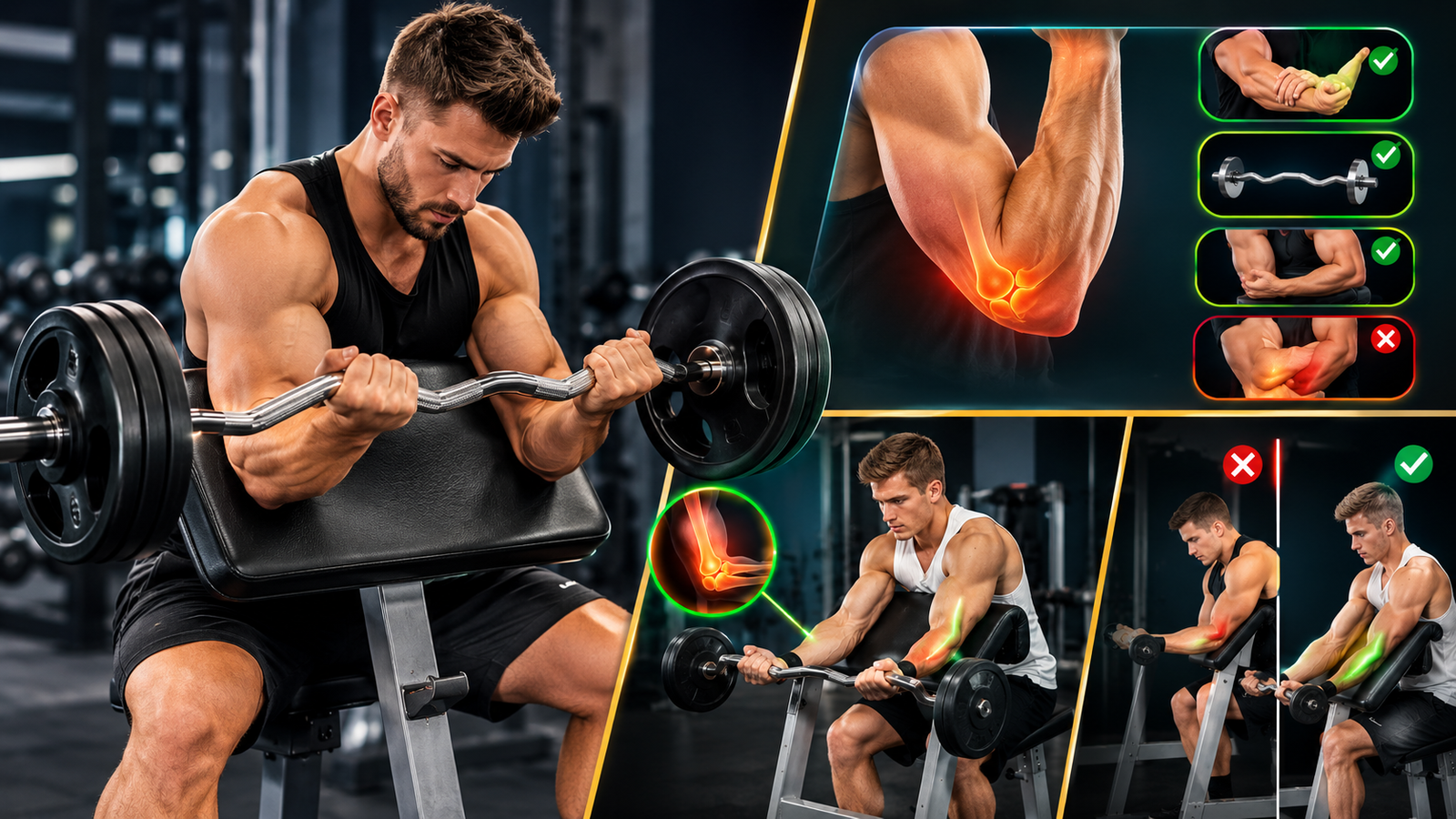
If you want bigger, more defined biceps, the preacher curl deserves a permanent spot in your arm training routine. This exercise is one of the most effective ways to isolate your biceps, remove momentum from the equation, and build the kind of striche strength that translates into real muscle growth.
In this guide, you will learn exactly how to perform a preacher curl with proper form, which muscles it targets, the most common mistakes lifters make, and how to program it into your workouts for the best results. Whether you are new to strength training or looking to refine your technique, this article covers everything you need to know.
What Is a Preacher Curl
A preacher curl is a biceps isolation exercise performed on a piece of equipment called a preacher bench. This bench has an angled pad that supports your upper arms and chest while you curl a weight upward.
Because your upper arms are locked against the pad, you lose the ability to swing your body or use momentum to move the weight. That single detail is what makes the preacher curl so valuable. It forces your biceps to do almost all of the work, rep after rep.
Bodybuilders have used this exercise for decades to build peak, size, and definition in the biceps. It remains a staple in arm day workouts because it consistently delivers a strong, focused muscle contraction that is hard to replicate with standing curls.
You can perform a preacher curl using an EZ bar, a straight barbell, a single dumbbell, or a dedicated preacher curl machine. Each option offers a slightly different feel, but the underlying mechanics stay the same.
Muscles Worked During a Preacher Curl
Understanding which muscles the preacher curl targets will help you appreciate why this exercise is so effective for arm development.
Primary muscle: Biceps brachii. This is the main muscle worked during the preacher curl, particularly the short head, which sits closer to your body. The preacher bench angle places significant tension on this part of the biceps throughout the entire range of motion.
Secondary muscle: Brachialis. Located underneath the biceps, the brachialis pushes the biceps upward and contributes to overall arm thickness. A well developed brachialis can make your arms look fuller even when your biceps peak is already strong.
Secondary muscle: Brachioradialis. This forearm muscle assists during the curling motion, especially when your grip position shifts slightly. It plays a smaller but still meaningful role in the exercise.
Because the preacher bench eliminates help from your shoulders, back, and core, these three muscles absorb nearly all of the workload. That is exactly why preacher curls feel so much harder than standing curls, even with lighter weight.
How to Do a Preacher Curl With Proper Form
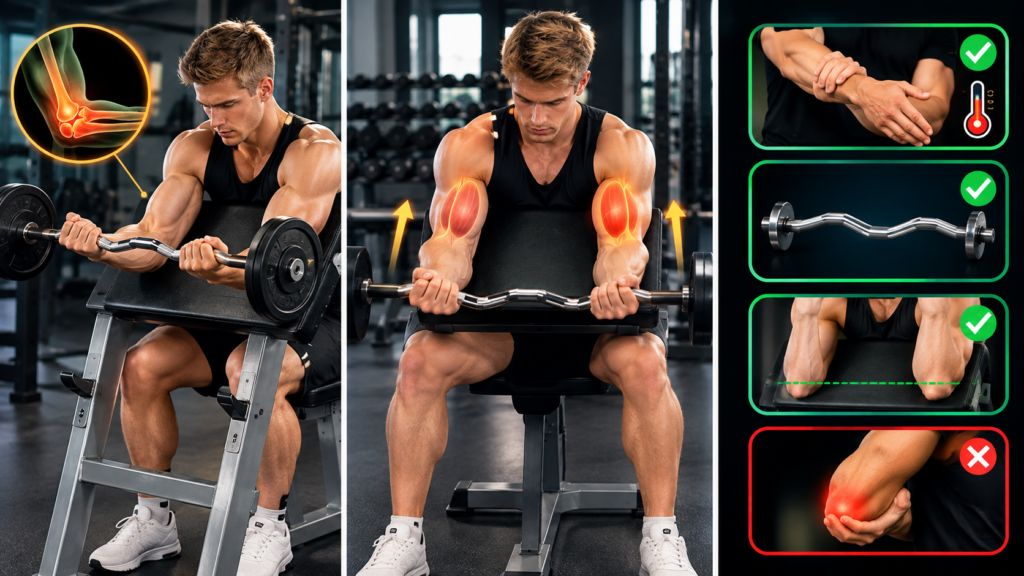
Getting your setup right is half the battle with this exercise. Follow these steps to perform a clean, effective preacher curl.
Step 1: Adjust the Bench
Set the preacher bench seat height so that your armpits rest comfortably at the top edge of the pad when seated. Your chest should stay in contact with the pad throughout the movement.
Step 2: Grip the Bar
Use a supinated grip, meaning your palms face upward. Position your hands slightly narrower than shoulder width for most comfort, though you can experiment with grip width once you feel confident with the movement.
Step 3: Start From a Slight Bend
Begin with your arms almost fully extended, but avoid locking out your elbows completely. A tiny bend protects the joint and keeps tension on the biceps rather than the elbow ligaments.
Step 4: Curl With Control
Slowly curl the weight upward, focusing on squeezing your biceps at the top of the movement. Avoid rushing this phase since a controlled tempo produces far better muscle engagement.
Step 5: Lower With Purpose
Lower the weight back down just as slowly as you lifted it. The eccentric, or lowering, portion of the preacher curl is where a large amount of muscle growth actually happens, so do not skip it.
Step 6: Repeat for Reps
Complete your desired number of repetitions while maintaining strict form throughout the entire set. If your form starts to break down, it is time to reduce the weight.
Common Preacher Curl Mistakes to Avoid
Even experienced lifters fall into bad habits with this exercise. Watch out for these frequent errors so you can get the most out of every rep.
Using too much weight. The preacher curl is not the exercise to chase your heaviest lift. Loading up too much weight forces you to jerk the bar upward, which defeats the entire purpose of the movement.
Fully locking out at the bottom. Letting your elbows lock completely at the bottom of the rep shifts stress away from the biceps and onto the joint itself. This increases injury risk over time, especially with repeated heavy sets.
Lifting your chest off the pad. If your chest rises off the pad during the curl, you are cheating the movement by involving your shoulders and back. Keep your chest planted throughout the set.
Rushing the eccentric phase. Many lifters focus only on the lifting portion and let the weight drop quickly on the way down. This wastes a huge opportunity for muscle growth and increases strain on the elbow joint.
Ignoring elbow position. Your elbows should stay in a consistent, comfortable position against the pad. Letting them drift outward or inward changes the angle of stress on your joints and reduces the effectiveness of the exercise.
Preacher Curl Versus Standing Barbell Curl
Many lifters wonder whether preacher curls or standing barbell curls deserve priority in their program. The honest answer is that both exercises offer distinct benefits, and including them together often produces the best results.
Standing barbell curls allow you to lift heavier weight because your shoulders, back, and core assist with stabilization. This makes them useful for building overall strength and adding size through progressive overload.
Preacher curls, on the other hand, remove that assistance entirely. You will typically lift less weight, but the isolation you get is unmatched. This makes preacher curls ideal for building a strong mind muscle connection and targeting stubborn areas of the biceps that standing curls sometimes miss.
A smart approach is to use standing curls earlier in your workout when you have more energy for heavier loads, then finish with preacher curls to fully exhaust the biceps with strict, controlled reps.
Preacher Curl Variations Worth Trying
Once you have mastered the standard preacher curl, these variations can add variety and target your arms from slightly different angles.
- Dumbbell preacher curl. Using a single dumbbell allows you to correct strength imbalances between your left and right arm while also giving your wrist more natural rotation.
- Single arm preacher curl. Training one arm at a time increases focus and lets you achieve a deeper contraction at the top of each rep.
- Machine preacher curl. A dedicated machine offers consistent resistance throughout the range of motion and is often easier on the joints than free weights.
- Reverse grip preacher curl. Turning your palms downward shifts more emphasis onto the brachialis and forearms, making this a great addition for building overall arm thickness.
How to Program Preacher Curls Into Your Routine
Programming matters just as much as form when it comes to seeing real results from preacher curls.
For general muscle growth, aim for three to four sets of eight to twelve repetitions. This rep range allows enough time under tension to stimulate hypertrophy without sacrificing form.
If your goal leans more toward strength and control, try three sets of six to eight reps with a slightly heavier load, while still prioritizing a slow, deliberate tempo.
Beginners should start with lighter weight and focus purely on mastering the movement pattern before adding significant load. Rushing this stage often leads to poor habits that are difficult to correct later.
Place preacher curls either as your primary biceps exercise or as a finishing movement after compound pulling exercises like rows or pull ups. Either placement works well depending on your overall workout structure and energy levels that day.
Preacher Curl Safety Tips for Your Elbows and Wrists
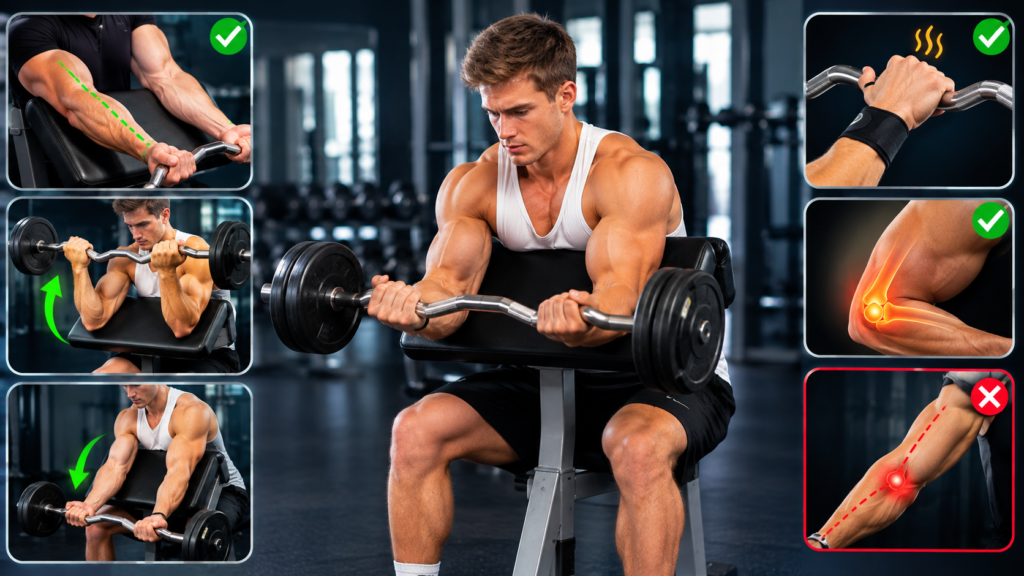
Because the preacher curl places direct, sustained tension on your elbows, a few safety habits go a long way in preventing discomfort or injury.
Always warm up your elbows and wrists with light curls or dynamic stretching before loading heavier weight. Cold joints are far more susceptible to strain during isolation exercises like this one.
Choose an EZ bar over a straight barbell if you notice any wrist discomfort. The angled grip reduces unnecessary twisting force on the wrist joint during the movement.
Avoid locking your elbows at the bottom of each rep, as mentioned earlier. This single adjustment alone prevents a significant amount of joint stress over time.
If you ever feel sharp pain, as opposed to normal muscle fatigue, stop the exercise immediately and reassess your form, weight selection, or bench setup before continuing.
Final Thoughts
The preacher curl remains one of the most reliable exercises for building strong, well defined biceps. Its unique setup removes momentum from the equation, forcing your muscles to do the real work on every single rep.
By following proper form, avoiding common mistakes, and programming this exercise thoughtfully alongside other biceps movements, you can build noticeably stronger and more sculpted arms over time. Focus on control over ego lifting, protect your joints along the way, and the preacher curl will reward you with consistent, visible progress.
Frequently Asked Questions
What muscles does the preacher curl work?
The preacher curl primarily targets the biceps brachii, with secondary involvement from the brachialis and brachioradialis in your forearm.
Are preacher curls better than standing curls?
Neither is strictly better. Preacher curls offer superior isolation, while standing curls allow heavier loading. Combining both in your routine produces well rounded results.
Why do my elbows hurt during preacher curls?
Elbow discomfort usually comes from locking out completely at the bottom of the rep or using too much weight. Adjusting your form and reducing load often resolves this issue.
Can beginners do preacher curls safely?
Yes, preacher curls are beginner friendly as long as you start with light weight and focus on mastering proper form before progressing to heavier loads.
What is the best bar to use for preacher curls?
An EZ bar is generally the most comfortable option since its angled grip reduces strain on the wrists compared to a straight barbell.