
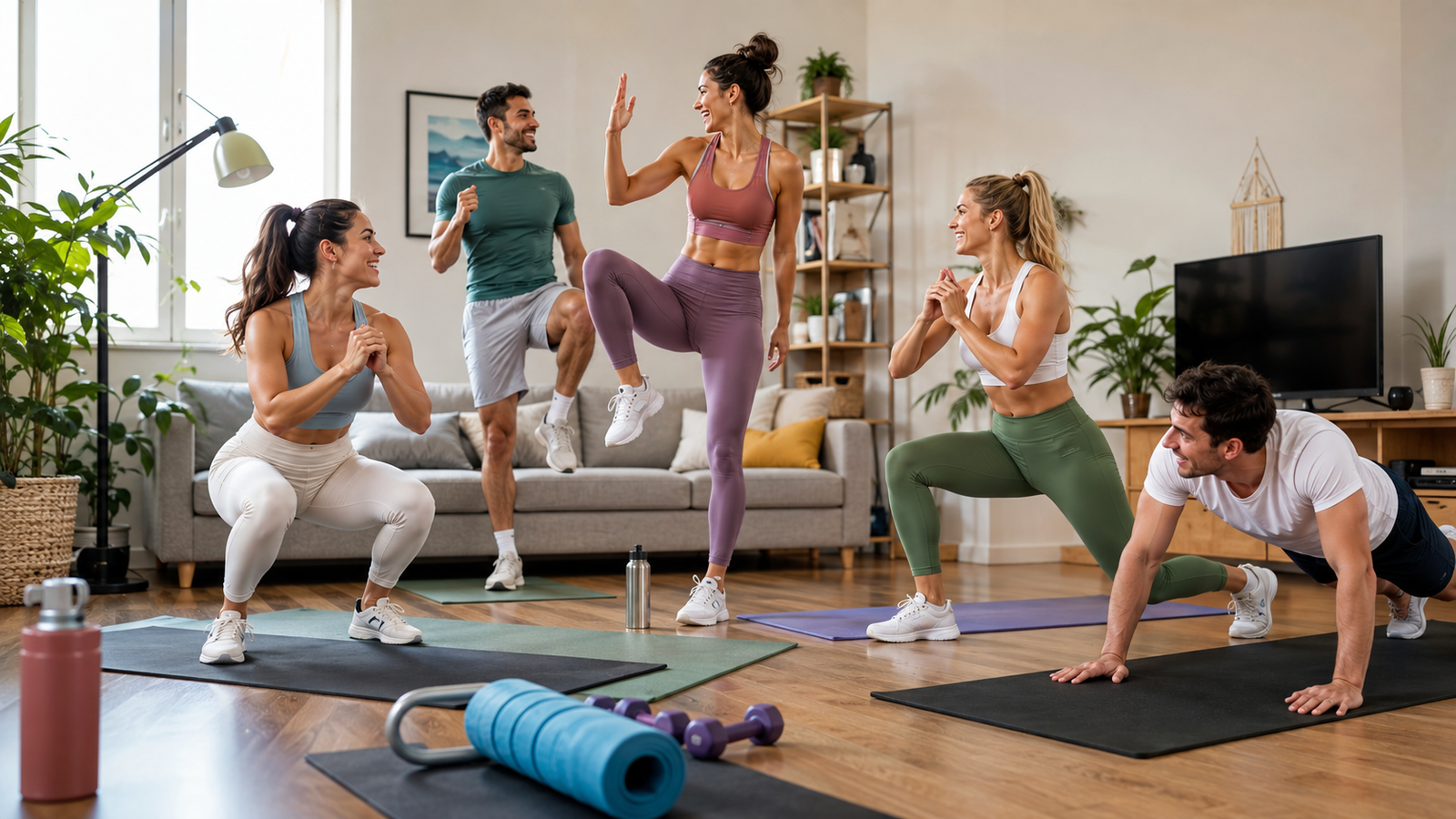
Working out alone can feel like a chore, especially when motivation runs low halfway through the week. That is exactly why so many people are turning to group exercises at home instead of solo routines or expensive gym memberships. When you train with a partner, your family, or a couple of roommates, something shifts. You show up because someone else is counting on you, and the whole session ends up feeling less like exercise and more like time well spent together.
This guide walks through 15 of the best group exercises at home, organized by type so you can build a session that fits your space, your group size, and your fitness level. You will also find practical tips on structuring a workout, keeping everyone safe, and turning a single session into a habit that actually sticks.
Why Group Exercises at Home Work So Well
There is a simple psychological reason group workouts tend to outperform solo sessions: accountability. When a friend, sibling, or coworker is waiting for you to show up, skipping becomes a lot harder than it would be if you were only answering to yourself.
Beyond accountability, group training also taps into friendly competition. Holding a plank for an extra ten seconds because the person next to you refuses to quit is a completely different experience than holding it alone in a quiet room. That shared effort tends to push people slightly harder than they would push themselves.
There is also the simple matter of convenience. Home group workouts remove the need for a gym membership, a commute, or a class schedule. You just need a bit of floor space, a group of willing participants, and a plan for what to do once everyone is ready.
Finally, exercising with others supports mental wellbeing in ways that solo training often does not. Laughing through a failed burpee attempt or celebrating a shared personal best builds connection, and that social element is a major reason group exercise routines are so much easier to stick with long term.
How to Set Up a Group Workout Space at Home
Before diving into the exercises themselves, it helps to prepare your space. A living room, garage, backyard, or even a spacious hallway can work perfectly well as long as a few basics are covered.
Clear enough floor space so that everyone can extend their arms and legs without bumping into furniture or each other. Move rugs, coffee tables, or anything with sharp corners out of the main workout zone.
Keep water nearby, especially for cardio focused sessions. A simple towel and a timer or phone with a stopwatch app are usually all the extra equipment you need. Most of the exercises below require zero equipment at all, which makes this style of training accessible for almost anyone.
If your group includes people at different fitness levels, plan to offer an easier and a harder version of each move. This keeps beginners from feeling discouraged while still giving more experienced participants something to work for.
15 Best Group Exercises at Home to Try With Family or Friends
These exercises are grouped into five categories so you can mix and match based on your group’s goals, whether that is cardio, strength, teamwork, or a lower impact recovery session.
Bodyweight Cardio Moves
Cardio based group exercises are ideal for warming up the room and getting hearts pumping without needing any equipment.
1. Synchronized Squat Challenge Everyone squats together while counting reps out loud as a group. Moving in unison changes the psychology of the exercise. Stopping at rep ten feels much harder when three other people are still going strong beside you. Add a two second pause at the bottom of the final rep to increase the challenge.
2. Mountain Climber Countdown Set a timer for thirty seconds and have everyone perform mountain climbers at the same time, counting their own reps. Compare totals at the end of each round. This move targets the core, hip flexors, and shoulders while raising your heart rate quickly.
3. Jumping Jack Relay Line participants up and have each person complete twenty jumping jacks before tagging the next in line. This format works especially well for larger groups and turns a basic cardio move into a lively relay.
4. Burpee Ladder Start with one burpee, add one more each round, and keep climbing as a group. Calling out each phase, down, push, jump, stand, keeps everyone moving together and makes it easier to catch someone slacking on form.
Strength and Core Builders
These moves focus on building functional strength using nothing more than body weight and a bit of floor space.
5. Group Plank Hold Everyone holds a plank position at the same time, aiming for a minimum of forty five seconds before any friendly competition begins. Because nobody wants to be the first to drop, group plank holds are often noticeably longer than what people manage solo.
6. Wall Sit Competition Line up against a wall and drop into a seated position with knees bent at ninety degrees. Last person still holding the position wins. This move builds serious quad endurance while requiring absolutely no equipment.
7. Lunge Walk Train Have participants walk forward performing alternating lunges across the room, then turn around and repeat. This works the glutes, quads, and hamstrings while also improving balance and coordination.
8. Push Up Partner Count Pair up and count each other’s push up reps out loud. Having someone watching your form tends to improve technique naturally, since nobody wants to be caught cutting a rep short in front of a partner.
Partner Powered Exercises
Some of the most effective group exercises at home actually require exactly two people, which makes them a great fit for couples, siblings, or roommates.
9. Partner Resistance Rows Face your partner, grip hands or a sturdy towel, and lean back while pulling against each other’s resistance. This builds back and arm strength while requiring clear communication between both people to avoid sudden jerky movements.
10. Sit Up Pass Lie on your backs with feet touching your partner’s feet and knees bent. One person holds a light object, such as a water bottle. Both partners perform a sit up at the same time and pass the object at the top before lowering back down.
11. Wheelbarrow Walks One partner holds the other’s legs while they walk forward on their hands. This classic move builds shoulder and core stability while adding a playful, game like element that works particularly well with kids or teenagers in the mix.
Fun Formats and Games
Sometimes the best way to keep a group engaged is to turn exercise into a game rather than a formal routine.
12. Fitness Dice Roll Assign an exercise to each number on a die, then take turns rolling and performing whatever comes up. Nobody gets to complain about the exercise since the die made the decision, not any single person in the group.
13. Workout Bingo Draw a simple four by four grid and fill each square with a different exercise. Take turns choosing a square, complete that move together, then cross it off. The first person to clear a full row wins, though most groups keep playing until every square is done.
14. Team AMRAP Sprint Set a timer for ten minutes and pick three exercises, such as squats, push ups, and sit ups. Everyone works through as many rounds as possible individually, then combines their totals at the end. That shared number becomes the benchmark to beat the following week.
Low Impact and Recovery
Not every group session needs to be high intensity. A slower, lower impact format is just as valuable, particularly for mixed ability groups or recovery days.
15. Group Yoga Flow Move through a simple sequence together, including child’s pose, downward facing dog, gentle twists, and standing balance poses. Group yoga improves flexibility, reduces stress, and gives everyone a chance to breathe and reset after a more intense session earlier in the week.
How to Structure a 30 Minute Group Workout at Home
Knowing the exercises is only half the equation. Structuring them properly makes the difference between a workout that feels chaotic and one that flows smoothly from start to finish.
Begin with five minutes of light movement to warm up the body. Marching in place, arm circles, and a few gentle squats are enough to prepare muscles and joints for more intense work.
Spend the next eighteen to twenty minutes on your main circuit. Choose three or four exercises from the categories above, ideally mixing cardio with strength so the session stays balanced. Perform each move for thirty to forty five seconds with short rest breaks between stations, and repeat the circuit two or three times depending on the group’s energy.
Finish with a five minute cool down that includes slower stretches and a few deep breaths. This helps prevent dizziness or soreness and gives the group a moment to reflect on how the session went.
A thirty minute session repeated three to five times a week fits comfortably within general physical activity guidelines, which typically recommend at least 150 minutes of moderate intensity exercise weekly along with strength training on two or more days.
Tips to Keep Everyone Motivated and Safe
A great group workout depends on more than just picking good exercises. A few simple habits can keep the entire group engaged and injury free over the long run.
- Always warm up before intense movement and cool down afterward to protect muscles and joints.
- Offer an easier and a harder version of every move so no one feels left out or overwhelmed.
- Rotate who chooses the workout or playlist each session to keep things fresh and give everyone a sense of ownership.
- Track progress as a group, whether that means total reps completed, longest plank hold, or simply consistent attendance over several weeks.
- Stop immediately if anyone experiences sharp pain, dizziness, or unusual shortness of breath, and check in with each other regularly during more intense intervals.
Consistency matters far more than intensity. A group that shows up for a manageable twenty minute session every week will see better long term results than one that attempts an exhausting workout once and never returns.
Who Benefits Most From Group Exercises at Home
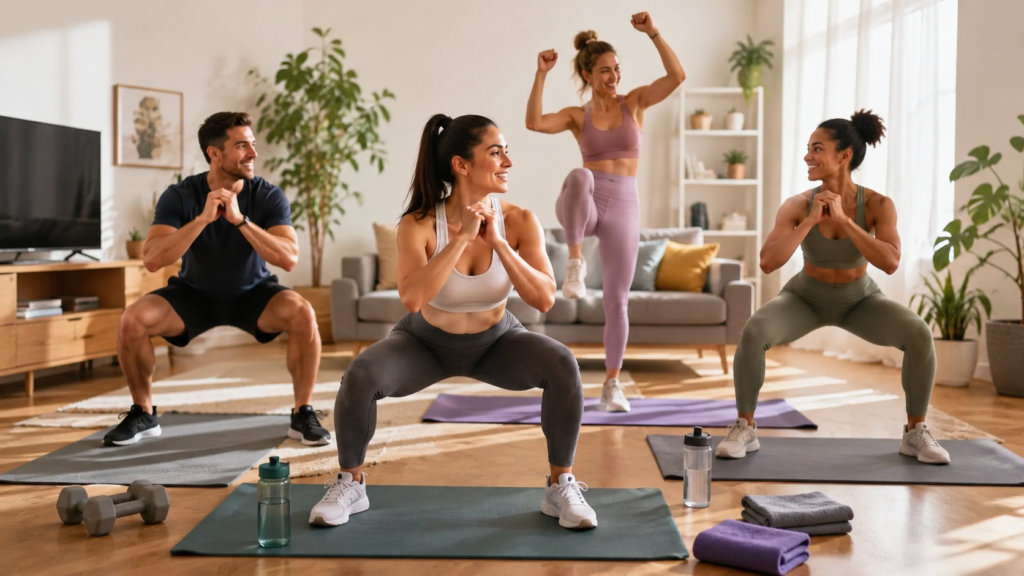
Group training at home is remarkably flexible, which is part of why it works for such a wide range of people.
Families find that a shared workout becomes a natural way to spend quality time together while modeling healthy habits for kids. Beginners often feel more comfortable learning new movements alongside others rather than navigating an unfamiliar gym alone. Older adults benefit from lower impact formats like group yoga combined with the social connection that comes from exercising with others.
Coworkers and remote teams have also started using video calls to run group sessions together, proving that the accountability benefits of group exercise are not limited to people in the same physical room. Even experienced fitness enthusiasts can use group formats like the burpee ladder or AMRAP sprint to add fresh intensity to routines that might otherwise feel stale.
Final Thoughts
The best group exercises at home do not require a gym membership, fancy equipment, or advanced fitness knowledge. What they do require is a bit of floor space, a willingness to show up, and a group of people ready to push each other through the tougher moments.
Start with two or three exercises from this list, build a simple structure around them, and let consistency do the rest. Whether your group leans toward high energy cardio challenges or prefers a slower yoga flow, the shared effort is what turns an ordinary living room into a space that supports real, lasting fitness progress.
Frequently Asked Questions
What is the best group exercise to do at home?
A synchronized bodyweight circuit combining squats, planks, and push ups tends to work well for most groups because it requires no equipment and can be adjusted for different fitness levels within the same session.
How many people do you need for a home group workout?
Two people is enough to get started, especially for partner based exercises like resistance rows or sit up passes. Groups of three to six tend to work best for relay style and challenge formats.
Do group exercises at home require any equipment?
Most of the exercises in this guide need no equipment at all. A towel, a light object for passing drills, or a die for fitness dice are the only extras you might want to have on hand.
How long should a group workout at home last?
Twenty to forty five minutes is typically enough to cover a warm up, a main circuit, and a proper cool down without the session becoming too draining for beginners.
Can beginners join high intensity group workouts?
Yes, as long as each exercise includes an easier modification. Reducing range of motion, slowing the pace, or shortening intervals allows beginners to participate fully while more experienced members push harder within the same session.