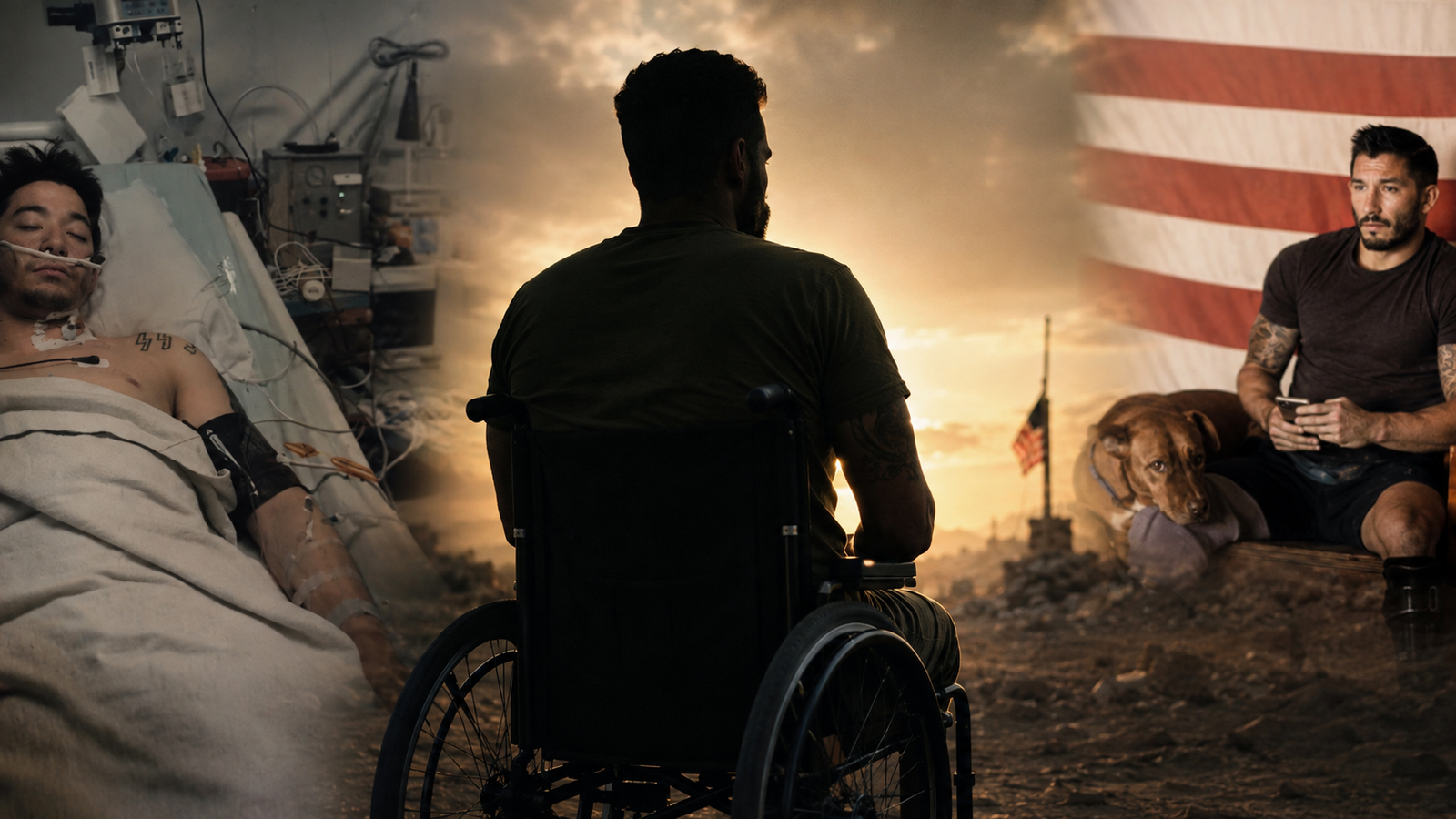
Every IED survivor carries a story that most of us will never fully understand. One moment changes everything: a vehicle, a patrol, a single step, and then a life divided into before and after.
These stories are not just about combat. They are about what happens next. The surgeries, the therapy sessions, the quiet nights when the mind refuses to rest, and the slow, deliberate work of building a new version of a life that was interrupted in an instant.
This article looks at what it really means to survive an improvised explosive device, the physical and emotional aftermath survivors face, and how so many of them find a way forward. If you are here because you love someone who lived through this, or because you want to understand what recovery actually looks like, you are in the right place.
What It Means to Be an IED Survivor
An IED survivor is someone who has lived through an attack involving an improvised explosive device, a homemade weapon built from military or commercial materials and designed to detonate on contact, by remote trigger, or through pressure. These devices became one of the defining threats of modern conflict, particularly during the wars in Iraq and Afghanistan.
Surviving the blast is only the beginning. The term survivor covers a wide range of experiences: someone who lost a limb, someone dealing with a traumatic brain injury that left no visible scar, and someone who walked away physically intact but carries the psychological weight of that day for years afterward.
It is worth noting that IED survivors are not only military service members. Civilians in conflict zones, humanitarian workers, and communities living near unexploded ordnance also face this reality. Their stories often receive far less attention, even though the injuries and the recovery process share many of the same challenges.
The Moment of Impact: What Actually Happens in a Blast Injury
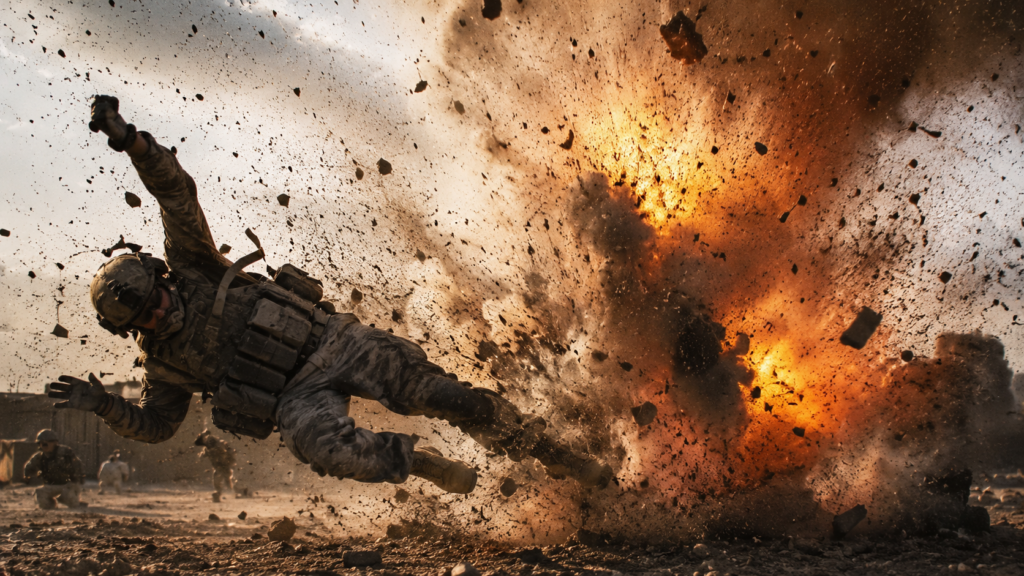
Understanding blast injury helps explain why recovery is so complicated. An explosion does not cause a single type of harm. It causes several, often at once.
Primary blast injury comes from the pressure wave itself. This shockwave can damage the lungs, ears, and brain even when there is no visible wound on the body.
Secondary blast injury happens when debris, shrapnel, or fragments from the device strike the body. This is usually what causes the most severe physical trauma, including the wounds that lead to amputation.
Tertiary blast injury occurs when the force of the explosion throws a person into the ground, a vehicle, or another object. Fractures, spinal injuries, and additional head trauma often result from this impact.
Quaternary injuries include burns, crush injuries, and the inhalation of dust or toxic material released by the blast.
Because so many injuries happen simultaneously, the medical response to an IED attack is rarely straightforward. A survivor might be treated for blood loss, a collapsed lung, and a head injury all within the same hour, long before doctors even begin to understand the full scope of what needs to heal.
The Long Road to Recovery
Surviving the explosion is the first step. What follows is often a much longer and more demanding journey, one that stretches across years rather than weeks.
Emergency Care and Medical Stabilization
In combat zones, survival often depends on how quickly a wounded service member reaches advanced medical care. Tourniquets, rapid evacuation, and forward surgical teams have saved countless lives that would have been lost in earlier conflicts. From there, survivors are typically moved through a chain of care, from field hospitals to major military medical centers, before reaching long term rehabilitation facilities closer to home.
Amputation, Prosthetics, and Physical Rehabilitation
Limb loss is one of the most visible and life altering outcomes of an IED attack. Modern prosthetic technology has advanced significantly, giving many survivors the ability to walk, run, and even compete athletically again. Still, the process of adapting to a prosthetic limb is physically exhausting and emotionally demanding.
Physical rehabilitation often includes:
- Learning to balance and move with a new center of gravity
- Building strength in muscles that now compensate for lost limbs
- Adjusting to prosthetic fittings that may need to be replaced or refined multiple times
- Managing phantom limb pain, which is common and often underestimated
Many survivors describe this stage as a second kind of battle, one fought quietly in physical therapy rooms rather than on a battlefield.
Traumatic Brain Injury: The Invisible Wound
Traumatic brain injury, often called TBI, is one of the most common and least visible consequences of an IED blast. Because there is frequently no external wound, TBI can go undiagnosed for months or even years.
Symptoms can include memory problems, headaches, sensitivity to light and sound, and difficulty concentrating. For many survivors, these symptoms are more disruptive to daily life than the physical injuries people can actually see.
Mental Health After Survival: PTSD, Depression, and Survivor Guilt
The psychological impact of surviving an explosive attack is significant and should never be treated as secondary to physical recovery. Post traumatic stress disorder, depression, and anxiety are common among IED survivors, and so is survivor guilt, the difficult feeling of having lived when others did not.
Many survivors also struggle with a loss of identity, particularly service members whose sense of purpose was deeply tied to their role in the military. Rebuilding that sense of self often takes just as much work as physical rehabilitation.
Real Patterns in IED Survivor Stories
While every survivor’s experience is unique, certain patterns appear again and again in their journeys.
Most stories begin with a routine moment: a patrol, a convoy, a single step on unfamiliar ground. The attack itself is often described as disorienting rather than dramatic, a sudden flash, ringing ears, and confusion before the reality of what happened sets in.
What follows is usually a period of darkness. Survivors commonly describe months where recovery felt hopeless, where pain medication, isolation, or anger became temporary escapes from a much harder truth they were not ready to face.
The turning point, when it comes, rarely arrives as a single dramatic moment. More often it grows from small decisions repeated daily: showing up to physical therapy, reconnecting with fellow service members, setting one small physical goal and then another. Over time, those small choices become a new identity built on resilience rather than loss.
This pattern matters because it offers something more useful than inspiration alone. It shows that recovery is not a straight line, and that setbacks do not erase progress. For anyone supporting a survivor, understanding this rhythm can make it easier to offer patience instead of pressure.
Finding Purpose After Loss
One of the most consistent threads in IED survivor stories is the search for renewed purpose. For many, this comes through physical challenges: adaptive sports, endurance events, or fitness programs designed specifically for wounded veterans.
Others find purpose through service, whether by mentoring newly injured veterans, working with nonprofit organizations, or speaking publicly about their experience to raise awareness. Some rebuild through creative outlets like music, writing, or art, using those platforms to process what they went through and to connect with others facing similar struggles.
What ties these paths together is not the specific activity but the underlying need it fulfills: a sense of forward motion, contribution, and control after an event that stripped all three away in an instant.
Support Systems That Make a Real Difference
Recovery rarely happens in isolation. The organizations and systems built around IED survivors often determine how smoothly, or how painfully, that recovery unfolds.
Veteran Nonprofits and Programs
Organizations such as the Wounded Warrior Project and the Purple Heart Foundation provide services that extend far beyond initial medical treatment. These typically include mental health support, financial guidance, adaptive sports programs, and peer connection opportunities with other survivors who understand the experience firsthand.
VA Benefits and Claims
Navigating Veterans Affairs benefits can be one of the most frustrating parts of the recovery process. Many survivors face delays, denied claims, or confusing paperwork at a time when they have the least energy to deal with bureaucracy. Working with an accredited veterans service officer can significantly improve the odds of a smoother claims process, and it is a step many survivors wish they had taken sooner.
Family and Caregiver Support
Families and caregivers absorb a significant portion of the recovery burden, often without adequate recognition or support of their own. Spouses may become full time caregivers overnight. Parents may need to relearn how to communicate with a child whose personality has shifted due to TBI. Support groups and respite care programs exist specifically to help caregivers avoid burnout while continuing to provide the steady presence survivors need.
What Civilians Can Learn From These Stories
You do not need to have served in the military to take something meaningful from IED survivor stories. These accounts offer lessons in resilience, in the value of small consistent progress over dramatic breakthroughs, and in the importance of community during periods of crisis.
They also serve as a reminder that recovery from any major loss, whether physical, emotional, or both, is rarely linear. Anyone facing a serious setback in life can find something useful in how these survivors approach the long, uneven process of rebuilding.
How to Support an IED Survivor in Your Life
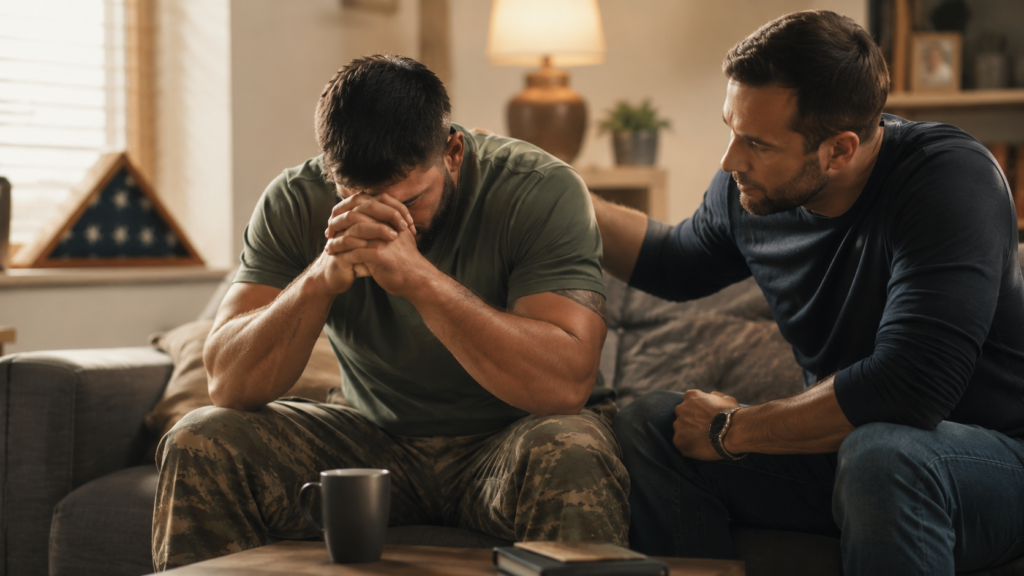
If someone in your life is an IED survivor, there are practical ways to offer meaningful support.
- Listen without trying to fix the situation immediately. Sometimes survivors simply need to talk without receiving advice.
- Avoid asking for graphic details about the incident unless the survivor brings it up themselves.
- Encourage professional support, including therapy and peer groups, without pushing too hard or too fast.
- Celebrate small milestones in recovery, since these matter just as much as major turning points.
- Be patient with mood changes, memory issues, or physical limitations related to TBI or PTSD.
- Learn about available resources so you can help navigate benefits, medical care, or nonprofit programs if asked.
Consistency matters more than grand gestures. Showing up reliably, even in small ways, often means more to a survivor than a single dramatic act of support.
Frequently Asked Questions
What is the most common injury among IED survivors?
Traumatic brain injury and limb loss are among the most common injuries, though many survivors experience a combination of physical wounds, hearing damage, and psychological trauma from the same event.
How long does recovery from an IED injury typically take?
Recovery timelines vary widely depending on the severity of injuries. Physical rehabilitation can take one to two years or longer, while emotional and psychological recovery is often an ongoing process without a fixed endpoint.
Can IED survivors return to a normal quality of life?
Many survivors go on to live full, active lives, including returning to work, competing in adaptive sports, and building strong family relationships. Quality of life often improves significantly with consistent medical care, mental health support, and a strong personal support network.
Are civilians ever considered IED survivors?
Yes. While much of the public conversation focuses on military service members, civilians in conflict zones and areas affected by unexploded ordnance are also IED survivors, often facing similar physical and emotional recovery challenges with fewer available resources.
What organizations help IED survivors and their families?
Groups such as the Wounded Warrior Project and the Purple Heart Foundation offer a range of services including benefits assistance, mental health resources, adaptive sports programs, and caregiver support for families of survivors.
Final Thoughts
IED survivor stories are ultimately stories about what people are capable of rebuilding after devastating loss. They involve pain that many of us will never fully understand, but they also reveal a consistent thread of determination, community, and purpose that carries survivors through the hardest years of their lives.
If you take one thing from these stories, let it be this: recovery is not about returning to who someone was before. It is about becoming someone new, shaped by both the loss and the strength it took to keep moving forward. That process deserves patience, respect, and real support, whether it comes from a nonprofit program, a family member, or simply someone willing to listen.