
If you have ever fallen down a rabbit hole of British gangster films, chances are you eventually landed on Lock, Stock and Two Smoking Barrels. Released in 1998, this film did not just introduce audiences to a fresh voice in cinema. It practically invented a genre of its own, one filled with sharp suits, sharper dialogue, and criminals who are equal parts terrifying and hilarious.
Whether you just watched it for the first time or you have seen it a dozen times and want to understand why it still holds up decades later, this guide covers everything worth knowing. We will look at the story, the cast, the slang, the filming locations, and the lasting mark it left on British cinema.
What Is Lock, Stock and Two Smoking Barrels About
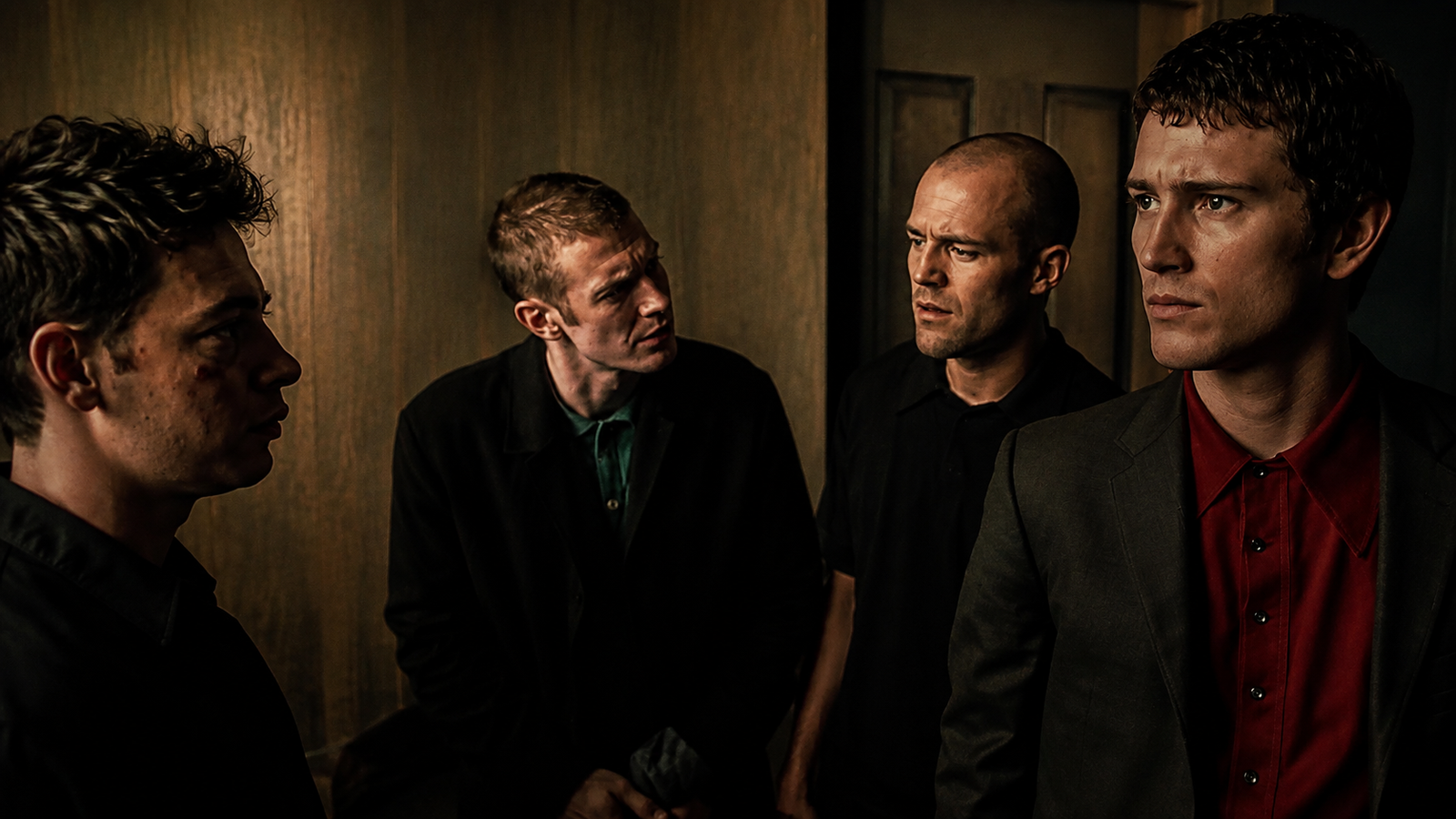
At its heart, Lock, Stock and Two Smoking Barrels is a story about consequences. Four friends from London’s East End, Eddy, Tom, Soap, and Bacon, pool their savings so Eddy can buy into a high stakes card game run by a local crime lord named Hatchet Harry.
The game is rigged from the start, and Eddy walks away owing half a million pounds with just one week to pay it back. What follows is a chain reaction involving stolen weed, two antique shotguns, a debt collector named Big Chris, and several other criminal factions who all end up chasing the same prize without fully realizing they are connected.
The plot sounds complicated on paper, and that is intentional. Guy Ritchie built the story like a puzzle box, where seemingly unrelated characters and subplots slowly click into place. Part of the fun of watching Lock, Stock and Two Smoking Barrels is seeing how everything ties together by the final act.
The Story Behind Guy Ritchie’s Directorial Debut

Before Lock, Stock and Two Smoking Barrels, Guy Ritchie was working in music videos and commercials, learning how to tell stories in short, visually punchy bursts. That background shows up clearly in the finished film, which moves with an energy that felt completely different from anything British cinema had produced before.
Financing the film was not easy. The budget came together in pieces, with contributions from producer Matthew Vaughn and financial backers including Trudie Styler, who happens to be married to Sting. Sting himself ended up taking a small but memorable role in the film as Eddy’s father, JD, who runs a local pub.
The final budget landed around 1.35 million pounds, which is remarkably small for a film that went on to earn more than 28 million dollars worldwide. That return on investment turned Lock, Stock and Two Smoking Barrels into one of the most profitable British independent films of its era, and it opened doors for Ritchie to direct bigger projects almost immediately afterward.
Meet the Cast Behind the Chaos
One of the reasons Lock, Stock and Two Smoking Barrels still feels fresh is the ensemble cast, many of whom were relative unknowns at the time.
- Eddy (Nick Moran): The card player whose bad luck kicks off the entire story.
- Tom (Jason Flemyng): The group’s fixer and unofficial voice of reason, sort of.
- Soap (Dexter Fletcher): The trained chef who dreams of running his own restaurant.
- Bacon (Jason Statham): A street market trader with a sharp mouth, played in what became Statham’s very first film role.
- Big Chris (Vinnie Jones): A debt collector who works alongside his young son. Jones was a former professional footballer with no formal acting experience before this role.
- Hatchet Harry (P. H. Moriarty): The menacing crime lord who rigs the card game.
- JD (Sting): Eddy’s father, a bar owner who wants nothing to do with his son’s criminal entanglements.
What makes the casting so effective is that Ritchie leaned into authenticity rather than polish. Statham had never acted before, and Jones had never set foot on a film set, yet both brought a natural, lived in quality that trained actors sometimes struggle to fake. Their performances helped ground the film’s more outlandish moments in something that felt real.
Why Lock, Stock and Two Smoking Barrels Became a Cult Classic
Plenty of crime films came out in the late 1990s, so why does this one still get talked about decades later? A few reasons stand out.
First, the humor. Unlike many gangster films that lean entirely on menace and violence, Lock, Stock and Two Smoking Barrels finds comedy in almost every scene, even the tense ones. The dialogue is quick, quotable, and full of dry wit that rewards repeat viewings.
Second, the structure. The film jumps between multiple groups of criminals whose stories eventually intersect, a technique that was relatively uncommon in mainstream British film at the time. Audiences who paid close attention were rewarded with connections they might have missed on a first watch.
Third, timing. British cinema in the late 1990s was hungry for something that felt homegrown yet globally cool. Lock, Stock and Two Smoking Barrels delivered a distinctly London flavor while still feeling stylish enough to compete with anything coming out of Hollywood.
The Signature Style That Defined a Genre
Guy Ritchie’s visual approach in Lock, Stock and Two Smoking Barrels became something of a blueprint for British crime films that followed. Fast cuts, freeze frames, voiceover narration, and a soundtrack packed with reggae, ska, and rock all combine to give the film its distinct pulse.
The editing rhythm mirrors the chaos of the plot itself. Scenes rarely linger longer than they need to, and transitions often use clever visual tricks rather than simple cuts. This kinetic pacing keeps the film feeling fresh even on a fifth or sixth watch.
The soundtrack deserves its own mention. Tracks from artists like Junior Murvin provide a backdrop that feels both cool and slightly dangerous, reinforcing the film’s tone without ever overpowering the dialogue.
Cockney Slang and British Crime Lingo Explained
If you watched Lock, Stock and Two Smoking Barrels and felt like you missed half the jokes, you are not alone. The film is dense with Cockney rhyming slang and East End criminal vocabulary that even some British viewers find tricky.
Here are a few terms that come up throughout the film, explained simply:
- Geezer: A general term for a man, often implying he is tough or streetwise.
- Bird: Slang for prison time, as in serving a sentence.
- Sorted: Meaning something has been handled or resolved.
- Naughty: Used to describe something illegal or dodgy.
- Gaff: A person’s home or property.
- Blag: To talk your way into or out of something, or to rob something through deception.
Understanding this vocabulary genuinely improves the viewing experience. Many jokes and tense exchanges land much harder once you know exactly what the characters are threatening or promising each other.
Real London Locations You Can Still Visit
Part of what gives Lock, Stock and Two Smoking Barrels its authenticity is the use of real East London settings rather than polished studio sets. Several pubs, markets, and streets used during filming still exist today, giving fans a chance to walk through pieces of the film’s world.
The film draws heavily on the atmosphere of London’s traditional working class neighborhoods, capturing markets, backstreet pubs, and cramped flats that feel lived in rather than staged. This grounded setting is a big part of why the criminal underworld depicted in the film feels believable rather than cartoonish, even when the plot takes wild turns.
If you are a fan planning a trip to London, seeking out East End pubs with old school character is a fitting way to experience the vibe the film captures so well.
How It Compares to Guy Ritchie’s Other Crime Films
Guy Ritchie would return to similar territory just two years later with Snatch, another ensemble crime comedy set in London’s underworld. Fans often debate which film is better, and the comparison is worth exploring.
Snatch has a larger budget, bigger stars, and an even more sprawling cast of criminal factions. However, many longtime fans argue that Lock, Stock and Two Smoking Barrels feels tighter and more personal, since it introduced the style before it became a formula.
Later films like RocknRolla revisited the same London crime setting once more, but none quite captured the scrappy, low budget charm of the original. There is something special about watching a first time director figure out his voice in real time, and that energy is hard to replicate.
The Legacy: How It Shaped British Crime Cinema

Lock, Stock and Two Smoking Barrels did more than launch Guy Ritchie’s career. It helped define an entire subgenre often nicknamed the geezer film, characterized by working class criminals, dark humor, and a distinctly British sense of style.
Films and shows that followed, from The Football Factory to Peaky Blinders in a different era, owe at least some of their tone to the groundwork laid here. The film also played a role in reviving interest in British independent cinema at a time when many feared the industry was losing ground to Hollywood imports.
Beyond influencing other filmmakers, the movie also launched two major acting careers. Jason Statham went on to become one of the biggest action stars in the world, while Vinnie Jones built a long career playing tough, no nonsense characters across dozens of films.
Where to Watch Lock, Stock and Two Smoking Barrels Today
Streaming availability changes often, so your best bet is checking your preferred platform directly before settling in. The film has appeared on various subscription services and digital rental platforms over the years, and physical copies on DVD and Blu ray remain widely available for collectors who want a permanent copy.
If you cannot find it streaming at the moment, renting it digitally through major platforms is usually the quickest option. Given its cult status, it rarely disappears from circulation for long.
Final Thoughts
Lock, Stock and Two Smoking Barrels earned its place as a cult classic through sharp writing, a fearless directorial debut, and a cast that brought genuine grit to every scene. It captured a specific moment in British culture and turned it into something stylish, funny, and endlessly rewatchable.
If you have not seen it yet, now is a great time to fix that. And if you already know every line by heart, there is always something new to notice on the next watch, whether it is a subtle callback, a clever edit, or a piece of slang you finally understand.
Few films manage to balance comedy, crime, and genuine tension as gracefully as this one does, and that balance is exactly why people keep coming back to it more than twenty five years later.
Frequently Asked Questions
Is Lock, Stock and Two Smoking Barrels based on a true story?
No, the film is a work of fiction written by Guy Ritchie. However, it draws heavily on the atmosphere and slang of real East London criminal culture, which gives it a grounded, believable feel.
Why was Jason Statham cast despite having no acting experience?
Guy Ritchie met Statham through mutual connections and was drawn to his natural charisma and authentic East London background. Ritchie preferred casting people who felt real over trained actors who might come across as too polished for the role.
What does the title Lock, Stock and Two Smoking Barrels mean?
The phrase plays on the old English saying lock, stock, and barrel, meaning the entirety of something. Here, it is adapted to reference the two antique shotguns that become central to the plot, with smoking barrels hinting at recent gunfire.
Is there a sequel to Lock, Stock and Two Smoking Barrels?
There is no direct sequel, but a television spin off called Lock, Stock aired in 2000 with an entirely different cast and characters, loosely inspired by the same setting and tone.
How does Lock, Stock and Two Smoking Barrels compare to Snatch?
Both films share a similar style and sense of humor, but Lock, Stock and Two Smoking Barrels is generally considered the more focused and personal of the two, while Snatch expands the scale with a larger cast and bigger budget.