
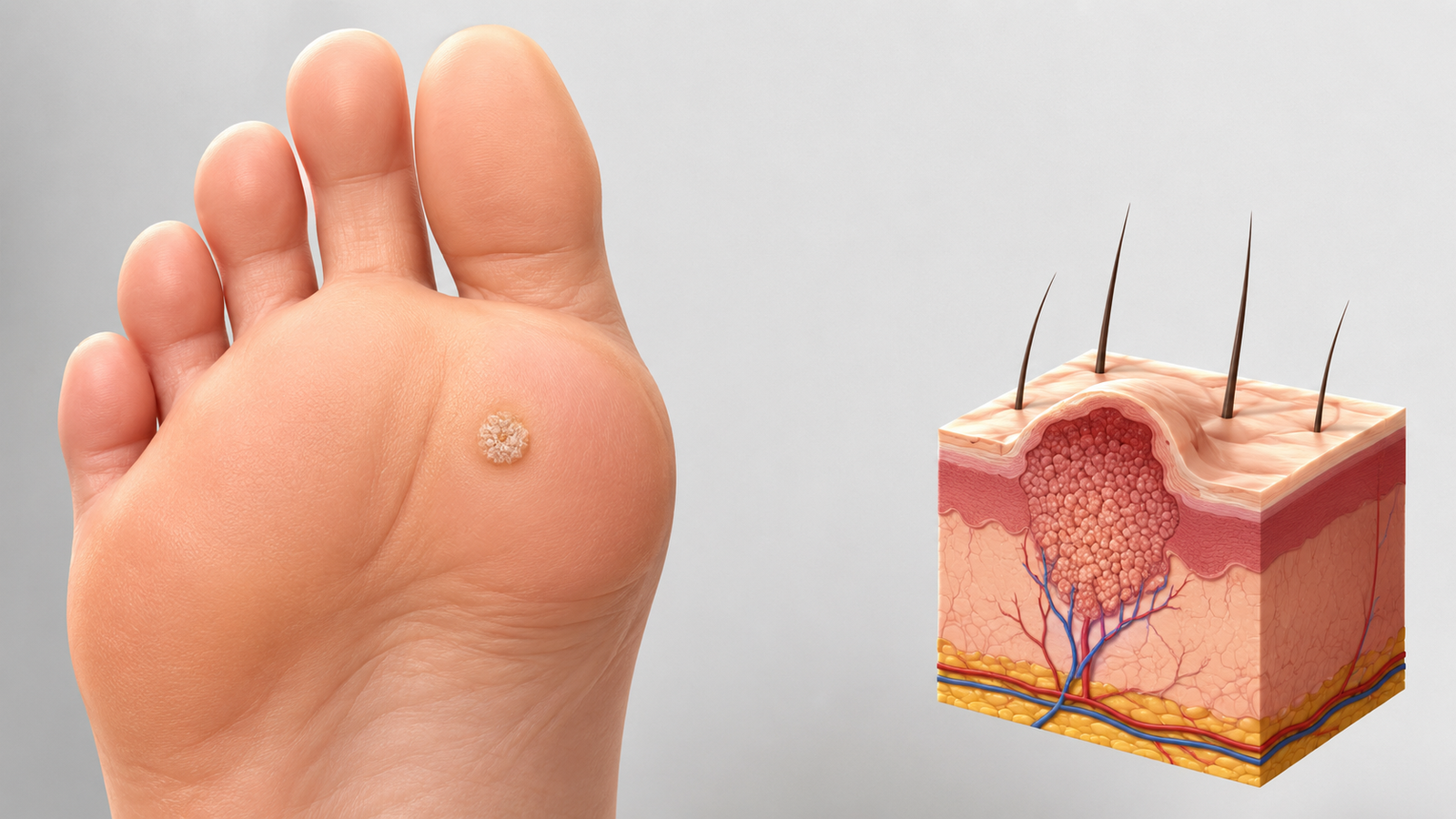
If you are staring at a wart that suddenly looks darker, crustier, or angrier than before, your first thought is probably not “great, it’s healing.” It is more likely “is this getting worse?” That reaction is completely understandable, and it is also one of the most common reasons people search for the stages of a wart falling off in the first place.
The truth is that a wart rarely disappears in one clean motion. It goes through a series of visible changes as the body breaks down infected tissue and replaces it with new skin. Some of those changes look dramatic. Almost all of them are normal.
This guide walks through each stage of the process in plain language, explains what is happening beneath the surface, and highlights the handful of warning signs that actually deserve a call to your doctor. By the end, you should be able to look at your own wart and know exactly where it sits in the healing timeline.
What Causes a Wart in the First Place
Warts are caused by the human papillomavirus, commonly known as HPV. There are more than one hundred strains of this virus, and a handful of them are responsible for the skin warts most people encounter on their hands, feet, or face.
The virus enters through tiny breaks in the skin and infects the top layer of cells. Those cells multiply faster than normal, which is what creates the rough, raised bump most of us recognize as a wart.
Understanding this helps explain why the healing process is not instant. Your immune system has to recognize the infected cells, shut down their blood supply, and clear them out before new, healthy skin can take their place. That entire sequence is what you are actually watching when you track the stages of a wart falling off.
The Six Stages of a Wart Falling Off
No two warts behave identically, but most follow a recognizable pattern. Here is the timeline broken into six practical stages, from the moment treatment or natural resolution begins to the point where new skin has fully formed.
Stage One: The Wart Before Any Change
At this point, the wart still looks the way it always has. It is rough to the touch, slightly raised, and often shows small black or dark red dots scattered across the surface.
Those dots are frequently mistaken for the “roots” of the wart. In reality, they are tiny blood vessels that have clotted, and they are a completely normal feature of most common and plantar warts.
Stage Two: Early Irritation
Once treatment begins, whether that is an over the counter acid, cryotherapy, or simply the body’s own immune response kicking in, the surrounding skin often becomes red, tender, or mildly swollen.
This is one of the most reassuring signs in the entire process, even though it does not feel that way. Redness and mild soreness usually mean the treatment is doing exactly what it is supposed to do: disrupting the tissue that houses the virus.
Stage Three: Darkening of the Wart
This is the stage that alarms people the most, and it is also one of the most searched moments in the entire healing timeline. The wart may turn brown, purple, gray, or even black.
That color change happens because the blood supply to the infected tissue is being cut off, and the cells inside begin to die. Dermatologists sometimes call this necrosis, but you do not need the technical term to understand what matters: a darkening wart is very often a dying wart, not a spreading one.
A useful way to tell the difference is to watch for pattern. Even, gradual darkening across the wart itself is typically part of normal healing. Sudden, severe pain combined with dark discoloration spreading into surrounding healthy skin is the combination that warrants a call to your doctor.
Stage Four: Scabbing and Crusting
As the dead tissue continues to break down, the surface of the wart hardens into a scab or crust. It can look dry, flaky, or even a little intimidating, especially compared to how the wart looked just a week or two earlier.
This is often the stage where people feel discouraged and stop treatment early. That is unfortunate, because a scabbed wart is usually closer to falling off than it has ever been. Resist the urge to pick at it. Picking increases the risk of scarring and can slow the entire process down.
Stage Five: Detachment
Eventually, the scab loosens from the healthy skin underneath. It might come away on its own during washing, peel off gradually over several days, or come off cleanly in one piece.
Underneath, you will likely see a small pink or slightly reddened patch, sometimes with a shallow indentation where the wart used to be. That is exposed, healing skin rather than a wound, and it is a completely expected part of the process.
Stage Six: New Skin Regeneration
In the final stage, the skin gradually returns to its normal color and texture. Some mild discoloration can linger for a few weeks, particularly on feet or areas with thicker skin, but this fades with time.
It is worth noting that even after the visible wart is gone, HPV can occasionally remain dormant in nearby tissue. This is why some warts return months later, and why finishing any recommended treatment course matters even after the surface looks clear.
How the Timeline Changes Depending on Treatment
The stages above hold true regardless of method, but the speed at which you move through them depends heavily on how the wart is being treated.
Left untreated. Roughly two out of three warts eventually resolve on their own as the immune system clears the virus, but this can take anywhere from several months to two years.
Salicylic acid. This gradual, at home treatment softens the wart layer by layer. Full resolution commonly takes eight to twelve weeks of consistent application.
Cryotherapy. Freezing with liquid nitrogen tends to move through the stages faster. Blistering often appears within days, and the wart typically detaches within one to three weeks, though larger or older warts may need repeat sessions.
Microwave or laser therapy. These newer, in clinic options can trigger a stronger immune response, sometimes shrinking the wart from its base rather than its surface, with visible results appearing within a few weeks.
Whichever method you choose, patience matters more than speed. Stopping treatment the moment things look worse is the single most common reason healing gets delayed.
What Different Wart Types Look Like as They Heal
Not every wart follows an identical script. Location and type both influence how the stages of a wart falling off actually appear.
- Common warts on the hands and fingers tend to follow the classic pattern described above, with clear darkening and scabbing.
- Plantar warts on the soles of the feet often flatten before they detach, since the pressure of walking pushes them inward rather than allowing them to rise and peel away easily.
- Flat warts, frequently found on the face or legs, are smaller and less likely to scab dramatically. They often simply shrink and fade.
- Filiform warts, which have a thin, thread like shape and usually appear around the eyes or mouth, tend to shrivel rather than form a thick crust.
Knowing which type you are dealing with can help set realistic expectations for how dramatic, or subtle, the healing process will look.
Signs Your Wart Is Healing the Way It Should
It helps to have a short mental checklist you can run through when a wart looks different from one day to the next. Reassuring signs include:
- Gradual darkening or shrinking rather than sudden change
- A dry scab forming over the area
- A steady reduction in size week over week
- No spreading of the rough texture into nearby healthy skin
- Pink, smooth skin appearing once the scab lifts
If most of these apply to what you are seeing, you are very likely watching a normal, healthy progression rather than a complication.
Warning Signs That Need Medical Attention
While most warts heal without incident, certain symptoms cross the line from “healing looks intense” to “this needs a professional opinion.” Reach out to a doctor or podiatrist if you notice any of the following.
| Symptom | Why It Matters |
|---|---|
| Severe or worsening pain | Can indicate deeper tissue involvement or infection |
| Pus, discharge, or a foul odor | Classic signs of bacterial infection |
| Rapid spreading beyond the original site | May suggest the virus is actively spreading rather than resolving |
| No visible change after several weeks of treatment | Could mean the current treatment is not working |
| Bleeding that will not stop with light pressure | Warrants evaluation to rule out other causes |
If you are ever unsure whether what you are seeing is normal healing or something else, a quick photo and a call to your healthcare provider is always a reasonable step. It is far better to ask an unnecessary question than to ignore a genuine warning sign.
Aftercare Tips for a Smoother Recovery
A few simple habits can meaningfully speed up healing and reduce the odds of scarring or recurrence.
Keep the area clean and dry, especially in the days right after the wart detaches. Avoid picking, scratching, or peeling any remaining scab, even when it feels loose. Wash your hands after touching the area, since HPV can spread to other parts of the body or to other people through direct contact. If the wart was on your foot, wear clean socks and change them daily until the skin has fully closed over.
These steps will not change which stage you are in, but they do reduce the chances of a setback like infection or a slower than necessary recovery.
Conclusion
Watching a wart go through the stages of falling off can feel unsettling, especially during the darkening and scabbing phases when everything seems to be getting worse instead of better. In reality, those stages are usually clear evidence that treatment is working and the body is doing exactly what it should.
To recap, most warts move through six recognizable phases: the original intact wart, early irritation, darkening as tissue dies, scabbing, detachment, and finally new skin regeneration. The exact pace depends on your treatment method and the type of wart involved, but the pattern itself remains fairly consistent.
If you keep an eye out for the warning signs covered above, and you resist the urge to pick or stop treatment too soon, most warts resolve fully without complications. When in doubt, a quick check in with a healthcare professional will always give you the clearest answer.
Frequently Asked Questions
Is it normal for a wart to turn black before it falls off?
Yes. Darkening usually means the blood supply to the wart has been cut off and the tissue is dying, which is a normal and expected part of healing.
How long does it take for a wart to fully fall off?
This varies by treatment and wart type, but most warts move through the full process within two to twelve weeks, with plantar warts and larger warts sometimes taking longer.
Should I pick at a scabbing wart to speed things up?
No. Picking increases the risk of infection, scarring, and delayed healing. It is best to let the scab detach naturally.
Can a wart come back after it falls off?
Yes, this is possible, since HPV can occasionally remain in nearby skin even after the visible wart is gone. Finishing your full treatment course lowers this risk.
What should the skin look like right after a wart falls off?
Expect pink or slightly red skin, sometimes with a small indentation, which should gradually smooth out and return to a normal tone over the following weeks.