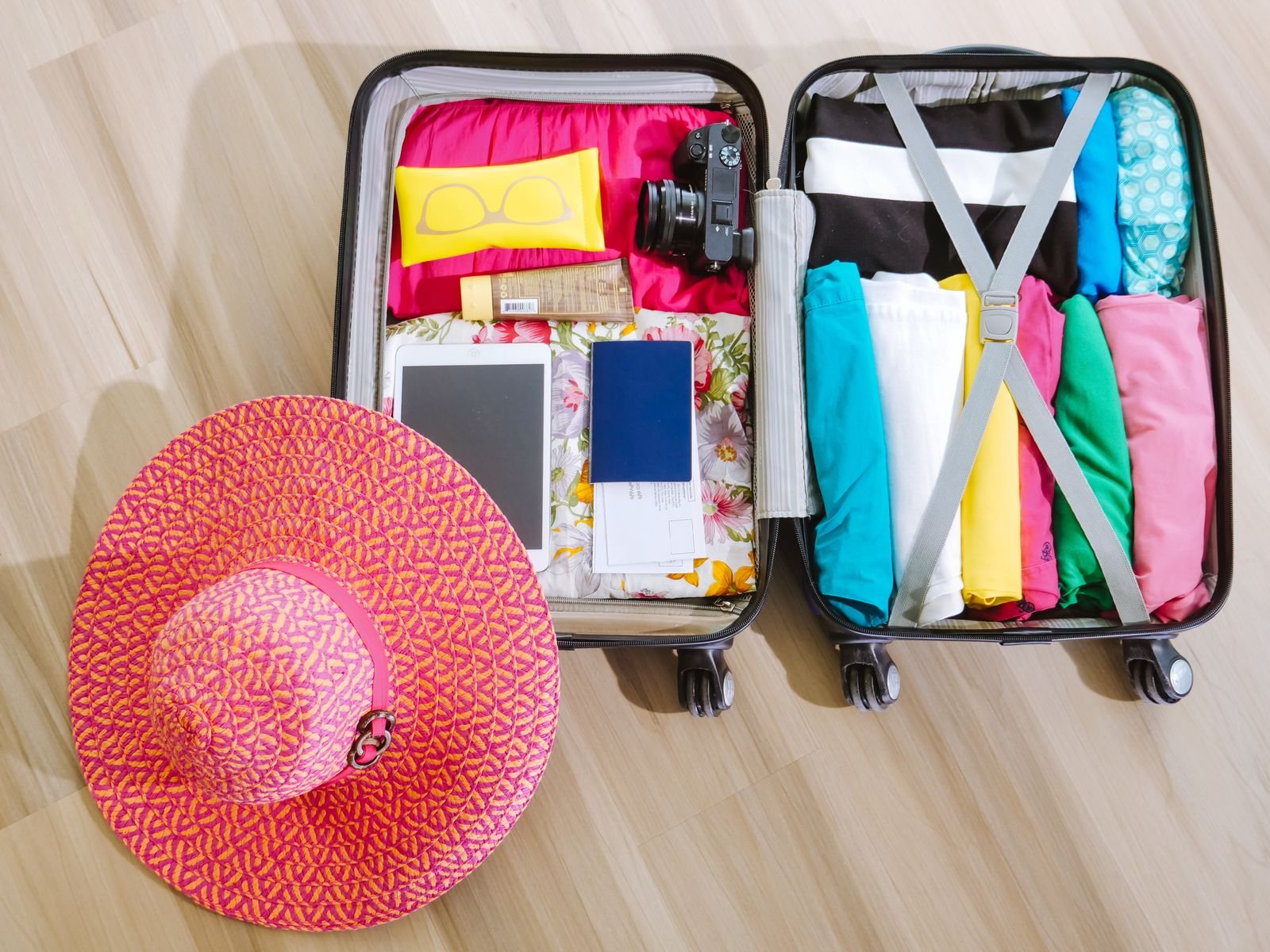
Picture this. You land in Edinburgh for a wedding, or you walk into a London hotel before a morning meeting, and you open your suitcase to find every shirt folded into a map of sharp creases. You had packed carefully. You had folded everything neatly. Yet your clothes look as if they spent the flight in a tumble dryer. If that scene feels familiar, you are not alone, and the fix is simpler than most packing guides suggest. Learning how to keep clothes wrinkle free while travelling comes down to three things: choosing the right fabrics, packing them in a way that avoids hard fold lines, and knowing what to do in the first hour after you arrive. Get those three right and you can step off a plane looking as fresh as when you left home.
This guide walks through the whole journey, from the wardrobe choices you make before you pack to the quick rescue tricks that save a creased shirt in a hotel room with no iron in sight. The methods here work for a weekend city break, a two week holiday, and a business trip where looking sharp actually matters. They need no special gear beyond a few packing cubes and a little patience, and they work in a cabin bag just as well as in a large checked case.
Why clothes crease in a suitcase
Creases are not caused by the suitcase itself. They are caused by three things acting together: pressure, moisture, and sharp folds. When fabric is damp or warm, the fibres inside it relax and loosen. When weight then presses those relaxed fibres into a sharp fold, they lock into that bent shape as they cool and dry. Leave them pressed that way for hours in a closed case and the crease sets hard.
That is why a shirt folded into a neat square often arrives looking worse than one that was loosely rolled. Every sharp fold is a line of intense pressure. The flatter and tighter the fold, the deeper the crease. The good news is that the same science points to the solution. If you remove sharp folds, keep pressure even, and keep clothes dry, wrinkles have nowhere to form. Every method in this guide works by controlling one or more of those three factors.
Humidity plays a part too. A damp bathroom, a rainy walk to the station, or clothes packed before they are fully dry can all add the moisture that lets creases set. Always pack clothes that are completely dry, and if you wash anything on the road, give it a full day to dry before it goes back in the case.
Choose fabrics that resist creases
The easiest way to keep clothes wrinkle free while travelling is to start with fabrics that do not crease much in the first place. Fabric choice does more work than any packing trick, and it costs nothing extra if you plan your travel wardrobe around it.
Fabrics that travel well
Merino wool is the standout natural fabric for travel. Its fibres have a natural spring that lets them bend and recover, so a merino jumper or tee shirt can spend a day folded in a bag and still look smooth when you shake it out. Technical fabrics made from nylon, polyester, and elastane blends are equally forgiving. They were designed for active use, and they shrug off creases that would ruin a cotton shirt.
Poly cotton blends deserve a place in your case too. A shirt with a good share of polyester in the mix will hold its shape far better than pure cotton, while still feeling comfortable against the skin. Viscose blends with elastane also travel well, and they drape nicely for smarter outfits. For dresses and smarter tops, look for fabrics described as crease resistant or easy care on the label. Those labels usually mean the fabric has been treated or blended to resist exactly the problem you are trying to solve.
Fabrics that crease badly
Pure linen is beautiful and breathable, and it creases the moment you look at it. That is part of its charm at home, but on a trip it can leave you looking rumpled within an hour of unpacking. Pure cotton is the next worst offender, especially cotton poplin shirts, which crease along every fold line. Rayon and some silks are also prone to deep creases, and they often need careful handling that a hotel room cannot provide.
None of this means you must leave your favourite linen shirt at home. It means you should pack it with extra care, using the bundle method described below, and accept that a quick steam on arrival will be part of the routine. If you are travelling for a wedding or an important meeting, though, choose the forgiving fabrics and save the linen for a relaxed holiday where a few creases do not matter.
How to keep clothes wrinkle free while travelling with the roll method
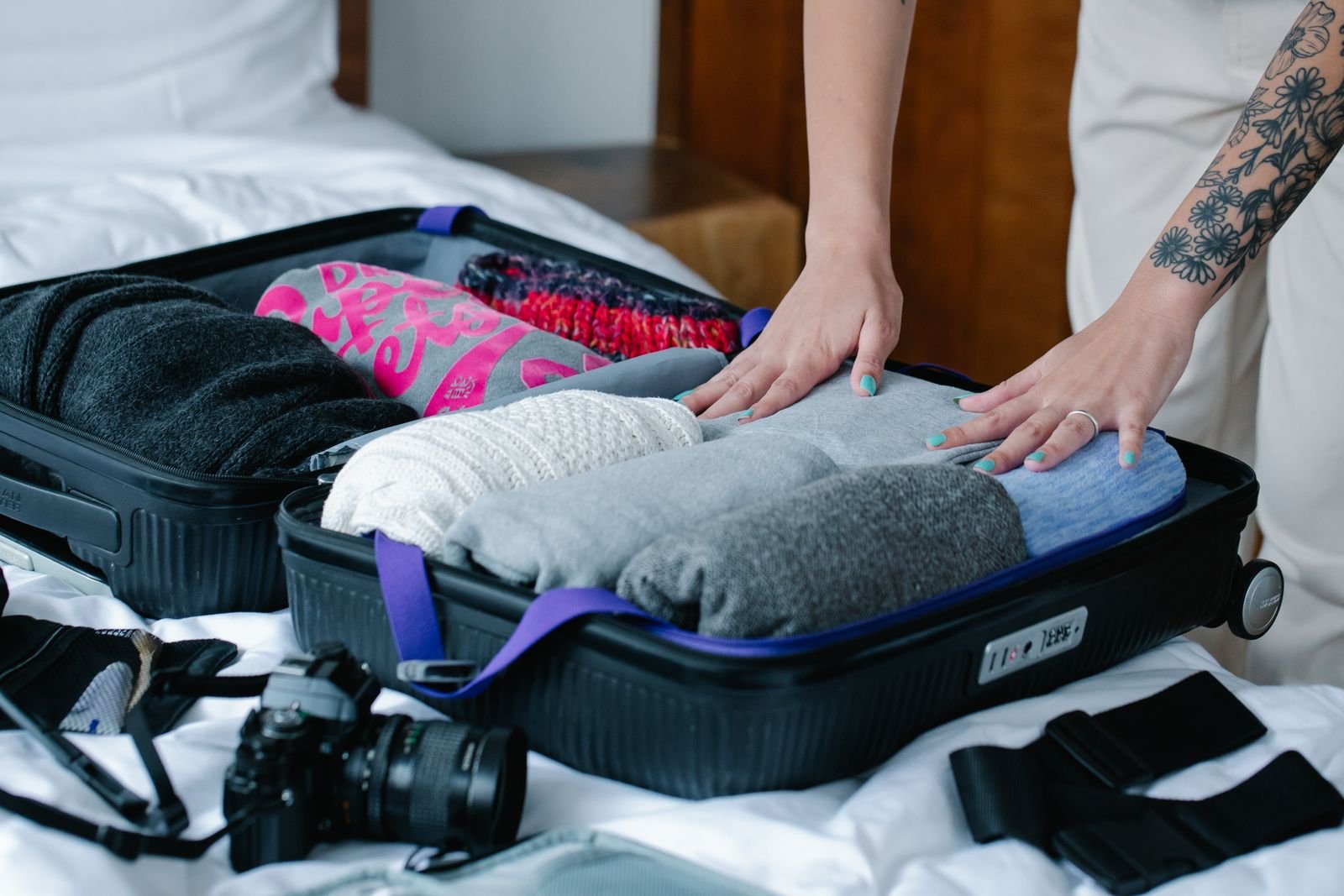
Rolling is the single most useful packing skill for wrinkle free travel, and it is easy to learn. A roll replaces a sharp fold with a gentle curve, so the fabric never gets pressed into a hard line. It also saves space and lets you see everything in your case at a glance.
Start by laying the garment flat on a bed and smoothing it with your hands from the centre outwards. Fold the sleeves inward so the shape is a neat rectangle, then roll firmly from the bottom hem towards the collar. Keep the roll even and snug, but do not pull it so tight that you stretch the fabric. A roll that feels like a wrapped scarf is right. A roll that feels like a poster tube is too tight, and it will create its own creases.
Place the rolls side by side in your case like files in a drawer, rather than stacking them in a pile. That way you can pull out one item without disturbing the rest, and the weight stays evenly spread. Soft items such as tee shirts, knitwear, jersey dresses, and casual trousers roll beautifully. Save flat folding for the structured pieces that need it, which we cover next.
One common mistake is rolling clothes that are still slightly damp from the wash. Even a little moisture lets creases set inside the roll. If in doubt, leave the garment hanging for an extra hour before you pack it. Your patience will be repaid when you unroll it smooth at the other end.
The bundle wrap for shirts and tailoring
Rolling works for soft clothes, but a tailored shirt, a blazer, or a smart dress needs a different approach. For those pieces, the bundle wrap is the best method available, and it is the technique frequent travellers use for the clothes that matter most.
Start with a soft core, such as a pouch of underwear and socks or a rolled tee shirt. Lay your most structured and crease prone piece flat on the bed, buttoned up, with the front facing down. Lay the next garment across it in the opposite direction, and keep layering until the stack is complete. Then fold the sleeves and tails of each garment smoothly over the core, working from the inside layer outwards. Because every piece wraps around a soft curve instead of folding against a hard edge, there are no sharp pinch points and no deep crease lines.
Place the finished bundle flat on top of your other clothes, where it will not be crushed. When you arrive, unwrap it straight away and hang the garments up. The bundle method takes a few minutes longer than ordinary folding, so practise it once at home before a real trip. After two or three tries it becomes second nature, and the results are worth the effort.
If your trip is mainly about business, this method pairs well with a dedicated plan for work clothes. Our guide to pack business clothes in a carry on without wrinkles covers shirts, suits, and shoes in more detail, and it is a useful companion to the general method here.
Suitcase layout that protects your clothes
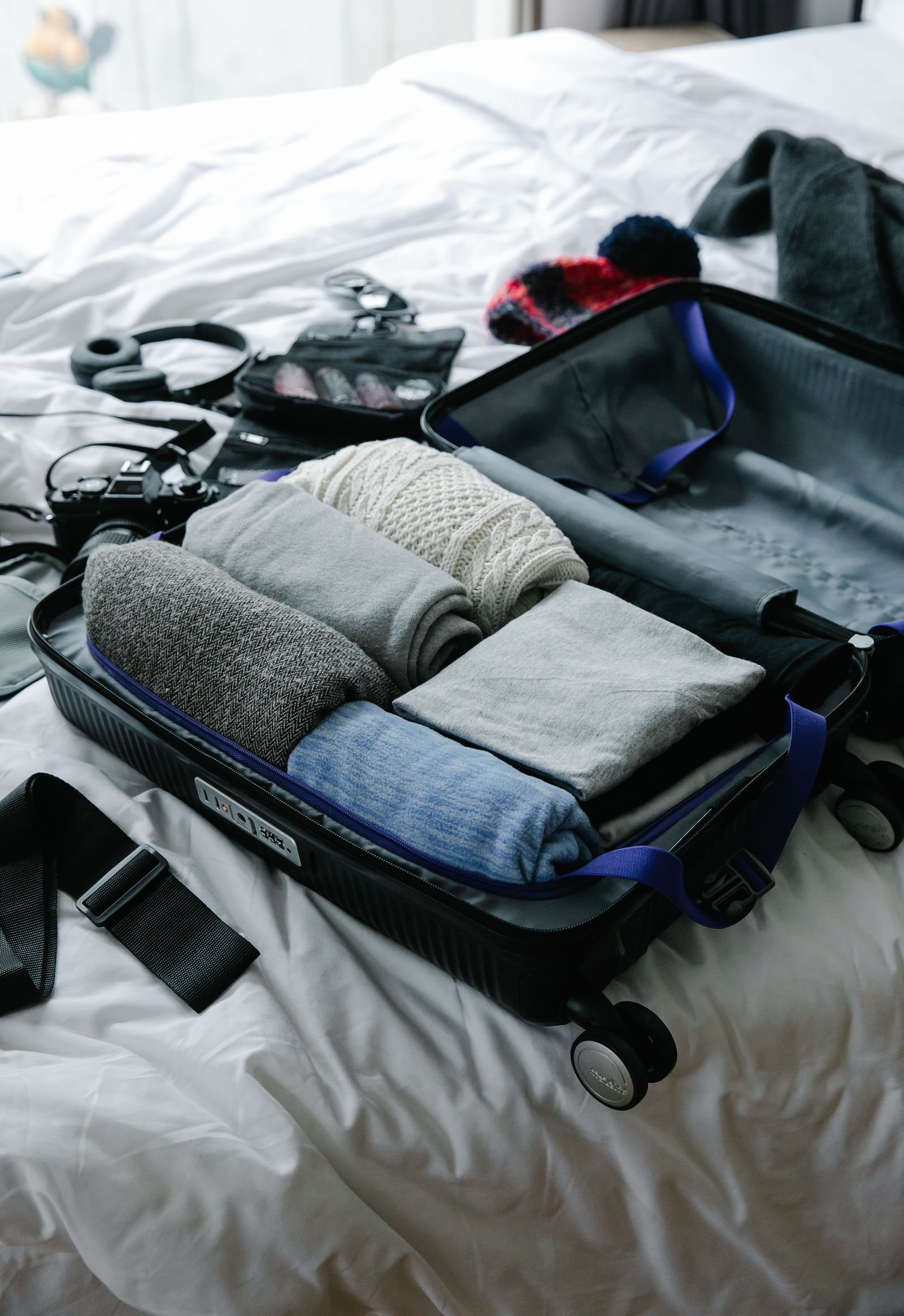
How you arrange the case matters as much as how you fold what goes in it. A good layout spreads pressure evenly, keeps heavy items from crushing light ones, and stops clothes shifting around in transit.
Put heavy items at the bottom of the case, near the wheels. Shoes in bags, sealed toiletry pouches, and books sit low, where their weight presses down on the sturdiest items rather than on your best shirt. Place rolled soft clothes in the middle layer, and keep structured pieces and the bundle wrap flat on top, where nothing presses on them.
Packing cubes help enormously here. They keep each group of clothes contained, so a shirt cannot slide around and bunch up during the journey. Use one cube for tops, one for bottoms, and one for underwear and socks. Do not overfill them. A cube squeezed shut like a vacuum bag will crease everything inside it, however neatly you packed it. Leave a little room, and treat each cube as a container, not a compression device.
Leave a little space in the case overall. An overstuffed suitcase is the fastest route to wrinkles, because every item is pressed hard against its neighbours for the whole journey. If the lid barely closes, take something out. You will not miss the extra outfit, and your clothes will thank you.
What to do the moment you arrive
The first hour after you arrive is when you can undo most of the damage from the journey, and it takes less effort than most people expect. Make unpacking the first thing you do, before you check your phone or head out to explore.
Open the case, take out the bundle wrap and any shirts, and hang them up straight away. Gravity does a surprising amount of work in the first hour, as fibres relax and light creases fall out on their own. Hang clothes on proper hangers, not on the back of a chair, and give each garment room to breathe. A crowded wardrobe rail will press new creases into clothes that have just recovered.
Close the bathroom door, run a hot shower for a few minutes, and hang the creased garment in the steamy room. The warm, damp air relaxes the fibres and lets the creases drop out. This is the classic hotel trick, and it works well for cotton, viscose, and most blends. Keep the garment away from direct water, and leave it hanging for 15 to 20 minutes while you have a cup of tea.
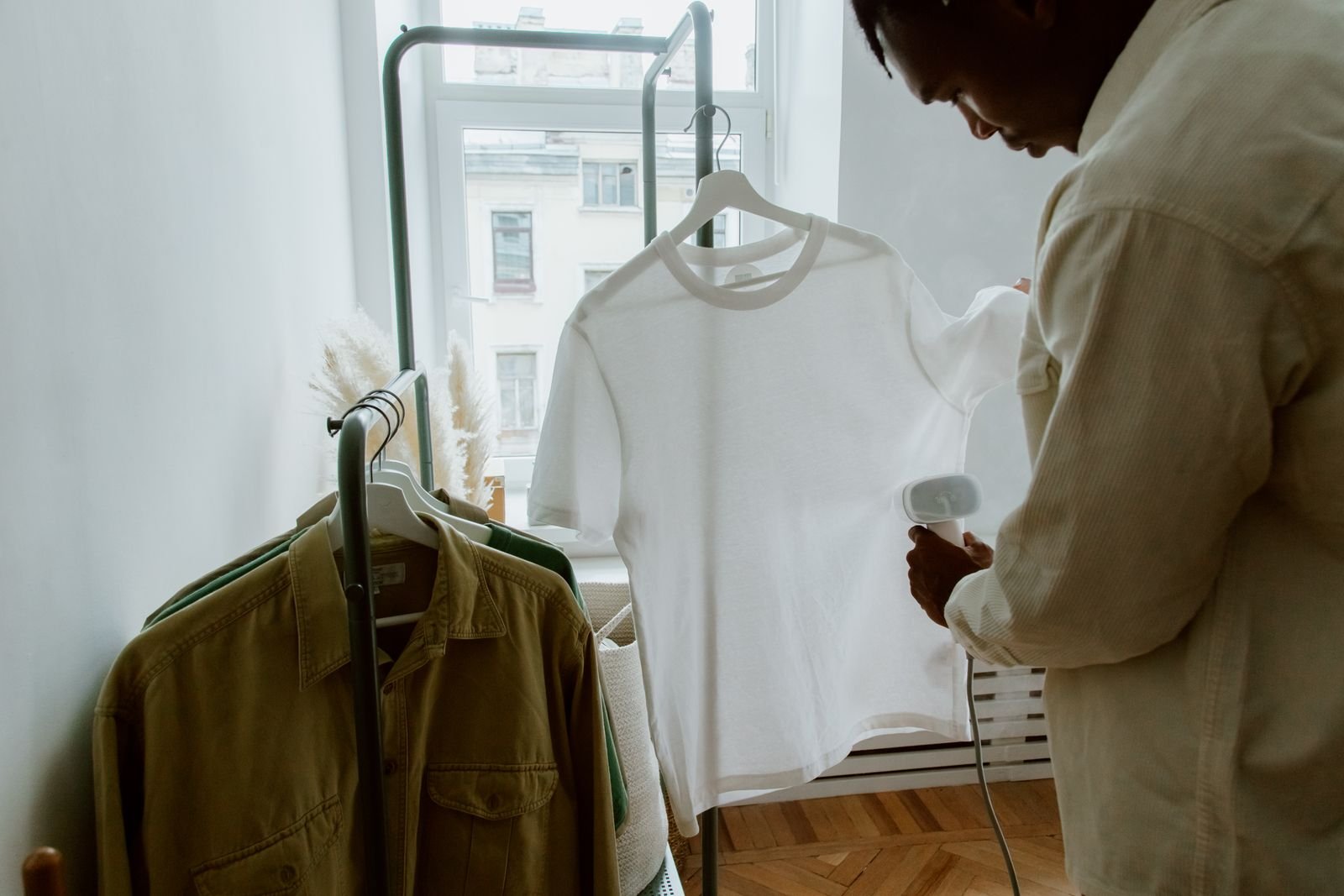
For a quick result on a shirt, a small travel steamer is worth its place in your case. It weighs little, costs less than a single airport meal, and smooths a shirt in under two minutes. If you travel often for work, it is one of the best value items you can own. If you do not own one, the shower steam method plus a careful hang will handle most creases well enough for a casual day out.
Quick fixes without an iron
Sometimes you need a shirt ready in ten minutes and there is no iron, no steamer, and no time for a shower. These quick fixes will not replace proper pressing, but they will get you looking presentable in a hurry.
A wrinkle release spray is the simplest option. Mist the garment lightly, smooth it with your hands, and hang it to dry for a few minutes. The spray relaxes the fibres just enough to let light creases fall out. You can buy small travel sized bottles, or make a simple version at home with water and a tiny amount of fabric softener in a spray bottle.
A hairdryer is another useful tool, and most hotel rooms provide one. Dampen the creased area lightly with water, hold the dryer a short distance away on a warm setting, and smooth the fabric with your other hand as you go. Work in short passes, and keep the dryer moving so you do not scorch one spot.
For a stubborn crease on a collar or cuff, hair straighteners work surprisingly well. Run them gently over the creased area on a low heat, as if you were ironing a narrow strip. Check the fabric care label first, and never use this method on silk or delicate fabrics. It is a rescue move for cotton shirts and sturdy blends, not a routine.
The mattress press is the oldest trick in the book, and hotel concierges have used it for years. Smooth the garment flat on a clean towel, roll it up loosely, leave it for two or three minutes, then unroll it and slip it flat under the edge of the mattress for 15 to 25 minutes. The even pressure relaxes the fibres without heat. Keep the garment near the edge of the mattress, where the pressure is firm but even, rather than in the middle where it can set odd creases.
A packing checklist for your next trip
A short checklist turns all of this into a habit. Run through it before every trip, and wrinkle free packing becomes automatic rather than a last minute scramble.
- Choose crease resistant fabrics first, and save linen and pure cotton for relaxed days.
- Wash and press key pieces at home, then let them cool and dry fully before packing.
- Roll soft clothes, and use the bundle wrap for shirts, blazers, and dresses.
- Use packing cubes, but never overfill them or the case itself.
- Put heavy items low, soft rolls in the middle, and structured pieces flat on top.
- Pack a small wrinkle release spray and, if you travel often, a travel steamer.
- Unpack and hang clothes within the first hour of arriving, and use shower steam for anything that needs help.
That list fits on a single card, and it covers the whole system. If you only remember one thing, remember this: sharp folds cause sharp creases, so replace folds with curves wherever you can.
Packing light makes the whole system easier, because a case with room to spare is a case that does not crush your clothes. If you are heading away for a short break, our guide to pack light for a weekend trip without checking a bag shows how to fit everything into a cabin bag. And if your trip involves a hostel stay, knowing how to sleep comfortably in a hostel dorm bed will help you arrive rested as well as well dressed.
Conclusion
Learning how to keep clothes wrinkle free while travelling is not about buying expensive luggage or mastering complicated techniques. It is about understanding why creases form and removing the conditions that let them set. Choose fabrics that resist creasing, roll soft clothes instead of folding them into sharp squares, wrap structured pieces in a bundle, lay out your case so nothing gets crushed, and unpack promptly when you arrive. Each step is small on its own, but together they make a real difference.
Try the system on your next trip, even a short one. Pack one shirt with the bundle method and one the old way, and compare them when you open the case. The difference will convince you faster than any guide can. Once you have seen it work, you will never go back to stuffing a case full of folded squares and hoping for the best. You will step off the plane, open your case, and find clothes that are ready to wear, which is exactly how travel should feel.
Frequently asked questions
Can you keep clothes wrinkle free in a cabin bag?
Yes, and a cabin bag can actually help, because it forces you to pack less and leave room around each item. Roll soft clothes, use one packing cube for tops, and place your bundle wrapped shirt flat on top. The key is the same as in a large case: no sharp folds, no overfilling, and unpack as soon as you arrive.
Does rolling clothes really prevent wrinkles?
Rolling prevents the sharp fold lines that cause the deepest creases, so it works well for tee shirts, knitwear, jersey, and casual trousers. It is not perfect for structured shirts and tailoring, which need the bundle wrap instead. Use rolling for soft items and bundle wrapping for smart ones, and you cover the whole wardrobe.
What is the best fabric for wrinkle free travel?
Merino wool and technical blends of nylon, polyester, and elastane are the most crease resistant choices. Poly cotton blends are a good everyday option for shirts. Pure linen and pure cotton crease the most, so pack them with extra care or save them for relaxed trips where creases do not matter.
How do you get wrinkles out of clothes in a hotel without an iron?
Hang the garment in a steamy bathroom for 15 to 20 minutes, or use a travel steamer if you have one. A wrinkle release spray plus a few minutes hanging will handle light creases. A hairdryer on a warm setting, used with a lightly dampened cloth, works for stubborn spots. Always unpack and hang clothes within the first hour of arriving.
Should you fold or roll clothes for a suitcase?
Roll soft and casual clothes, because rolling avoids hard fold lines and saves space. Fold or bundle wrap structured clothes such as shirts, blazers, and dresses, because they need flat support to hold their shape. A mix of both methods, with packing cubes to keep everything in place, gives the best result for most trips.