

It is 9:12 in the morning. Your laptop is open, a report is half written, and your coffee is already cold. Your toddler has just tipped a box of crayons across the floor. Your school age child needs help with a login for online class. Your phone buzzes with a message from your manager. In the space of ten minutes you have started three tasks and finished none of them. If this sounds familiar, you are not failing at remote work. You are trying to do focused work inside a day that was never built for it.
Learning how to stay focused when working from home with kids is not about willpower. It is about building a system that fits a real family day, with noise, snacks, school runs, and sudden demands. The parents who manage it best are not the ones with perfect silence. They are the ones with a plan for the noisy hours, a plan for the quiet hours, and honest expectations about what a day with children can hold.
This guide gives you that plan. You will learn how to find focus windows in your day, how to block time around family life, how to give your children clear signals, how to keep them happily busy, what to say to your employer, and how to let go of the guilt when the day does not go to plan.
Why Focus Feels So Hard at Home
Focus is hard at home because your brain pays a price every time it switches tasks. Researchers who study attention call this the switching cost. When you stop writing a report to answer a question about lunch, your mind does not snap straight back. Part of your attention stays with the interruption. Research from the University of California Irvine found that it can take more than 20 minutes to fully return to a task after an interruption. Three small interruptions can quietly eat an hour of your morning.
This is why a workday with kids can feel so exhausting even when you have not finished much. You are not lazy. You are switching context all day, and switching is tiring work in itself.
Author Cal Newport calls the opposite state deep work. Deep work is focused effort on one hard task without distraction. It is the state where you write the best report, solve the hardest problem, and finish work you feel proud of. Parents need deep work just as much as anyone else. They simply need to find it in smaller windows and protect those windows with care.
Here is the good news. You do not need eight quiet hours. Most remote working parents do their best work in one to three focused blocks a day. The rest of the day can hold email, calls, admin, and lighter tasks that survive an interruption. Once you accept that shape, the day stops feeling like a failure and starts feeling like a design you can improve.
How to Stay Focused When Working From Home With Kids Starts With Focus Windows
A focus window is a stretch of time when interruptions are unlikely and your energy is good. Your job is to find two or three of these windows in your day and guard them for your hardest work. Everything else can move. The windows cannot.
For many families, the first window is early morning. If your children wake at 7, a 5:30 start gives you 90 minutes of quiet before the house wakes. It is not easy, and it is not for everyone, but it is the most reliable quiet time most parents ever get. Use it for writing, planning, or any task that needs a clear head. Save email for later.
The second window is nap time. If you have a toddler who still naps, that nap is gold. Protect it. Do not spend it on laundry or scrolling. Do the one task that matters most, then stop when the nap ends. A 60 minute nap used well beats a whole scattered afternoon.
The third window is after bedtime. Once the children are asleep, many parents get another focused hour. This works best for lighter deep work, like editing, planning the next day, or finishing a draft. Be careful with late nights, though. If you work until midnight every night, your mornings will suffer. Use this window two or three nights a week, not every night.
Write your windows down. Put them in your calendar as real appointments. When you can see them, you can plan around them, and your family can learn when you are truly unavailable.
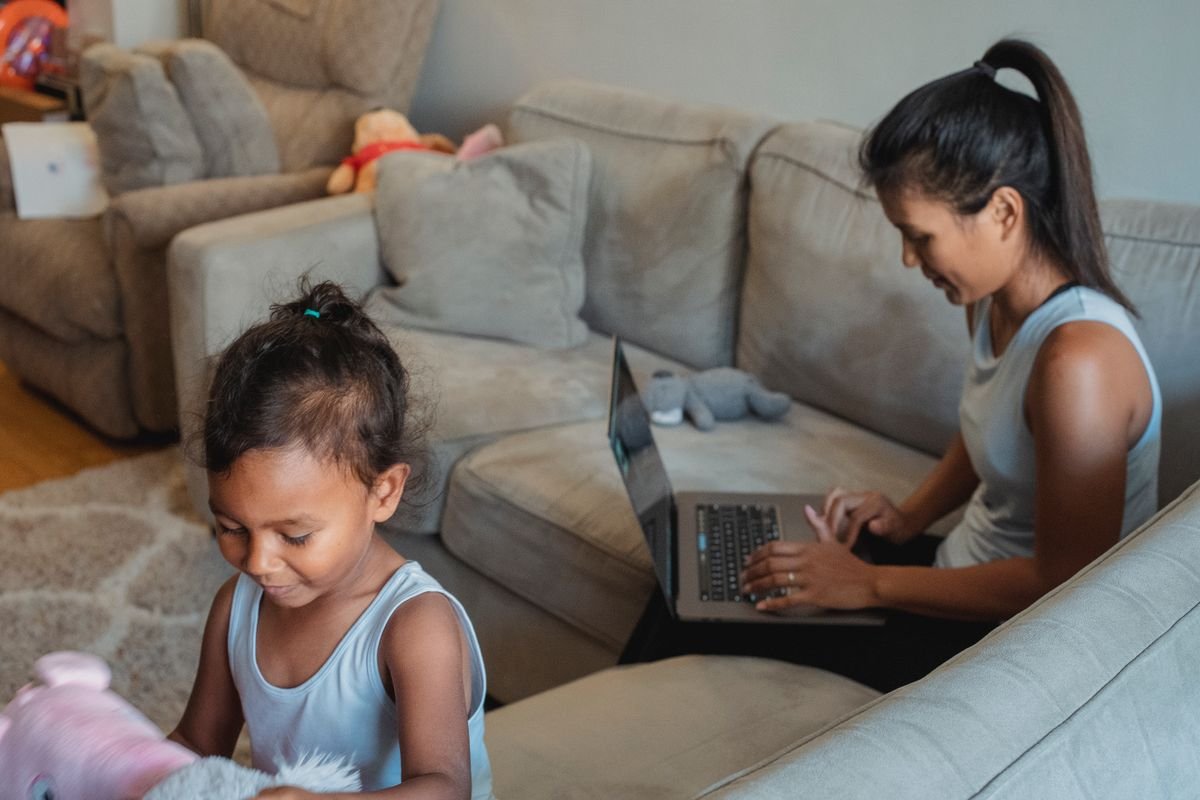
Time Blocking That Fits a Family Day
Time blocking means giving each part of your day a job before the day begins. Instead of opening your laptop and wondering what to do, you look at the plan and start. This matters even more with kids at home, because an unplanned day gets eaten by whoever shouts loudest.
Start the night before. Pick one main task for tomorrow. Just one. Write it on a sticky note and put it where you will see it. Then pick two smaller tasks. That is your whole list. If you finish the main task, the day is a win, even if the smaller tasks slip.
Next, match tasks to energy. Do hard thinking work in your focus windows. Do calls and email when the children are awake but busy. Do admin and tidying when energy is low. This simple match can double what you finish, because you stop asking a tired brain to do hard work at the wrong hour.
Use a simple priority check each morning. Ask which task would matter most if you only finished one thing today. To make that choice easier, learn how to prioritize your tasks with the Eisenhower Matrix. It sorts work by urgency and importance, so you stop spending your best hours on tasks that only feel urgent.
Keep blocks short. A 25 minute block followed by a 5 minute break works well for many parents, because it matches a child’s patience too. Tell your child you are working until the timer rings, then you will play together. Children accept a wait much better when they can see it ending.
Build in buffer time. Children get sick, school calls, and the internet drops at the worst moment. Leave one empty 30 minute block in your day. When nothing goes wrong, use it to get ahead. When something does go wrong, you have room to cope without losing the whole plan.
Do Not Disturb Signals Your Kids Can Actually Read
Children interrupt because they do not know when you are free. A closed door means little to a four year old. A clear visual signal works far better than a rule they cannot see.
Pick one signal and use it every day. A red card on the door means do not come in unless it is an emergency. A green card means you can come in. A pair of headphones means the same thing. The signal only works if it is always the same, and if you always respect it yourself by not checking your phone during red card time.
Practice the signal when you do not need it. Play a game where your child waits two minutes while you pretend to work, then you praise the wait and play together. Build up to five minutes, then ten. Children learn patience by practice, not by lectures.
Define what counts as an emergency in words a child understands. Blood, fire, and someone hurt are emergencies. A lost toy, a snack request, and a question about a game are not. Write the emergency list on the door with pictures so young children can read it.
For video calls, prepare in advance. Tell your children the call time, set up their activity before you join, and lock the door if you can. Good lighting helps too, so learn how to improve your video call lighting at home before your next meeting. A clear picture and a calm face make a brief interruption look far less chaotic than it feels.
If an interruption happens on a call, stay calm. Smile, mute yourself, deal with it quickly, and move on. Most colleagues understand. A short apology and a quick return to the topic is far better than a flustered excuse.
Activity Bins and Independent Play That Buy You Real Time
Independent play is the engine of focus for parents of young children. It does not happen by accident. It happens when you prepare activities that are new enough to hold attention and simple enough for a child to do alone.
Activity bins are the easiest way to do this. Take five or six boxes and fill each with a different activity. One holds building blocks. One holds coloring books and crayons. One holds play dough. One holds a simple puzzle. One holds toy cars and a road map drawn on cardboard. Rotate the bins so your child only sees two or three each day. A toy that was hidden for a week feels new again.
Introduce a bin only when you need focus time. Hand it over with a clear start and a clear end. Say you will work while they build, and you will look at the building when the timer rings. Then keep that promise. Children play longer when they trust that you will come back.
For older children, build a menu of quiet activities they can choose from. Reading, drawing, a puzzle, a craft kit, or a learning app all count. Let them choose, because choice builds ownership. A child who picks an activity will stick with it longer than a child who is handed one.
Keep screens as a tool, not a default. A 30 minute learning show during your most important call is fine. A whole morning of cartoons is not a plan. Use screens for the moments that matter most, and save the bins and books for the rest.
Finally, prepare the night before. Lay out the bins, charge the tablet, and put snacks in easy reach. Five minutes of preparation at night saves twenty minutes of chaos in the morning.
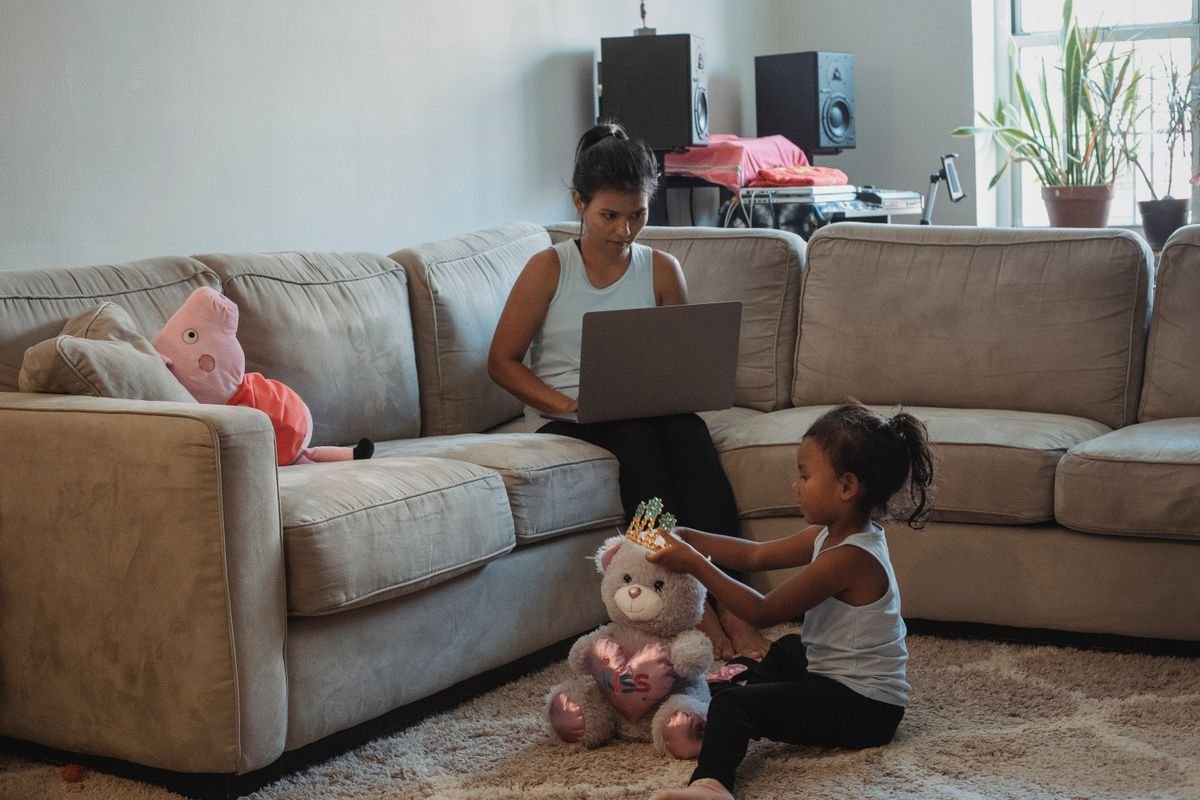
Toddlers vs School Age Kids: Different Ages Need Different Plans
A plan that works for a seven year old will fail for a two year old. Age changes everything: attention span, safety, and what a child can do alone. Match your plan to the age in front of you.
Working With Toddlers at Home
Toddlers need you close. They play best when they can see you, so set up their play area in the same room as your desk if you can. A small table, a box of safe toys, and a snack within reach can buy you a 20 minute block. That is a real win at this age.
Keep tasks short and your expectations low. Two or three 20 minute blocks in a morning is a good day with a toddler. Use nap time for your hardest work and accept that the rest of the day will be broken into small pieces. That is normal, not a sign of failure.
Use songs and routines to mark work time. A special work time song, a special box that only appears when you work, and a cuddle when the timer rings all help a toddler learn the pattern. Repetition is the teacher at this age.
Safety comes first. Never leave a toddler alone in a room to finish a call. If you need a quiet room, use a baby gate, a playpen, or a second adult. No deadline is worth an unsafe moment.
Working With School Age Kids at Home
School age children can understand rules and keep them. This is your advantage. Sit down together on Sunday and plan the week. Show them your focus windows and ask what they want to do during those times. When children help make the plan, they follow it far better.
Give them real jobs during your work blocks. Reading for 20 minutes, finishing homework, building a model, or writing a story are all good. Ask them to show you the result when the block ends. That small review turns waiting time into proud time.
Teach them to write down questions instead of interrupting. Keep a notepad by your desk. When your child has a question, they write it down and you answer it at the next break. This one habit can cut interruptions in half within a week.
Respect their school work too. If your child has homework or online class, that is their focus window. Protect it the way you protect yours. A family that respects focus together builds it together.
What to Say to Your Employer or Team
Many parents suffer in silence because they fear looking unprofessional. The truth is the opposite. A clear, honest message to your team builds trust. A missed deadline with no warning destroys it.
Tell your manager the shape of your day. You do not need a long story. A short message works best. Say that you work from home with children, that your deep work happens in the morning and after bedtime, and that you will answer messages within a set time. Most managers will respect that clarity.
Try a script like this for your manager. Say that your core hours are 9 to 3, that you are fully available for calls between 10 and 12, and that your focused writing happens before the children wake and after they sleep. Ask if that pattern works for the team, and offer one adjustment if needed. This shows you are solving the problem, not just reporting it.
For teammates, try a shorter script. Tell them you reply to messages within two hours during the day and faster during your call window. Tell them which channel to use for urgent items. Clear rules stop the stream of pings that break your focus.
If you work with clients, set expectations early. A calm note about reply times and meeting windows protects you far better than a rushed apology later. Learning how to set boundaries with clients is a skill that pays you back every week, because clients respect professionals who communicate clearly.
Ask for what you need. A later deadline, a meeting moved by an hour, or a quiet morning twice a week are small asks. Many employers will say yes if you ask early and show how the work will still get done. Do not wait until you are already behind.
Guilt, Burnout and Realistic Expectations
Here is the honest part most guides skip. Working from home with kids can bring guilt from both sides. When you work, you feel you should be with your children. When you play, you feel you should be working. That double guilt is exhausting, and it is also very common.
Start by naming a realistic number. For most parents with young children at home, one to three hours of real deep work a day is a strong result. If you hit two hours of deep work plus a few hours of lighter tasks, you have had a productive day. Stop measuring yourself against a child free colleague with eight quiet hours. That comparison is not fair and it is not useful.
Watch for burnout signs. Constant tiredness, snapping at small things, dreading the morning, and feeling numb at the end of the day are all warnings. Burnout does not mean you are weak. It means the load is too heavy for the support you have. If you see these signs, change something real. Cut one task, ask for help, or move a deadline.
Ask for help without shame. A partner who takes the morning shift, a grandparent who covers two afternoons a week, a neighbor who shares school pickup, or a few hours of childcare can change everything. Support is not cheating. It is how working parents have always managed.
Protect one hour a day that belongs to you alone. A walk, a book, exercise, or simply sitting quietly with tea all count. Rest is not a reward for finishing work. Rest is what makes finishing work possible.
Finally, forgive the messy days. Some days the plan will fall apart. A child will be sick, a call will run long, and the bins will end up all over the floor. On those days, do the one thing that matters most, then close the laptop and be present. Tomorrow is a fresh window.

Tools and Apps That Help You Stay Focused
Tools cannot fix a bad plan, but they can support a good one. Pick one tool from each group below and ignore the rest. Too many apps become a distraction of their own.
For time blocking, a simple calendar works best. Block your focus windows in your calendar and set a reminder ten minutes before each block. A paper planner works just as well if you prefer it.
For focus timers, try a simple timer app that runs 25 minute work sessions with short breaks. Some parents like apps that grow a virtual tree while you stay focused, because children love watching the tree grow too. The exact app matters less than the habit of starting the timer.
For noise, try white noise or gentle background sound when the house is loud. Headphones with noise cancelling can help during calls, but keep one ear free if you need to hear a young child.
For notes and questions, keep one shared family notepad. Children write their questions there, you answer them at breaks, and nothing gets lost. A simple system you actually use beats a clever system you forget.
Review your tools once a month. Keep what helps, drop what does not, and never pay for an app you have not used in two weeks.
Conclusion: Build a Day That Fits Your Family
Learning how to stay focused when working from home with kids is a design problem, not a discipline problem. Find your focus windows and guard them. Block your time the night before. Give your children a signal they can read. Prepare activity bins that make independent play easy. Match your plan to your child’s age. Tell your team the shape of your day. And be honest about what one to three hours of deep work can achieve.
Start small tomorrow. Pick one focus window, one main task, and one activity bin. Try it for a week and notice what works. Then keep the parts that help and change the parts that do not. A calm, focused workday with kids at home is not a fantasy. It is a system, built one small habit at a time, and you can start building it today.
Frequently Asked Questions
How do I focus with kids at home?
Find two or three focus windows in your day, such as early morning, nap time, or after bedtime. Do your hardest work in those windows, use time blocking for the rest, and give your children a clear visual signal for when you must not be disturbed.
How many hours of deep work are realistic with kids?
For most parents with young children at home, one to three hours of real deep work a day is a strong result. Add a few hours of lighter tasks around it, and that is a full and productive day.
How can I stop interruptions on video calls?
Prepare before the call. Set up an activity for your child, use a clear do not disturb signal, and tell your child the call time in advance. If an interruption still happens, stay calm, mute yourself, deal with it quickly, and return to the call.
What is the best way to keep a toddler busy while I work?
Use activity bins that you rotate each day, keep play in the same room where you can see your child, and work in short 20 minute blocks with a break and a cuddle at the end of each one.
Should I work early in the morning or late at night?
Early morning suits most parents because energy is fresh and the house is quiet. Late nights work too, but only two or three nights a week, because regular late nights will hurt your mornings and your health.