
Every professional knows the feeling. You start the day with a plan, then by lunch your task list has doubled and the important work has moved to tomorrow. Again. If you want to learn how to prioritize tasks using the Eisenhower Matrix, you are in the right place. This simple four box framework has helped managers, freelancers and remote workers decide what truly matters for more than seventy years, and it still works beautifully in a world of constant notifications.
In this guide you will learn what the Eisenhower Matrix is, how each of the four quadrants works, and how to prioritize tasks using the Eisenhower Matrix in a practical daily routine. You will see a worked example of a real messy day sorted through the matrix, the five mistakes that break the system, and how teams can use it together. By the end you will have a repeatable method for turning a chaotic task list into a calm plan of action.
Why Your To Do List Is Not Helping You
A traditional to do list treats every task as equal. Replying to a casual message sits next to finishing a client proposal, and both look equally urgent on paper. Your brain is left to decide on the fly, and under pressure it almost always picks whatever is loudest instead of whatever is most important.
This is why busy people can work for ten hours and still feel behind. They spent the day reacting. The loudest task, the newest email and the most recent message all won priority, while the quiet important work waited patiently and then became a crisis. The problem is not effort. It is the absence of a system that separates what demands attention from what deserves it.
Prioritization frameworks exist to solve exactly this problem, and the Eisenhower Matrix is the simplest one that actually works. It forces every task through two questions before you act. Once you build that habit, your days stop being dictated by other people and their urgency.
What Is the Eisenhower Matrix
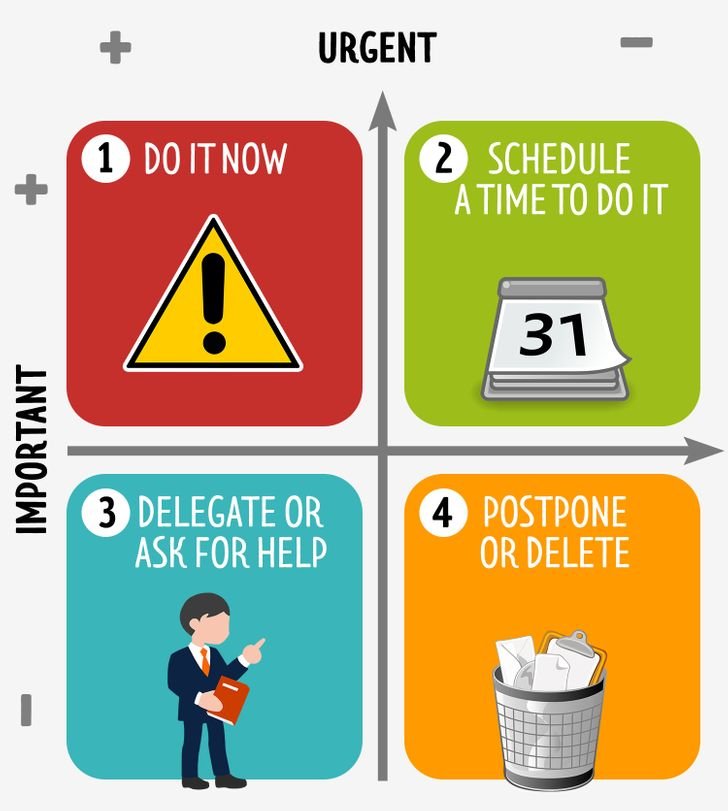
The Eisenhower Matrix is a task prioritization tool that sorts every task into one of four boxes based on two qualities: urgency and importance. Urgent tasks demand your attention soon, with deadlines or real consequences attached. Important tasks contribute to your goals, your responsibilities and your long term results, even when nobody is shouting about them.
The matrix is often drawn as a square divided into four quadrants. The top left box holds tasks that are urgent and important. The top right holds tasks that are important but not urgent. The bottom left holds tasks that are urgent but not important. The bottom right holds tasks that are neither. Each box comes with a clear action: do, schedule, delegate or delete.
The Story Behind the Matrix
The framework is named after Dwight D Eisenhower, the 34th President of the United States and a five star general in World War II. In a 1954 speech he quoted an unnamed university president who said: I have two kinds of problems, the urgent and the important. The urgent are not important, and the important are never urgent.
Eisenhower used this distinction to run the free world, and decades later the author Stephen Covey popularized the four quadrant version in The 7 Habits of Highly Effective People. Covey called it the Time Management Matrix, but the idea is identical. What matters is not who invented it. What matters is that it turns a vague sense of overwhelm into four clear buckets with four clear actions.
The Four Quadrants Explained
Before you can sort anything, you need to understand what belongs in each box. Each quadrant represents a different relationship between urgency and importance, and each one asks for a different response from you.

Quadrant 1: Urgent and Important. Do It Now
These are your genuine crises and hard deadlines. A client proposal due this afternoon, a server outage affecting customers, a report your manager needs before the board meeting, a medical issue that cannot wait. Quadrant 1 tasks have real consequences and they are happening now.
Everyone has some Quadrant 1 work. The goal is not to eliminate it, which is impossible, but to keep it small. A life spent entirely in Quadrant 1 is exhausting and reactive. Many Quadrant 1 crises started as quiet Quadrant 2 tasks that were ignored until they became emergencies.
Quadrant 2: Important but Not Urgent. Schedule It
This is the most valuable quadrant in the entire matrix and the one most people neglect. Quadrant 2 holds the work that builds your future: strategic planning, skill development, relationship building, preventive maintenance, exercise, proper rest and process improvement. Nothing here is shouting at you. That is exactly why it gets skipped.
Highly effective people spend the majority of their working time in Quadrant 2. When you invest in planning, crises become rarer. When you invest in relationships, problems get solved faster. When you invest in skills, everything gets easier. The matrix makes this invisible work visible so you can protect it.
Quadrant 3: Urgent but Not Important. Delegate It
These are the interruptions that feel pressing but do not move your goals forward. Most meetings you were invited to out of habit, routine emails someone else could answer, colleagues dropping by with their own urgencies, notifications from apps you forgot to silence. Quadrant 3 is the busiest and least rewarding place to spend a day.
The correct response is to delegate, batch or deflect these tasks. Ask whether someone else could handle it. Ask whether it can wait until a set time. Ask whether a template answer exists. Every hour you hand back from Quadrant 3 is an hour you can give to Quadrant 2.
Quadrant 4: Neither Urgent nor Important. Delete It
These are pure distractions: endless scrolling, binge watching during work hours, gossip, over organizing your desk for the fifth time, tasks you keep copying from list to list without ever intending to do. Quadrant 4 activities feel like breaks but they rarely refresh you.
Be honest here. Some Quadrant 4 time is fine, because everyone needs genuine rest. The problem is not relaxing. The problem is calling distraction productivity. Delete what you can, limit what remains, and stop pretending it counts as work.
How to Prioritize Tasks Using the Eisenhower Matrix in Four Simple Steps
Theory is useful only if it changes your day. Here is the practical routine you can start using this afternoon. It takes about ten minutes and it works with a notebook, a whiteboard, sticky notes or any task app you already use.
Step 1: Write Down Everything

Start with a complete brain dump. Write down every task, project, appointment and obligation competing for your attention. Do not filter, sort or judge yet. The point is to get everything out of your head and onto paper, because an overloaded mind cannot prioritize clearly.
Include the obvious work tasks, the personal admin you keep forgetting, the vague worries like prepare for the performance review, and the small things like book the dentist. A task list you cannot see in full is a task list you cannot manage. Most people discover twenty to thirty items when they do this honestly.
Step 2: Ask the Two Key Questions
For each item, ask two questions. First: is this urgent, meaning does it need action soon and would delay cause a real consequence? Second: is this important, meaning does it support my goals, my responsibilities, my team or my long term results?
The order matters. Ask about urgency first because it is easier to spot, then ask about importance because that is the question that actually protects your time. The classic trap is answering yes to important for everything. Be strict. If a task does not connect to a real goal or responsibility, it is not important, no matter how loudly it demands attention.
Step 3: Sort Each Task Into a Quadrant
Place every item into one of the four boxes. Urgent and important goes in Quadrant 1. Important but not urgent goes in Quadrant 2. Urgent but not important goes in Quadrant 3. Neither goes in Quadrant 4. If you use sticky notes on a board, physically moving them makes the sorting feel real.
Expect to argue with yourself on about a third of the items. That argument is the whole point. The matrix works because it forces the uncomfortable judgment calls you have been postponing. A task that has sat in Quadrant 2 for three weeks without being scheduled is telling you something honest about your priorities.
Step 4: Act on the Matrix
Now the actions. Do the Quadrant 1 tasks first, starting with the one that has the nearest hard deadline. Then put Quadrant 2 tasks directly into your calendar with protected time blocks, because unscheduled important work never happens. Delegate or batch the Quadrant 3 tasks. Delete or strictly limit the Quadrant 4 tasks.
Repeat this process daily. Spend five to ten minutes each morning reviewing new tasks and adjusting what shifted overnight. Spend fifteen minutes each Friday reviewing the week. The daily review keeps today clear. The weekly review keeps your life aligned with your goals.
A Worked Example: One Messy Day Sorted
Let us see the matrix in action. Meet Nadia, a freelance marketing consultant juggling clients, admin and a course she is building. Here is her Tuesday list before sorting, and where each item lands.
Her unsorted list: client proposal due today at 4pm, reply to twelve emails, plan next quarter content calendar, invoice the client from last month, team standup meeting, fix the broken link on her portfolio site, watch a webinar on analytics, scroll competitor feeds, reorganize her file folders, prepare slides for Thursday workshop, call the accountant about tax paperwork, renew her domain name before it expires.
Quadrant 1, do now: the client proposal due at 4pm, renewing the domain name before expiry, preparing Thursday workshop slides since the outline is due Wednesday. Quadrant 2, schedule: the content calendar for next quarter, calling the accountant about tax paperwork, fixing the broken portfolio link. Quadrant 3, delegate or batch: replying to the twelve emails as one batch at 3pm, the standup meeting which she shortens to fifteen minutes, the analytics webinar which she watches at double speed later. Quadrant 4, delete or limit: scrolling competitor feeds, reorganizing file folders that were already fine.
Notice what changed. Nadia stopped treating the webinar and the emails as equal to the proposal. She gave her morning to Quadrant 1, blocked her early afternoon for Quadrant 2, and refused to let Quadrant 3 interruptions fragment her focus. For anyone running a freelance business, this kind of triage pairs well with good organization habits, such as learning how to create a digital filing system for small business, so that admin stops stealing creative hours.
The Daily Routine That Makes It Stick

A framework you use once is entertainment. A framework you use daily is a system. The Eisenhower Matrix earns its place when it becomes a short routine you run every morning, almost without thinking.
Morning, five minutes: look at the day ahead. Identify your Quadrant 1 items, anything with a hard deadline today or a genuine crisis. Then choose your single most important Quadrant 2 task, the one thing that would make the day a success regardless of everything else. Start with Quadrant 1, then protect time for that Quadrant 2 task.
During the day: when a new task arrives, run the two questions before adding it to any list. Quadrant 1 goes to the top. Quadrant 2 gets a calendar block. Quadrant 3 gets delegated or batched with similar tasks. Quadrant 4 gets removed or parked. This thirty second habit is what stops other people from designing your day for you.
Evening, five minutes: review what happened. Did Quadrant 3 or 4 tasks crowd out your Quadrant 2 work? If so, what can you change tomorrow? Small business owners who run this review consistently find their weeks get calmer, which frees energy for growth work like learning how to start a newsletter for your small business instead of firefighting.
Five Mistakes That Break the Matrix
The matrix is simple, but people still find creative ways to misuse it. Here are the five most common mistakes and how to avoid them.
First, labeling everything as important. If every task is important, the matrix changes nothing. Fix this by defining your top three to five goals for the quarter first. A task is important only if it serves one of them. Everything else is, by definition, not important.
Second, confusing urgency with importance. A message marked urgent by someone else is not automatically important to you. Ask whose goal it serves. If it serves only the sender, it belongs in Quadrant 3.
Third, starving Quadrant 2. Most people schedule Quadrant 1, react to Quadrant 3, and leave Quadrant 2 to whenever there is time. There is never time. Quadrant 2 needs calendar blocks treated with the same respect as client meetings.
Fourth, building the matrix and never reviewing it. Priorities shift daily. A matrix from Monday is a museum piece by Thursday. The five minute morning review is not optional, it is the product.
Fifth, trying to delegate without a system. Delegation fails when tasks live only in your head. Keep a simple shared list so that handing work over takes seconds, not a long meeting. Freelancers and contractors can read more about keeping their admin tight in this guide on how to track business expenses as a freelancer, since clear finances make delegation decisions easier.
Using the Matrix With a Team
The Eisenhower Matrix works even better as a shared language. When a whole team understands the four quadrants, priority conversations stop being arguments about feelings and start being questions about boxes.
Try this in your next planning meeting. Have everyone write their tasks on sticky notes, then sort them together on a board or shared screen. You will immediately see the imbalances: one person drowning in Quadrant 1, another overloaded with Quadrant 3 requests from colleagues, Quadrant 2 work with nobody assigned. Rebalance on the spot.
For remote teams, keep a shared matrix in your project tool and review it in the weekly standup. It gives quiet team members a structured way to say I am overloaded, and it gives managers a visible picture of where the team is spending its energy. Over time the team starts self correcting, pushing back on Quadrant 3 requests before they reach a sprint.
Conclusion: Pick Your Top Three
Learning how to prioritize tasks using the Eisenhower Matrix is not about drawing pretty boxes. It is about building one habit: asking, before every task, whether it is urgent and whether it is important. That tiny pause is the difference between a day that happens to you and a day you designed.
Start small. Do the brain dump today. Sort the list honestly. Protect one Quadrant 2 block tomorrow morning. Repeat for a week and watch how the pattern of your days changes. The matrix will not give you more hours, but it will make sure your hours go to the work that actually counts. The takeaways are simple: separate urgent from important, protect your Quadrant 2 time on the calendar, delegate or batch the urgent distractions, and review the matrix every morning so it stays current.
Frequently Asked Questions
How do you decide if a task is urgent or important?
Ask whether the task needs action soon and whether delay would cause a real consequence. That is urgency. Then ask whether it supports your goals, responsibilities or long term results. That is importance. Replying to a routine message may feel urgent but rarely matters. Planning a project timeline may not feel urgent today but prevents missed deadlines later.
How often should you update your Eisenhower Matrix?
Daily reviews work best. Spend five to ten minutes each morning sorting new tasks and adjusting what shifted overnight. A longer weekly review on Friday or Sunday helps you check whether you are actually spending time in Quadrant 2 or just talking about it.
Which quadrant should you spend most of your time in?
Quadrant 2, the important but not urgent box. Highly effective people spend the majority of their working time there, on planning, skill building, relationships and prevention. Investing in Quadrant 2 shrinks Quadrant 1 crises over time, so your weeks get calmer instead of louder.
Can the Eisenhower Matrix work for teams?
Yes. Teams can sort tasks together on a board or shared screen during planning meetings, which reveals imbalances like one person drowning in Quadrant 1. Remote teams can keep a shared matrix in their project tool and review it in the weekly standup to rebalance workloads.
What is the biggest mistake people make with the Eisenhower Matrix?
Labeling everything as urgent and important. When every task qualifies, the matrix changes nothing. The fix is to define your top three to five goals for the quarter first, and only count a task as important if it serves one of them. Be strict and the system starts working.