
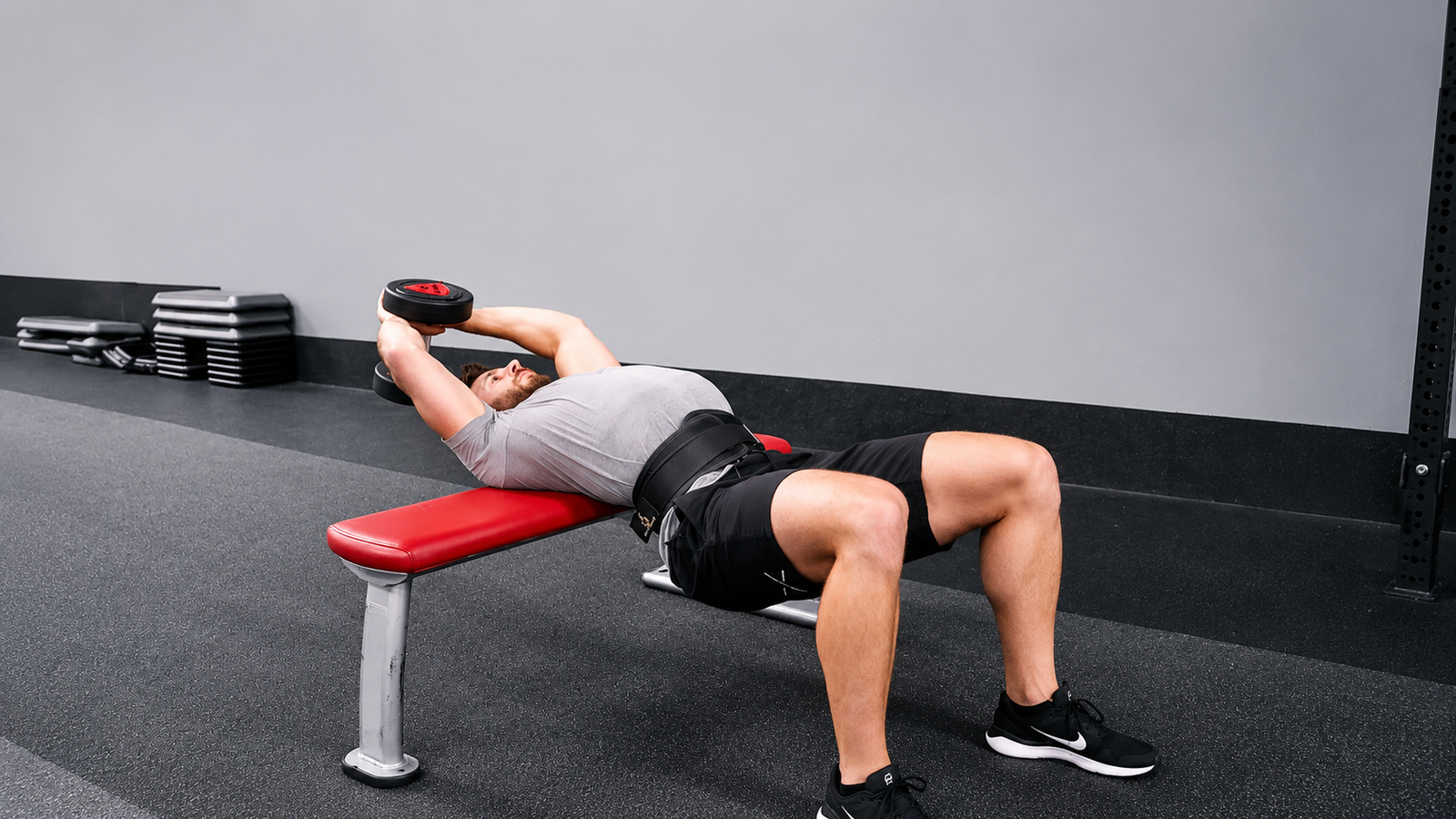
If you have spent any time around a weight bench, you have probably seen someone lying flat with a single dumbbell held overhead, slowly lowering it behind their head. That movement is the dumbbell pullover, and it is one of the most misunderstood exercises in the gym.
Some people treat it as a chest exercise. Others swear it belongs on back day. The truth is that the dumbbell pullover can train both, depending on how you set it up. This guide will walk you through everything you need to know: proper form, the muscles involved, common mistakes, smart variations, and how to actually fit it into your training plan.
Whether you are new to strength training or you have been lifting for years and just want to clean up your technique, this article gives you a complete, practical roadmap for mastering the dumbbell pullover.
What Is the Dumbbell Pullover
The dumbbell pullover is a strength exercise performed lying on a bench, holding a single dumbbell with both hands above the chest, then lowering it in a slow arc behind the head before pulling it back to the starting position.
It has been a staple of bodybuilding programs since the golden era, when lifters like Arnold Schwarzenegger used it to build a wider rib cage and a thicker upper body. It has stayed popular for decades because it does something few other exercises can: it trains the chest and the back at the same time, in one fluid motion.
Unlike most pressing or pulling movements, the pullover works through a large range of motion at the shoulder joint. This makes it valuable not just for muscle growth, but for shoulder mobility and control as well.
Is the Dumbbell Pullover for Chest or Back
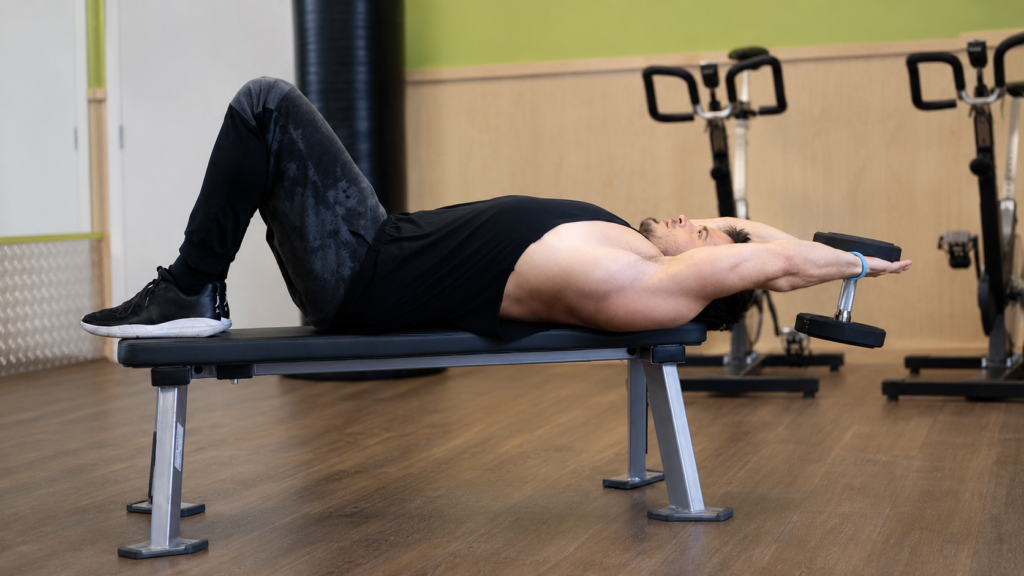
This is the question most people search for, and the honest answer is that it can be both, depending on your setup.
The direction your elbows point during the movement changes which muscle group does most of the work. Point your elbows out to the sides and you will feel your chest working harder. Tuck your elbows in slightly and keep them pointed toward your knees, and your lats take over as the primary mover.
Most lifters use a middle ground with a slight elbow bend, which naturally recruits both the chest and the back to some degree. This is one reason coaches often program the dumbbell pullover on chest day, back day, or even as a finisher for a full upper body session.
Chest Focused Pullover
For a chest emphasis, flare your elbows outward slightly during the descent. This shifts more tension onto the pectoral muscles, especially at the bottom of the stretch.
Back Focused Pullover
For a back and lat emphasis, keep your elbows closer together and rotate your upper arms inward. This mimics part of the pulling pattern used in a lat pulldown and puts more demand on the latissimus dorsi.
Muscles Worked During the Dumbbell Pullover
The dumbbell pullover is a compound movement, meaning it recruits several muscle groups rather than isolating just one. Here is a breakdown of what is actually working during each rep.
- Pectoralis major: the primary chest muscle, most active as you pull the dumbbell back to the starting position.
- Latissimus dorsi: the large back muscle that runs from your armpit down to your lower back, heavily involved during the lowering phase and the pull back up.
- Triceps: engaged throughout the movement to keep the elbows slightly bent and stable.
- Serratus anterior: located along the ribs, this muscle helps stabilize the shoulder blade and is one of the more underrated benefits of this exercise.
- Core and abdominal muscles: your midsection works to keep your spine neutral and your ribs from flaring as the weight travels overhead.
Because it activates so many muscles in a single pattern, the dumbbell pullover is often described as an efficient exercise for anyone short on training time but still looking for a solid upper body stimulus.
How to Do a Dumbbell Pullover with Proper Form
Good technique is what separates a productive set from a wasted one, or worse, an injury. Follow these steps closely, especially if this is your first time trying the movement.
- Choose an appropriate dumbbell. Start lighter than you think you need. A good starting point for beginners is roughly a quarter to a third of your body weight, though this varies from person to person.
- Sit near the end of a flat bench holding the dumbbell upright on one thigh.
- Lie back so that only your upper back, shoulders, and head rest on the bench, with your hips slightly lower and your feet planted firmly on the floor.
- Hold the dumbbell with both hands, palms pressed against the underside of the top plate, forming a diamond shape with your hands.
- Press the dumbbell straight above your chest with a slight bend in your elbows. This is your starting position.
- Slowly lower the dumbbell in a controlled arc behind your head, keeping your elbows at that same slight bend throughout.
- Continue lowering until you feel a deep stretch through your chest and lats. You do not need to touch the floor. Depth should be dictated by how far you can go with good control, not by pushing your shoulder joint past its comfortable range.
- Pause briefly at the bottom, then reverse the motion by pulling the dumbbell back up and over your chest, focusing on squeezing your chest and back muscles as you return to the start.
- Keep your ribcage down and avoid letting your lower back arch excessively off the bench. A small, natural arch is fine, but you should not feel your spine hyperextending.
- Breathe in as you lower the weight and exhale as you pull it back up. This breathing pattern also helps expand your ribcage, which many lifters find enhances the stretch.
Aim for smooth, deliberate reps rather than rushing through the set. This exercise rewards control far more than speed or heavy loading.
Common Dumbbell Pullover Mistakes to Avoid
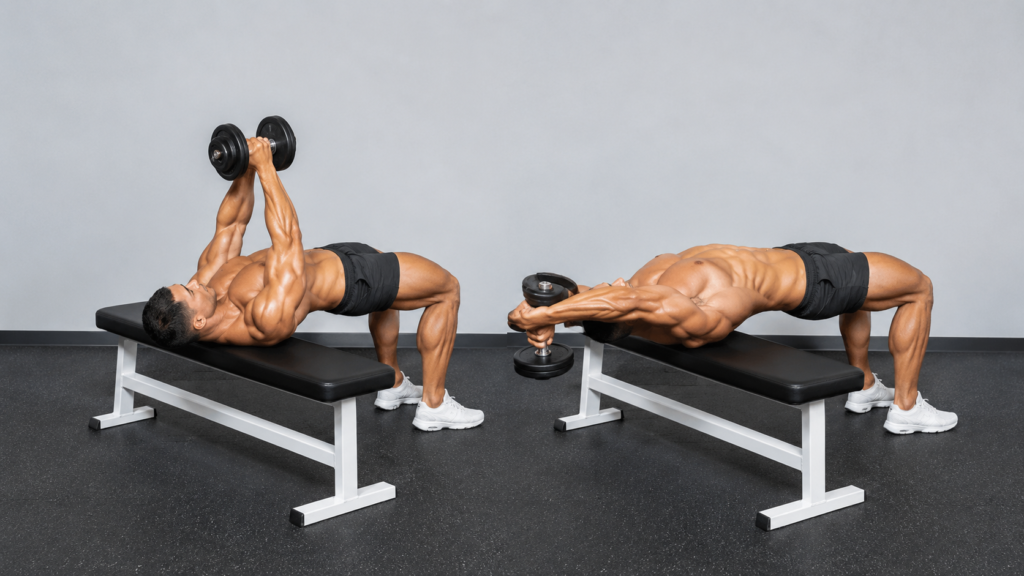
Even experienced lifters get this exercise wrong sometimes. Here are the mistakes that show up most often, along with how to fix them.
Using Too Much Weight
The dumbbell pullover is not meant to be a heavy lift. Because the weight travels directly over your face and chest during part of the movement, going too heavy increases your risk of losing control. Choose a weight that lets you complete every rep with a full, controlled range of motion.
Letting the Hips Lift Off the Bench
If your hips or lower back start rising as you lower the weight, that usually means you are forcing more range of motion than your shoulders can handle safely. Keep your feet grounded and your hips still, and simply work within the range you can control.
Bending the Elbows Too Much
A slight elbow bend is correct, but if your elbows fold significantly, the exercise starts to shift away from your chest and lats and turns into more of a triceps movement. Keep that bend consistent and minimal throughout the set.
Rushing the Eccentric Phase
The lowering portion of the pullover is where most of the stretch and muscle benefit happens. Dropping the weight quickly robs you of that benefit and increases injury risk. Slow down and control the descent.
Dumbbell Pullover Variations
Once you have the standard version down, these variations can help you target different goals, work around equipment limitations, or simply keep your training interesting.
- Floor pullover: performed lying on the floor instead of a bench. This naturally limits your range of motion, which makes it a solid option if you have shoulder mobility restrictions or you are new to the movement.
- Stability ball pullover: lying across a stability ball instead of a bench challenges your core stability while still allowing a similar range of motion to the standard version.
- Decline bench pullover: performed on a decline bench, this variation increases the range of motion at the shoulder, offering a deeper stretch for more experienced lifters.
- Single arm dumbbell pullover: using one arm at a time helps address strength imbalances between sides and can improve mind muscle connection.
- Barbell pullover: using a barbell instead of a dumbbell allows for a heavier load and a slightly different grip, which some lifters find more comfortable on the wrists.
- Cable pullover: performed standing or kneeling in front of a cable machine, this variation keeps constant tension on the target muscles throughout the entire range of motion, which many lifters find more joint friendly.
Sets, Reps, and Programming Tips
How you structure your sets and reps depends on your specific goal.
- For strength: three sets of six to eight reps, using a controlled weight that still challenges you without sacrificing form.
- For muscle growth: three to four sets of eight to twelve reps, leaving a couple of reps in reserve on each set.
- For endurance and mobility: two to three sets of twelve to fifteen reps with lighter weight, moving slowly through each rep.
Because it is an accessory movement rather than a primary compound lift like the bench press or a pull up, the dumbbell pullover works well near the end of a chest or back workout, once your joints and muscles are already warmed up from heavier pressing or pulling exercises.
Dumbbell Pullover vs Other Exercises
It helps to understand how the pullover compares to more familiar movements so you know where it fits in your program.
Compared to the bench press, the dumbbell pullover uses a much lighter load and moves through an overhead arc rather than a straight vertical press. The bench press is better for building raw pressing strength, while the pullover is better for stretching and activating the chest and lats together.
Compared to the lat pulldown, the pullover trains a similar overhead pulling pattern but adds a significant stretch component and chest involvement that the pulldown does not offer. Many lifters use both exercises together rather than choosing one over the other.
Compared to the dumbbell flye, the pullover involves a longer range of motion and brings the back into play, while the flye stays more isolated to the chest.
None of these exercises need to replace the others. Each one offers something slightly different, and combining them tends to produce better results than relying on any single movement alone.
Who Should Add This Exercise to Their Routine
The dumbbell pullover suits a wide range of lifters, but it is especially useful for a few specific groups.
Bodybuilders and physique focused lifters benefit from the added chest and back stretch, which many coaches believe supports muscle growth over time. Strength athletes, including powerlifters and weightlifters, often use it to build shoulder stability and rib cage strength that carries over into heavier compound lifts. Anyone dealing with tight shoulders or limited overhead mobility can also benefit from a lighter, more controlled version of this movement as part of a mobility focused warm up.
That said, if you have a current shoulder injury or significant mobility restrictions, it is worth checking with a physical therapist or trainer before adding this exercise to your routine, since the overhead position can aggravate certain shoulder issues if performed incorrectly.
Conclusion
The dumbbell pullover earns its place as a classic exercise because it does something rare: it trains your chest and back together while improving shoulder mobility along the way. Whether you angle your elbows out for a chest focus or tuck them in for more lat involvement, the key to getting real value from this movement comes down to control, a manageable weight, and a full, comfortable range of motion.
Start light, focus on form before load, and pay attention to how your shoulders feel throughout the set. Add in variations like the floor version, the cable pullover, or the single arm version as you progress, and use the sets and reps guidance above to match the exercise to your specific goal, whether that is strength, size, or mobility.
Give it a place in your next chest or back workout, and you may find it becomes one of the most valuable accessory movements in your entire program.
Frequently Asked Questions
Is the dumbbell pullover a chest or back exercise?
It can train both. Flaring your elbows outward shifts emphasis toward the chest, while keeping your elbows tucked in shifts more work to your lats and back.
Can I do a dumbbell pullover without a bench?
Yes. Performing it on the floor is a safe alternative, though it will limit your range of motion compared to using a bench.
How heavy should my dumbbell be for pullovers?
Start light. A good starting point for many beginners is around a quarter to a third of body weight, adjusting up or down based on comfort and control.
Is the dumbbell pullover safe for my shoulders?
When performed with proper form and a controlled range of motion, it can actually improve shoulder mobility. If you have an existing shoulder injury, check with a professional before including it in your routine.
How often should I do dumbbell pullovers?
Once or twice per week is plenty for most lifters, added as an accessory movement after your main chest or back exercises.