
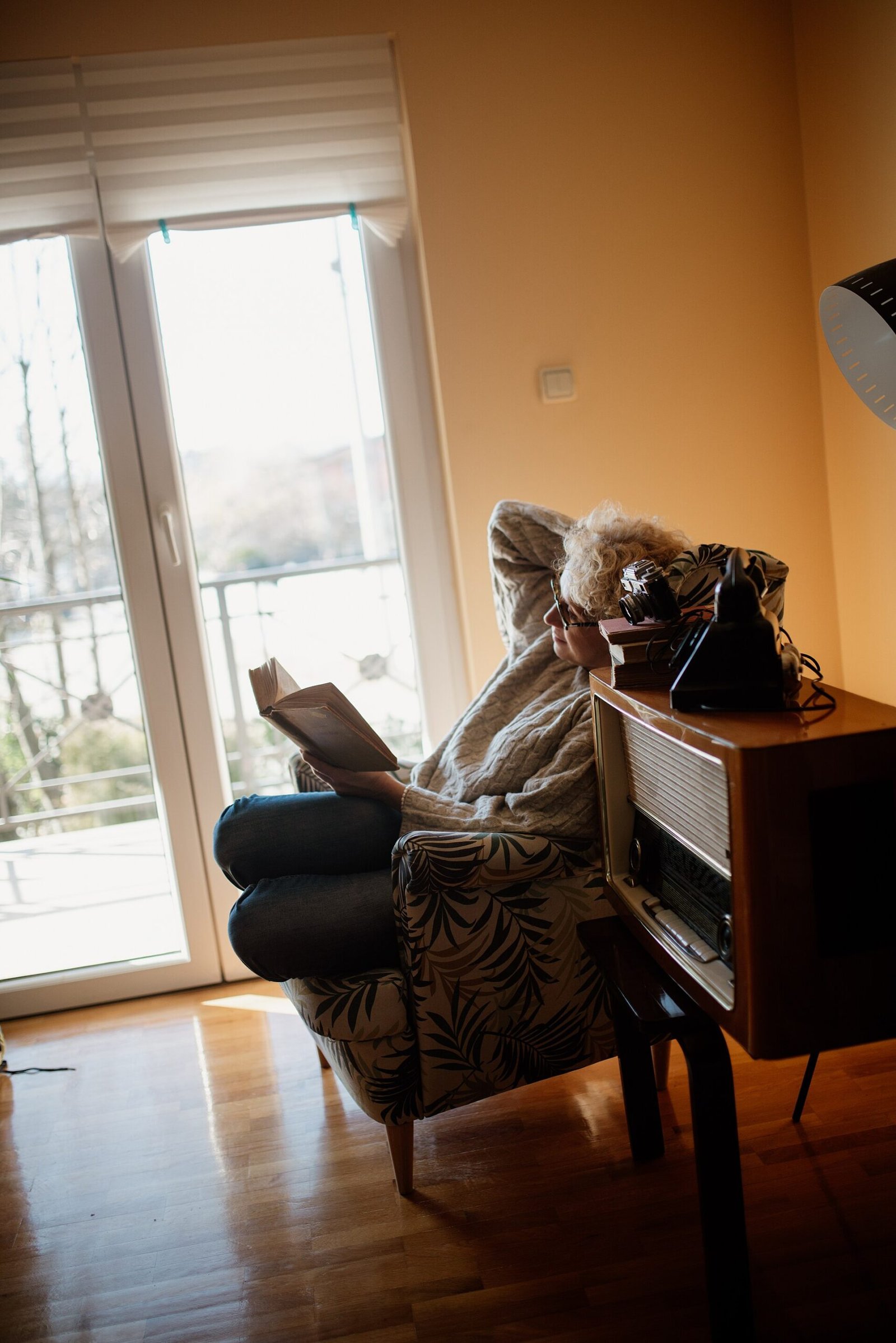
Every year I buy more books than I finish. They pile up on the bedside table, then on the floor beside the bed, then in a bag meant for the charity shop. The problem is not that I stopped loving reading. The problem is that my small bedroom never gave me a place to sit down and read properly. This guide shows how to create a reading nook in a small bedroom, even when floor space is tight, money is tight, and the room is rented.
A reading nook does not need a spare room, a bay window, or a large armchair. It needs three things done well: a seat you can stay in, light that reaches the page, and a small pile of books within reach. Everything else is a bonus. When those three things are right, reading stops being a chore you mean to do and becomes the easiest part of the evening.
The story behind this small bedroom reading nook
Picture a typical UK box room. There is a bed, a wardrobe, a chest of drawers, and one corner that collects laundry, bags, and books you meant to read. You sit on the bed to read, then slide down the pillows, then reach for your phone. An hour later the book is still on page twelve.
That corner is the opportunity. You do not need to clear a whole wall or buy a full reading chair set. You need to claim one small zone and protect it from clutter. In most small bedrooms that zone is about 90 centimetres wide and 90 centimetres deep. That is enough for a floor cushion, a small chair, or the end of a sofa style seat, plus a lamp and a tiny surface.
Start with the story you want the corner to tell. This is the place where the day slows down. It is not a work desk, not a laundry pile, and not a second storage shelf. When you sit there, the only job is to read. That simple rule is what keeps the nook in use after the first week.
How to create a reading nook in a small bedroom in 90 minutes
You can build a workable nook in one short session, as long as you work in the right order. Do not buy decor first. Buy comfort first, then light, then storage, then softness.
Step 1: Find the spot you already have
Walk around the bedroom with a book in your hand. Sit in each possible spot for a few minutes. Notice the glare from the window, the noise from the street, the distance to a plug socket, and whether someone has to squeeze past you. A beautiful corner behind a door that opens often will frustrate you within days.
Good spots in a small bedroom are often hiding in plain sight. Try the side of the bed, the strip of wall beside the wardrobe, the foot of the bed, a window ledge with a cushion, or one end of a chair you already own. If you have a window seat, even a shallow one, a thick cushion can turn it into a nook at once.
Measure the spot before you buy anything. Use a tape measure and mark the footprint on the floor with masking tape. Sit inside the marked area and move as you would while reading. Stretch your legs, change position, and reach for a pretend cup of tea. If the marked area makes an everyday task harder, shrink the plan to a seat and a light only.

Step 2: Choose a seat you can stay in
Comfort matters more than matching a photograph. A seat that looks perfect but hurts your back after ten minutes will sit empty. Test any seat for ten minutes with a real book before you commit. Your feet should rest comfortably, your shoulders should relax, and your lower back should feel supported without slumping.
In a small bedroom, these seats work best. A floor cushion with a firm back cushion suits a very tight room and can be stood against the wall when you need the floor back. A small slipper chair with slim arms suits a slightly larger corner and leaves room to walk past. A storage ottoman can serve as a footrest, an occasional seat, and a box for throws. Your own bed can work too, if you add a firm reading cushion and a proper light, but keep the bed for reading only in that corner of the routine, so the nook still feels separate.
Second hand shops, charity shops, and local marketplace listings are a sensible place to look first. A solid second hand chair for £30 to £60 often beats a flimsy new chair at the same price. Check the frame, sit in it, and look for a shape that lets you tuck your legs up or stretch out. If you buy new, a compact chair in the £80 to £150 range is usually enough. There is no need to spend hundreds of pounds to read comfortably.
Step 3: Get the light right
Light decides whether you stay for ten minutes or an hour. Daylight is lovely, but a nook must also work after sunset in a UK winter, when daylight fades early in the afternoon. Place a task lamp where it lights the page without shining into your eyes. A lamp behind your shoulder, slightly above the page, usually works best.
Choose warm white light, around 2700K to 3000K, rather than cold white light that feels like an office. A dimmer helps, because a large print novel and a small print paperback need different brightness. A clip on lamp can attach to a headboard or a shelf and saves floor space. A rechargeable wall light can give the look of a fitted light without drilling, which matters in a rented flat.
Test the light at night, not just in the shop. Bring the lamp home, sit with your usual book, and read for ten minutes. If you squint, move the lamp closer to your shoulder. If you see glare on glossy pages, angle it slightly away from you. Small moves make a large difference.
Book storage that fits a small bedroom
Books become heavy quickly, so storage must suit the wall and the floor you actually have. In a rented flat, check what your tenancy allows before you drill. Freestanding furniture avoids that question entirely, and a tall narrow bookcase often holds more than a wide low unit because it uses height instead of floor space.
Keep only a small active pile in the nook. Five to ten books is plenty: the book you are reading now, the next two you plan to read, and a couple of favourites to dip into. Store the rest on a main shelf, in a cupboard, or in a box under the bed. Rotate the active pile every few weeks. That rotation keeps the nook fresh and stops it turning into a second bookshelf.
Useful small storage ideas include a slim bedside bookcase, a narrow rolling cart that can move beside the bed or the chair, a storage ottoman, and one or two floating shelves for lighter paperbacks. Put heavier hardbacks low down, where they are stable and easy to reach. Keep a small basket for a notebook, glasses, and bookmarks, so those items do not spread across the room.
Before you build the nook, it helps to clear the corner properly. Our guide on how to declutter a spare room fast uses the same simple rule: take everything out, keep only what earns its place, and give the rest a home elsewhere. A clear corner feels larger at once, even before you add a single cushion.
Make the corner feel separate without filling it
In a small room, restraint works better than decoration. Choose one soft layer you truly enjoy: a thick throw, a supportive cushion, or a small rug under your feet. Add one personal touch, such as a framed print, a plant, or a candle you only light when you read. Stop there. The nook should feel calm, not crowded.
Colour helps to mark the zone. Warm neutrals, soft sage green, dusty blue, or warm cream on cushions and throws can make the corner feel restful without repainting the room. If you rent, a throw and a cushion give you colour without touching the walls. A small rug can also anchor the seat and signal that this patch of floor has a purpose.
Keep work out of the nook. Do not store work papers, chargers, or laundry in the reading corner. When the corner holds only reading things, your brain learns the cue quickly: sit here, open a book, slow down. That cue is worth more than any single piece of furniture.

A realistic budget in pounds
A good small bedroom reading nook does not need a large budget. Here is a realistic range that works in the UK, using a mix of new and second hand pieces.
- Seat: £0 if you reuse a chair or floor cushion you already own, £30 to £60 second hand, or £80 to £150 new for a compact chair.
- Light: £15 to £35 for a clip on lamp or a small adjustable lamp, or £20 to £40 for a rechargeable wall light.
- Surface: £0 to £25 for a small stool, a crate, or a slim side table from a charity shop.
- Soft layer: £10 to £30 for a throw and a cushion, often less in a sale.
That puts a complete nook at roughly £60 to £150 if you buy the main pieces, and much less if you reuse what you already own. Spend the largest share on the seat and the light, because those two items decide whether you use the nook. Spend the smallest share on decor, because decor never saved a nook with an uncomfortable chair.
Library books, library reservations, and book swaps with friends keep the reading itself almost free. A nook filled with borrowed books is just as cosy as a nook filled with bought books, and it forces a healthy rotation: finish one, return it, choose the next.
Reading nook ideas for rented flats
Renters can build a proper nook without drilling, painting, or arguing with a landlord. Choose freestanding storage, a clip on lamp, and a rechargeable wall light. Use a floor cushion or a small chair that you can take with you when you move. Avoid heavy wall shelves unless your tenancy clearly allows them and the wall can take the weight.
If your bedroom is also your workspace, draw a clear line between the two zones. Keep the work chair and the reading seat apart, even if they are only a metre apart. Put work papers in a box at the end of the workday and leave the reading corner clear. That small ritual protects both zones.
Flat sharers can agree a simple house rule: the nook is a quiet zone in the evening. Headphones, a closed door, or a shared understanding about noise after a certain time all help. You do not need silence, but you do need a corner where a conversation in the next room does not pull you out of the story every few minutes.
Turn the nook into a daily habit
A nook only earns its space if you use it. The simplest habit is a fixed reading time, even a short one. Twenty minutes after dinner, or twenty minutes before bed, is enough to build momentum. Put your phone on charge outside the bedroom, or at least face down in another room, so the nook stays screen free.
Pair the habit with something pleasant. A cup of tea, a warm throw, and a lamp already switched on make the nook inviting before you sit down. Keep the current book open on the seat, or on the small surface beside it, so there is no friction when you arrive. The easier the start, the more often you will start.
Track progress in a simple way that suits you. A paper bookmark with the date you started, a short note in a notebook, or a list of finished books on the inside of a wardrobe door all work. Do not turn reading into homework. The point is pleasure, not a target that makes you feel guilty.
A screen free evening routine pairs naturally with a reading nook. Our guide on how to do a digital detox weekend shows how a short break from screens can reset attention, and a reading nook gives that break a comfortable place to happen every day, not just at the weekend.

Common mistakes to avoid
The most common mistake is buying a chair that is too large. Measure first, tape the footprint, and walk around it with laundry in your arms. If you have to climb over the chair to reach the wardrobe, the chair is too large, however beautiful it looks.
The second mistake is buying decor before comfort. Cushions, fairy lights, and prints are tempting, but they cannot fix poor light or a sore back. Buy the seat and the light first, live with them for a week, and only then add soft layers.
The third mistake is letting the nook become a dumping ground. A weekly two minute tidy prevents that slide. Return finished books to the main shelf, fold the throw, clear the surface, and put stray items back where they belong. A tidy nook invites you back. A cluttered nook quietly pushes you toward the sofa and your phone.
The fourth mistake is placing the nook where glare ruins reading. Test the spot in daylight and at night. If the window throws bright light across glossy pages in the morning, angle the seat slightly away from the glass. If the overhead light creates shadows in the evening, rely on the task lamp instead.
Conclusion: three things, done well, and a habit to match
Learning how to create a reading nook in a small bedroom comes down to a simple choice: use the space you already have, and make it comfortable enough to return to. Choose a seat you can stay in for a full chapter. Add light that reaches the page without glare. Keep a small pile of books within reach, and keep the rest of the collection elsewhere. Set a realistic budget, respect the rules of a rented flat, and protect the corner from clutter and work.
Then give the nook a habit. Twenty minutes a day, a phone charging in another room, and a book left open on the seat will do more than any extra cushion. Start tonight, even if your nook is only a floor cushion, a clip on lamp, and a stack of library books beside the bed. That small corner can turn unread books into finished books, and turn the end of the day into the best part of it.
Frequently asked questions
How do I make a reading nook in a small bedroom?
Claim a corner, a window ledge, or the side of your bed. Measure a footprint of about 90 centimetres by 90 centimetres. Add a seat you can stay in, a warm task lamp, and a small pile of books. Test the setup for ten minutes before you buy more.
How much space do I need for a reading nook?
About 90 centimetres by 90 centimetres is enough for a floor cushion or a compact chair, a lamp, and a tiny surface. If you have less space, use the end of your bed or one end of a sofa, and keep books in a basket beside it.
What chair is best for a small bedroom reading nook?
A compact slipper chair, a firm floor cushion with back support, or a small armchair with slim arms all work well. Test the chair for ten minutes with a real book. Your feet should rest comfortably and your back should feel supported.
How bright should a reading light be?
Use warm white light around 2700K to 3000K, placed behind your shoulder and slightly above the page. A dimmer helps you adjust for large print and small print. Avoid cold white overhead light as your only light source.
How can I make a reading nook in a rented flat without drilling?
Use freestanding storage, a clip on lamp, and a rechargeable wall light. Choose a floor cushion or a small chair you can take with you when you move. Check your tenancy before you fix anything to a wall, and keep heavy books low down on freestanding shelves.