
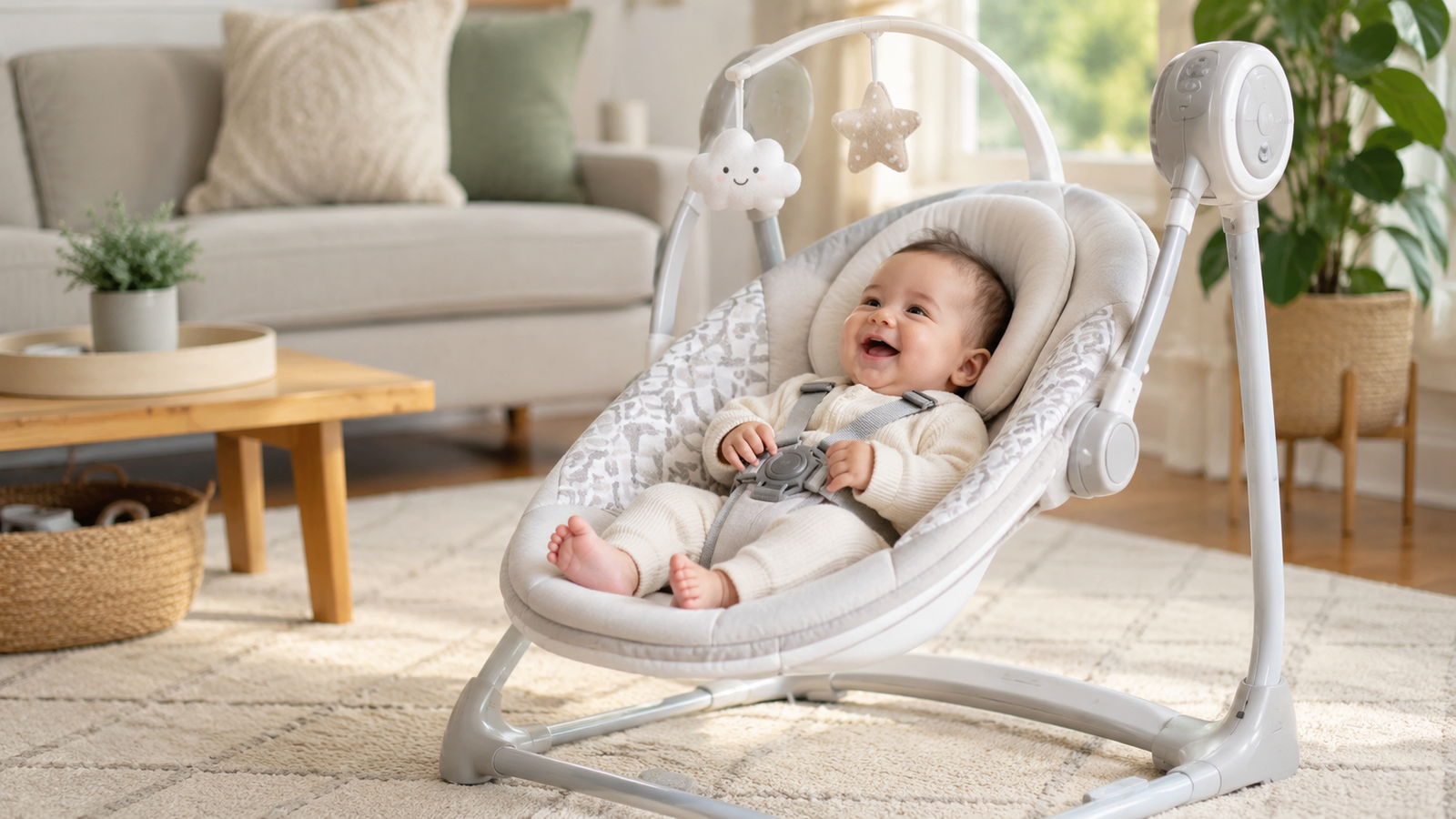
A fussy, overtired baby at ten in the evening can make even the calmest parent feel completely out of options. This is usually the moment when a baby swing starts to sound like the best purchase you will ever make. Whether you are researching your first swing before your due date or replacing one that has finally worn out, this guide walks you through everything worth knowing before you buy, from motion types to safety rules to what actually matters once the baby is in the seat.
Baby swings have come a long way from the simple wind up models many of us remember from childhood. Today’s options include app controlled motion patterns, multiple recline positions, and speakers that stream your own playlists. With so many choices on the market, it helps to know what separates a genuinely useful swing from one that will end up folded in a closet after a month.
What a Baby Swing Actually Does
A baby swing uses a motor to create a repeated, gentle motion, usually side to side or front to back, that mimics the rocking sensation babies experience in the womb or in a parent’s arms. Many newborns find this motion calming, especially during the witching hour when nothing else seems to work.
It is important to set realistic expectations here. A swing is not a magic cure for every crying episode, and it is not designed for unsupervised sleep. Think of it as one tool in a broader toolkit that might include swaddling, white noise, feeding adjustments, and simple time spent being held.
Baby Swing vs Bouncer vs Rocker: Which One Do You Need
Parents often ask whether they need a swing, a bouncer, a rocker, or all three. Each product serves a slightly different purpose, and understanding the difference can save you money and closet space.
A swing uses motorized motion in a wide arc and is best suited for calming a fussy or overstimulated baby who needs consistent, hands free movement. A bouncer relies on the baby’s own movements or a gentle vibration to create a bounce and works well for supervised awake time and light play. A rocker sits closer to the ground, rocks gently, and often doubles as a place for supervised naps or quiet time once a baby is a bit older.
If your baby tends to be easily overstimulated, a simpler rocker with fewer lights and sounds might suit them better than a feature packed swing. If your baby seems to need strong, consistent motion to settle, a swing with several speed settings is likely the better investment.
How to Choose the Right Baby Swing
Motion Type
Some swings move side to side, others move front to back, and a smaller number of premium models combine several motion patterns designed to mimic the way parents naturally rock and sway a baby. There is no single best motion type. Some babies settle instantly with a side to side sway, while others respond better to a front to back glide. If possible, try before you buy, or choose a model with adjustable motion settings so you can experiment.
Recline and Newborn Support
For the first few months, look for a swing that offers a flatter recline position. Newborns have limited neck control, and a seat that sits too upright can cause their chin to tip toward their chest, which is uncomfortable and can restrict breathing. A swing with at least two recline positions gives you flexibility as your baby grows and develops more head control.
Portability and Space
Full size swings tend to offer more features but take up a noticeable amount of floor space, sometimes rivaling a small piece of furniture. If you live in an apartment or simply want to move the swing between rooms, a compact or foldable model will make daily life much easier. Weigh how much you value extra features against how much space you actually have to spare.
Sound, Lights, and Entertainment Features
Music, nature sounds, white noise, spinning mobiles, and soft lighting can all help distract and soothe a fussy baby. That said, more is not always better. Some babies become overstimulated by too many lights and sounds happening at once, so a swing with adjustable or simple settings often works better in the long run than one packed with constant stimulation.
Power Source
Most swings run on either a wall adapter, batteries, or both. Battery powered and USB rechargeable models offer more flexibility if you want to move the swing around the house, while plug in models tend to provide steadier, quieter motion without the worry of batteries running low overnight.
Price Range
Baby swings generally fall into three price tiers, and understanding what you get at each level helps set realistic expectations before you shop.
Best Baby Swings by Budget in 2026
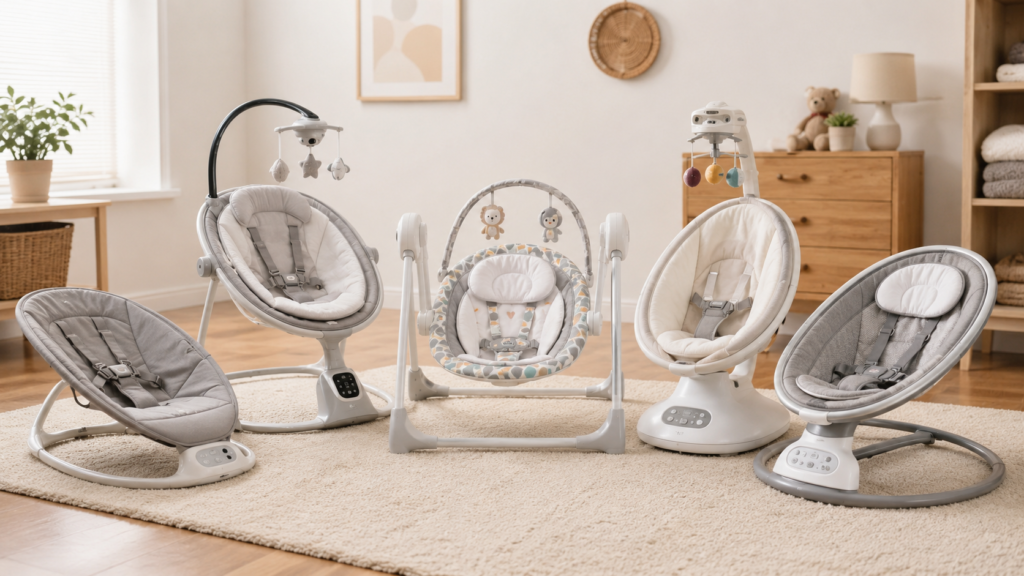
Budget Friendly Picks
Entry level swings typically range from around seventy to one hundred and forty dollars. These models usually offer basic side to side or front to back motion, a handful of speed settings, and simple built in melodies. They are a smart choice for parents who want to test whether their baby even takes to a swing before investing in a pricier option, or for families who simply do not need extra bells and whistles.
Look for models with a five point harness and a usage range that extends beyond the newborn stage, since a slightly higher weight limit can extend how long you get to use the swing before your baby outgrows it.
Mid Range Picks
In the one hundred and fifty to two hundred and twenty dollar range, you will typically find swings with more refined recline options, softer harness padding, quieter motors, and a wider variety of sounds and speeds. Many parents find this tier offers the best overall value, since the quality jump from entry level swings is noticeable without reaching premium pricing.
This price range is also where you start seeing swings with rotating seats, which let you keep your baby facing you or facing outward depending on the moment.
Premium and High Tech Picks
Above roughly two hundred and fifty dollars, you enter the territory of app controlled swings with multiple unique motion patterns, Bluetooth audio streaming, and sensors that adjust motion based on how the baby is moving or fussing. These models are popular in hospital settings and among parents dealing with particularly hard to soothe babies, since the variety of motion options increases the odds of finding one that works.
The tradeoff is cost and, in some cases, a learning curve to figure out the app or control panel. For families on a tight budget, a mid range swing with fewer tech features often does the job just as well.
Safety Guidelines Every Parent Should Follow
Safety should always come before features when choosing baby gear, and swings are no exception. Pediatric health organizations and consumer safety agencies have issued clear guidance around swings, bouncers, and rockers, particularly regarding sleep.
- Never leave a baby unattended in a swing, even for a short moment.
- Use the swing in a fully reclined position until your baby can hold their head up unassisted, usually around four months.
- Always secure the harness according to the manufacturer’s instructions, even for quick sessions.
- Do not use a swing as a substitute for a crib or bassinet. If your baby falls asleep in the swing, move them to a firm, flat sleep surface as soon as possible.
- Check that the base has full contact with the floor and remains stable, especially at higher speed settings.
- Keep any fabric, blankets, or toys away from your baby’s face to avoid the risk of airway obstruction.
- Stop using the swing once your baby can sit up unassisted or attempts to climb out, typically around nine months, or once they exceed the manufacturer’s weight limit.
These guidelines apply regardless of price point or brand. A two hundred dollar swing is not inherently safer than a budget model if it is used incorrectly, so it is worth reading the manual for whichever swing you choose.
Signs Your Baby Has Outgrown the Swing
Most babies use a swing for roughly the first six to nine months, though this varies from child to child. Watch for these signals that it is time to retire the swing.
Your baby can sit up without support, push up onto their hands and knees, or actively tries to climb out of the seat. They have reached the manufacturer’s stated weight limit, even if they seem comfortable in the seat. They seem uninterested in the motion or fussier in the swing than they used to be, which sometimes signals they are ready for more active play, such as a jumper or activity gym.
Baby Swings for Colic or Reflux
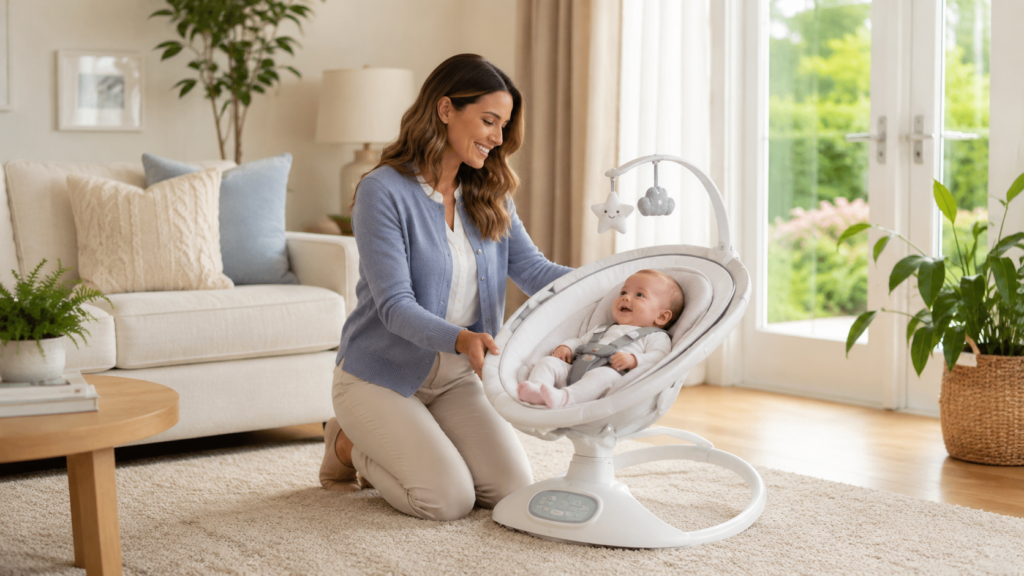
Parents of colicky or reflux prone babies often lean on swings more heavily during the tougher early months, and for good reason. Gentle, rhythmic motion can help settle a baby whose digestive system is still adjusting, and an upright or gently reclined position, rather than lying completely flat, can ease discomfort after feeds for babies with reflux.
If your baby has reflux, ask your pediatrician whether a swing with an adjustable, slightly elevated recline position is appropriate, and avoid placing your baby in a swing immediately after a large feed. Always follow your doctor’s specific guidance, since every baby’s situation is different.
Cleaning and Maintenance Tips
A baby swing sees a lot of drool, spit up, and the occasional diaper leak, so keeping it clean matters both for hygiene and for the lifespan of the product. Most seat covers are removable and machine washable, so check the care label before your first use.
Wipe down the frame, harness straps, and control panel regularly with a damp cloth and mild soap, avoiding harsh chemicals near areas your baby’s skin will touch. Let the seat cover fully air dry before reattaching it to prevent mildew, particularly if you live in a humid climate.
Conclusion
Choosing the right baby swing comes down to matching the features to your baby’s temperament, your living space, and your budget, rather than chasing the model with the longest list of settings. A budget friendly swing with a proper recline and a secure harness can soothe a fussy newborn just as effectively as a premium, app connected option, provided it is used safely and appropriately for your baby’s age and stage.
Keep safety guidelines at the center of your decision, watch for the signs that your baby has outgrown the swing, and remember that a swing is one helpful tool among many rather than a guaranteed fix for every fussy moment. With the right choice, a baby swing can offer your family a few precious, calm minutes when you need them most.
Frequently Asked Questions
How long can a baby safely stay in a swing at one time?
Most pediatric experts recommend limiting swing sessions to fifteen to twenty minutes at a time, several times a day, rather than using it as an all day seating solution.
Can a baby sleep overnight in a swing?
No. Swings are not designed or approved for overnight or unsupervised sleep. If your baby falls asleep while swinging, move them to a crib or bassinet as soon as it is safe to do so.
Is a baby swing bad for hip development?
A well designed swing with proper hip support and a correctly adjusted harness should not cause hip problems. Avoid swings that force the legs into an unnaturally straight or squeezed position for extended periods.
What age can a baby start using a swing?
Most swings are designed for use from birth, provided the seat offers a fully reclined position suitable for newborns who cannot yet support their own head and neck.
Do I really need a baby swing, or can I skip it? Not every baby needs one. Some infants are perfectly content being held, worn in a carrier, or placed in a bassinet. A swing is a helpful tool for many families, but it is not an essential item for every household.