
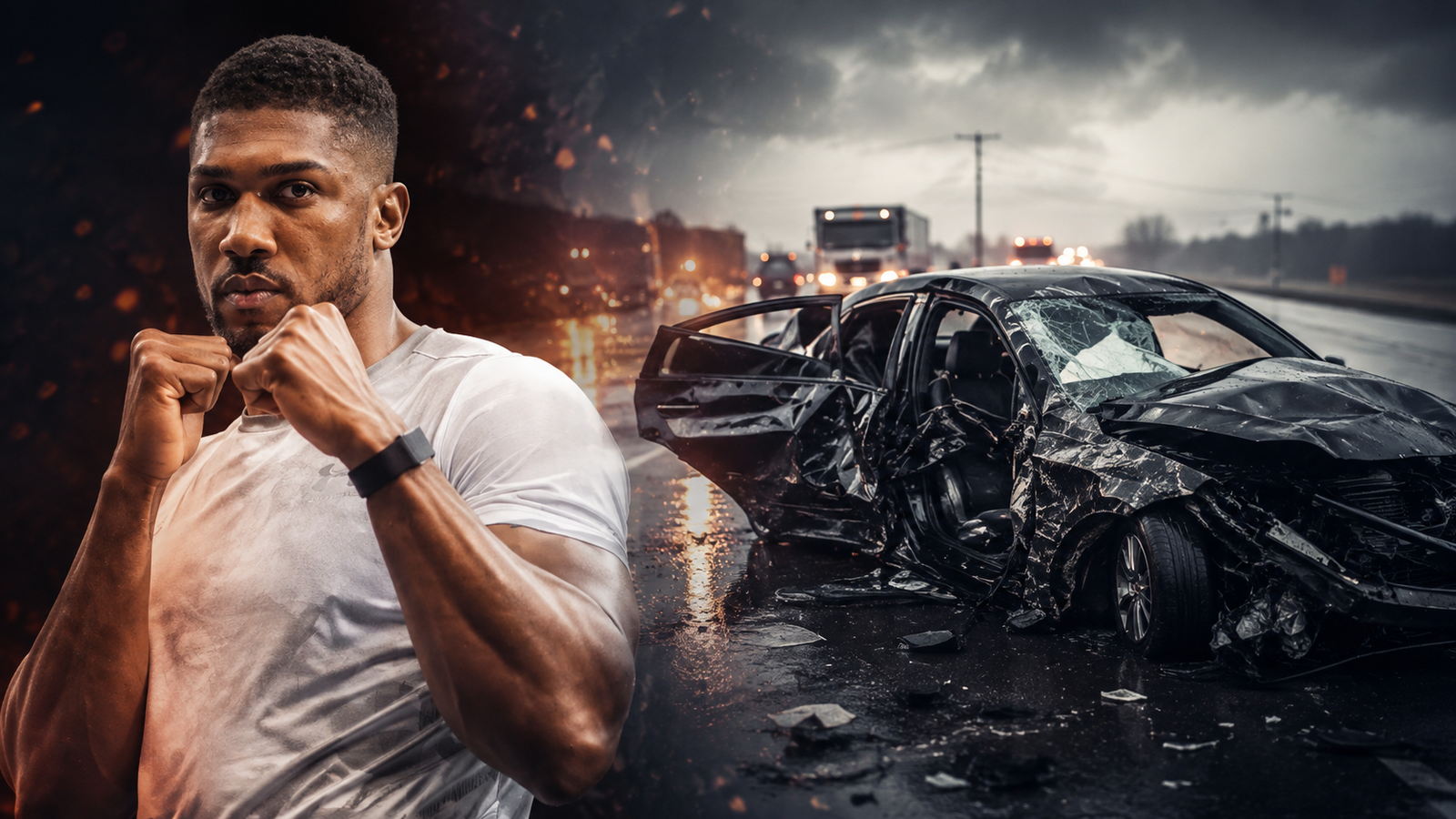
When news broke that Anthony Joshua had been involved in a serious car crash in Nigeria, fans around the world reacted with the same mix of shock and worry. Just days earlier, the former two time heavyweight champion had stunned the boxing world with a dominant win over Jake Paul in Miami. Then, almost overnight, the headlines shifted from celebration to concern.
If you are searching for clarity on the Anthony Joshua crash, you are probably looking for straight answers. What actually happened on that Nigerian highway? Who was hurt? Who tragically did not survive? And what has happened in the weeks since? This article brings everything together in one place, told simply and accurately, so you do not have to piece the story together from a dozen different sources.
What Happened in the Anthony Joshua Crash
On December 29, 2025, Anthony Joshua was a passenger in a Lexus SUV traveling along a busy Nigerian highway when the vehicle struck a stationary truck parked along the roadside. The impact was severe enough to injure Joshua and, tragically, kill two other passengers who were traveling with him.
Joshua was seated in the rear of the vehicle at the time. According to Nigerian police, the SUV was part of a small convoy, with a second vehicle carrying Joshua’s security team following close behind. That second car was not directly involved in the collision.
The news spread quickly, in part because Joshua had just become one of the most talked about athletes in the world following his win over Jake Paul. The contrast between that triumphant moment and this frightening accident is part of why the story captured so much attention.
Where and When the Crash Took Place
The accident happened on the Lagos Ibadan Expressway, near the Sagamu Interchange in Ogun State, southwestern Nigeria. This stretch of road connects Lagos, Nigeria’s commercial capital, to Ibadan and other inland cities, and it carries heavy traffic throughout the day.
Joshua was in Nigeria on a personal trip at the time. He has deep family roots in the country, with his parents both being British Nigerians, and he frequently visits Sagamu, a town closely tied to his family history. He had traveled there following his fight in Miami to spend time with relatives.
Who Died in the Anthony Joshua Car Accident
The crash claimed the lives of two people who were extremely close to Joshua both personally and professionally.
- Sina Ghami, Joshua’s strength and conditioning coach
- Latif “Latz” Ayodele, one of Joshua’s personal trainers
Both men were part of Joshua’s inner circle and had traveled with him to Nigeria. Reports later noted that just hours before the crash, Joshua and Ayodele had been filmed together playing table tennis, a small but poignant detail that underscored how sudden and unexpected the tragedy was.
Their deaths were confirmed by Joshua’s promotional team, Matchroom Boxing, which released a statement acknowledging that both men had “tragically passed away” as a result of the accident. The loss was felt deeply within the boxing community, with tributes pouring in from fellow fighters, promoters, and fans.
Anthony Joshua’s Injuries and Hospital Recovery
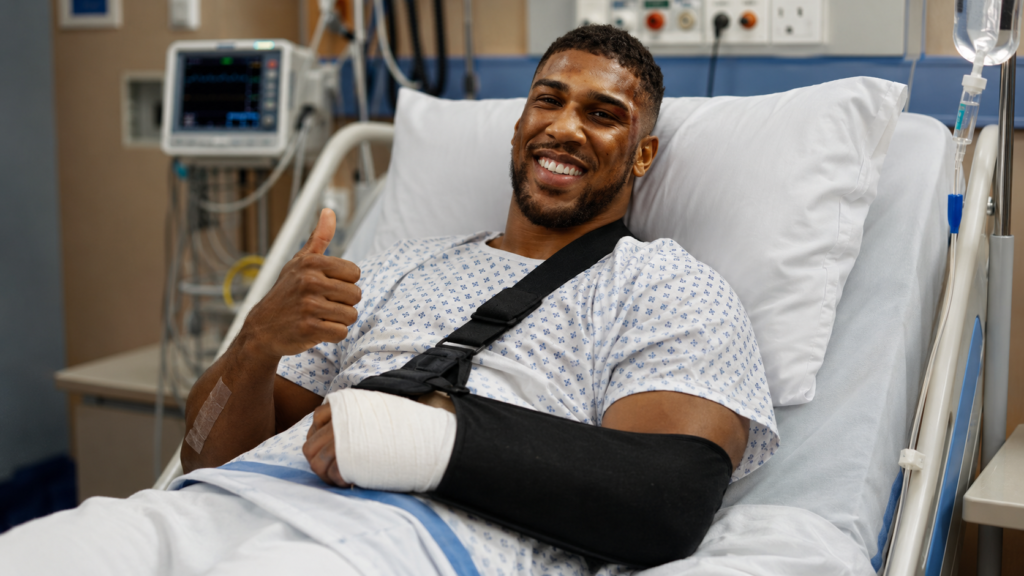
Anthony Joshua sustained what officials described as minor injuries in the crash. He was taken to a local hospital in Lagos for evaluation and observation shortly after the accident.
Medical authorities from Lagos and Ogun state governments later confirmed in a joint statement that Joshua was in stable condition and did not require emergency intervention. He remained hospitalized for a short period before being discharged.
Joshua was released from the hospital on Wednesday, just two days after the crash. He then flew back to the United Kingdom, where he attended the funerals of both Ghami and Ayodele, a difficult farewell to two people who had played a significant role in his career.
Eyewitness Accounts From the Scene
Details about the crash came largely from people who witnessed it firsthand. One eyewitness, Adeniyi Orojo, described the moments after impact to a Nigerian newspaper, offering a clearer picture of what unfolded.
According to Orojo, the convoy consisted of two vehicles, a Lexus SUV and a Mitsubishi Pajero. Joshua was seated behind the driver, with another passenger beside him, while a fourth occupant sat in the front passenger seat. In total, four people were in the Lexus when it crashed.
Orojo and other bystanders rushed to help immediately, flagging down passing vehicles for assistance while waiting for emergency services to arrive. Officials from Nigeria’s Federal Road Safety Corps reached the scene shortly after and began coordinating the response.
Tragically, according to the eyewitness, the two passengers seated beside the driver and beside Joshua died at the scene before help could save them.
What Caused the Crash
Nigerian authorities offered two overlapping explanations for how the accident occurred, and together they paint a fuller picture.
Ogun State Police initially reported that a tire on Joshua’s vehicle burst while it was in motion. This sudden tire failure caused the driver to lose control of the SUV, sending it veering off course and directly into a truck that was parked along the side of the road.
Separately, Nigeria’s Federal Road Safety Corps conducted its own preliminary investigation. Officials there indicated that the vehicle appeared to be traveling faster than the legally permitted speed limit for that stretch of highway and lost control while attempting to overtake another vehicle, ultimately crashing into the stationary truck.
Both explanations point to a similar chain of events: a fast moving vehicle, a mechanical or control failure, and a stationary obstacle that the driver could not avoid in time. Investigators continued to examine the full circumstances in the weeks that followed.
The Legal Aftermath: Driver Charged and Arraigned
In the weeks after the crash, Nigerian authorities took formal legal action against the man who had been driving Joshua’s vehicle.
The driver, identified as Adeniyi Mobolaji Kayode, 46, was charged by Ogun State Police with several offenses. These included dangerous driving causing death and driving without a valid national driver’s license, among four counts in total.
Kayode was arraigned at a local magistrate court in Sagamu in January 2026. His defense team requested an adjournment, though prosecutors pushed for the case to proceed given that witnesses were already present. The case brought renewed public attention to road safety enforcement in the region, an issue that had already been raised in the aftermath of the crash itself.
The outcome of the trial remains significant not only for accountability in this specific case, but also as a marker of how seriously road safety violations are treated on one of Nigeria’s busiest highways.
Anthony Joshua’s Public Response
For a period after the crash, Joshua remained largely private, focusing on his recovery and grieving the loss of two close friends. His first public gestures came through social media rather than statements to the press.
He shared photos on Instagram showing him surrounded by family, including his mother, with the caption “My Brothers Keeper.” It was a quiet but emotional acknowledgment of the bond he shared with those affected by the tragedy.
Weeks later, Joshua addressed the crash directly for the first time in a video posted to YouTube. In it, he reflected on the whirlwind nature of the previous weeks, going from a career defining win over Jake Paul in Miami to returning home for what should have been a celebratory family visit, only for everything to change in an instant.
He described the experience as one that reshaped his outlook, expressing gratitude for his own survival while honoring the memory of Ghami and Ayodele. His words struck a tone of reflection rather than sensationalism, which resonated with fans who had been following the story closely.
His promoter, Eddie Hearn, also spoke publicly during this period, noting that Joshua would take the time he needed before making any decisions about his boxing schedule. Hearn emphasized that any return to training or competition would be entirely Joshua’s call, not something rushed by outside pressure.
What This Means for His Boxing Future
Understandably, many fans want to know how the crash might affect Anthony Joshua’s career going forward. As of the most recent updates, Joshua has been seen back in the gym, a sign that his recovery is progressing well physically.
However, both Joshua and his team have been clear that any decision about a return to the ring will happen on his own timeline. Given the emotional weight of losing two close members of his team, it is reasonable to expect that his return will be guided as much by personal readiness as physical recovery.
For now, his immediate focus appears to be on healing, both from his injuries and from the loss of Ghami and Ayodele, two people who were instrumental in shaping his recent form and success in the ring.
Road Safety Concerns on the Lagos Ibadan Expressway
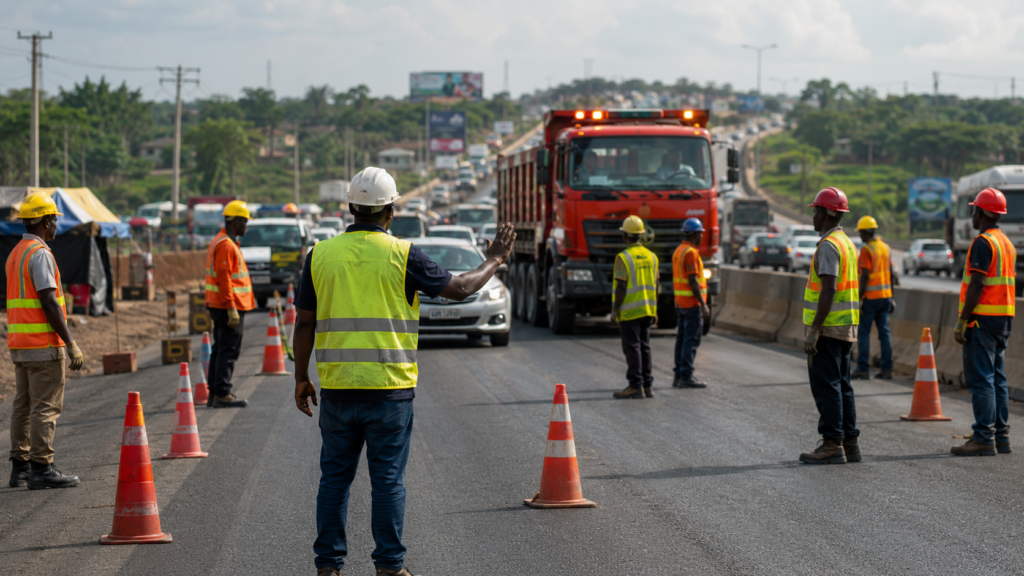
One aspect of this story that deserves more attention is the road itself. The Lagos Ibadan Expressway is one of the busiest and most heavily trafficked routes in Nigeria, connecting the country’s largest commercial hub to major inland cities.
The corridor has long been associated with a high rate of accidents, driven by a combination of factors including speeding, poorly maintained vehicles, inconsistent enforcement of traffic laws, and heavy congestion mixed with high speed stretches. Joshua’s crash, while high profile because of who was involved, reflects a broader pattern of incidents on this road.
In the aftermath of the accident, there has been renewed public conversation in Nigeria about improving road safety measures, from stricter licensing requirements to better vehicle maintenance standards and more consistent traffic enforcement. While change on this scale takes time, high profile incidents like this one often serve as a catalyst for public pressure and policy discussion.
Conclusion
The Anthony Joshua crash was a frightening and deeply sad event that touched not just the boxing world but anyone following the story of a fighter who had just delivered one of the biggest wins of his career. In the span of a few weeks, Joshua went from celebrating a dominant victory over Jake Paul to grieving the loss of two people close to him, Sina Ghami and Latif Ayodele, following a highway accident in Nigeria.
The key facts are now well established. The crash occurred on the Lagos Ibadan Expressway on December 29, 2025, after Joshua’s vehicle, likely due to a combination of speed and a tire failure, struck a stationary truck. Joshua suffered minor injuries and recovered quickly, while the driver of the vehicle now faces legal consequences for his role in the accident.
What stands out most, though, is how Joshua has handled the aftermath. Rather than rushing back to the spotlight, he has taken time to grieve, reflect, and support the families affected, while leaving the door open for his boxing career to resume when he is ready. For fans, the most meaningful takeaway may simply be this: behind the headlines and highlight reels is a person who, like anyone else, needed time to process a genuine tragedy.
Frequently Asked Questions
Is Anthony Joshua okay after the crash?
Yes. Joshua sustained minor injuries in the accident, was hospitalized briefly for observation, and was discharged within two days. He has since been seen training again.
Who died in the Anthony Joshua crash?
Two people traveling with Joshua died in the accident: Sina Ghami, his strength and conditioning coach, and Latif “Latz” Ayodele, one of his personal trainers.
What caused the Anthony Joshua car accident?
Authorities pointed to a burst tire that caused the driver to lose control, combined with reports that the vehicle was traveling above the legal speed limit while attempting to overtake another car.
Has the driver been charged?
Yes. The driver, Adeniyi Mobolaji Kayode, was charged with dangerous driving causing death and driving without a valid license, and was arraigned in a Nigerian court in January 2026.
Will Anthony Joshua fight again after the crash?
Joshua’s team has stated that any return to boxing will be his own decision and on his own timeline. He has been seen back in training, though no official return date has been announced.