
Empty appointment slots are money your business never gets back. If you run a salon, clinic, repair service, consultancy or any small business that takes bookings, you have felt the frustration of waiting for a client who never walks through the door. Learning how to reduce no shows for appointments small business owners deal with every week is one of the fastest ways to protect your revenue without finding a single new customer.
This guide walks you through nine practical tactics that real small businesses use to cut missed appointments dramatically. No expensive software required to start, and most of these changes can be made this week.
What No Shows Really Cost Your Small Business
Before fixing the problem, it helps to measure it. A no show rate of 15 percent means that for every twenty appointments on your diary, three generate nothing. If each appointment is worth 80 pounds, that is 240 pounds lost per day, or more than 5,000 pounds a month. Add staff wages paid during idle time, and the true cost climbs even higher.
Most business owners underestimate their rate because they never track it. Open your diary for the last four weeks and count how many appointments ended as no shows versus kept bookings. Write the percentage down. That number becomes your baseline, and watching it fall is one of the most satisfying parts of running a small business well.
Why Clients Miss Appointments in the First Place
Understanding the cause makes the fixes obvious. Research and owner experience point to the same handful of reasons again and again.
Simple forgetfulness is by far the biggest cause. Busy people book three weeks ahead, life gets in the way, and the appointment simply slips their mind. Confusion comes next: clients turn up on the wrong day, at the wrong time, or at the wrong branch. Anxiety matters too, especially for dental and medical appointments. Finally, some clients book tentatively with no real commitment and quietly decide not to bother cancelling.
The good news is that every one of these causes has a practical answer. You do not need to change human nature. You just need a better system.
Build a Reminder Sequence That Does the Heavy Lifting
A single reminder helps, but a short sequence changes everything. Businesses that move from one email reminder to a three touch system routinely see no show rates drop by a third or more. Here is a rhythm that works for almost any appointment based business.
Touch one: confirm the moment they book
Send an instant confirmation with the date, time, location and the name of the person they will see. This catches booking mistakes immediately, while there is still plenty of time to fix them. It also anchors the appointment in the client’s mind from minute one.
Touch two: remind them the day before
Roughly twenty four hours out, send a reminder with a clear call to action. Text messages work best here because almost every text gets opened within minutes. Email is a useful backup and a good place for details like directions, parking or what to bring.
Touch three: nudge them on the day
Two to three hours before the appointment, send a short final message with your phone number. This catches the clients who confirmed and then forgot the time. Keep it warm and brief.
Many booking tools can automate this whole sequence, but even a calendar reminder on your phone prompting you to send the texts manually beats sending nothing at all.
How to Reduce No Shows for Appointments When You Run a Small Business
The remaining tactics go beyond reminders. Used together, they build a booking process that clients respect and a diary that fills itself even when plans change.
Make rescheduling easier than disappearing
Counterintuitively, you want the wobbly client to move their appointment rather than ghost you. A client who reschedules two days out gives you time to fill the slot. A client with no easy way out simply does not show. Put a one tap reschedule link right next to the confirm button in every reminder, and mention your phone number in each message so calling you feels effortless.
Ask for a confirmation, not just an acknowledgement
There is a real difference between “here is your appointment reminder” and “reply YES to confirm”. The second requires a small action, and that small action creates a small commitment. Clients who reply to confirm show up far more reliably than those who merely receive a message.
Take deposits or card details at the point of booking
A deposit changes behaviour more than any reminder ever will. When a client has money on the line, the appointment feels real. Even a modest deposit of 10 or 15 pounds signals commitment, and most clients accept it without complaint when the policy is explained clearly at booking. One mobile hairdresser cut her no show rate from around 18 percent to under 4 percent with a compulsory 15 pound deposit and no other changes at all.
If deposits feel too strong for your trade, take card details to secure the booking instead, with a clear note that a fee applies for missed appointments. The psychology is nearly as powerful.
Write a cancellation policy and enforce it kindly
A written policy sets expectations before there is a problem. State how much notice you need, what the fee is, and how clients can cancel or move their booking. Display it on your booking page, in confirmation messages and at your premises. When clients know the rule upfront, enforcing it feels fair rather than confrontational.
Enforcement matters as much as the policy itself. If repeat no shows are never charged, the policy is decoration. Apply it consistently and politely, and word will spread that your diary is not optional. If chasing money owed feels awkward, our guide on how to chase unpaid invoices covers the same calm and professional approach for overdue bills.

Shrink the gap between booking and the appointment
The longer the wait between booking and the appointment, the more likely the client forgets or finds something better to do. If your diary allows it, offer same day and next day slots and promote them actively. For appointments that must be booked weeks ahead, add a gentle extra reminder a few days before so the booking does not fall off the client’s radar between booking and the day before message.
Personalise every touchpoint
People keep appointments with people, not with businesses. Use the team member’s name in reminders: “Sarah is looking forward to seeing you at 2 today” outperforms “your appointment is at 2 today”. Send directions and parking details for first visits, and tell clients what to expect or bring. The more concrete the appointment feels, the harder it is to skip.
Collecting a little information at booking also deepens commitment. A short intake form or a couple of questions about what the client wants from the appointment turns a passive booking into an active one. Clients who have invested five minutes before the appointment almost always show up.
Run a waitlist so cancellations become opportunities
Every cancellation is a slot you can refill if you have somewhere to send it. Keep a simple waitlist of clients who want earlier appointments and contact the first name the moment a gap opens. Even a basic list in a notebook works. The goal is simple: a moved appointment should never mean an empty chair. Many owners pair this with regular marketing, such as a newsletter for your small business, so there is always a pool of interested clients ready to take short notice slots.
Handle repeat offenders with a clear strike system
Most clients miss once and never again. For the few who make a habit of it, you need a policy with teeth. A common approach is a two strike rule: after two no shows, future bookings require full prepayment, and after three you may decline to book them. Frame it as protecting your other clients’ access to appointments rather than punishment. Your reliable clients will respect you for it.
How you handle these conversations also shapes your reputation. Clients talk, and fair but firm policies earn good Google reviews while sloppy enforcement of rules invites complaints. Always explain, never accuse.
Track your rate and improve it every month
What gets measured gets managed. Each month, record your no show rate, how many slots the waitlist refilled, and which reminder touchpoint gets the most responses. Small experiments compound: try moving the day of nudge from three hours to two hours before, or test reply to confirm wording, and watch the numbers. A steady climb from 20 percent to 5 percent no shows transforms a small business’s income without any extra marketing spend.
Choosing Tools Without Overspending
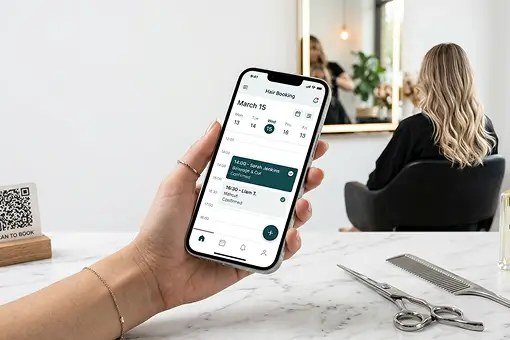
You do not need an expensive platform to start. If you take under twenty bookings a week, the free tier of most scheduling tools handles reminders and online rescheduling perfectly well. Upgrade only when you hit a limit or when deposits become worth automating.
When you do compare tools, prioritise the features that actually reduce no shows: automated SMS reminders, two way confirmation, deposit or card collection at booking, easy self service rescheduling and a waitlist. A flashy booking page that lacks reminders is decoration. The unglamorous reminder engine is what fills your diary.
Conclusion: Small Systems, Full Diary
Reducing no shows is not about finding better clients. It is about building a booking process that makes showing up the easy option and disappearing the hard one. Start with the three touch reminder sequence, add a clear cancellation policy and deposits, make rescheduling effortless, and keep a waitlist ready. Measure your rate monthly and keep refining.
Most small businesses see a meaningful drop within the first month of tightening their system. Your diary fills, your staff stop standing idle, and the revenue you were quietly losing every week starts landing in your bank account instead. That is the real prize: not more marketing, just keeping the customers you already won.
Frequently Asked Questions
What is a normal no show rate for a small business?
It varies by industry, but 10 to 15 percent is common for appointment based small businesses without a reminder system. Salons, clinics and home services often sit at the higher end. With reminders, deposits and a clear policy, most businesses get under 5 percent.
Do appointment reminders really reduce no shows?
Yes. Simple forgetfulness is the leading cause of missed appointments, and automated reminders directly fix it. A three touch sequence of confirmation at booking, a day before reminder and a day of nudge typically cuts no shows by a third or more on its own.
Should I charge a fee for missed appointments?
A fee or deposit is the single strongest deterrent available. Even a small deposit changes client behaviour dramatically. Just make sure the policy is written clearly, shown at booking and enforced consistently, or clients will not take it seriously.
How do I deal with a client who no shows repeatedly?
Use a clear strike system. After two no shows, require full prepayment for future bookings. After three, you can politely decline to book them. Communicate the rule calmly and apply it to everyone equally so it feels fair.
Are deposits legal for small businesses in the UK?
Yes, taking deposits is legal as long as your terms are clear and fair. State the deposit amount, when it is refundable and what happens on cancellation before the client pays. Keep terms reasonable and in writing to avoid disputes.