

Your Google reviews are no longer quiet feedback sitting on your profile. They are a public conversation between your business and every future customer who finds you on Search or Maps. Learning how to respond to Google reviews as a business UK owners can trust is one of the simplest ways to build confidence in your brand, calm unhappy customers and lift your local visibility. This guide shows you exactly what to write, when to write it and how to handle the tricky ones.
Why your replies matter more than you think
Research often quoted by UK marketing agencies shows that nearly everyone who reads a review also reads the business reply. That means your response is seen by far more people than the review itself. A warm and professional reply tells a stranger that you care about customers after the sale, not just before it.
There is a second reason to reply. Google rewards active profiles. Businesses that respond to reviews regularly send a signal that they are engaged and current, and that activity supports your visibility in local search. Replies alone will not put you on the map, but combined with accurate opening hours, good photos and a steady flow of reviews, they all count.
The third reason is human. A thoughtful reply can turn a grumbling customer into a loyal one, and a glowing five star review into a marketing asset you can quote elsewhere. Few business owners spend time on this, which is exactly why doing it well makes you stand out.
How to respond to Google reviews as a business UK style: seven golden rules
Before you touch the keyboard, agree these ground rules with anyone on your team who replies to reviews.
- Reply to every review. Positive, neutral and negative. Skipping the bad ones looks like you only engage when it flatters you.
- Reply quickly. Aim to answer within one working day. Forty eight hours is the outer limit. Speed shows you are listening.
- Use the reviewer name. A reply that starts with a name feels like a conversation. A reply that starts with “Dear customer” feels like a press release.
- Stay calm in public. Never argue, blame or get sarcastic in a reply. If you would not say it to someone across the counter, do not type it.
- Take disputes offline. Share a phone number or email address and invite the customer to continue privately. This stops a public back and forth and gives you room to fix the real problem.
- Keep it genuine. Replies that sound identical every time do more harm than good. Use a structure, but write fresh words for each one.
- Mind the law. In the UK, publishing a false claim about a reviewer could raise defamation issues, and sharing their personal details could breach data protection rules. State facts you can prove and keep personal details out of your reply.
How to reply to five star reviews without sounding robotic
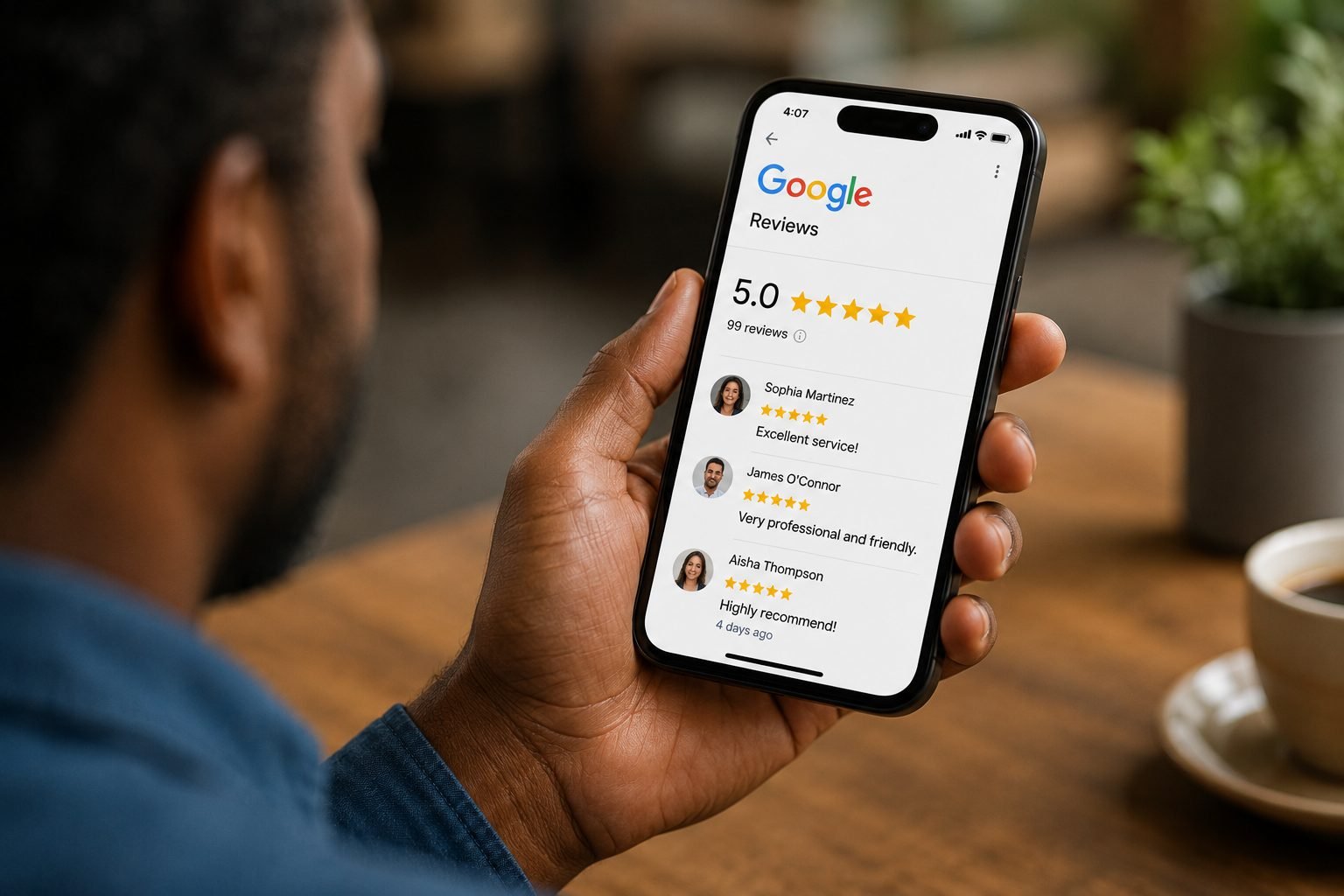
It is tempting to write “Thanks!” and move on. Resist that urge. A short personal reply to a happy customer costs you thirty seconds and does three jobs at once: it rewards the reviewer, it shows future readers that you notice praise, and it lets you slip in a natural mention of what you do. Mention the service they praised by name. If Sarah loved your boiler repair, say boiler repair. That natural wording helps Google understand your business too.
Here are two simple structures you can adapt for almost any trade:
- The warm thank you.
Thank you so much, Sarah! We are delighted the boiler repair went smoothly and that the team left everything tidy. We really appreciate you taking the time to leave a review.
- The referral nudge.
Thanks, James! Great to hear the garden clearance made a difference. If any friends need a hand with theirs, we would love to help.
Notice what these do. They thank by name, they name the job, they stay short and they feel human. That is the whole formula, and it works for plumbers, cafes, salons and shops alike.
How to handle negative reviews calmly
A one star review can ruin your morning, but it rarely ruins a business if you handle it well. Many customers say they trust a business more when they see a negative review answered gracefully than when they see a perfect five star record with no replies at all. Remember this: your reply is not really for the angry reviewer. It is for the hundreds of people reading over their shoulder.
Follow this process every time:
- Pause. Read the review twice. Then step away for an hour if you feel your blood pressure rising. A reply written in anger is a reply you will regret.
- Acknowledge the experience. You do not have to agree with everything they wrote. You do have to show you heard them. “I am sorry to hear your visit did not live up to expectations” costs you nothing.
- Apologise for what is fair. If your team was late, say so and own it. If the complaint is inaccurate, stay factual without calling the reviewer a liar. “Our records show the appointment was booked for Tuesday” beats “You are wrong”.
- Move it offline. Give a name, a phone number and an email address. “Please call me directly so I can look into this properly” shows future readers that you take complaints seriously.
- Follow up. If you resolve the problem, add one more public reply on the thread. A review that ends with “Issue resolved, thank you” is worth its weight in gold.
A worked example helps. Imagine this review: “Terrible service. Waited forty minutes past my appointment and nobody apologised. Will not return.”
A poor reply: “We were very busy that day and you were told about the wait. Most customers understand.”
This blames the customer, excuses the business and will put off everyone who reads it. Never write a reply like this.
A strong reply: “Thank you for telling us, Mark. I am sorry you waited so long without an apology; that is not the standard we aim for. I would like to look into what happened that day. Please email me or call the shop directly and I will make this right. Emma, Manager.”
This reply apologises, names a real person, offers a private channel and shows future customers that complaints get attention. That is how you turn a one star review into a moment that builds trust.
The copy paste template bank: five situations covered
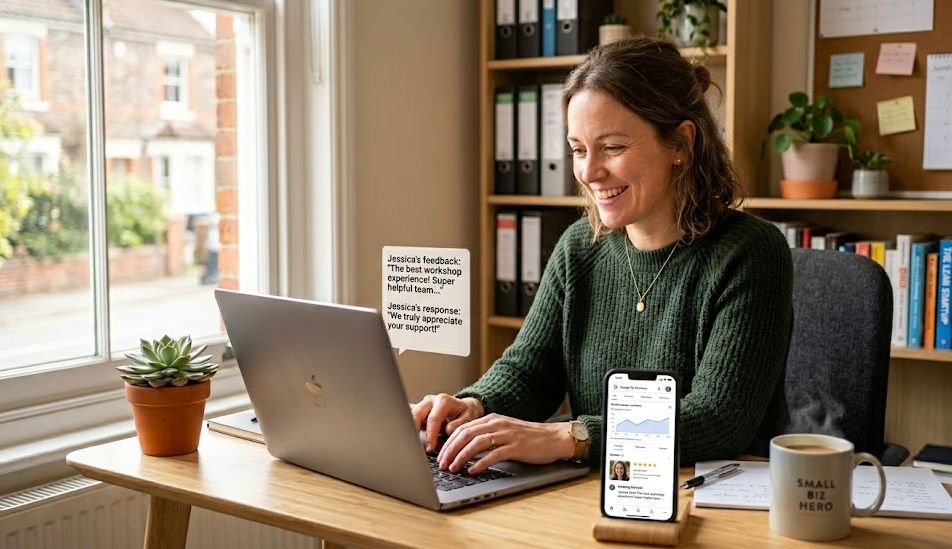
Keep these in a shared document your whole team can reach. Personalise the bracketed parts every single time.
- Five star review, short and sweet.
Thank you, [Name]! We are so pleased you enjoyed [service or product]. It means a lot to the whole team.
- Five star review with detail.
Thanks for the lovely detail, [Name]. We are glad the [specific thing they mentioned] hit the mark. We look forward to seeing you again soon.
- Three star review, mixed feelings.
Thank you for the honest feedback, [Name]. I am pleased parts of your visit went well and I am sorry [the specific issue] let you down. I have shared this with the team and we would welcome the chance to do better. Please contact me directly if you would like to talk it through.
- One star review, genuine complaint.
I am very sorry to hear this, [Name]. That is not the experience we want for our customers. I would like to investigate properly, so please email me with your order details and I will personally look into it. Thank you for giving us the chance to put it right.
- Review with stars but no text.
Thank you for the star rating, [Name]! If there is anything we could do to earn top marks next time, we would love to hear from you.
What to do about fake or unfair reviews
Every UK business owner dreads the review from someone who was never a customer, a competitor posing as one, or a rant full of claims that never happened. First, do not accuse the reviewer publicly. A reply that says “This is fake” looks defensive and can backfire if you cannot prove it.
Instead, post a calm holding reply: “Thank you for your review. We have no record of this visit in our system, so we cannot verify the details. Please contact us with your booking reference so we can investigate.” This signals to readers that something is off, without making a claim you cannot defend.
Then report the review through your Google Business Profile dashboard. Open the reviews tab, find the review, click the three dots and choose Report review. Select the reason that fits, such as a review that is not a genuine experience or one that shows a conflict of interest. Google usually decides within a few days, though tricky cases can take weeks. You can check the status in the same dashboard.
While you wait, gather evidence: booking records, staff rotas and any messages from the reviewer. If a review contains false statements of fact that damage your business and you know who wrote it, UK defamation law may apply, but court action is slow and expensive. For most small businesses, a calm public reply plus a report is the proportionate response. Speak to a solicitor before threatening legal action in writing.
Getting more reviews worth replying to
The best review strategy is refreshingly boring: ask happy customers at the right moment. The right moment is just after you have solved their problem, delivered the work or seen them smile. A simple “If you have a minute, a Google review would really help our small business” works better than any clever script.
Make it effortless. A short review link from your Google Business Profile can go in email signatures, on receipts and on a small card at the till. If you serve customers face to face, our guide to QR codes for small business marketing shows how a scannable code on a table card or invoice can turn a happy visit into a fresh review in seconds.
And if you already send a newsletter for your small business, a monthly roundup of your best reviews doubles as social proof and a gentle nudge for new ones. People are far more likely to leave a review when they see others doing it.
A simple weekly review routine
You do not need expensive software. Fifteen minutes a week covers most small businesses:
- Monday morning: open your Google Business Profile and read every new review.
- Reply first to the negative ones, while you are fresh and patient.
- Then reply to the positive ones, personalising each with a name and a detail.
- Flag anything fake and report it through the dashboard.
- Note any patterns. Three reviews mentioning slow service at the till is not a review problem. It is an operations problem. Fix the root cause and say so in future replies.
Conclusion: small replies, lasting results
Learning how to respond to Google reviews as a business UK customers can believe in is not complicated. Reply to every review within a day, thank people by name, stay calm when criticism lands, take disputes offline and report the fakes through your dashboard. Keep a few templates handy, personalise them every time and build a short weekly routine so nothing slips through the cracks.
Do this consistently and your review profile becomes one of your hardest working marketing assets. Future customers will read your replies and conclude, before they ever contact you, that this is a business that listens. In a crowded local market, that quiet signal is worth more than any advert.
Your takeaways:
- Reply to all reviews within one working day.
- Thank the reviewer by name and mention the specific service.
- Never argue in public; move disputes to phone or email.
- Report fake reviews calmly and keep your evidence.
- Ask happy customers for reviews at the perfect moment.
Frequently asked questions
Should I respond to positive Google reviews too?
Yes. Replying to positive reviews shows future customers that you value feedback, and it gives you a natural place to mention the service by name, which helps local search. Keep replies short, warm and personal.
How quickly should a business respond to Google reviews?
Within one working day is the gold standard. Forty eight hours is acceptable. Replies that arrive weeks later look like an afterthought, while same day replies show you are actively listening.
Can I get a bad Google review removed in the UK?
Only if it breaks Google review policies, for example if it is fake, posted by a competitor or contains hate speech. Respond politely, report it through your Google Business Profile dashboard and gather evidence. Google will not remove a review simply because it is negative but honest.
What should I never write in a review reply?
Never argue with the reviewer, never accuse them of lying, never share their personal details and never offer payment for removing a review. All four can damage your reputation and, in the case of personal data, breach UK data protection rules.
Do review replies really help my Google ranking?
They help indirectly. Regular replies signal an active and engaged business to Google, and detailed replies can include natural mentions of your services and location. Combined with a steady flow of genuine reviews, they support stronger local visibility.