

Learning how to start a newsletter for your small business is one of the smartest marketing moves you can make this year. Social media reach keeps shrinking, ad costs keep climbing, and yet the humble email keeps quietly delivering results. Industry research regularly puts the return on email marketing at around thirty six pounds for every pound spent, a figure no social platform comes close to matching.
Best of all, you do not need a marketing team or a big budget to get going. A newsletter can begin with a simple signup form on your website and a free email platform. What matters is consistency, honesty and content your readers actually want to open.
In this guide you will learn how to start a newsletter for your small business in seven practical steps, from choosing a platform to sending your first issue. We will also cover UK privacy rules, the mistakes that sink most beginner newsletters, and how to measure what is working.
Why email still beats social media for small business
Before we get into the practical steps, it is worth understanding why a newsletter deserves your time. When you post on social media, you are renting attention. The platform decides who sees your post, and organic reach for business pages has fallen to single figures on most networks. An algorithm change overnight can wipe out years of audience building.
An email list is different because you own it. Every subscriber has personally asked to hear from you, which makes them far more likely to read what you send. Typical open rates for small business newsletters sit between 35 and 45 percent. Compare that with the 2 to 5 percent of followers who see a typical social post, and the advantage is obvious.
Email also drives action. Readers are already in a reading mindset when they open their inbox, so a well placed link to a new product, a booking page or a blog post gets clicked far more often than the same link buried in a social feed. For shops, trades, cafes, consultants and creators alike, the newsletter is the closest thing to a direct line to your best customers.
How to start a newsletter for your small business in seven practical steps
Here is the exact process to go from zero to your first send. Each step builds on the last, so work through them in order and do not skip ahead to the fun part of designing your template before the foundations are in place.
Step 1: Choose one clear goal
Every good newsletter starts with a single, clear goal. Are you trying to drive sales, win repeat bookings, build trust with future customers, or keep past clients coming back? Pick one primary goal and let it guide every decision, from what you write about to how often you send.
Be specific. “Grow the business” is too vague to be useful. “Drive ten extra weekend orders a month for the bakery” gives you something to plan around and measure. A plumber might aim for more boiler service bookings each autumn, while a consultant might want a steady flow of discovery calls.
Your goal also shapes your content. A newsletter built to drive sales will feature products, offers and customer stories. One built to build authority will lean toward tips, guides and behind the scenes insight. Trying to do everything in every issue is how newsletters become unfocused and unread.

Step 2: Pick an email platform you will actually use
The email platform, sometimes called an email service provider, is the software that stores your subscriber list and sends your newsletters. There are plenty of good options with free plans, so the best choice is the one you will actually log in to and use.
Popular starting points for UK small businesses include Mailchimp, Brevo, Kit and Substack. Free tiers usually cover a few hundred to a couple of thousand subscribers, which is more than enough while you are getting started. When comparing platforms, look at the free contact limit, how easy the editor feels, whether it handles signup forms and automation, and what pricing looks like once you outgrow the free plan.
Do not overthink this decision. Moving your list to a different platform later is perfectly possible, and far easier than most people fear. Spending three weeks comparing features is a classic form of procrastination. Pick one this week, set up your account, and move on to building your list.
Step 3: Build your list the honest way
Your subscriber list is the heart of your newsletter, and how you build it matters enormously. Never buy an email list. Purchased lists are full of dead addresses, trigger spam complaints, damage your sender reputation, and break UK privacy law. A small list of real fans will always outperform a big list of strangers.
Start with the people who already know you. Add a signup form to your website, ideally in more than one place: the homepage, the footer and at the end of blog posts. If you sell online, add an opt in checkbox at checkout so buyers can join with one click. If you have a physical premises, a small sign with a QR code linking to your signup form works surprisingly well.
A lead magnet can speed things up considerably. This is simply something valuable you give away in exchange for an email address: a discount code, a helpful checklist, a short guide or a free consultation. Make it genuinely useful and closely related to what you sell, so the people who sign up are the people most likely to buy.
UK readers should take privacy rules seriously from day one. Under UK GDPR and the Privacy and Electronic Communications Regulations, you generally need clear consent before sending marketing emails to individuals. Use a proper signup form, say clearly what people are signing up for, and keep a tidy record of every consent you collect. Keeping those records organised is much easier with a digital filing system for small business, so subscriber exports and consent logs never go missing when you need them.
Step 4: Plan content your readers will open
The number one reason newsletters fail is running out of things to say. Solve this before you send a single email by planning your first six issues in advance. Sit down with a notebook and brainstorm topics your customers actually care about, not just what you want to tell them about your business.
Content ideas that consistently work for small businesses include:
- Practical tips related to your trade or products
- Behind the scenes stories from your workshop, kitchen or office
- New product or service announcements with a subscriber only perk
- Customer stories and reviews that show real results
- Seasonal advice tied to what your customers are doing right now
- Answers to questions customers ask you again and again
If you sell physical products, a new arrival spotlight with a subscriber discount is a proven winner. Before you announce prices to your list, make sure your numbers are solid: our guide to pricing your handmade products walks through getting your margins right first.
Aim for a mix of roughly 80 percent useful or entertaining content and 20 percent direct selling. Nobody stays subscribed to a newsletter that is only ever asking for money. When every issue delivers something genuinely helpful, readers look forward to your emails and forgive the occasional sales pitch.
Step 5: Write emails people open and read
Your subject line decides whether your email gets opened or ignored, so give it real thought. Short, specific subject lines beat clever ones. “Three ways to keep sourdough fresh” will outperform “You will not believe this baking secret” every time. Write the subject line last, after you know exactly what the email delivers, and keep it under 50 characters so it does not get cut off on phones.
The preview text, the short snippet shown next to the subject line in most inboxes, is free extra space. Use it to expand on the subject line rather than repeating it. Together they form your headline, and they deserve as much care as the email itself.
Inside the email, write as if to one person. Use “you” more than “we”, keep paragraphs to two or three lines, and get to the point quickly. Most readers skim, so put your main message and your single call to action near the top. One email should ask the reader to do one thing: read the guide, book the slot, or browse the new range. Give them five different links and they will click none of them.

Step 6: Keep the design simple and mobile ready
Beginner newsletter senders often spend hours on design and minutes on content. Flip that around. A clean, simple layout will always beat a fussy one, and it takes a fraction of the time to build.
Use a single column layout, a readable font size, and plenty of white space. Most email platforms offer solid starter templates: pick one, add your logo and brand colours, and resist the urge to tinker further. More than half of your readers will open your email on a phone, so always send yourself a test and read it on mobile before it goes out.
Add descriptive alt text to your images, since some email apps block images by default and some readers use screen readers. Keep image file sizes small so your email loads quickly. And every email must include a clear unsubscribe link and your business postal address, which UK law requires on marketing emails.
Step 7: Send, measure and improve
With your platform chosen, your list started and your first issue written, it is time to send. Schedule your first newsletter for a Tuesday, Wednesday or Thursday morning, when open rates tend to be highest, and then pay close attention to what happens next.
Three numbers tell you most of what you need to know. The open rate shows how many subscribers opened your email: for small businesses, anything above 35 percent is healthy. The click rate shows how many clicked a link inside: 2 to 5 percent is a solid range. The unsubscribe rate shows how many left: keep it under 0.5 percent per send, and investigate if it climbs.
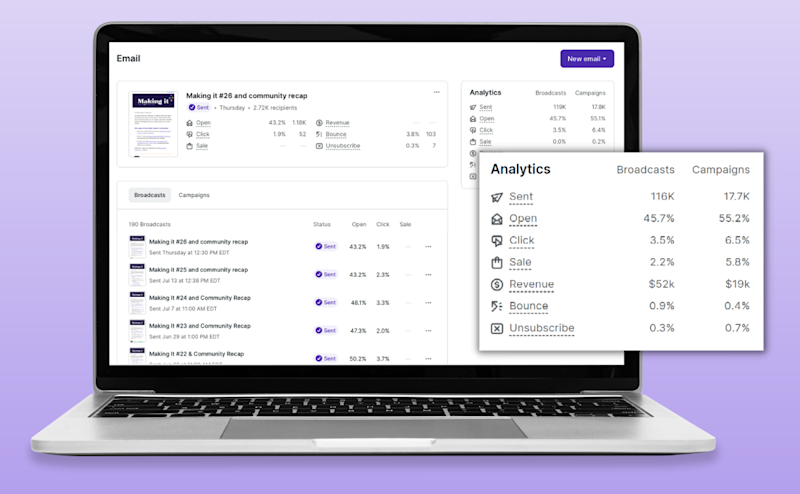
Do not panic over a single weak issue. Look for patterns across four to six sends before changing course. If open rates are low, test different subject line styles. If clicks are low, sharpen your call to action or move it higher. Change one thing at a time so you know what made the difference.
One automation worth setting up from the start is a welcome email. This is a short, friendly message sent automatically the moment someone subscribes, thanking them and setting expectations about what is coming. Welcome emails get some of the highest open rates in all of email marketing, and they take twenty minutes to write once.
Five mistakes that sink small business newsletters
Most newsletters do not fail because of bad software. They fail because of avoidable habits. Watch out for these five:
- Sending too rarely. Emailing once every three months means subscribers forget who you are. Pick a rhythm you can sustain, monthly at minimum, and stick to it.
- Only selling. A newsletter that is pure promotion trains readers to ignore you. Lead with value and the sales will follow.
- Buying email lists. It damages your reputation, breaks the law in the UK, and fills your list with people who never asked to hear from you.
- Skipping the test send. Broken links, missing images and typos in the subject line are all avoidable with a two minute test to your own inbox.
- Ignoring the numbers. Your platform shows you exactly what works. Newsletters that never check their stats keep repeating the same mistakes.
When to get help with your newsletter
In the early days, writing your own newsletter is the right call. Nobody knows your business and your customers like you do, and your authentic voice is part of what makes a small business newsletter worth reading. Budget two to three hours per issue: one for planning and drafting, one for polishing and design, and a little for reviewing the results.
As your list grows, the newsletter can start eating into time better spent serving customers. That is a good problem to have. You might hand the writing to a freelancer, ask a team member to own it, or bring marketing help in house. If you are reaching the point of building a team, our hiring your first employee checklist covers the legal and practical steps UK employers need to get right.
Key takeaways
Figuring out how to start a newsletter for your small business comes down to a handful of principles that never change. Own your audience instead of renting it from social platforms. Choose one clear goal and let it guide your content. Build your list honestly with proper consent, because trust is the whole game. Write short, human emails with one clear call to action. And measure what happens, then improve one thing at a time.
Your first issue will not be perfect, and that is fine. Every successful newsletter you admire started with a wobbly first send to a tiny list. What separates the newsletters that grow from the ones that fade is simply this: they kept showing up in the inbox, month after month, with something worth reading. Start this week, and give your future self a list of loyal readers to be grateful for.
- Set one clear goal before you write a word
- Pick a free friendly platform and stop comparing options
- Grow your list with consent, never with purchased addresses
- Plan six issues ahead so you never face a blank page
- Send consistently, measure the basics, and improve steadily
Frequently asked questions
How much does it cost to start a newsletter for a small business?
You can start for free. Most email platforms offer free plans covering a few hundred to a couple of thousand subscribers, which is plenty for a new newsletter. Costs only appear as your list grows, typically from around ten to twenty pounds a month for a few thousand subscribers.
How often should a small business send a newsletter?
Monthly is the minimum that keeps you memorable, and fortnightly or weekly works well once you have the content habit. The golden rule is consistency: a dependable monthly email beats an ambitious weekly schedule that collapses after three issues.
Do I need permission to email customers in the UK?
In most cases, yes. UK GDPR and the Privacy and Electronic Communications Regulations generally require clear consent before you send marketing emails to individuals. Use proper signup forms, explain what subscribers will receive, keep records of consent, and always include an unsubscribe link.
What is a good open rate for a small business newsletter?
Open rates between 35 and 45 percent are typical for engaged small business lists, well above the single figure reach of most social media posts. Rates vary by industry, so track your own trend over several issues rather than chasing a single benchmark.
Can I run a newsletter from my normal email account like Gmail?
Technically you can send to a handful of people, but it is a bad idea beyond that. Personal email accounts have strict daily sending limits, offer no unsubscribe handling or analytics, and bulk sending from them looks unprofessional and risks your account being flagged. A proper email platform is free to start and handles all of this for you.