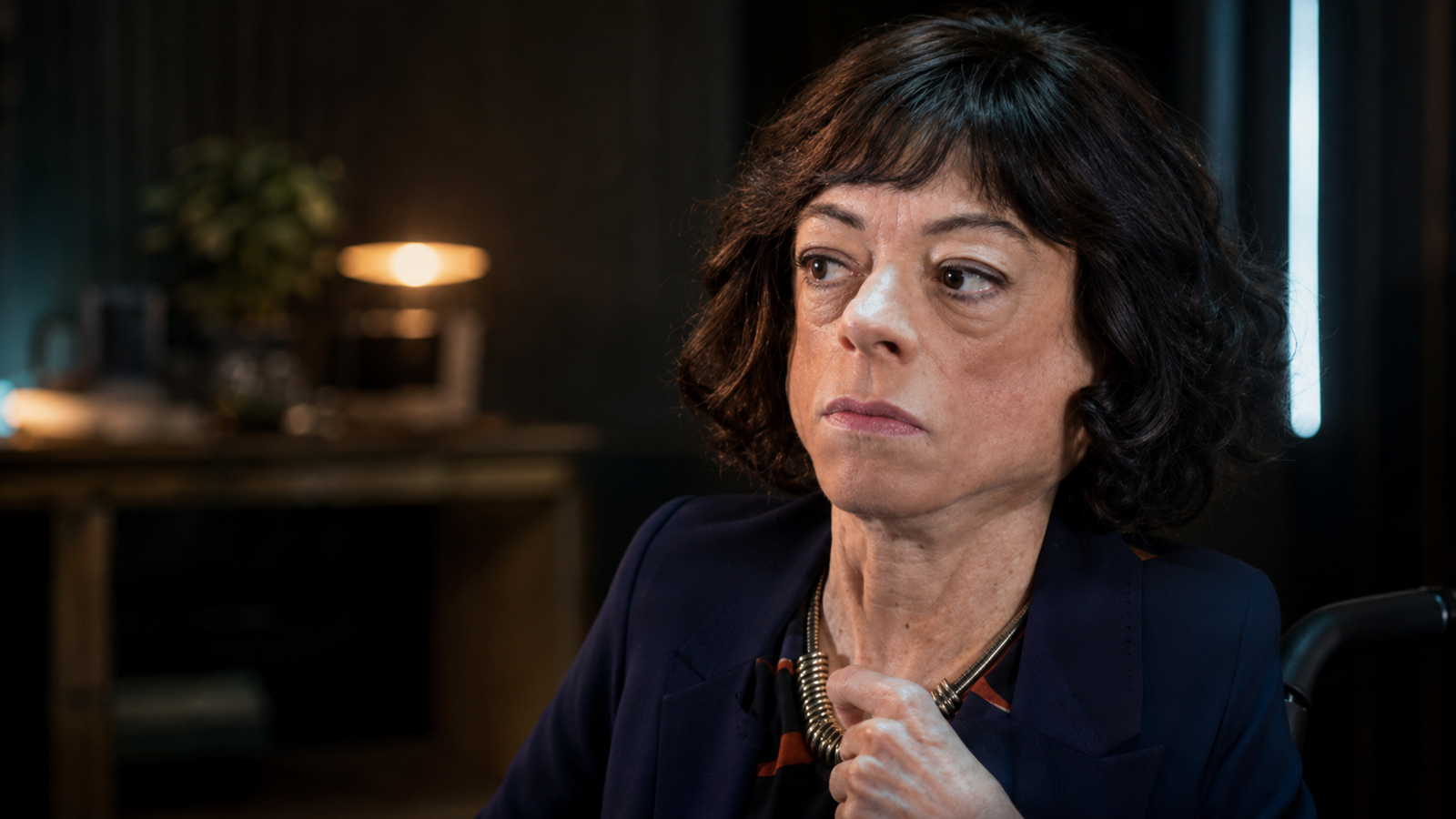
Liz Carr is one of the most respected names in British television, theatre, and disability advocacy today. Best known for playing forensic examiner Clarissa Mullery in the long running BBC drama Silent Witness, Liz Carr has built a career that few can match for its range and honesty.
She is an actress, comedian, broadcaster, and lifelong campaigner for disabled people’s rights. Her path to fame was not conventional, and that is exactly what makes her story worth telling.
This article looks at who Liz Carr is, how she built her career, and why her voice matters far beyond the screen.
Who Is Liz Carr
Liz Carr, born Elizabeth Anne Carr, is an English actress, comedian, and disability rights activist known for her work both in front of the camera and off it. Many people first encounter her through Silent Witness, but her career stretches back decades before that role.
What sets Liz Carr apart from many performers is the way her activism and her creative work are woven together. She rarely separates the two, and audiences have come to respect her for that honesty.
Early Life and Education
Liz Carr was born in Port Sunlight and grew up in Bebington, Cheshire. She attended Upton Hall School FCJ before moving on to Birkenhead High School.
At the age of eleven, she began using a wheelchair due to arthrogryposis, a condition affecting joint movement. This early experience shaped much of her later activism and gave her a grounded perspective on disability that would inform her comedy, her acting, and her campaigning.
In 1990, Carr enrolled at the University of Nottingham to study law. She graduated with an LLB and initially pursued a career connected to that field rather than performing.
From Law Graduate to Disability Rights Campaigner
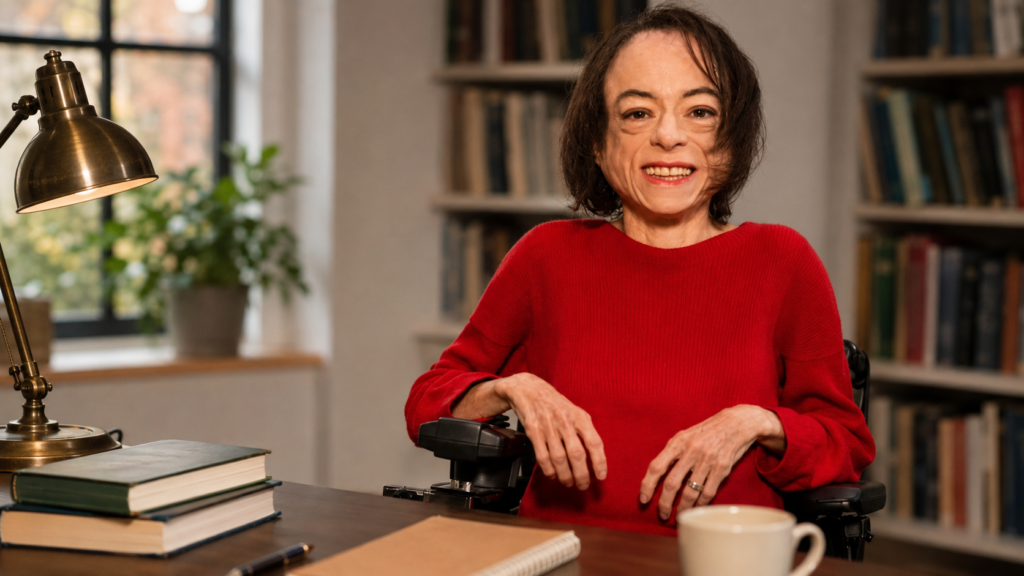
After finishing her law degree, Liz Carr did not head straight into entertainment. Instead, she volunteered at a law centre and became involved in civil rights work for disabled people, both in the UK and internationally.
This period proved formative. Carr developed a reputation as a clear, confident voice on disability issues, something that would carry through into every stage of her later public life.
Her early journalism with the BBC’s Ouch website marked one of her first steps into broadcasting. She wrote columns exploring disability from a personal and often witty perspective, building an audience long before she appeared on screen.
Liz Carr’s Comedy Career
Comedy became Carr’s unexpected entry point into performance. In 2000, she co-founded the comedy group Nasty Girls, and by 2005 she had joined Abnormally Funny People, a group made up entirely of disabled comedians.
She took her stand up work to the Edinburgh Fringe six times and performed at the Melbourne Comedy Festival twice. In 2006, she reached the final of the Funny Women competition, and the following year she was runner up at the Hackney Empire New Act of the Year.
One of her most striking creative projects came later, when she wrote the book and lyrics for Assisted Suicide: The Musical. The show combined dark humour with a serious message and played to sold out audiences at the Royal Festival Hall in 2016 and 2017.
Alongside her stand up work, Carr co-hosted the Ouch podcast with actor Mat Fraser from 2006 to 2013. The show won a Royal Television Society award and became known for its frank, funny discussions of disability in everyday life.
Breaking Into Television and Film
Carr’s professional acting career started later than most, and that timing is part of what makes her story interesting. She trained in performing arts through Graeae Theatre Company and London Metropolitan University, and in 2003 she took on the lead role in a touring production of Mother Courage and Her Children.
From there, she appeared in stage productions including a reading of The Vagina Monologues performed entirely by disabled women, as well as work at the Young Vic and a touring production of George Dandin with Graeae.
Television opportunities followed gradually, but it was one particular audition that would change the course of her career.
Liz Carr in Silent Witness
In 2012, Liz Carr auditioned for a role on Silent Witness, the BBC’s long running forensic crime drama. She nearly missed the audition entirely after getting stuck in traffic, arriving later than planned.
She got the part anyway, joining the cast in 2013 as Clarissa Mullery, a sharp and capable forensic examiner working alongside characters played by Emilia Fox and David Caves. It was Carr’s first television acting role.
Over the following seven series, Clarissa grew from a supporting character into a central figure in the show. Carr remained with Silent Witness from 2013 through 2020, appearing in 79 episodes and becoming one of the most recognisable faces of the franchise.
Her portrayal was notable for something beyond strong acting. Clarissa’s disability was written into the character naturally, without being the focus of every storyline, which many viewers and critics saw as a meaningful step forward for representation on British television.
Other Notable Roles: Good Omens, The Witcher, Loki, and More
Since leaving Silent Witness, Liz Carr’s screen career has only broadened. She played Saraqael across six episodes of the Prime Video series Good Omens, appeared as Fenn in Netflix’s The Witcher, and joined the Marvel universe with a role in Loki.
Other credits include Devs on FX, The OA on Netflix, and a role as a concierge in the BBC’s 2018 adaptation of Les Misérables. She also appeared in This Is Going to Hurt and shared the screen with Mark Wahlberg in the Paramount film Infinite.
This range, moving between prestige drama, comedy, science fiction, and major streaming productions, shows an actress equally comfortable in very different creative worlds.
Theatre Work and the Olivier Award
Alongside her screen work, Carr has continued to build a serious theatre career. Her performance in Larry Kramer’s The Normal Heart at the National Theatre stands as one of the highlights of her career.
In the production, she played Dr Emma Brookner, a role based on the real life physician Linda Laubenstein, who worked at the forefront of the early HIV and AIDS crisis. Carr became the first disabled actor to take on the role professionally.
Her performance earned her the Laurence Olivier Award, one of British theatre’s highest honours, in 2022. It marked a significant moment not just for her personal career but for disabled representation on the British stage more broadly.
Better Off Dead: A Documentary That Sparked National Conversation
In May 2024, BBC One broadcast Better Off Dead, a documentary written and presented by Liz Carr. The film explored assisted dying legislation and its potential impact on disabled people, a subject Carr had campaigned on for years.
The documentary presented a clear argument against legalising assisted suicide in the United Kingdom, drawing on Carr’s own experience and extensive research into how similar laws have played out elsewhere. It received strong reviews and was widely discussed in the press.
The programme reflected exactly the kind of work Carr has become known for: personal, well researched, and unafraid to challenge popular assumptions. It also earned her recognition from the Royal Television Society for her presenting work.
Living With Arthrogryposis
Arthrogryposis multiplex congenita is a condition that affects joint movement and muscle development from birth. For Liz Carr, it has meant using a wheelchair since childhood and navigating a world not always built with accessibility in mind.
Rather than treating her disability as something to explain away, Carr has spoken openly about it throughout her career, using both comedy and serious documentary work to challenge misconceptions. Her approach has helped shift public conversation around disability from pity toward genuine understanding.
Personal Life
Liz Carr married her partner, Jo Church, in 2010. She has generally kept her personal life relatively private compared to her very public activism and performing career, choosing instead to let her professional work speak for her values.
In August 2017, Carr and her personal assistant were the victims of an attack, an incident that drew attention to the vulnerability disabled people can face even with support systems in place.
Why Liz Carr’s Career Matters
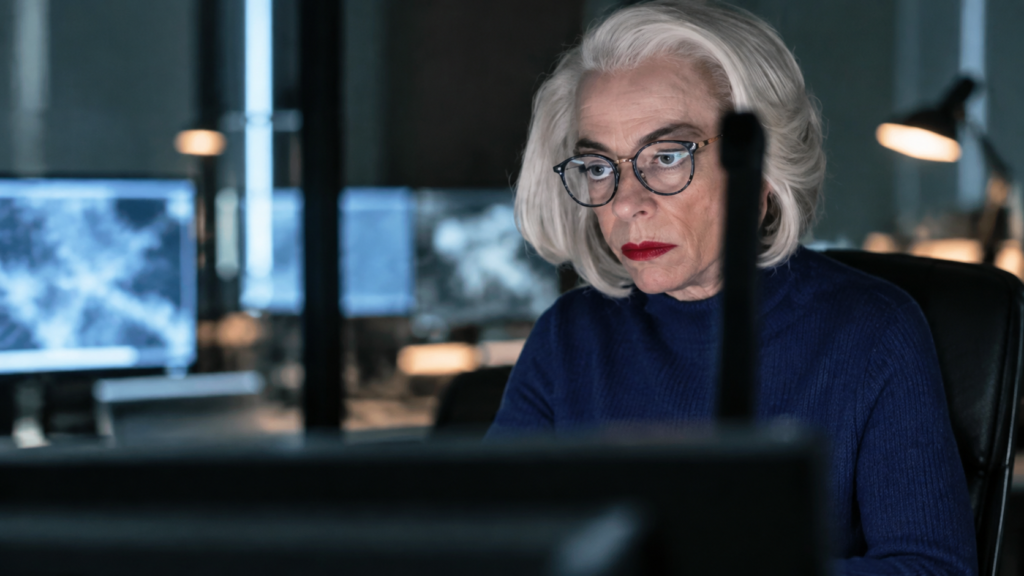
What makes Liz Carr’s story stand out is not just the range of roles she has taken on, but the consistency of purpose behind them. Whether she is performing stand up comedy, playing a forensic examiner on primetime television, or presenting a documentary on a sensitive political issue, her work is shaped by lived experience and genuine conviction.
She has helped normalise disabled representation on screen without reducing her characters to a single trait. At the same time, her activism has never taken a back seat to her entertainment career. The two have always moved together.
For young disabled performers watching her career, Carr offers proof that a path into mainstream British television and theatre is possible, even when it starts later and looks different from the traditional route.
Conclusion
Liz Carr’s journey from a law graduate and disability rights campaigner to an Olivier Award winning actress and BBC documentary presenter is genuinely remarkable. Her career on Silent Witness introduced her to millions of viewers, but it is only one part of a much larger body of work that spans comedy, theatre, broadcasting, and activism.
She has used every platform available to her, from stand up stages to national television, to tell stories that matter and to challenge how disability is understood in Britain. That combination of talent and purpose is what continues to make her one of the most respected figures in British entertainment today.
Frequently Asked Questions
What is Liz Carr best known for?
Liz Carr is best known for playing forensic examiner Clarissa Mullery in the BBC drama Silent Witness, a role she held from 2013 to 2020.
What disability does Liz Carr have?
Liz Carr has arthrogryposis multiplex congenita, a condition affecting joint movement, and she has used a wheelchair since childhood.
Did Liz Carr win an award?
Yes. Liz Carr won the Laurence Olivier Award in 2022 for her performance in The Normal Heart at the National Theatre.
What is Liz Carr’s documentary Better Off Dead about?
Better Off Dead is a BBC documentary presented by Liz Carr that explores assisted dying legislation and its potential impact on disabled people.
What other TV shows has Liz Carr appeared in?
Beyond Silent Witness, Liz Carr has appeared in Good Omens, The Witcher, Loki, Devs, The OA, and Les Misérables, among other productions.