Buying an espresso machine should feel exciting, not overwhelming. Yet most people who start researching one end up more confused than when they began, buried under spec sheets, bar pressure claims, and a dozen “best of” lists that all recommend different machines for vague reasons.
This guide takes a different approach. Instead of ranking products, it walks you through the actual decisions that determine whether an espresso machine will earn its place on your counter or end up gathering dust after a few weeks. You will learn what genuinely affects the quality of your shot, what costs to expect beyond the sticker price, and how to figure out which category of machine actually fits your life.
If you are serious about making great coffee at home, or you are simply tired of overpaying for a cup at your local café, this is the guide that treats you like an adult capable of making an informed decision, not someone who just needs a ranked list to scroll through.
Why Most Espresso Machine Guides Get It Wrong
Search for an espresso machine online and you will find dozens of articles structured the same way. Best overall, best budget, best compact, best for beginners. They all read like they were written from the same template, because in a sense, they were.
The problem is not that these guides are dishonest. Many are genuinely well tested. The problem is that they answer the wrong question. They tell you which specific product to buy before helping you understand what actually matters for your own situation.
An espresso machine that is perfect for a coffee obsessive who enjoys tinkering with grind settings every morning might be a frustrating waste of money for someone who just wants a decent latte before work. This guide focuses on the decision making process first, because the right machine for you depends entirely on how you actually plan to use it.
Do You Actually Need an Espresso Machine
This question rarely gets asked honestly, but it deserves an answer before you spend a single dollar.
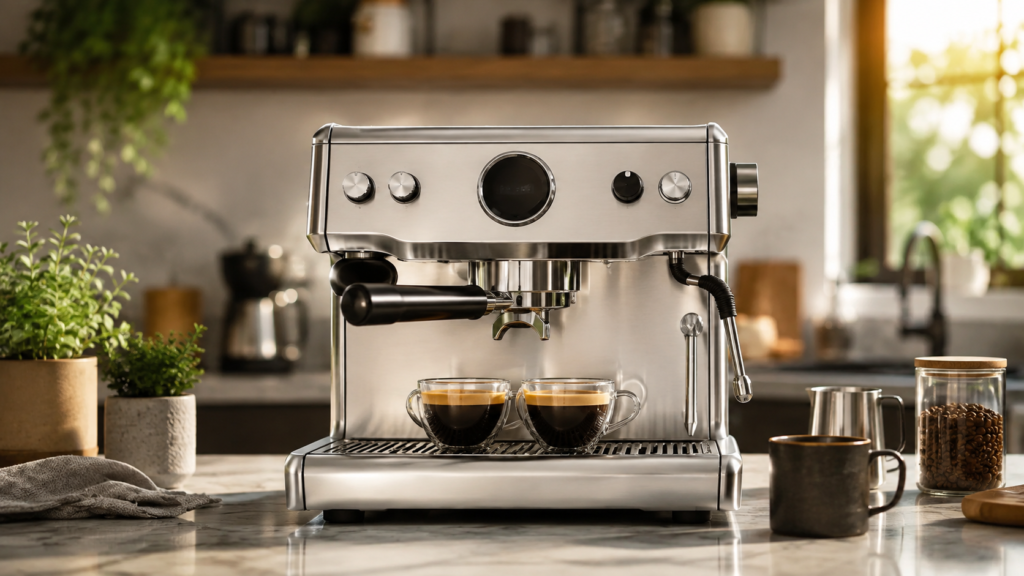
An espresso machine forces hot, pressurized water through finely ground, tightly packed coffee to produce a concentrated shot topped with crema. That process is what separates espresso from drip coffee, pour over, or a moka pot. If what you actually enjoy is strong black coffee without the milk drinks, a moka pot or AeroPress will get you close for a fraction of the price and effort.
Espresso machines make the most sense for people who:
- Drink milk based drinks regularly, such as lattes, cappuccinos, or flat whites
- Want café quality espresso without the daily cost of buying it out
- Enjoy the ritual of making coffee, not just drinking it
- Are prepared to learn at least a little bit about grind size, tamping, and extraction
If none of that describes you, a good pod machine or a manual brewer might genuinely serve you better. There is no prize for owning an espresso machine you resent using.
The Three Types of Espresso Machine, Explained Simply
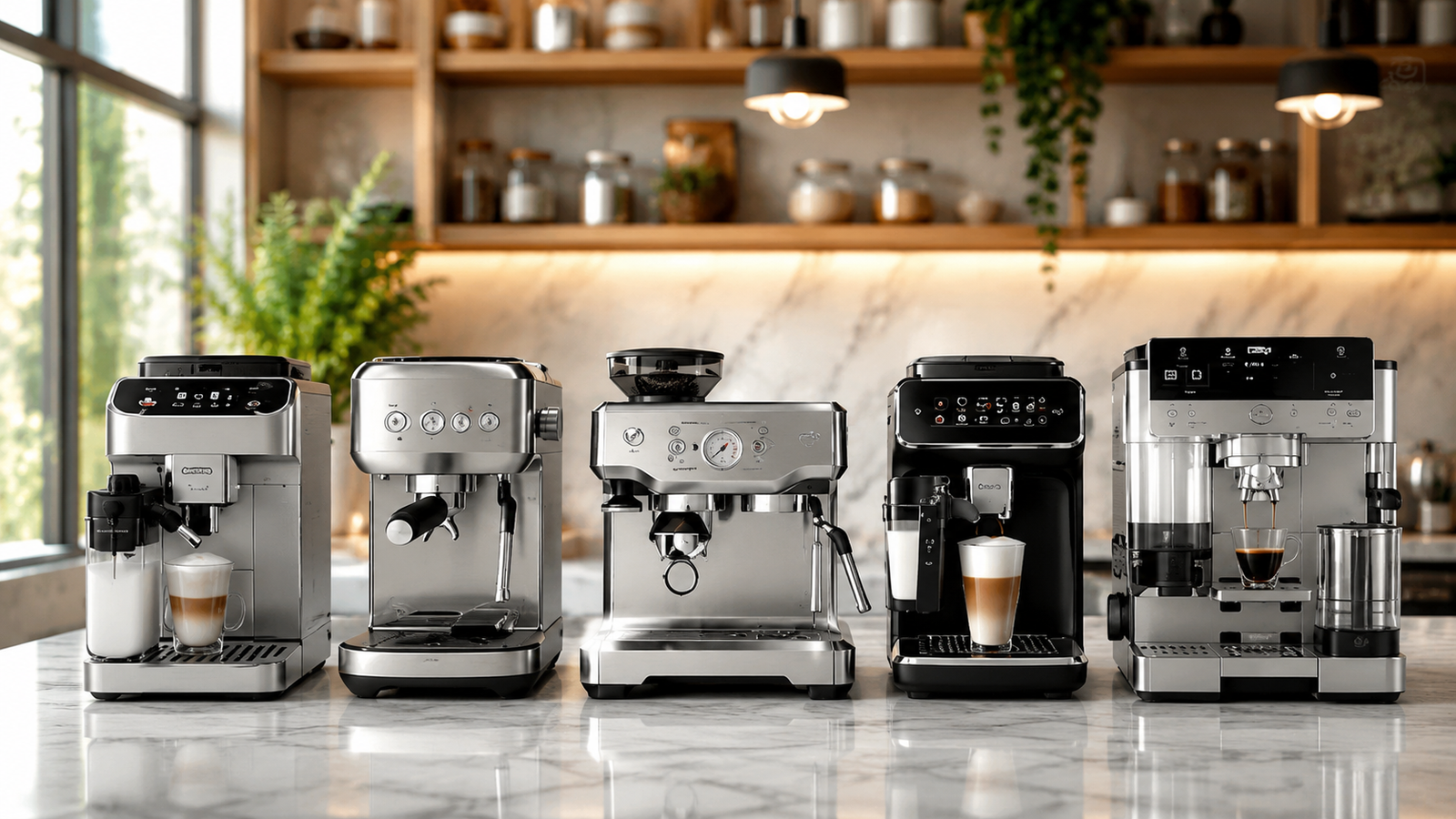
Once you have decided an espresso machine is right for you, the next step is understanding the three broad categories. Nearly every machine on the market fits into one of these, no matter the brand or price point.
Manual Machines
Manual machines require you to grind, dose, tamp, and control the brewing process yourself, often with a separate grinder. They offer the most control and, in skilled hands, the best possible espresso. They also have the steepest learning curve. Expect your first few weeks of shots to be inconsistent while you learn how grind size and tamping pressure affect flavor.
Automatic Machines
Automatic, sometimes called semi automatic, machines sit in the middle. Many include a built in grinder and guided features like assisted tamping or automatic milk steaming, while still letting you adjust variables if you want to. This category has grown enormously in recent years and now offers some of the best value for people who want quality without becoming a full time hobbyist.
Superautomatic Machines
Superautomatic machines handle grinding, dosing, tamping, brewing, and often milk steaming at the touch of a button. They remove almost all the variables, which means less room for error but also less room for customization. These tend to cost more for comparable quality, since you are paying for the engineering that automates the entire process.
Understanding which category fits your patience level and available time is more useful than comparing individual models, because it immediately narrows your options to machines that suit how you actually want to spend your mornings.
The Specs That Actually Matter (And the Ones That Do Not)
Spec sheets are designed to impress, not necessarily to inform. Here is what is worth paying attention to, and what is mostly marketing noise.
Bar Pressure Is Mostly Marketing
You will see machines advertised with 15, 19, or even 20 bars of pressure. The ideal pressure for pulling a great shot of espresso is actually around 9 bars. Anything beyond that is largely irrelevant to the final cup, since well designed machines use an internal valve to regulate pressure down to that sweet spot regardless of the maximum the pump can produce. A high bar number on the box is not a reliable indicator of quality.
Grinder Quality Matters More Than Grind Settings
A machine boasting 30 grind settings sounds impressive, but most people settle on one or two preferred settings within the first couple of weeks and rarely touch them again. What actually matters is the quality of the burrs doing the grinding. Conical burr grinders tend to run quieter and produce more consistent particle sizes than cheaper alternatives, which translates directly into a more even extraction and better flavor.
Temperature Stability
Consistent water temperature during brewing, ideally between 190 and 200 degrees Fahrenheit, is essential for good extraction. Machines with a PID controller, which stands for proportional integral derivative, actively regulate this temperature far more precisely than basic thermoblock systems. If you plan to drink several shots back to back, temperature stability becomes even more important, since inconsistent heat leads to sour or bitter tasting espresso depending on which direction it drifts.
Steam Wand Design
If milk drinks are part of your daily routine, do not treat the steam wand as an afterthought. A responsive wand that lets you control texture by hand will consistently outperform an automated milk dispenser found on many superautomatic machines, which tend to heat and aerate milk rather than truly steam it into microfoam.
What an Espresso Machine Really Costs You Over Time
The price tag on the box is only part of the story. A complete picture of ownership costs looks something like this.
Upfront cost: entry level manual machines start around 100 to 150 dollars, while quality automatic machines with built in grinders typically range from 400 to 1,000 dollars. Prosumer and superautomatic machines can run well beyond that.
Grinder: if your machine does not include one, budget at least 150 to 300 dollars for a grinder capable of a fine, consistent espresso grind. This is not optional if you care about quality.
Descaling solution: mineral buildup from water is inevitable and needs to be cleared out every one to three months depending on your water hardness, typically costing 10 to 20 dollars per treatment.
Water filters: some machines use replaceable filters to reduce scale buildup and improve taste, usually 15 to 30 dollars every few months.
Replacement parts: gaskets, portafilter baskets, and steam wand tips wear out over years of use and are generally inexpensive to replace individually, but worth factoring in over the life of the machine.
Beans: quality, freshly roasted espresso beans typically cost more than standard grocery store coffee, though buying whole bean and grinding fresh will always beat pre ground coffee in flavor.
None of these costs should scare you away from buying an espresso machine. They are worth knowing upfront so the true cost of ownership does not catch you off guard a year in.
Space, Noise, and Kitchen Fit
This gets surprisingly little attention in most buying guides, yet it affects daily satisfaction just as much as shot quality does.
Espresso machines, particularly those with built in grinders, tend to be bulkier than a standard drip coffee maker. Measure your counter space, including clearance above the machine for filling the water reservoir and accessing the portafilter, before you commit to a specific model.
Grinders are also genuinely loud, especially at 6 a.m. If you share a home with people who sleep later than you, or your kitchen is open to a bedroom, this is worth testing in store or checking reviews for before you buy, since it is rarely mentioned in spec sheets.
Some prosumer and commercial style machines require a dedicated water line for plumbing in, rather than a manual reservoir. If you are considering a machine at that level, confirm your kitchen setup can actually accommodate it, or budget for professional installation.
How to Match a Machine to Your Actual Habits
Rather than chasing a specific brand or model, work through these honest questions first.
How many drinks do you make per day? Someone pulling one shot each morning has very different needs from a household making six drinks before everyone leaves for work. Higher volume households benefit from machines with faster reheat times and larger water reservoirs.
Do you drink espresso straight, or mostly milk based drinks? If lattes and cappuccinos are your daily order, prioritize steam wand quality above almost everything else. If you drink espresso or americanos, focus your budget on the grinder and temperature stability instead.
How much time do you want to spend each morning? Be honest here. A manual machine can produce phenomenal espresso, but only if you are genuinely willing to learn and practice. If your mornings are already rushed, an automatic machine with guided features will serve you far better than the most highly rated manual option on paper.
What is your actual budget, including the extras above? Decide on a total budget that includes a grinder if needed, not just the machine itself, so you are not forced to compromise on grind quality to stay within range.
Answering these questions honestly will point you toward a category and price range far more reliably than any single ranked list.
Maintenance: The Part Nobody Tells You About Upfront
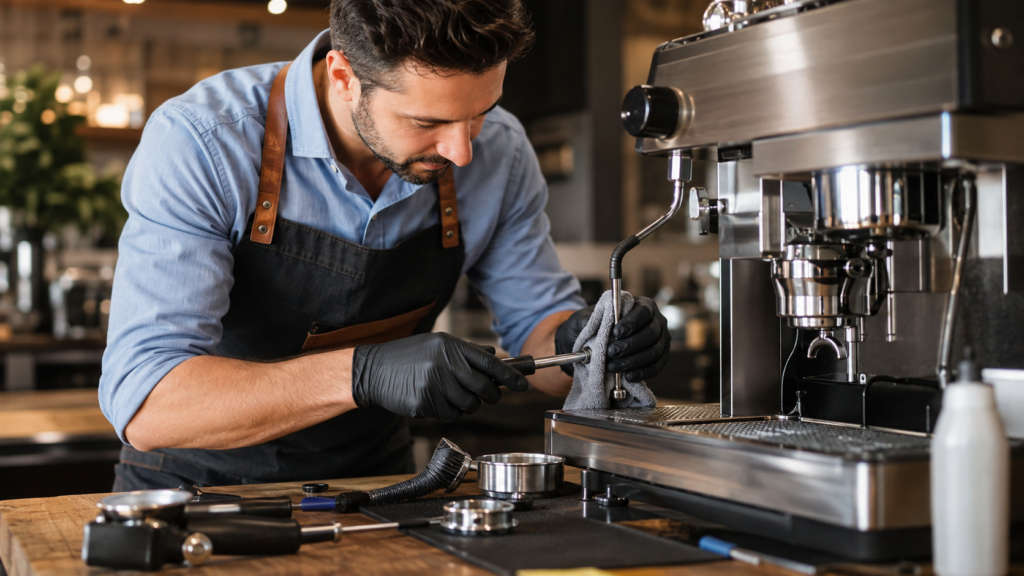
An espresso machine is a small appliance with moving parts, heating elements, and mineral rich water passing through it daily. Like any appliance in that category, it needs regular care to keep performing well.
Daily habits are simple: wipe down the steam wand immediately after each use to prevent milk residue from hardening, and empty the drip tray regularly.
Weekly habits include backflushing the group head if your machine supports it, which clears out coffee oils that build up and eventually turn shots bitter.
Monthly to quarterly habits center on descaling, which removes mineral deposits from the internal boiler or thermoblock. Skipping this step is the single most common reason machines lose performance or fail early, particularly in areas with hard water.
Budget about ten to fifteen minutes a week for basic upkeep. It sounds like a small thing, but it is the difference between a machine that performs consistently for a decade and one that starts producing lukewarm, off tasting shots within a year.
Common Mistakes First Time Buyers Make
A few patterns show up again and again among people buying their first espresso machine.
- Buying based on looks alone. A beautiful machine that does not match your skill level or daily routine will end up unused, no matter how good it looks on the counter.
- Skipping the grinder budget. Pairing an excellent machine with stale, pre ground coffee will always produce a mediocre shot. The grinder matters just as much as the machine itself.
- Ignoring water quality. Hard water accelerates scale buildup significantly. If your tap water is hard, a simple filter or using filtered water can meaningfully extend your machine’s lifespan.
- Underestimating the learning curve. Manual machines are rewarding, but expect your first two or three weeks of shots to be a genuine learning process, not an instant café quality result.
- Overspending on pressure and grind count. As covered earlier, more bars of pressure and more grind settings than you will ever use do not equal better coffee. Spend that extra money on grinder quality and temperature stability instead.
Conclusion
Choosing the right espresso machine has very little to do with finding the single best rated model online and everything to do with understanding your own habits, budget, and patience for learning. A manual machine rewards those willing to practice. An automatic machine offers the best balance of quality and convenience for most households. A superautomatic machine suits anyone who wants consistent results without getting involved in the process at all.
Focus your attention and budget on grinder quality, temperature stability, and steam wand performance rather than flashy bar pressure numbers or an excessive list of grind settings. Factor in the ongoing costs of descaling, filters, and beans so there are no surprises after purchase, and be realistic about the counter space, noise, and maintenance routine you are signing up for.
An espresso machine is genuinely one of the more satisfying small appliances you can own, but only when it actually fits how you live. Take the time to answer the questions in this guide honestly, and you will end up with a machine you actually use every single day, not one that becomes an expensive countertop decoration.
FAQ
Is a more expensive espresso machine always better?
Not necessarily. Price often reflects automation and build quality more than raw shot quality. A well chosen mid range automatic machine paired with a good grinder can outperform an expensive machine used with poor technique or a weak grinder.
How long does a good espresso machine typically last?
With regular descaling and basic maintenance, a quality machine can easily last eight to fifteen years. Neglecting descaling is the most common reason machines fail prematurely.
Do I need a separate grinder, or can I rely on pre ground coffee?
For genuine espresso quality, freshly ground coffee makes a significant difference, since ground coffee loses flavor and aroma within days. A dedicated grinder, whether built in or separate, is one of the best investments you can make.
What is the ideal number of bars of pressure for an espresso machine?
The ideal brewing pressure is around 9 bars. Machines advertising 15, 19, or 20 bars use internal valves to regulate down to that same range, so a higher maximum number does not translate into better espresso.
How often should I descale my espresso machine?
Most manufacturers recommend descaling every one to three months, depending on how hard your water is and how frequently you use the machine. Areas with hard water may need more frequent descaling to prevent mineral buildup.