
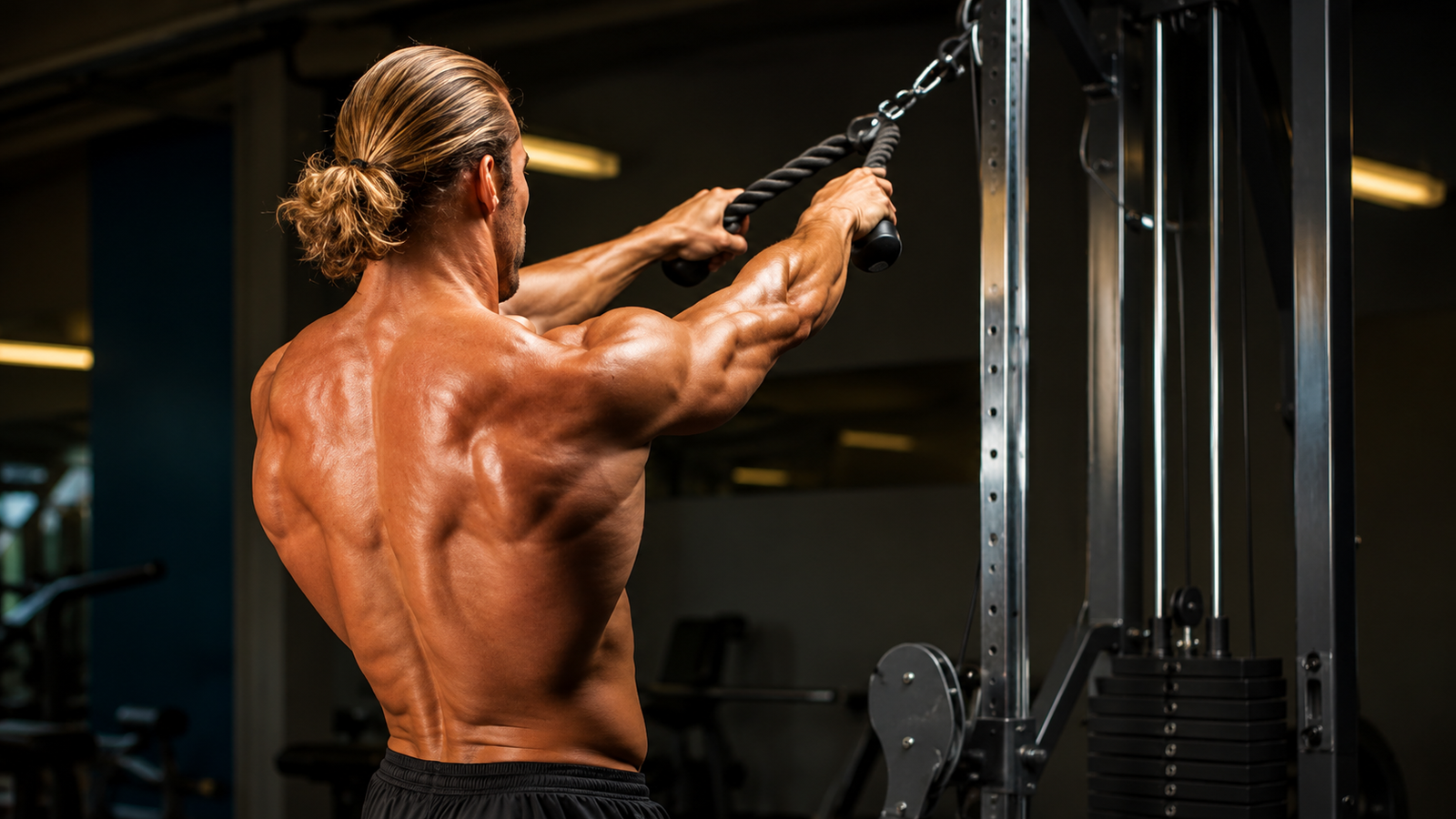
If you spend most of your day hunched over a laptop or phone, there is a good chance your shoulders are paying the price. Rounded posture, tight chest muscles, and a weak upper back are incredibly common, and they often lead to nagging shoulder pain that never quite goes away.
Face pulls are one of the simplest and most effective exercises for fixing that problem. This single movement strengthens the muscles behind your shoulders, improves your posture, and helps protect your joints from injury during heavier lifts like the bench press and overhead press.
In this guide, you will learn exactly how to perform face pulls with proper form, which muscles they target, common mistakes to avoid, and how to fit them into your training week. Whether you are new to the gym or a seasoned lifter looking to clean up your technique, this article will give you everything you need.
What Are Face Pulls
Face pulls are a pulling exercise typically performed on a cable machine with a rope attachment. You pull the rope toward your face while flaring your elbows out to the sides, which trains the often neglected muscles at the back of your shoulders and upper back.
Unlike pressing movements that dominate most workout routines, face pulls work in the opposite direction. They pull your shoulders back and open your chest, which makes them a natural counterbalance to all the pushing and pressing most people do at the gym.
You do not need to be an advanced lifter to benefit from this exercise. Face pulls are simple to learn, gentle on the joints when done correctly, and useful at every stage of a fitness journey.
Muscles Worked by Face Pulls

Face pulls are technically an isolation exercise, but they recruit several muscle groups at once to stabilize and move your shoulder blades and upper arms.
Rear Deltoids
The rear deltoids sit at the back of your shoulder and are frequently underdeveloped compared to the front and side deltoids. Face pulls place direct tension on this muscle, helping to balance out your shoulder shape and function.
Trapezius and Rhomboids
The middle and lower traps, along with the rhomboids, pull your shoulder blades together during the movement. Strengthening these muscles supports a more upright posture and reduces the rounded shoulder look that comes from too much sitting.
Rotator Cuff Muscles
The infraspinatus and teres minor, two small but important rotator cuff muscles, are activated as you externally rotate your arms during the pull. These muscles play a major role in keeping your shoulder joint stable and injury free.
Why Face Pulls Matter for Shoulder Health
Most gym goers spend far more time on pressing exercises than pulling ones. Bench presses, shoulder presses, and push ups all strengthen the front of the body, but without balancing work for the back, this creates muscular imbalances over time.
These imbalances often show up as tight chest muscles, rounded shoulders, and reduced range of motion in the shoulder joint. Left unaddressed, they can contribute to shoulder impingement, rotator cuff strain, and chronic upper back tension.
Face pulls directly counter this pattern. By regularly training the rear delts, traps, and rotator cuff, you build a more balanced upper body that moves better and holds up longer under heavier training loads. Many physical therapists and strength coaches recommend this exercise specifically for people recovering from or trying to prevent shoulder injuries.
How to Do Face Pulls with Proper Form
Getting the technique right matters more than the amount of weight you lift. Follow these steps to perform a proper cable face pull.
- Attach a rope handle to a cable pulley and set it to roughly eye or forehead height.
- Grab one end of the rope in each hand using an overhand or neutral grip, whichever feels more comfortable on your wrists.
- Step back until there is tension on the cable, then set your feet shoulder width apart or in a slight staggered stance for balance.
- Extend your arms straight in front of you at shoulder height, keeping a small bend in your knees and a braced core.
- Pull the rope toward your face by driving your elbows out and back, aiming to bring your hands level with your ears.
- Pause briefly at the peak of the movement and squeeze your shoulder blades together.
- Slowly return to the starting position with control, resisting the pull of the cable the entire way.
Aim for a slow, controlled tempo throughout. This exercise is not about how much weight you can move, it is about how well you can feel your upper back and rear delts doing the work.
Common Face Pull Mistakes and How to Fix Them
Even experienced lifters get this exercise wrong more often than you might expect. Here are the most frequent errors and simple fixes for each one.
Pulling the Rope to Your Chin Instead of Your Forehead
Dropping your elbows and pulling low toward your chin shifts the work into your biceps and lats rather than your rear delts. Keep your elbows high throughout the movement so the rope travels toward your forehead or eye level.
Using Too Much Weight
Because face pulls are an isolation exercise, they should never require heavy loads. If you find yourself swinging your body or using momentum to move the weight, it is time to drop down a plate or two.
Shrugging Your Shoulders
If you feel this exercise mainly in your neck and upper traps rather than your rear delts, you are likely shrugging your shoulders up toward your ears. Keep your shoulders relaxed and down throughout each rep.
Skipping the Squeeze at the Top
Rushing through the peak contraction reduces the effectiveness of the exercise. Pause for a full second at the top of each rep and actively squeeze your shoulder blades together before releasing.
Face Pull Variations for Every Gym Setup
Not everyone has access to a cable machine, and that is perfectly fine. Face pulls can be adapted to suit different equipment and comfort levels.
Banded Face Pulls
Loop a resistance band around a sturdy anchor point at chest or head height. Grab each end and perform the same pulling motion you would with a cable. This variation is ideal for home workouts or warm ups before a heavier session.
Seated Face Pulls
Performing the exercise from a seated position removes the need to stabilize your lower body, letting you focus entirely on the pulling motion. This can be a good option if balance or core stability is limiting your form.
Half Kneeling Face Pulls
Kneeling on one knee while performing the pull adds a stability challenge and can help you avoid leaning back or using momentum. It also works well as a warm up drill before overhead lifts.
Single Arm Face Pulls
Performing the movement one arm at a time can help correct strength imbalances between your left and right sides, which many lifters develop without realizing it.
How to Program Face Pulls in Your Workout
Face pulls respond well to higher rep training since the rear delts and upper back are made up mostly of slow twitch muscle fibers built for endurance rather than raw power.
A good starting point is two to three sets of twelve to fifteen reps, performed with a light to moderate weight that still challenges you by the final few repetitions. You can place face pulls in a few different spots depending on your goals.
- As a warm up before pressing exercises to activate the rear delts and rotator cuff.
- After your main compound lifts on shoulder, back, or pull days as an accessory movement.
- On a dedicated posture or mobility day alongside other corrective exercises.
Training face pulls two to three times per week is generally enough to see noticeable improvements in posture and shoulder stability within a few weeks.
Face Pulls vs Other Rear Delt Exercises
Face pulls are often compared to reverse flyes and Y raises since all three target the rear deltoids. Each has its own advantages worth understanding.
Reverse flyes, whether performed with dumbbells or on a machine, isolate the rear delts more directly but do not train external rotation of the shoulder the way face pulls do. Y raises emphasize the lower traps and are excellent for overhead shoulder stability, but they involve less rotator cuff activation than face pulls.
If your main goal is shoulder health and injury prevention, face pulls offer the most complete package because they combine scapular retraction, external rotation, and rear delt activation in a single movement. For pure rear delt size, combining face pulls with reverse flyes in the same program often produces the best results.
Who Should Be Doing Face Pulls

Almost anyone who trains regularly can benefit from adding face pulls to their routine, but a few groups stand to gain the most.
Desk workers and anyone who sits for long stretches each day often develop tight chests and weak upper backs from prolonged forward posture. Face pulls directly counteract this pattern and can noticeably improve how your shoulders feel by the end of a workday.
Lifters who bench press or perform heavy overhead work regularly should treat face pulls as a form of insurance for their shoulders. The exercise strengthens the smaller stabilizing muscles that heavy pressing tends to neglect.
Swimmers, throwing athletes, and anyone recovering from a minor shoulder strain may also find face pulls useful, though anyone dealing with an existing injury should check with a physical therapist or doctor before starting a new exercise.
Conclusion
Face pulls are a small investment of time that pays off in a big way. By strengthening your rear delts, traps, and rotator cuff, this exercise helps correct rounded shoulders, supports better posture, and protects your joints during heavier lifts.
The key to getting real results is focusing on form over weight. Keep your elbows high, control the tempo, and squeeze your shoulder blades together at the top of every rep. Whether you use a cable machine, a resistance band, or a seated variation, consistency is what will make the biggest difference.
Add two to three sets of face pulls to your routine a few times a week, and give your shoulders the balanced training they have likely been missing.
Frequently Asked Questions
Are face pulls for the shoulders or the back?
Face pulls train both areas. They primarily strengthen the rear deltoids in the shoulder while also engaging the traps and rhomboids in the upper back.
How much weight should I use for face pulls?
Choose a weight light enough to complete twelve to fifteen controlled reps without swinging your body or losing form. Face pulls are meant to be a high rep, light weight exercise.
Can I do face pulls every day?
While face pulls are gentle on the joints, training the same muscles daily without rest can lead to overuse issues. Two to three sessions per week is a safer and equally effective approach.
What can I use instead of a cable machine?
A resistance band anchored to a door frame or pull up bar works just as well for training the same muscles and movement pattern.
Why do I feel face pulls more in my traps than my rear delts?
This usually means your shoulders are shrugging up during the movement. Focus on keeping your shoulders down and driving the motion through your elbows rather than your neck.