You have just finished a wonderful meal in Tokyo. The plates are empty, the tea is gone, and you are ready to head out into the night. Then a small panic sets in. Nobody has brought the bill, and you have no idea how to ask for it in Japanese.
This is one of the most common stressful moments for visitors in Japan, and it has a very simple fix. Learning how to ask for the bill in Japanese takes less than a minute, and it will make every restaurant visit for the rest of your trip feel easy and relaxed.
This guide gives you the exact polite phrase, shows you how to pronounce it, and walks you through everything that happens after you say it: where you pay, how you pay, and the small customs that surprise most first time visitors.
The Exact Phrase: How to Ask for the Bill in Japanese
The phrase you need is this:
Okaikei onegaishimasu
It means “the bill, please” and it works in almost every eating place in Japan, from a tiny six seat ramen counter in Osaka to a formal restaurant in Kyoto. Staff hear it hundreds of times a day, so you will be understood even if your pronunciation is not perfect.
Let us break it into pieces so it feels less intimidating:
- Okaikei (oh kai kay) means the bill or the check. The “o” at the start is a politeness marker, so do not drop it.
- Onegaishimasu (oh neh guy shee mahss) means “please” in the sense of “I humbly request.” It is one of the most useful words in the whole language.
Say it at a normal speaking pace, not slowly like a robot. Japanese rhythm is fairly even, with each syllable getting about the same weight. A smooth, confident “okaikei onegaishimasu” will get you a nod and quick service every time.
Two handy alternatives worth knowing
Okanjou onegaishimasu (oh kahn joe oh neh guy shee mahss) means the same thing. Okanjou is a slightly more formal word for the bill, and you will hear older staff use it. Either phrase is completely fine.
Chekku onegaishimasu (check oh neh guy shee mahss) uses the English word “check” pronounced the Japanese way. It is widely understood in tourist areas and casual places, though the first phrase sounds more natural.
There is one phrase you should avoid. You may hear the word “oaiso” used for the bill in old movies or by sushi chefs talking among themselves. It is staff slang, and it sounds strange coming from a customer. Stick with okaikei and you will never go wrong.
How to Get the Staff’s Attention Politely
In Japan, staff almost never bring the bill on their own. This is not bad service. It is respect. Rushing a guest out is considered rude, so they wait for you to signal that you are ready.
When the moment comes, catch someone’s eye and raise one hand slightly, then say:
Sumimasen (soo mee mah sen)
This means “excuse me” and it is the universal attention getter in Japan. Use it in restaurants, shops, and anywhere else you need help. Once the staff member turns toward you, say “okaikei onegaishimasu” with a small nod or a light bow of the head.
Do not snap your fingers, clap, or shout across the room. A calm raised hand and a clear “sumimasen” is all it takes, and staff are trained to notice it quickly.
Why Paying the Bill Works Differently in Japan
Once you ask, something unfamiliar may happen. Instead of bringing the bill to your table, the staff might simply nod toward the front of the restaurant. Do not worry. You have not done anything wrong. In most Japanese restaurants, you pay at the register near the exit, not at your table.
Here is how the usual flow goes. You ask for the bill. The staff either hand you a small slip of paper or tell you the total. You take that slip to the cashier by the door, pay there, and leave. The whole thing takes about a minute once you know the routine.
In casual places like ramen shops and small izakaya pubs, the bill slip may already be sitting face down on your table from the moment your food arrived. Pick it up and carry it to the register when you are done.
The money tray ritual
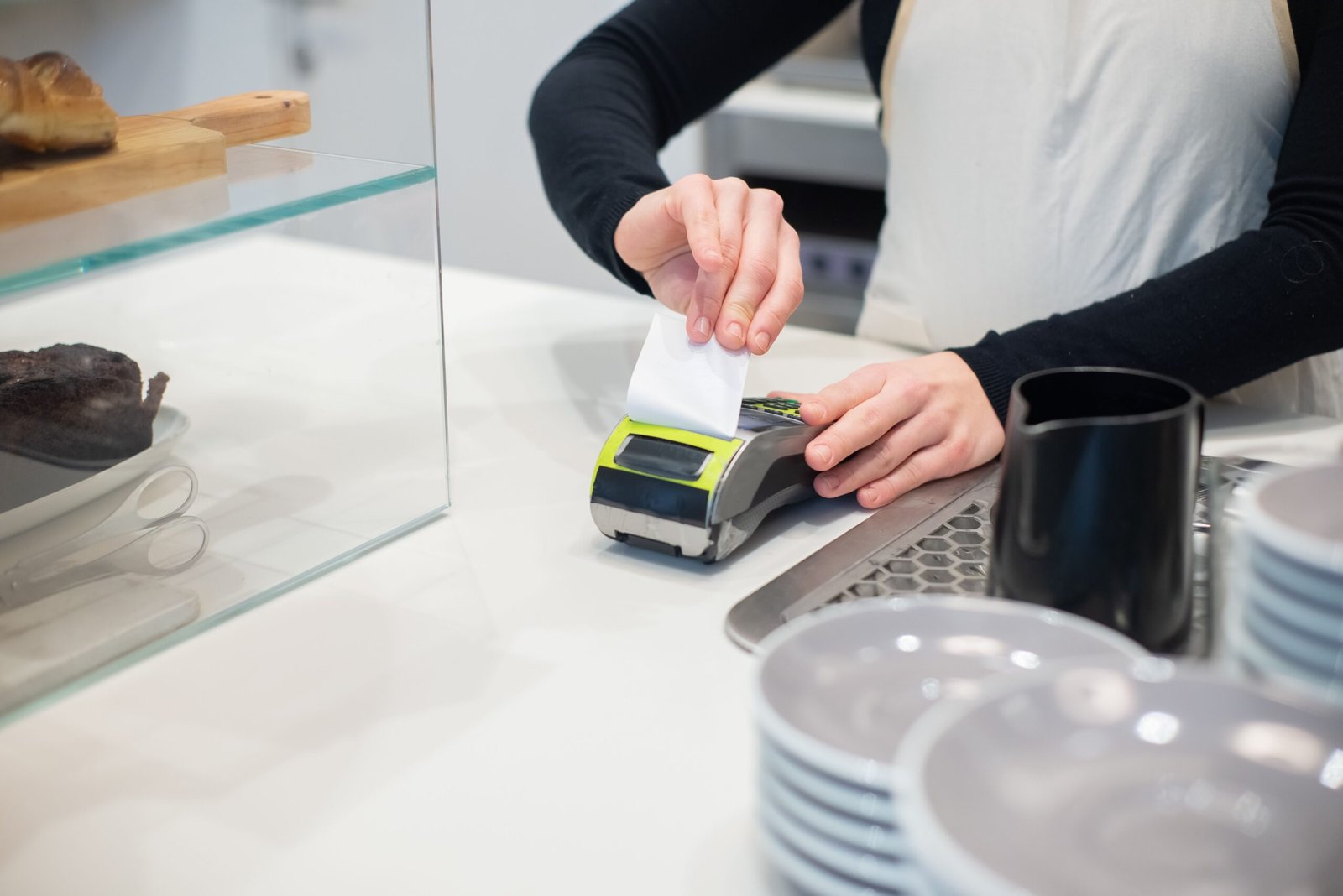
At the register you will often see a small tray on the counter. This is where you place your cash or card, never directly into the cashier’s hand. Handing money person to person is considered slightly impolite in Japan, so the tray keeps a respectful distance.
The cashier will take your payment from the tray, count your change, and place the change back on the tray for you to pick up. Follow their lead and use the tray every time. It is one of those small details that marks you as a thoughtful visitor.
Cash, Card, or IC Card: How to Actually Pay
Japan is changing fast, but cash is still king in smaller restaurants. Many family run places, old school izakaya pubs, and countryside restaurants accept cash only. A good rule is to always carry enough yen for your meals, even if you plan to use a card.
In cities like Tokyo and Osaka, card acceptance is now common in mid range and nicer restaurants. International credit cards usually work fine. If you want to check before you sit down, look for card logos on the door or simply ask:
Kaado wa tsukaemasu ka? (kah doh wah tsoo kai mahss kah)
“Can I use a card?”
You can also pay with a prepaid IC card such as Suica or Pasmo in a growing number of places, especially chain restaurants and cafes. These are the same tap cards used for trains, and they are wonderfully convenient once you have one.
One practical tip: the 1,000 yen note is your best friend. Japanese cashiers handle large bills without any fuss, but having smaller notes makes everything faster, especially at busy lunch spots.
How to Split the Bill With Friends in Japan
Eating out with a group? Japan has a smooth system for this. The most common approach is called warikan (wah ree kahn), which means splitting the total evenly among everyone. Just say “warikan de onegaishimasu” (wah ree kahn deh oh neh guy shee mahss) at the register and the staff will divide it for you.
If everyone ordered very different amounts and you want to pay separately, that is called betsu betsu (bet soo bet soo), meaning “separately.” Say “betsu betsu de onegaishimasu” and each person pays for their own items at the register.
Most restaurants are happy to handle either method, but very small shops may prefer one combined payment. When in doubt, one person pays and friends settle up later, which is also extremely common.
The Tipping Question: Should You Leave Extra Money
Here is the simplest money rule in Japan: do not tip. Tipping is not expected, not required, and can genuinely confuse staff. In some cases, a cashier will chase you down the street to return the “forgotten” money.
Good service is considered a standard part of the job, not something extra to be rewarded. Some high end restaurants add a service charge to the bill automatically, usually around ten percent, and that is clearly printed so there are no surprises.
The best way to show appreciation is with words. A warm “gochisousama deshita” (go chee so sah mah desh tah), meaning “thank you for the meal,” as you leave means far more than any tip.
Asking for a Receipt in Japanese
If you need a receipt for expenses or records, ask for one at the register with this phrase:
Ryoushuusho o kudasai (ryo shoo sho oh koo dah sai)
“Receipt, please.”
Most modern registers print receipts automatically, so you may receive one without asking. But the phrase is useful at smaller places with older tills, and it is a great one for business travelers to have ready.
What to Say in Different Kinds of Restaurants
The core phrase works everywhere, but a few restaurant types have their own quirks worth knowing.
Izakaya pubs
Izakaya are Japan’s beloved after work pubs, and the bill routine is classic: ask with “okaikei onegaishimasu,” receive the slip, and pay at the register by the door. Groups almost always use warikan here. One thing to expect is a small appetizer called otoshi that appears without ordering and adds a few hundred yen per person to the bill. It is normal, not a scam.
Ramen shops with ticket machines
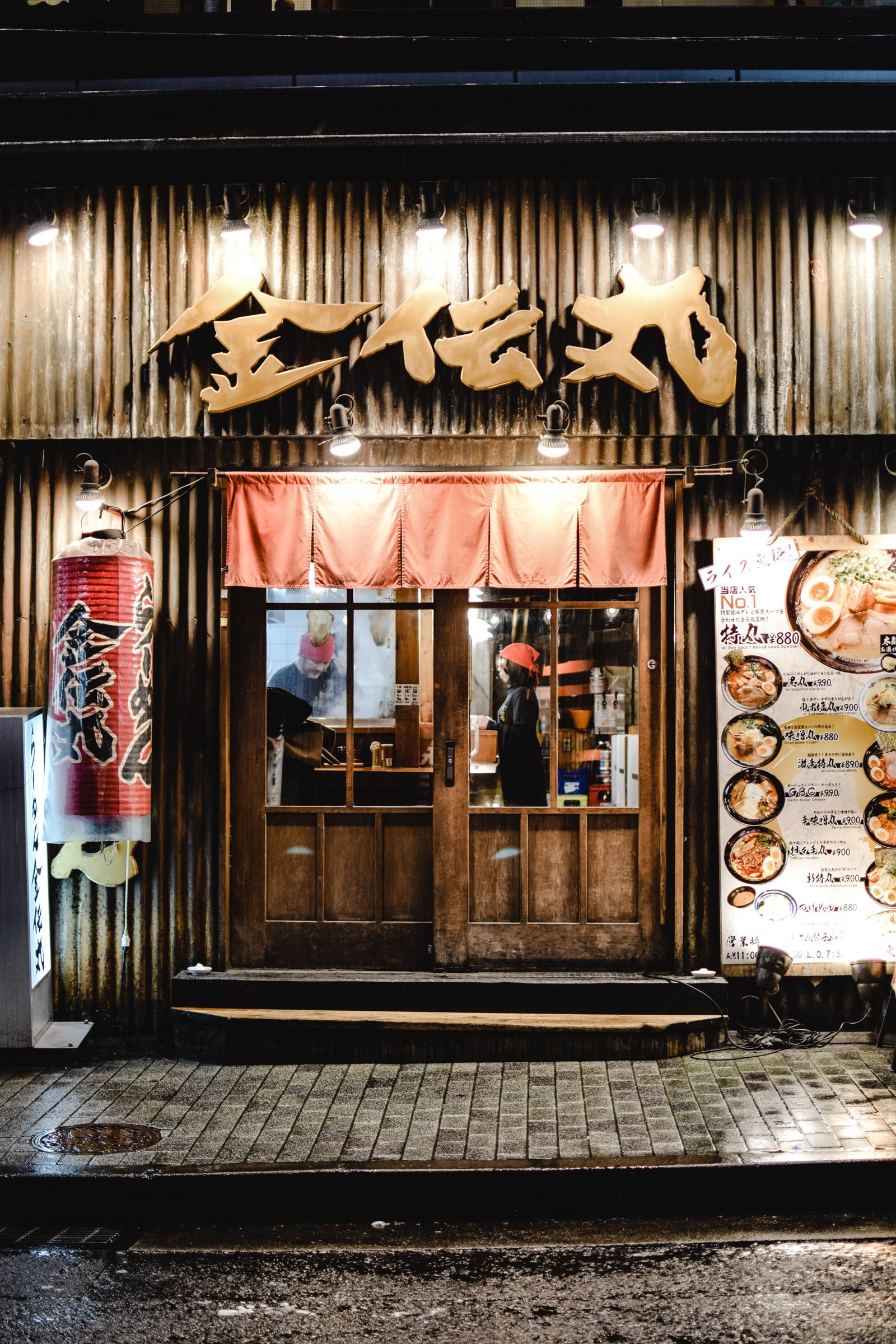
Many ramen shops skip the bill entirely. You buy a meal ticket from a vending machine by the entrance, hand it to the staff, and eat. No asking, no register line, no fuss. If you are unsure which button to press, the pictures on the machine and a pointing finger work perfectly.
High end restaurants
At formal restaurants the flow is more discreet. The bill often arrives in a small folder or envelope, and you may pay at the table rather than the register. The same phrase applies, just delivered a little more quietly. Service charge may be included, so check the slip.
Family restaurants and cafes
Chain family restaurants work much like the standard pattern: ask, take the slip, pay at the front. Many now have self checkout machines where you feed in the slip and pay by cash or card on your own. They usually have an English button, so do not panic.
Common Mistakes to Avoid
Most bill related awkwardness in Japan comes from a handful of easy errors:
- Waiting for the bill to arrive on its own. It will not come. You must ask, and asking is completely normal.
- Leaving cash on the table. Unless the restaurant clearly works that way, always pay at the register.
- Handing money directly to the cashier. Use the tray on the counter.
- Trying to tip. It creates confusion, not goodwill.
- Using “oaiso” as a customer. It is staff slang and sounds off.
- Forgetting cash. Cards are spreading, but cash only places are still everywhere.
Practice Tips for Nervous Speakers
If saying a foreign phrase out loud makes you nervous, try these tricks. Practice “okaikei onegaishimasu” a few times in your hotel room until it flows. Break it into two beats: “oh kai kay” then “oh neh guy shee mahss.” Say it with a smile, which instantly makes any pronunciation sound friendlier.
Remember that restaurant staff in tourist areas hear mangled Japanese all day long. They are experts at understanding what you mean. Even a rough attempt earns warmth and quick help, which is far better than sitting in silence hoping the bill appears.
You can also point at the bill slip and say “okaikei” alone with a questioning tone. It is not textbook perfect, but it communicates clearly and nobody will mind.
Conclusion: One Phrase Unlocks Every Restaurant
Knowing how to ask for the bill in Japanese removes one of the biggest small anxieties of traveling in Japan. The whole ritual comes down to a few easy takeaways.
Say “okaikei onegaishimasu” when you are ready. Get attention first with a calm “sumimasen.” Expect to pay at the register, not the table, and place your money on the tray. Carry cash, skip the tip, and split with “warikan” when you are with friends.
Master this one moment and the rest of Japanese dining opens up: the ticket machine ramen shops, the lively izakaya nights, the quiet sushi counters. The food is the adventure. The bill should be the easy part.
Frequently Asked Questions
What is the polite way to ask for the bill in Japanese?
Say “okaikei onegaishimasu,” which means “the bill, please.” It is polite, universally understood, and works in every type of restaurant in Japan.
Do you pay at the table in Japanese restaurants?
Usually not. In most restaurants you take the bill slip to a register near the exit and pay there. High end restaurants are the main exception, where you may pay at the table.
Is it rude to ask for the bill in Japan?
Not at all. Staff deliberately wait for you to ask because bringing the bill unprompted is considered pushy. Asking with “okaikei onegaishimasu” is the normal and expected thing to do.
Can you split the bill in Japan?
Yes. Say “warikan de onegaishimasu” to split evenly, or “betsu betsu de onegaishimasu” to pay separately. Most restaurants handle both without any trouble.
Do Japanese restaurants accept credit cards?
Many do, especially in cities and at mid range or nicer places, but cash only restaurants are still common. Always carry enough yen, and ask “kaado wa tsukaemasu ka” if you are unsure.