
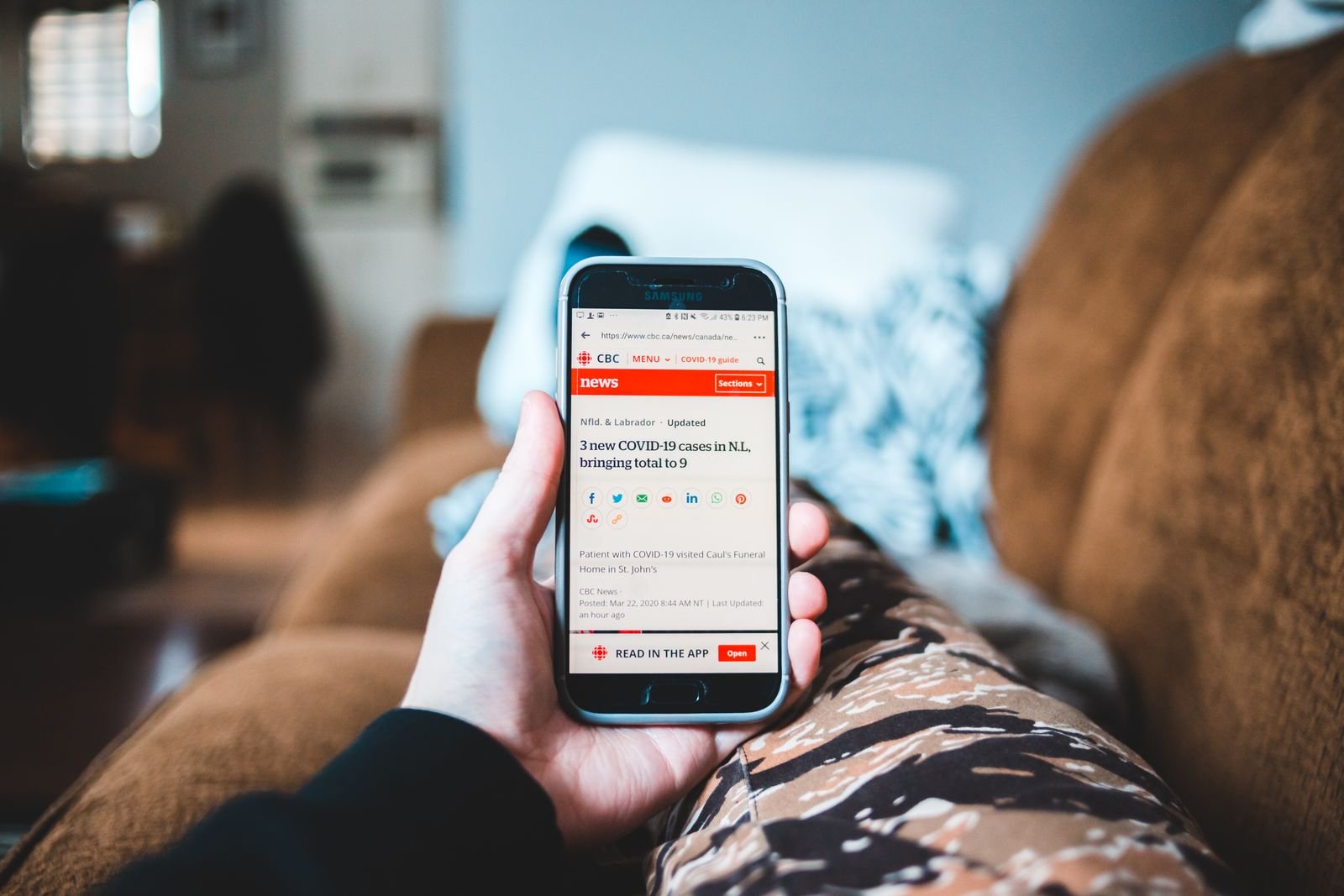
It is 7:42 on a Tuesday evening. You are on the sofa, phone in hand, half watching television and half scrolling. A post stops your thumb. It says a major US city will shut off the water supply for three days starting Monday, and it shows a photo of empty shelves in a grocery store. The caption says a friend of a friend works for the water department and confirmed it. Within minutes the post has thousands of shares. You feel a small jolt of panic, and your finger hovers over the share button.
That moment is exactly why you need to know how to fact check a viral news story. The post feels urgent, it looks real, and everyone you trust seems to believe it. Yet the story is not true, and by the end of this guide you will know how to prove that in a few minutes with free tools.
False stories travel fast because they are built to travel fast. They use fear, anger, or surprise, and they carry a hidden instruction: share this now, before it is too late. Learning the difference protects your money, your health, and your reputation, because a share is an endorsement, and your friends trust what you share.

Why Viral Stories Spread Faster Than the Truth
A viral story does not spread because it is true. It spreads because it is easy to feel and easy to share. A claim that makes you angry takes about two seconds to pass on. Checking it takes a few minutes. That gap is where misinformation lives.
Emotion is the engine. A story about a water shutdown triggers fear for your family. A story about a product recall triggers worry about something in your kitchen right now. When a post hits a strong emotion, the thinking part of your brain steps aside and the reacting part takes over.
Social proof adds fuel. When you see a post shared by your sister, your coworker, and three friends from college, your brain treats those shares as evidence. They are not evidence. They are only proof that the post is good at getting shared. Nobody in the chain checked it, because everyone assumed someone else had.
Algorithms reward the same pattern. Platforms show people more of what gets reactions, and nothing gets reactions like outrage and fear. A calm correction with a link to a primary source will never travel as far as the original false claim, because the correction is boring and the claim is exciting. This guide gives you a habit of pausing and checking in six clear steps.
How to Fact Check a Viral News Story in Six Steps
You do not need a journalism degree or paid software to check a viral claim. You need a repeatable routine and a short list of free tools. Most false stories fail at step two or three. The whole routine takes about five minutes once you have done it a few times.
Step 1: Pause before you share
The single most powerful fact checking tool is a pause. When a post makes you feel a strong emotion, that feeling is your cue to stop, not your cue to share. Ask yourself one question: what would change if I waited ten minutes before sharing this? The answer is almost always nothing. A ten minute wait costs nothing and saves you from spreading a false claim.
Use the pause to notice the tricks in the post. Does it say “share before they delete this” or “the media will not report this”? Those phrases are red flags, not proof of a cover up. They are designed to make you feel like an insider with secret knowledge, and to rush you past the part where you ask for evidence. If the feed keeps pulling you in at night and the pause feels impossible, our guide on how to stop doomscrolling before bed without deleting apps shows how to break the scroll loop without giving up the apps you use.
Step 2: Read past the headline
Open the article or the full post and read the whole thing, not just the headline and the first line. Many viral stories fall apart on a full read. The headline says a city will shut off the water. The third paragraph says a single building had a planned repair. The headline says a product was recalled. The article says a single batch was pulled from one store in one state. Headlines are written to earn clicks, and the headline often travels without the article.
While you read, look for the basics that real reporting always includes. Who is quoted by name? What is the name of the agency, the hospital, the company, or the court? A post that says “doctors say” or “officials confirm” without naming a single doctor or official is asking you to trust a voice with no face. If the story has no named source at all, treat it as a rumor until you find one.
Step 3: Trace the claim to its source
Every real story has a trail. Your job is to follow it back to the start. Copy a distinctive sentence from the post, put it in quotation marks, and search for it in Google. If the only results are copies of the same post on other social accounts, the claim has no reporting behind it. If a real outlet reported it, the original article will appear.
Check the account that posted it. When was the account created? Does it post about one topic only, or does it jump from miracle cures to election claims to celebrity deaths? A brand new account with a stolen profile photo is not a news source. Look for the original document behind the claim as well. A real water shutdown would appear on the city utility website. A real recall would appear on the website of the Food and Drug Administration or the Consumer Product Safety Commission. If no official source mentions it, that silence is evidence too.

Step 4: Check the date and the context
Old news is one of the most common ingredients in viral falsehoods. A genuine photo or a genuine event from three years ago gets posted today with a new caption, and suddenly it looks like breaking news. A video of a flood from 2019 cannot prove a flood happened today, even if the water in the video is real.
Context matters just as much as date. A photo can be real and still misleading if it shows a different city, a different year, or a different event. Read the caption carefully and ask whether the image actually shows what the caption says it shows. Search for the same image and see where it first appeared.
Step 5: Verify the photo or video
Images are the easiest part of a viral story to check, and the part most people skip. Run a reverse image search with Google Lens or TinEye. These free tools show you where else the image has appeared online and when it first appeared. If the photo of empty shelves first appeared during a hurricane in Florida in 2019, it cannot prove a water shutdown in Ohio today. That single search ends the story.
For video, look for clues inside the frame. Street signs, license plates, shop names, weather, and clothing all give away the real place and season. Search for a distinctive phrase from the video caption, and search for the location name plus the word video.
Step 6: Search for the claim on fact checking sites
Professional fact checkers have often already done the work for you. Search for the claim on Snopes, Reuters Fact Check, AP Fact Check, and PolitiFact, and use Google Fact Check Explorer to search all of them at once. Type the core claim in plain words. For our water example, search for the city name plus water shutdown. If a fact checker has rated the claim false, you will find the rating plus the evidence, usually within seconds.
Keep in mind what a fact check can and cannot do. A rating of false means the claim has been investigated and the evidence goes against it. A rating of unproven means there is not enough evidence either way, and you should not share the claim as fact. If no fact checker has covered the claim, run the first five steps yourself.
A Worked Example: Tracing One Viral Claim to Its Origin
Let us put the whole routine together and see how to fact check a viral news story from the first share to the final verdict. The example below is a composite built from patterns that appear again and again in real viral posts. On a Tuesday evening, a post appears claiming that the city of Dayton, Ohio will shut off the water supply for three days starting Monday. It shows a photo of empty grocery shelves and a screenshot that looks like a local news alert. The caption says a friend who works for the water department confirmed the shutdown. By midnight the post has been shared 40,000 times.
First, pause and read the whole post
The post says “share before they delete this” and warns that the media will not report the shutdown. Those two phrases are the first red flag. The screenshot that looks like a news alert has no station logo, no reporter name, and no time stamp. The caption names no person at the water department, only “a friend”. Real shutdowns are announced with dates, street names, and a phone number. This post has none of those.
Second, search for the claim in plain words
A search for Dayton water shutdown brings up the website of the City of Dayton and its water department, and neither one mentions any shutdown. A search for the exact sentence brings up only copies of the same post. The local newspaper and television websites have no story about a shutdown either. The silence from every local outlet is a strong signal.
Third, check the photo with a reverse image search
A reverse image search on the empty shelves photo shows that the same photo first appeared in 2019, during hurricane preparations in Florida. It has been reused many times since then, attached to a different scare story each time. The photo is real, but it has nothing to do with Dayton or today. The screenshot of the supposed news alert is not a screenshot at all. A closer look shows it was made with a free graphic tool, and the font does not match any real news brand.
Fourth, check the account and the fact checkers
The account that posted the claim was created nine days ago. Its only posts are outrage stories, and its profile photo is a stock image that appears on dozens of other accounts. A search on Snopes and Google Fact Check Explorer finds the same claim rated false, with a statement from the Dayton water department confirming that no shutdown is planned. The claim failed at every step: no named source, no official record, a recycled photo, a fake screenshot, and a brand new account. That is what a false viral story looks like when you trace it to its origin.
How to Spot AI Generated Images and Video
AI generated images and video are now part of the misinformation problem, and they are getting harder to spot. A realistic image of a flooded street can be created in seconds and will look convincing on a phone screen. The good news is that AI generated images still leave clues, and the same checking routine still works.
Start by looking closely at the details. Zoom in on hands, teeth, text on signs, and small objects in the background. AI images often get hands wrong, with too many fingers or fingers that bend in odd ways. Text on signs, shirts, and shop fronts often comes out as garbled letters that look like words but spell nothing. Straight lines like window frames and fences may bend or merge. Reflections in mirrors and windows may show things that are not in the scene. Several together are a strong warning.
Then run the same checks you would run on any other image. A reverse image search can show whether the picture appeared before AI tools became common, which would prove it is a real photo. If the only source for a dramatic image is a single anonymous account, and no newsroom, no witness, and no official source has the same picture, treat it as unverified. When in doubt, wait. Real events produce more evidence within hours, while fake images stay lonely.
What to Do When Someone You Know Shares False News
Correcting a friend or a family member is delicate, and a public reply that says “this is fake” usually makes people defensive. The goal is not to win an argument. The goal is to give the person a graceful way to change their mind. Start in private if you can, and lead with the evidence, not with judgment.
Share the link to the fact check or the official statement, and add one short sentence in your own words. Something like “I looked into this because it worried me too, and the city says there is no shutdown planned” works far better than “you should fact check before you post”. People share false stories because they care, not because they are careless. If the person deletes the post, say nothing more about it. The deletion is the win.
Sometimes the person will not accept the correction, and that is normal. A single fact check rarely changes a deeply held belief, especially when the false story fits what the person already thinks. In that case, plant the seed and move on. You have given them the evidence, and they may come back to it later. What matters most is that you did not share the story yourself. A short break from the feed can help you reset your own habits too, and our guide on how to do a digital detox weekend gives you a plan that actually works.
Your 60 Second Checklist Before You Share
Run this checklist every time a post makes you reach for the share button. It takes about a minute.
- Pause and notice your emotion. If you feel fear, anger, or shock, wait ten minutes.
- Read the full article, not just the headline. Check for a named source, a date, and a place.
- Search for the core claim in plain words. Look for the original report, not copies of the post.
- Check the date on the story and the date on the image. Old content with a new caption is a classic trick.
- Run a reverse image search on any photo that proves the claim. A recycled image ends the story.
- Search Snopes, Reuters Fact Check, or Google Fact Check Explorer for the claim.
- If the claim fails any of these checks, do not share it. Share the fact check instead.
If late night scrolling is where most of the false stories reach you, fix the setup around the habit. Our guide on how to reduce screen time before bed without willpower shows how to make the evening scroll harder to start and easier to stop, so the pause becomes automatic.
Conclusion
Learning how to fact check a viral news story is not about becoming suspicious of everything you read. It is about building one small habit: pause, read the whole story, trace the claim to its source, check the date and the image, and search the fact checkers. That routine takes about five minutes.
The three takeaways to remember are simple. First, emotion is the trigger, so a strong feeling is your cue to slow down, not to share. Second, every real story leaves a trail, and a claim with no named source, no official record, and a recycled photo has failed the test. Third, AI generated images and video follow the same rules as any other evidence, so zoom in, reverse search the image, and wait for independent confirmation. Share the truth with the same energy false stories use to spread.
Frequently Asked Questions
How long does it take to fact check a viral news story?
About five minutes once you know the routine. Most false stories fail at the second or third step, so you rarely need the full six steps.
What is the best free tool for checking a viral image?
Google Lens is the fastest starting point, because it searches the image across the web and shows where it first appeared. TinEye is a useful second check. Both are free and work from your phone.
Can I trust a story if many people have shared it?
No. Shares measure how shareable a post is, not how true it is. A false story can reach millions of shares while the correction reaches only a few thousand. Always check the claim itself.
What should I do if I already shared a false story?
Delete the post, then share the correction with a short note. A quick honest correction builds more trust than quietly leaving the false post up.
Are fact checking sites biased?
Established fact checkers like Snopes, Reuters Fact Check, AP Fact Check, and PolitiFact show their evidence and link to primary sources, so you can verify their work yourself. If you doubt one rating, check the same claim on a second site.