By five in the evening, Sarah could feel it every single day. She had sat at her desk since nine in the morning, answering emails, joining video calls and finishing a report, and now her lower back ached with a dull heavy throb that made standing up feel like a small victory. She was thirty four, healthy, and active on weekends, yet every workday ended the same way. If that sounds familiar, you already know the question this guide answers: how to relieve lower back pain when sitting all day.
Sarah tried the obvious things first. She bought a lumbar cushion, she sat up straighter, and she even tried a new chair. Nothing lasted more than a week. The ache always came back, because the real problem was never her chair. The problem was sitting still for hours without a break. This guide follows what finally worked for her, and it is built on three simple ideas that research and physiotherapists keep coming back to. Move little and often, set up your desk so your back can relax, and build a back that can handle a long sitting day. None of it needs special equipment, and none of it takes more than a few minutes at a time.
Why Sitting All Day Makes Your Lower Back Ache
Your lower back is built to move. The discs between your vertebrae soak up fluid and nutrients when you move, and they lose that nourishment when you stay in one position for hours. Your hip muscles tighten, your deep core muscles switch off, and the small joints at the back of your spine take more load than they should. After three or four hours of still sitting, that load turns into stiffness, and stiffness turns into the ache you feel when you finally stand.
Posture matters, but not in the way most people think. There is no single perfect sitting position, and holding yourself rigidly upright all day can hurt just as much as slouching. What your back really wants is change. A body that shifts position, stands, walks and stretches through the day puts far less strain on any one spot than a body held still in a perfect pose. That is why the fixes in this guide focus on movement first and furniture second.
It also helps to know what is normal. A dull ache that builds through the afternoon and eases with a walk or a stretch is very common, and it usually comes from muscles and joints that are tired of staying still. Sharp pain, pain that shoots down your leg, or pain that wakes you at night is different, and we cover those warning signs near the end of this guide.
How to Relieve Lower Back Pain When Sitting All Day in Three Simple Steps
Most advice about back pain fails because it asks too much. A complicated exercise plan or an expensive chair sounds good on day one and gathers dust by day ten. The three fixes below are deliberately small. Each one takes minutes, each one fits into a normal working day, and together they cover the three things your back actually needs: regular movement, a kinder desk setup, and a little strength.
Think of them as a team. Movement breaks stop the ache building up. A better desk setup lowers the load while you sit. Gentle strength work raises the amount of sitting your back can handle before it complains. Skip one and the other two still help, but all three together are what turned Sarah’s evenings around.
Fix One: Move Little and Often
This is the single most useful change you can make, and it costs nothing. Your back does not need a workout in the middle of your working day. It needs short breaks from sitting, taken often enough that stiffness never gets a chance to build.
The Thirty Minute Rule That Changes Everything
Set a quiet timer for every thirty to forty five minutes. When it goes off, stand up for two minutes. That is all. Walk to the kitchen, stretch your arms overhead, look out of the window, or take the long way to the printer. Two minutes of standing and walking every half hour adds up to real relief, because it lets your spinal discs rehydrate and your hip muscles loosen before they seize up.
Sarah started with a phone alarm labelled “stand up”. At first it felt silly, and on busy days she ignored it. After a week she noticed something. On days she obeyed the alarm, her back felt fine at five in the evening. On days she skipped it, the ache was back. That pattern is worth testing for yourself, because it tells you the truth about your own back faster than any article can.
If your job keeps you on calls all day, stand for some of them. A phone call is a perfect chance to stand and walk slowly around the room. A video call with your camera off is another. Nobody will know, and your back will thank you.

Five Gentle Movements You Can Do at Your Desk
These take about two minutes in total. Do them once or twice a day, ideally once in the late morning and once in the mid afternoon when stiffness peaks.
First, the standing back bend. Stand up, place your hands on your hips, and lean gently backwards a few inches. Hold for two or three seconds, then return to standing. Repeat five to ten times. This reverses the rounded position of sitting and feels wonderful after a long morning.
Second, the seated figure four stretch. Sit upright with both feet flat on the floor. Cross your right ankle over your left knee and lean gently forward until you feel a stretch in your right hip. Hold for thirty seconds, then switch sides. Tight hips pull on the lower back, so this one helps more than it looks like it should.
Third, the hip flexor stretch. Stand beside your desk, step one foot back, and gently press your hips forward until you feel a stretch at the front of the back hip. Hold for thirty seconds each side. Your hip flexors shorten every hour you sit, and this stretch undoes that.
Fourth, the seated spinal twist. Sit tall, place your right hand on the outside of your left knee, and turn your upper body slowly to the left. Hold for twenty seconds, breathe normally, then switch sides. Keep the movement gentle and never force it.
Fifth, the shoulder roll and neck release. Roll your shoulders slowly backwards ten times, then let your right ear drift towards your right shoulder and hold for fifteen seconds. Repeat on the other side. Tension in the neck and shoulders often travels down to the lower back, so easing the top of the spine helps the bottom. If stiff mornings are part of your problem too, our guide on waking up with a stiff neck covers the morning side of the same story.
Stop any movement that causes sharp pain or pain that travels down your leg. Gentle stretching should feel like relief, not a test of courage.
Fix Two: Set Up Your Desk So Your Back Can Relax
You do not need an expensive ergonomic overhaul. A few small changes to the desk you already have can take a surprising amount of pressure off your lower back, and most of them are free.
Chair, Screen and Feet
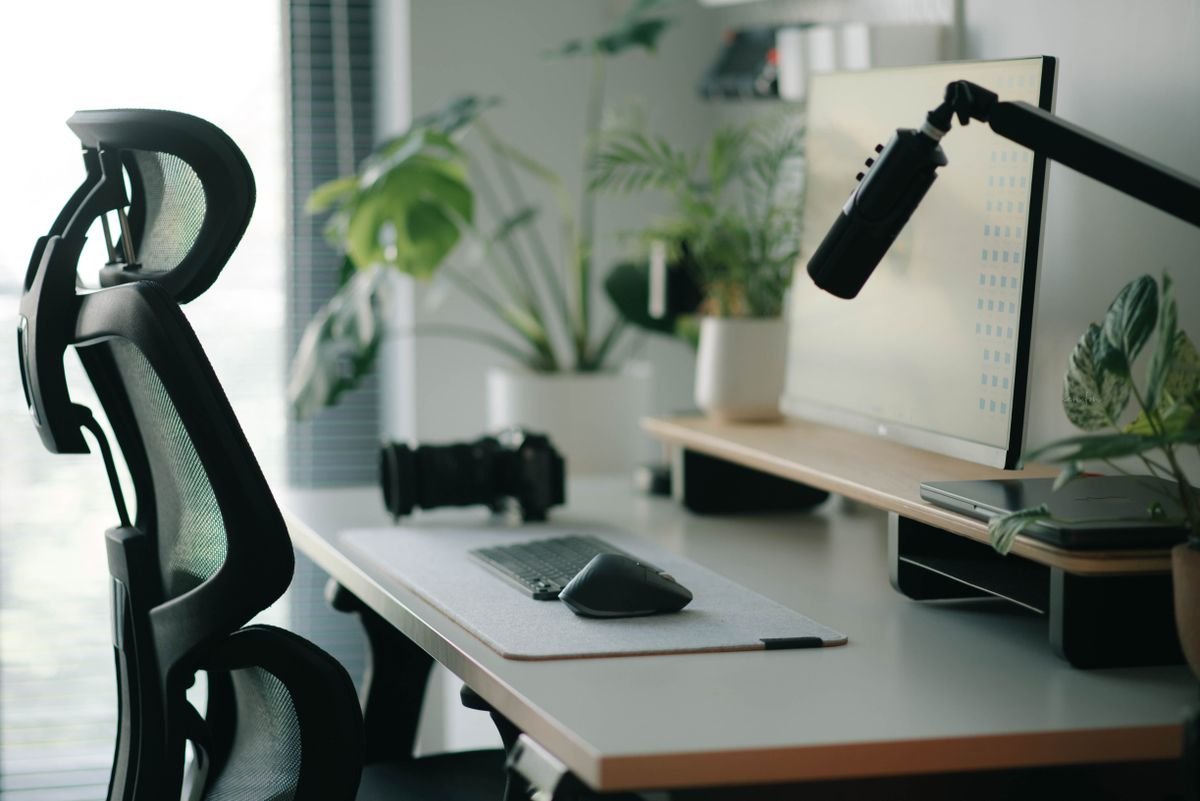
Start with your feet. They should rest flat on the floor, with your knees roughly level with your hips. If your feet dangle, use a small footrest or even a sturdy box. Dangling feet pull your pelvis into a tilt that loads the lower back all day.
Next, use the back of your chair. Sit right back so your lower back touches the backrest, and if there is a gap, roll up a small towel and place it in the curve of your lower back. A rolled towel costs nothing and does the same job as many lumbar cushions. Lean back slightly rather than sitting bolt upright. A recline of about ten degrees takes pressure off the discs in your lower back.
Then check your screen. The top of your monitor should sit roughly at eye level, about an arm’s length away. If you work on a laptop, raise it on a stack of books and use a separate keyboard if you can. Looking down at a laptop for eight hours pulls your whole spine forward, and your lower back pays for what your neck starts. A tidy desk helps here too, because it is far easier to sit properly when your keyboard and mouse are where they should be. Our guide to declutter your desk shows how a clear workspace makes good posture almost automatic.
Finally, keep the things you use most within easy reach. Twisting to grab a phone, a notebook or a water bottle dozens of times a day adds small strains that build up. Put your water bottle, phone and notebook close by, and keep your mouse at the same level as your keyboard.
Should You Buy a Standing Desk
A standing desk can help, but it is not a cure on its own. Standing still all day is just as hard on your back as sitting still all day. The real benefit of a height adjustable desk is that it makes it easy to change position, so you can sit for a while, stand for a while, and keep switching. If you already have one, use it that way. If you do not, a kitchen counter or a high shelf works fine for a standing phone call or a twenty minute stretch of standing work.
Fix Three: Build a Back That Can Handle Sitting
Movement breaks and a good desk setup deal with today. Strength and flexibility deal with next month and next year. A back supported by strong glutes, a steady core and loose hips can handle a long sitting day without complaining, while a weak and stiff back starts aching by lunchtime.

Gentle Stretches for the Evening
Five quiet minutes in the evening can undo a whole day of sitting. Lie on your back on the floor, bend your knees, and let both knees fall gently to one side while your shoulders stay on the floor. Hold for thirty seconds, then switch sides. This gentle twist releases the muscles that tighten around the lower spine.
Next, try the knee to chest stretch. Lie on your back, pull one knee towards your chest, and hold for thirty seconds. Switch legs, then try both knees together. This is one of the simplest stretches there is, and it is a favourite with physiotherapists for a reason.
Finish with the child’s pose. Kneel on the floor, sit back on your heels, and stretch your arms forward along the floor while your forehead rests down. Hold for a minute and breathe slowly. It stretches the whole length of the spine and it is deeply relaxing after a tense day.
Simple Strength Moves That Protect Your Back
You do not need a gym. Three simple moves, done three times a week, build the support your back needs.
The glute bridge is first. Lie on your back with your knees bent and your feet flat on the floor. Press through your heels and lift your hips until your body forms a straight line from shoulders to knees. Hold for three seconds, lower slowly, and repeat ten times. Strong glutes take load off the lower back every time you stand, walk or climb stairs.
The bird dog is second. Start on your hands and knees. Slowly extend your right arm forward and your left leg back, keeping your back flat and your body steady. Hold for five seconds, then switch sides. Repeat five times each side. This builds the deep core stability that protects your spine.
Walking is third, and it counts as strength work for your back. A brisk twenty to thirty minute walk most days keeps the muscles around your spine active, improves blood flow to the discs, and clears the stiffness that sitting creates. Sarah started walking to the shops instead of driving, and that one change did as much for her back as all the stretches combined.
Build up slowly. If you have not exercised in a while, start with five repetitions of each move and add one or two each week. Sore muscles the next day are normal. Sharp pain is not, and it means you should ease off and get advice.
What Does Not Help
Some popular fixes sound sensible and do very little. A brand new expensive chair rarely solves a problem that is really about not moving. Back belts and braces can feel supportive, but wearing one all day lets your core muscles switch off, which makes the problem worse over time. They have a place for short periods after an injury, but they are not a daily solution.
Bed rest is another one to avoid. Years ago, doctors prescribed rest for back pain. We now know that gentle movement helps most back pain recover faster than lying still. Unless a doctor tells you otherwise, keep moving, even if it is just a slow walk around the house.
Finally, be careful with strong painkillers. Medicines you can buy without a prescription can help on a bad day, and the NHS advises that short term use is usually safe for most adults. But painkillers mask the problem instead of fixing it, and they are no substitute for movement, a better desk setup and stronger muscles. If you find yourself taking them most days, talk to your GP or a pharmacist about a better plan.
A Simple Daily Routine You Can Actually Keep
Here is the whole plan on one page. Tape it beside your monitor for the first two weeks until it becomes a habit.
Morning: before you sit down, do two minutes of gentle movement. Shoulder rolls, a standing back bend and a hip flexor stretch each side. Check your chair and screen position before your first call.
During the day: stand up every thirty to forty five minutes for two minutes. Take at least one call standing. Do the five desk movements once in the late morning and once in the mid afternoon. Drink water regularly, because it gives you a natural reason to stand up and walk to the kitchen.
Lunchtime: take a ten to fifteen minute walk, even if it is just around the block. A walk in daylight also lifts your mood and your energy for the afternoon.
Evening: five minutes of floor stretches after work. Knee to chest, gentle twist, child’s pose. Then forget about your back and enjoy your evening.
Three times a week: glute bridges, bird dogs and a longer walk. Keep it short enough that you will actually do it.
Sleep matters too. A mattress that is too soft or too old can undo a good day, and poor sleep makes pain feel worse the next day. If your work pattern includes nights, our guide on how to sleep better when working night shifts has practical tips that help any tired back recover overnight.
When to See Your GP
Most lower back pain from sitting gets better with movement, a better desk setup and a little patience. See your GP promptly if you notice any of the following. Pain that lasts more than a few weeks despite trying the steps in this guide, pain that travels down your leg past the knee, numbness or tingling in your legs or feet, weakness in a leg or foot, or back pain after a fall or accident. Also seek urgent care if you develop problems controlling your bladder or bowels, or numbness around the saddle area, as these need same day medical attention.
A GP or physiotherapist can check whether something more specific is going on and tailor the exercises to you. There is no prize for toughing it out, and getting checked early usually means a quicker recovery.
Conclusion
Learning how to relieve lower back pain when sitting all day is not about finding one magic stretch or buying one perfect chair. It is about giving your back what it has been asking for all along: regular movement, a desk that lets it relax, and muscles strong enough to support it. Sarah still sits at a desk all day, and she still has deadlines and long video calls. What changed is that she now stands every half hour, her screen sits at eye level, and her evenings belong to her again instead of to an aching back.
Start with the smallest step. Set a timer for thirty minutes and stand up when it rings. That one habit, kept for a week, will tell you more about your back than any article can. Then add the desk fixes, then the evening stretches, and give it a fortnight. Your back has carried you through every working day so far. A little movement is all it is asking for in return.
Frequently Asked Questions
Why does my lower back hurt after sitting all day?
Sitting still for hours starves the discs in your spine of movement, tightens your hip muscles and switches off your core muscles. The joints and muscles in your lower back then carry more load than they should, which builds into a dull ache by the end of the day.
What is the best sitting position for lower back pain?
There is no single perfect position. Sit back in your chair with your lower back supported, feet flat on the floor and screen at eye level, then change position often. Your next posture is usually better than your best posture held for hours.
How often should I get up from my desk?
Stand up for two minutes every thirty to forty five minutes. A short walk, a stretch or a standing phone call is enough. Regular short breaks help far more than one long break at lunchtime.
Which stretches help lower back pain from sitting?
Gentle moves work best: the standing back bend, the seated figure four stretch, the hip flexor stretch, the knee to chest stretch and the child’s pose. Do them slowly, breathe normally and stop if anything causes sharp pain.
When should I see a doctor about lower back pain?
See your GP if pain lasts more than a few weeks, travels down your leg past the knee, or comes with numbness, tingling or weakness in a leg. Seek urgent care for bladder or bowel problems or numbness around the saddle area.