
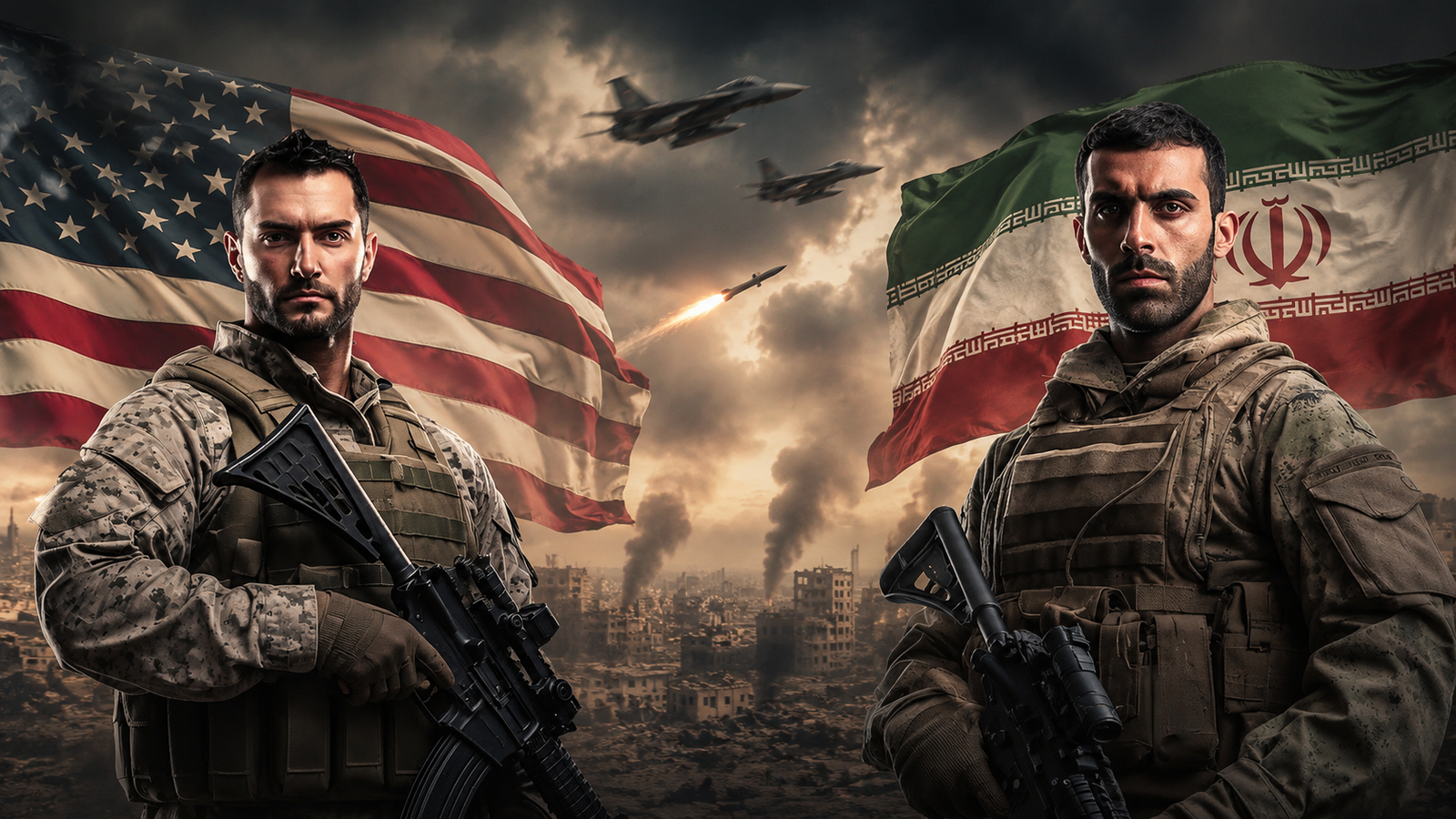
If you have been trying to make sense of the US Iran War, you are not alone. What started as a surprise round of airstrikes in February 2026 has grown into one of the most consequential conflicts of the decade, touching everything from gas prices at home to the balance of power across the Middle East. This guide breaks down how the war began, what has happened since, and what it actually means for everyday Americans.
Unlike a quick news update, this article is meant to be a single, clear resource you can return to whenever you need to understand the bigger picture. No jargon, no assumed background knowledge, just a straightforward walkthrough of the US Iran War from start to present.
What Is the US Iran War
The US Iran War refers to the military conflict that began on February 28, 2026, when the United States and Israel launched coordinated airstrikes against Iran. The strikes targeted Iranian military infrastructure, nuclear facilities, and senior government officials, including the country’s Supreme Leader.
Iran responded almost immediately, striking American bases across the Middle East and, most significantly, shutting down commercial shipping through the Strait of Hormuz. That single move turned a regional strike campaign into a global economic story, since roughly a fifth of the world’s oil and gas passes through that narrow waterway.
Some analysts refer to this conflict as the Third Gulf War, a nod to its scale and the way it has pulled in multiple countries beyond the original combatants. It builds on years of rising tension between the US, Israel, and Iran, including an earlier round of strikes in 2025 sometimes called the Twelve Day War. For a deeper timeline and background on the broader conflict, the Wikipedia overview of the 2026 Iran war is a useful reference point.
Timeline: How the Conflict Unfolded
Understanding the sequence of events makes the rest of the story much easier to follow.
The Opening Strikes
On February 28, 2026, the US and Israel launched a coordinated assault on Iranian targets. The attacks hit military command centers, nuclear enrichment sites, and residential areas in Tehran, resulting in the death of Iran’s Supreme Leader along with several senior officials. The strikes came during active diplomatic negotiations over Iran’s nuclear program, which made the timing especially controversial.
Iran’s Retaliation
Within days, Iran responded with missile and drone attacks on American bases in Bahrain, Kuwait, Jordan, and Iraq. The scale of these counterattacks was described by military officials as the most significant assault on US interests in the region since the Vietnam War era.
The Strait of Hormuz Blockade
Rather than limiting its response to direct strikes, Iran shut down commercial traffic through the Strait of Hormuz. This single decision reshaped the entire conflict, since it threatened global energy supplies and forced other nations, from Saudi Arabia to European allies, to weigh in diplomatically and militarily.
Months of Sustained Conflict
Over the following months, US Central Command reported striking more than thirteen thousand targets inside Iran, including air defense systems, naval assets, and drone facilities. The fighting expanded into Lebanon, involving Hezbollah, and even reached as far as the Caspian Sea region.
The Six Month Mark
By late summer 2026, the war had passed the six month mark. What President Trump initially predicted would last four to five weeks stretched into a prolonged campaign, with the administration shifting strategy toward economic pressure, including blockades and sanctions threats against countries doing business with Iran.
What Caused the US Iran War
The roots of this conflict go back further than February 2026, but a few factors directly triggered the outbreak of fighting.
Iran’s nuclear program. For years, the US and Israel expressed concern that Iran was approaching the capability to build a nuclear weapon. Talks aimed at limiting uranium enrichment had been ongoing, but both sides accused the other of acting in bad faith.
Breakdown of negotiations. The airstrikes were launched while diplomatic talks between Iran and the US were still technically active, which many observers saw as a decision to pursue a military solution rather than wait out a slow negotiation process.
Regional security concerns. Israel viewed Iran’s regional network, including Hezbollah, the Houthis, and various militia groups collectively known as the Axis of Resistance, as an ongoing existential threat that needed to be addressed directly.
Unresolved tension from 2025. The Twelve Day War in 2025 had already damaged parts of Iran’s nuclear infrastructure but did not result in a lasting resolution. Both sides entered 2026 with unfinished business.
Key Players and Alliances
The US Iran War is not a simple two country conflict. It involves a wide network of state and non state actors.
On one side, the United States and Israel led the initial offensive, joined in various capacities by Saudi Arabia, the United Arab Emirates, and Kuwait, largely due to their exposure to Iranian retaliation and shared interest in regional stability.
On the other side, Iran has been supported, directly or indirectly, by what is often called the Axis of Resistance. This includes Hezbollah in Lebanon, the Houthi movement in Yemen, the Amal Movement, and various Iraqi militia groups operating under the Popular Mobilization Forces umbrella.
A number of other nations, including Iraq, Jordan, Lebanon, Oman, Qatar, Syria, and Turkey, have found themselves affected by spillover fighting or drawn into diplomatic efforts to contain the conflict, even without formally joining either side.
The Legal Debate Over War Powers
One of the more overlooked but genuinely important angles of the US Iran War is the legal argument happening inside the United States itself.
Under the US Constitution, the power to declare war rests with Congress, not the President. Critics, including a number of legal scholars and members of Congress, argue that the administration bypassed this requirement by launching and sustaining a prolonged military campaign without formal congressional authorization.
The administration has pushed back on this criticism, pointing to past examples of presidents taking military action without a formal declaration of war and framing the strikes as an act of collective self defense alongside Israel. A Senate measure aimed at reasserting congressional war powers was introduced but ultimately rejected.
Adding another layer, Iran has taken its case to international bodies, invoking a decades old agreement between the two countries, the Algiers Accords, in which the US had previously pledged not to interfere militarily in Iran’s internal affairs. Whether this leads to any binding consequence remains uncertain, but it underscores how contested the legal foundation of this war really is. Organizations such as the Council on Foreign Relations continue to track these legal and diplomatic developments in detail for readers who want ongoing analysis.
Impact on the Global Economy and Oil Markets
For most Americans, the most tangible effect of the US Iran War has been felt at the gas pump and in broader economic uncertainty.
The closure of the Strait of Hormuz triggered a global oil supply crisis almost overnight. Since a significant share of the world’s oil and natural gas exports pass through that channel, prices spiked as shipping companies rerouted or paused operations entirely.
Beyond fuel costs, the conflict has rattled global markets more broadly. Insurance costs for shipping in the region increased sharply, supply chains for goods that rely on Middle Eastern energy exports were disrupted, and countries with heavy energy dependence, including several in Europe, began scrambling to diversify their sources.
The economic ripple effects extend beyond oil. Sanctions and counter sanctions threatened by the US against countries trading with Iran have added another layer of complexity to already strained international trade relationships, and businesses with exposure to the region have had to build contingency plans around continued uncertainty.
What the US Iran War Means for Everyday Americans
It is easy to see this conflict as something happening far away, but its effects reach much closer to home than many people realize.
Higher energy costs. Gas prices and heating costs have been directly influenced by the disruption to oil supplies moving through the Strait of Hormuz.
Military family impact. With American service members deployed and, in some cases, killed or wounded, military families across the country have experienced this war in a very personal and immediate way.
Economic uncertainty. Stock market volatility tied to oil prices and shipping disruptions has affected retirement accounts and investment portfolios for ordinary Americans, not just institutional investors.
Political division. The debate over whether Congress should have authorized this war, and whether it should continue, has become a genuine point of division in American politics, influencing everything from media coverage to upcoming elections.
Travel and safety advisories. Americans traveling to or working in the Middle East have faced repeated safety advisories, and some companies have altered operations in the region entirely.
Understanding these connections helps explain why a conflict thousands of miles away continues to dominate headlines and shape everyday decisions for people who have never set foot near the Persian Gulf.
Current Status and What Comes Next
As of the most recent reporting, the war has entered a quieter but still unresolved phase. Large scale strikes have slowed considerably, with the administration shifting toward economic pressure rather than continuous military engagement.
Despite the reduced pace of combat, the core issues driving the war remain unresolved. Iran is believed to still hold a substantial stockpile of enriched uranium, and the US has pushed for Iran to surrender that stockpile and commit to zero enrichment going forward, a demand Iran has not agreed to.
Diplomatic conversations continue periodically, though both sides have sent mixed signals about how close, or how far, an actual resolution might be. The Strait of Hormuz remains a point of tension, and its status continues to influence global energy markets on a near daily basis.
Whether the conflict moves toward a negotiated settlement or drags on remains genuinely uncertain, and it is likely to remain one of the defining foreign policy stories for the remainder of the year. For a closer look at what both sides have gained and lost after six months of fighting, Al Jazeera’s six month analysis of gains and losses offers useful additional context, as does ABC News’ report on what it means for Americans.
Frequently Asked Questions
When did the US Iran War start?
The war began on February 28, 2026, when the United States and Israel launched coordinated airstrikes on Iranian military and nuclear targets.
Is the United States officially at war with Iran?
There has been no formal declaration of war from Congress, which is part of an ongoing legal and political debate. In practice, however, sustained military engagement between the two countries has been underway for months.
Why did Iran close the Strait of Hormuz?
Iran closed the strait as a strategic response to the initial strikes, using its control of this critical shipping route to pressure the US and its allies economically rather than relying solely on direct military retaliation.
How has the war affected oil prices?
The closure of the Strait of Hormuz disrupted a major share of global oil and gas shipments, driving prices higher and creating broader supply chain uncertainty worldwide.
Is there a ceasefire or peace deal in place?
As of the latest updates, there is no formal ceasefire. Large scale strikes have slowed, and the US has shifted toward economic pressure, but the underlying disputes over Iran’s nuclear program remain unresolved.
The US Iran War has evolved from a sudden strike campaign into a prolonged conflict with consequences that stretch well beyond the Middle East. From higher gas prices to a genuine constitutional debate over war powers, its impact touches nearly every corner of American life in some way.
Staying informed does not require tracking every headline. Understanding the timeline, the key players, and the underlying causes gives you the context needed to follow future developments and understand why this conflict continues to matter, both at home and abroad.