
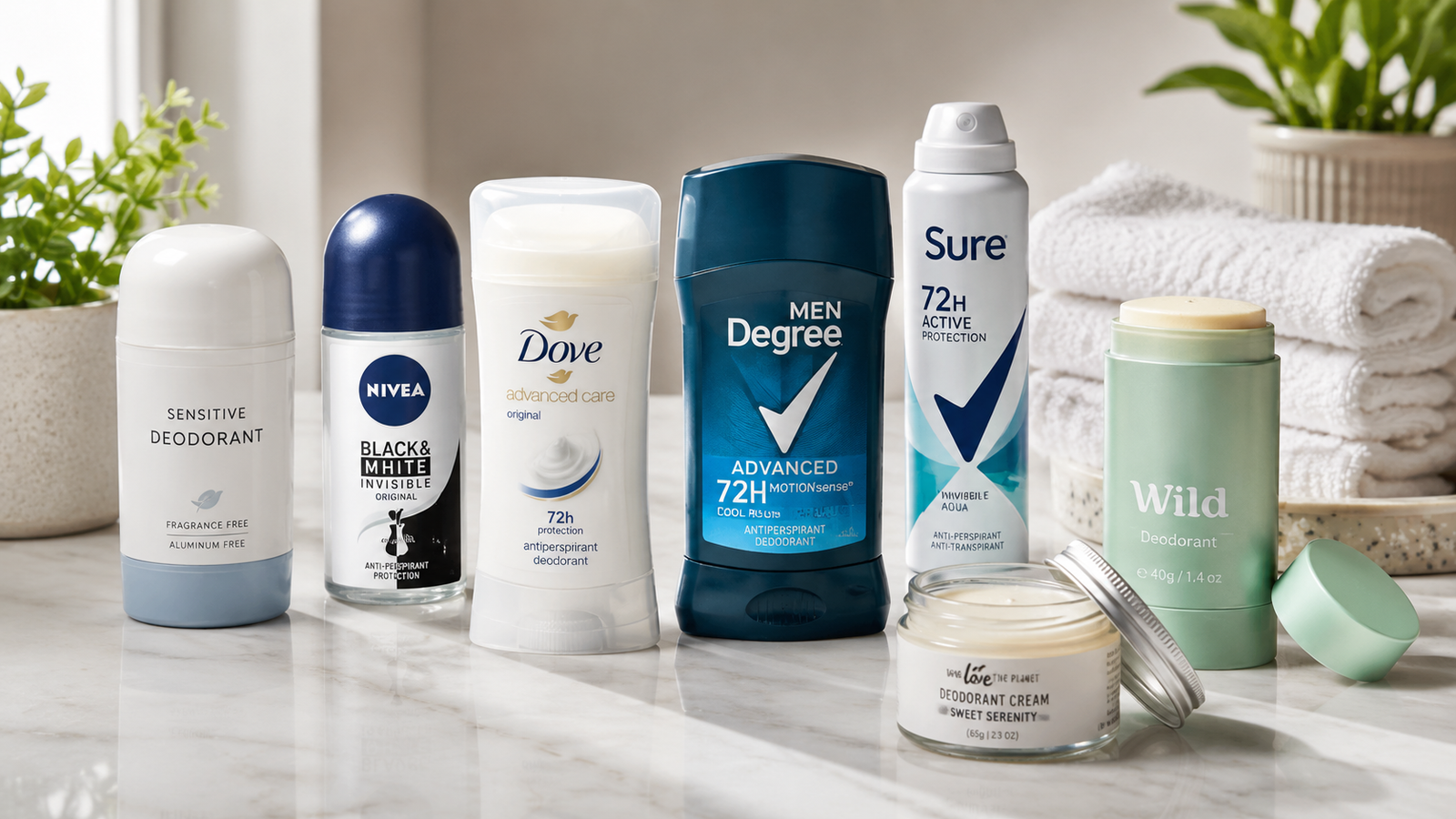
Finding the best deodorant sounds like it should be simple, but anyone who has stood in front of a crowded shelf of sticks, sprays and gels knows otherwise. Between aluminum free formulas, clinical strength antiperspirants and whole body sprays promising seventy two hours of protection, the choices can feel overwhelming.
This guide cuts through the noise. Instead of just listing products, it explains what actually matters when choosing a deodorant, how to match a formula to your skin type and sweat levels, and what dermatologists genuinely recommend rather than what marketing copy claims. Whether you are shopping for something gentle enough for sensitive skin, powerful enough for a heavy sweater, or simply the best deodorant for everyday confidence, you will find practical, honest guidance here.
What Makes a Deodorant the Best Choice for You
There is no single best deodorant that works for everyone. The right pick depends on a few personal factors that are worth thinking through before you buy.
Skin sensitivity matters more than most people realise. Fragrances, baking soda and alcohol based sprays can all trigger irritation in the delicate underarm area, especially after shaving.
Activity level changes what you need too. Someone training at the gym five times a week will want a different formula from someone who mostly needs a light refresh through an office day.
Personal values also come into play. Some shoppers care deeply about aluminum free formulas, plastic free packaging or cruelty free certification, while others simply want the strongest odour protection they can find at the chemist.
Finally, think about application preference. Sticks are convenient and mess free, sprays dry quickly, and creams tend to be gentler on reactive skin. There is genuinely no wrong answer here, only the option that fits your routine best.
Deodorant vs Antiperspirant: Understanding the Real Difference
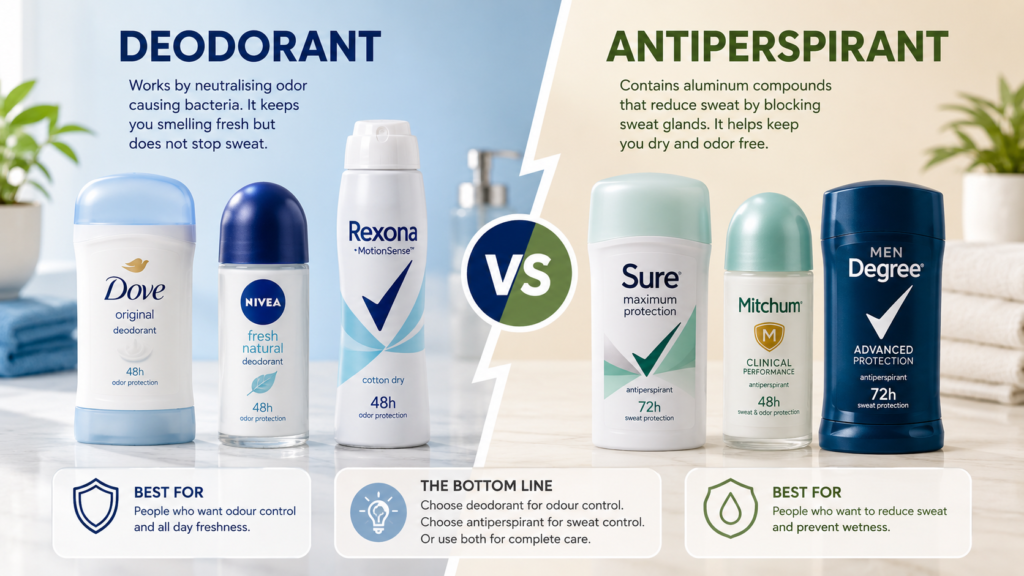
This is one of the most common points of confusion, and it is worth clearing up properly because it changes which product you should actually be reaching for.
A deodorant works by masking or neutralising odour. It does not stop you sweating. Instead, it targets the bacteria on your skin that feed on sweat and produce that unpleasant smell in the first place.
An antiperspirant, on the other hand, contains aluminum based compounds that temporarily block the sweat ducts, reducing how much you actually perspire. Many products on the shelf are labelled as both, since they combine odour control with sweat reduction in one formula.
If body odour is your main concern and you do not mind a bit of natural sweating, a standard deodorant is usually enough. If you deal with visible sweat patches or excessive perspiration, an antiperspirant, or a combination product, is generally the better route.
It is also worth knowing that some people use both, applying an antiperspirant at night when sweat ducts are less active, then a lighter deodorant in the morning purely for scent.
Best Deodorant Types for 2026
Formulation makes a bigger difference than most shoppers expect. Here is how the main types compare.
Stick and Solid Deodorants
Sticks remain the most popular format, and for good reason. They are simple to apply, travel well and tend to offer reliable, long lasting coverage. The trade off is that some solid formulas can leave a slight white residue, particularly on darker clothing.
Gel Deodorants
Gels sit somewhere between a stick and a liquid. They usually dry clear, which makes them a good choice if clothing marks are a concern, though they can take a little longer to fully dry than a solid stick.
Spray and Aerosol Deodorants
Sprays dry almost instantly and are easy to apply without direct skin contact, which some people prefer. The downside is that many contain alcohol, which can sting freshly shaved skin, and they are generally less concentrated than a stick.
Roll On Deodorants
Roll ons apply a thin, controlled layer of liquid and are a solid middle ground for anyone who finds sticks too heavy but sprays too messy.
Cream and Paste Deodorants
Creams and pastes are usually the most moisturising option, which makes them popular among people with dry or sensitive underarm skin. Application takes a little more effort since you typically scoop out a small amount and rub it in by hand.
Whole Body Deodorants
A newer category that has grown quickly, whole body deodorants are designed to be used beyond the underarms, including areas like the feet, chest and groin. They are usually aluminum free and formulated to be gentle enough for broader use on the body.
Best Deodorant for Sensitive Skin
If your underarms react to fragrance, redness or itching after applying deodorant, you are far from alone. Sensitive skin is one of the most common reasons people switch brands repeatedly, searching for something that finally agrees with them.
Dermatologists generally recommend looking for the following when shopping for sensitive skin:
- Fragrance free formulas, since added scent is one of the most frequent causes of underarm irritation
- No baking soda, which can be harsh on reactive skin despite being a popular natural ingredient
- Simple ingredient lists, avoiding unnecessary dyes, parabens and alcohol
- Arrowroot or cornstarch based formulas, which absorb moisture gently without the exfoliating effect baking soda can have
Patch testing a new deodorant on the inner arm for a few days before applying it to the underarm is a sensible habit if you have a history of reactions. It sounds like an extra step, but it can save you from a week of discomfort.
Natural and Aluminum Free Deodorant Options
The demand for aluminum free deodorant has grown steadily over the past few years, and the natural personal care category has expanded to match it. It is worth understanding what natural actually means in this context, since the term itself is not regulated.
Natural deodorants typically rely on ingredients such as magnesium hydroxide, tapioca starch, alpha hydroxy acids or essential oils rather than aluminum salts. Some also use probiotics or prebiotics to support a healthier balance of skin bacteria, which in theory helps control odour at the source.
The honest trade off is this: aluminum free deodorants control smell but do not stop sweat the way an antiperspirant does. Many people find this a fair compromise, particularly if they are more concerned about odour than visible perspiration. Others notice an adjustment period of a week or two as their skin gets used to a formula without aluminum, sometimes described as an armpit detox, though there is limited scientific evidence for this specific claim.
If you are switching to a natural deodorant for the first time, it is worth giving the new formula a proper trial period rather than judging it after a single hot day.
Best Deodorant for Heavy Sweating and Hyperhidrosis
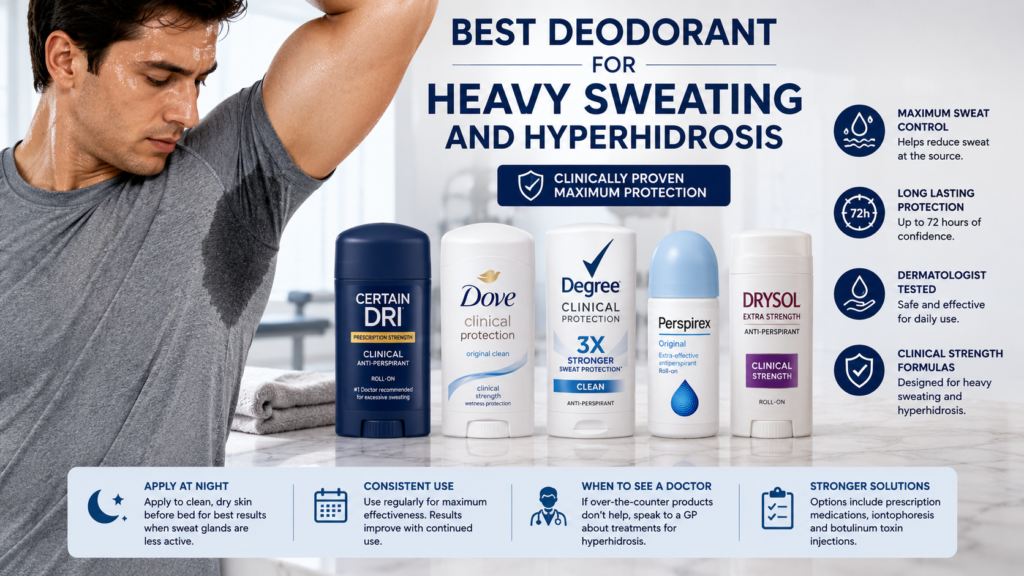
For people who sweat heavily, either due to genetics, stress, exercise or a medical condition called hyperhidrosis, a standard deodorant often is not enough.
Clinical strength antiperspirants are formulated with a higher concentration of aluminum compounds and are usually applied at night to clean, dry skin. Applying before bed gives the active ingredients time to form a temporary plug in the sweat ducts while the body is less active, which tends to make them more effective than a morning application alone.
If clinical strength products from the chemist are not cutting it, it is worth speaking to a GP or dermatologist. Persistent, excessive sweating that interferes with daily life is a recognised medical condition, and there are several treatment routes available, including prescription strength antiperspirants, iontophoresis treatments that use a mild electrical current to temporarily reduce sweat gland activity, and botulinum toxin injections, which can significantly reduce underarm sweating for several months at a time.
There is no need to simply live with excessive sweating if it is affecting your confidence or daily routine. Medical support exists, and many people are surprised at how manageable the condition becomes once they seek help.
Is Aluminum in Deodorant Safe? What Dermatologists Say
This is one of the most searched questions around deodorant, and the short answer from dermatologists and major health bodies is reassuring.
Concerns about a link between aluminum in antiperspirants and conditions such as breast cancer or Alzheimer’s disease have circulated for years, but a large body of research has not found convincing evidence to support this connection. Health organisations, including cancer research bodies, have reviewed the available studies and concluded that aluminum based antiperspirants are considered safe for regular use.
It is also worth noting that only a very small amount of aluminum is absorbed through the skin during normal use, and the body absorbs aluminum through other everyday sources too, including food and drinking water, often in larger amounts than through antiperspirant use.
That said, if you have particularly sensitive or reactive skin, aluminum compounds can sometimes cause mild irritation, which is a separate issue from the safety concerns mentioned above. In that case, switching to an aluminum free deodorant is a reasonable personal choice, even if it is not medically necessary for most people.
How to Choose the Best Deodorant for Your Lifestyle
With so many formulas and claims on the market, it helps to narrow things down with a few practical questions before you buy.
Start by being honest about how much you actually sweat on a typical day. Someone who sweats lightly has far more flexibility than someone dealing with heavy perspiration, who will likely need a genuine antiperspirant rather than odour control alone.
Consider your skin’s history with fragrance and harsh ingredients. If you have reacted badly to scented products before, start with a fragrance free, aluminum free option and build from there.
Think about your daily routine too. If you shower and dress quickly in the morning, a fast drying spray or roll on might suit you better than a stick that needs a moment to dry down.
In the UK, most major supermarkets, pharmacies such as Boots and Superdrug, and health focused retailers stock a wide range of both conventional and natural deodorants, so trying a few smaller sizes before committing to a full size product is often the most sensible approach. Many brands now offer travel sizes specifically for this kind of trial and error.
Finally, price does not always reflect quality here. Some of the most effective, dermatologist approved deodorants sit at the budget end of the shelf, while some premium natural brands charge considerably more for similar core ingredients.
Simple Tips to Reduce Body Odor Naturally
Alongside choosing the right product, a few small habits can make a noticeable difference to how fresh you feel throughout the day.
- Shave or trim underarm hair, since hair gives bacteria more surface area to interact with sweat and produce odour
- Wear breathable, natural fabrics like cotton where possible, as synthetic materials can trap moisture against the skin
- Shower daily with a gentle cleanser, focusing on the underarm area to reduce the bacteria that cause smell
- Watch your diet, since strong foods like garlic, onions and certain spices can influence body odour for some people
- Manage stress where you can, as stress sweat is chemically different from regular sweat and tends to smell stronger due to the glands it comes from
None of these replace a good deodorant, but combined with the right formula, they can genuinely reduce how often you need to reapply throughout the day.
Final Thoughts
The best deodorant is ultimately the one that matches your skin, your sweat levels and your daily routine, rather than whichever product has the loudest marketing claim. Understanding the real difference between deodorant and antiperspirant, knowing what to look for if you have sensitive skin, and recognising when heavier sweating might need medical attention will save you far more time and money than trial and error alone.
Take the time to identify what actually matters to you, whether that is aluminum free ingredients, all day odour protection or simply a scent you enjoy, and build your shortlist from there. A little patience during the switching process pays off with a deodorant that genuinely fits into your life rather than fighting against it.
Frequently Asked Questions
What is the best deodorant for sensitive skin?
Fragrance free, aluminum free formulas with simple ingredient lists tend to work best for sensitive skin. Avoiding baking soda and patch testing new products before full use is also recommended.
Is it better to use deodorant or antiperspirant?
It depends on your main concern. Choose deodorant if odour is your priority and you do not mind natural sweating. Choose antiperspirant if you want to reduce visible sweat as well as control smell.
Does natural deodorant actually work?
Natural deodorants can be effective at controlling odour, though they do not stop sweat the way antiperspirants do. Many people find them a good fit once their skin adjusts to the new formula.
Why does my deodorant stop working during the day?
This is often due to heavy sweating overwhelming the formula, wearing synthetic fabrics that trap moisture, or simply needing a stronger clinical strength option for your activity level.
When should I see a doctor about excessive sweating?
If sweating is heavy enough to soak through clothing regularly or affects your confidence and daily life despite trying stronger antiperspirants, it is worth speaking to a GP, since treatments for hyperhidrosis are available.