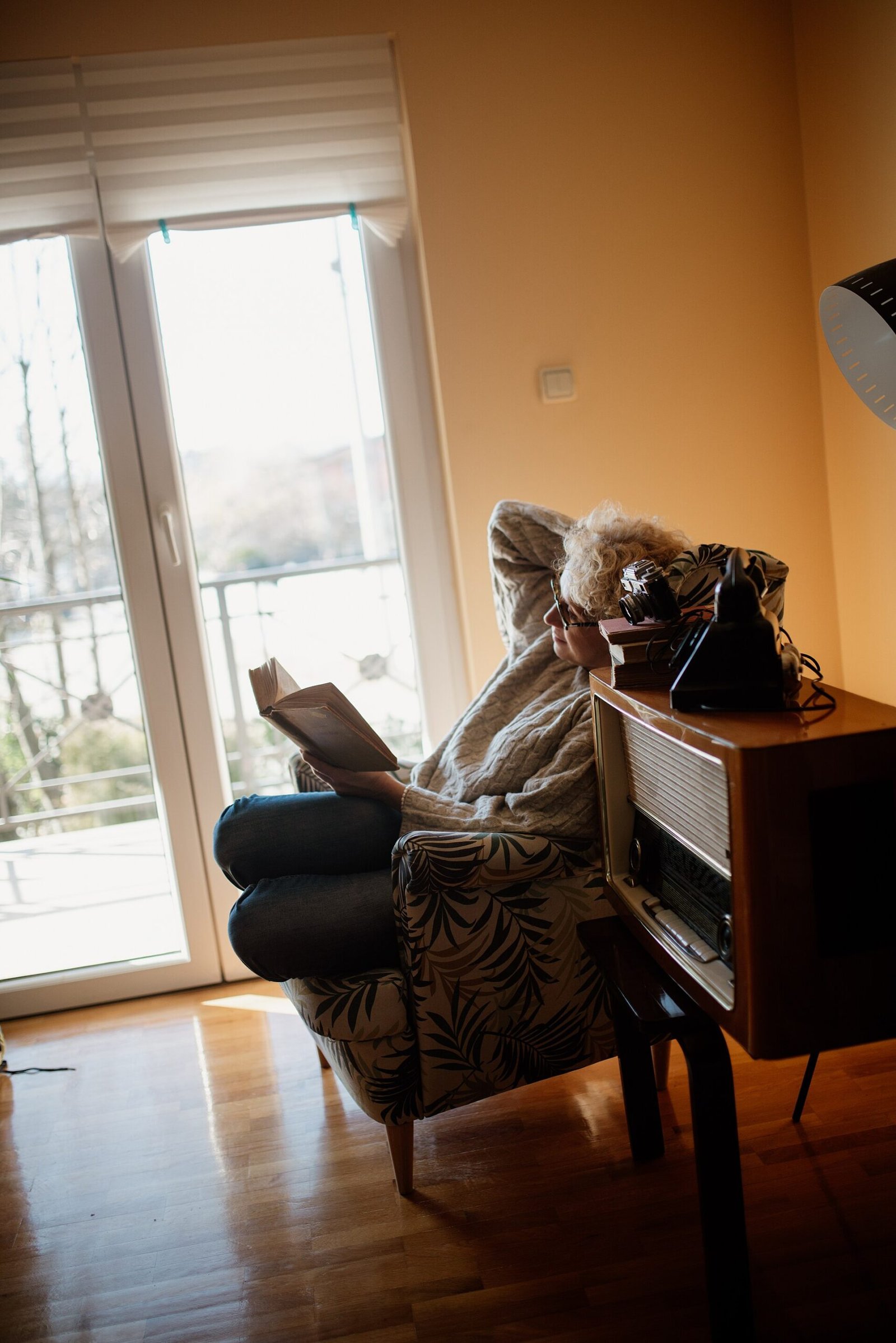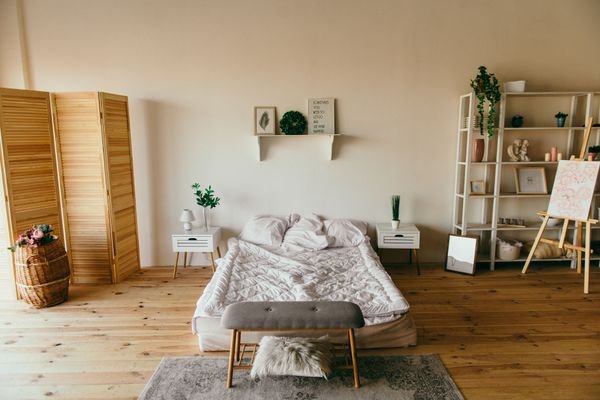
Priya stood in the doorway of her bedroom with a laundry basket in one hand and a phone in the other, and she could not find a single clear surface. The bed was covered in clothes she meant to fold, the chair held a pile she meant to sort, and the top of the dresser had disappeared under books, chargers, and a plant she kept forgetting to water. She had read plenty of advice about decluttering, but every guide seemed to end the same way: throw most of it away. Priya did not want to throw her things away. She liked her books, she wore most of her clothes, and she had no spare money to replace anything she discarded in a burst of enthusiasm.
If you want to know how to declutter a small bedroom without throwing everything away, you are asking a better question than most decluttering guides answer. The goal is not an empty room. The goal is a room where everything you keep has a place, everything you use is easy to reach, and the floor is clear enough to walk across without a plan. This guide shows you how to get there without a single garbage bag of regrets. You will sort by zone, use the storage you already own, move furniture with purpose, and build a ten minute weekly habit that keeps the room calm.
Think of this as a room rescue, not a lifestyle overhaul. Priya finished her bedroom in one weekend, kept nearly everything she owned, and still ended up with clear surfaces and a floor she could actually see. The difference was not willpower. It was a method that treated her belongings as things to organize, not things to judge.
Start With a Different Definition of Decluttering
Most decluttering advice confuses decluttering with discarding. Decluttering really means removing visual chaos and restoring order. A room can be full and still feel calm, as long as things are stored, grouped, and out of the walkways. A room can also be nearly empty and still feel chaotic, if the few things left have no home and migrate to every surface.
That distinction matters in a small bedroom, because space is the one thing you cannot buy more of. Every item you keep must earn its place, not by being precious, but by having a designated spot. When everything has a spot, putting things away takes seconds. When nothing has a spot, tidying takes an hour and lasts a day.
So set one rule before you start: nothing leaves the room in this first pass unless it is broken, obviously trash, or belongs in a different room. Donations and discards come later, calmly, after you can see what you actually own. This rule protects you from the most common decluttering regret, which is throwing away something useful in a tired moment and buying it again a month later.
Map the Room Before You Move Anything
Take ten minutes to look at the room like a stranger would. Stand in the doorway and note where your eyes land first. Usually it is the bed, the floor, and the biggest flat surface. Those three areas decide whether a room feels calm or chaotic, so they get attention first.
Next, walk the room and note the trouble zones. The chair that collects clothes, the nightstand that collects everything, the top of the dresser, the floor beside the bed, and the closet floor are the usual suspects. Write them down. A short list turns a vague feeling of mess into a set of small jobs you can finish one at a time.
Measure the walkways while you are at it. You need enough clear space to move around the bed without turning sideways. If a piece of furniture forces you to squeeze past it every day, that piece is in the wrong place, no matter how nice it looks there. Small bedrooms punish bad layouts faster than big rooms do, because every inch is in daily use.
Work by Zone, Not by Category
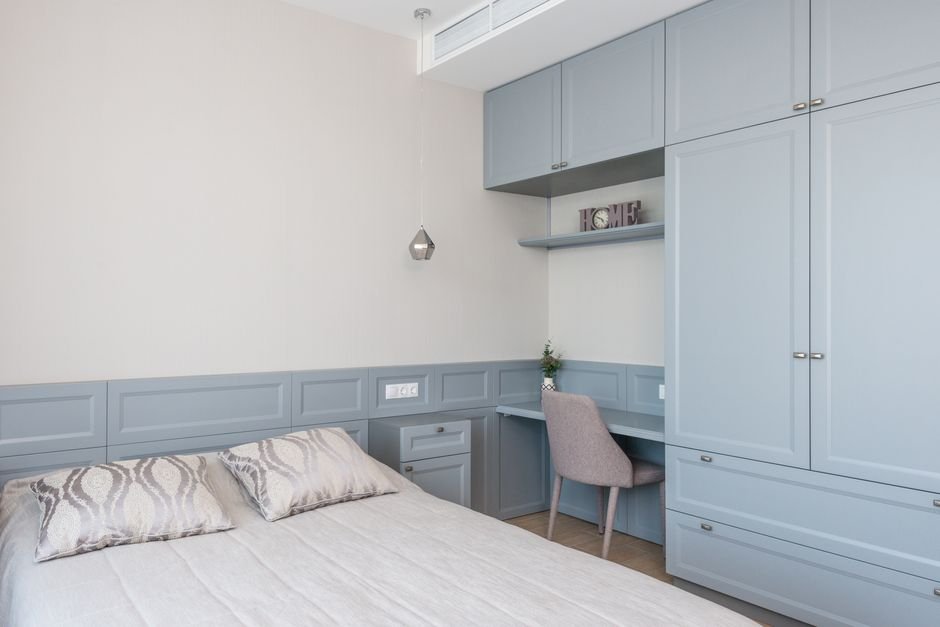
Decluttering guides often tell you to gather every book, then every item of clothing, then every paper in the house. That method fails in a small bedroom because it creates a bigger mess before it creates order. You end up with piles everywhere and no finished area to encourage you.
Work by zone instead. Pick one zone, finish it completely, and enjoy the result before moving on. A good order is: bed surface, floor, nightstand, dresser top, closet, drawers, under bed storage, and finally walls and doors. Each zone takes twenty to forty minutes, and each finished zone makes the next one easier because you have somewhere to put things.
For each zone, use four simple groups: stays here, moves to another zone, moves to another room, and needs a decision later. The fourth group is important. It is a single box for things you cannot decide about yet. Put the box out of sight, and revisit it in a month. Most people find they never missed anything in it, which makes later decisions much easier. Nothing in that box gets thrown away during this pass.
Clear the Bed and the Floor First
The bed is the largest surface in the room, so it sets the tone. Strip it, make it properly, and keep it clear from now on. A made bed makes the whole room look tidier even before you touch anything else, and it removes the temptation to use the bed as a sorting table.
The floor comes next, because a clear floor changes how a room feels more than any other single change. Pick up every item on the floor and sort it into your four groups. Clothes go to the closet or the laundry basket. Shoes go to one spot by the door or in the closet. Bags, books, and chargers go to their zones. Do not organize the floor items in detail yet. Just get them off the floor and into roughly the right place.
Once the floor is clear, protect it with one habit: nothing lives on the floor except furniture and shoes in their spot. Clothes go in the basket, not on the chair. Bags hang on a hook, not by the door. This one rule prevents most small bedroom mess from returning, because floor clutter is what makes a room feel crowded even when the closets are tidy.
Use the Storage You Already Own
Before you buy a single organizer, use what the room already gives you. The space under the bed holds flat boxes for out of season clothes, spare bedding, or shoes. The top of the closet holds bags and items you use rarely. The back of the door holds hooks for bags, robes, and tomorrow clothes. A bookshelf can hold baskets that hide small items while looking tidy.
Look for wasted vertical space. A tall narrow shelf in a corner uses floor space you were not using anyway. Hooks on the wall hold jewelry, hats, and bags without taking a single inch of floor. A shelf above the door holds items you need a few times a year, like a spare blanket or a travel bag.
If you do buy something, buy it after the sort, not before. Organizers bought before a sort usually fit the mess you had, not the room you want. After sorting, you will know exactly what you need: two baskets for the closet shelf, one tray for the nightstand, or a set of drawer dividers. Buying last saves money and avoids a new collection of empty organizers.
Fix the Nightstand and the Dresser Top
Flat surfaces attract clutter because they are easy to drop things on. The fix is to decide what belongs on each surface and remove everything else. A nightstand needs a lamp, a book, a charger, and a small dish for a watch and earrings. Everything else goes to its zone.
A tray or a small dish helps enormously. It gives small items a boundary, so they look intentional instead of scattered. Without a boundary, a watch, a lip balm, a receipt, and a hair tie spread across the whole surface within days. With a tray, they stay together and the rest of the surface stays clear.
The dresser top follows the same rule. Keep a mirror or a plant if you love it, keep the items you use every morning, and move the rest. Perfume bottles look lovely grouped on a tray and messy scattered across a dresser. Grouping is the difference, not the number of items.
Reorganize the Closet by Use, Not by Color
Closet advice often focuses on color order, which looks pretty and helps nobody get dressed faster. Organize by use instead. Group work clothes together, casual clothes together, and occasion clothes at one end. Put the clothes you wear weekly at eye level and within easy reach. Move occasion clothes and out of season clothes higher or further back.
Use slim hangers if your closet rod is crowded, because they can free up surprising space without removing a single garment. Fold knitwear instead of hanging it, since hanging stretches knits and wastes rod space. Keep a small basket on the closet shelf for accessories, so scarves and belts stop migrating to the dresser.
The same thinking helps when you travel, and our guide to packing light for a 3 day business trip without a checked bag uses the same idea of choosing by use and keeping only what earns its place. The closet floor deserves the same treatment. Shoes in a row, or in a single low rack, look calmer than shoes in a pile, even if the number of shoes is identical. One basket for laundry on the closet floor stops the chair pile from forming, because dirty clothes get a home the moment they come off.
Move Furniture With Purpose
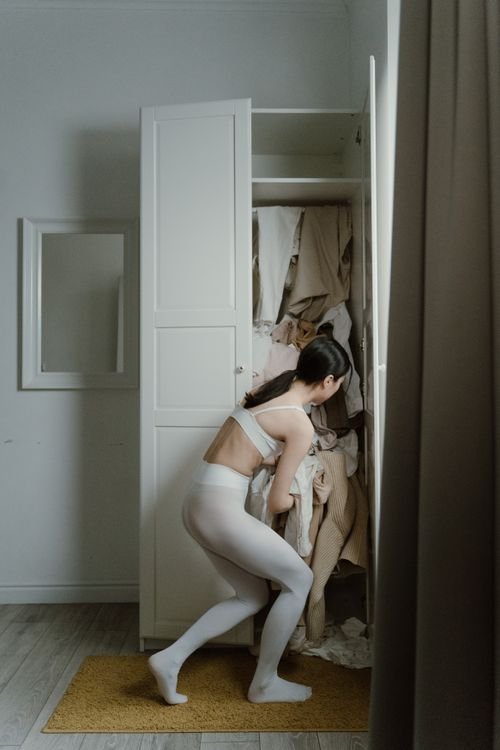
Once the zones are sorted, look at the layout again with fresh eyes. The bed usually works best against the longest wall, with a clear path on at least one side. A dresser under a window often blocks light and makes the room feel smaller, while the same dresser on a solid wall opens the room up.
Try moving one piece at a time and living with it for a day before moving another. Small rooms reward small moves. Shifting a nightstand by a few inches can clear a walkway. Turning a desk to face the wall instead of the room can make the room feel larger. Moving a tall shelf out of the sightline from the door makes the room feel less crowded the moment you walk in.
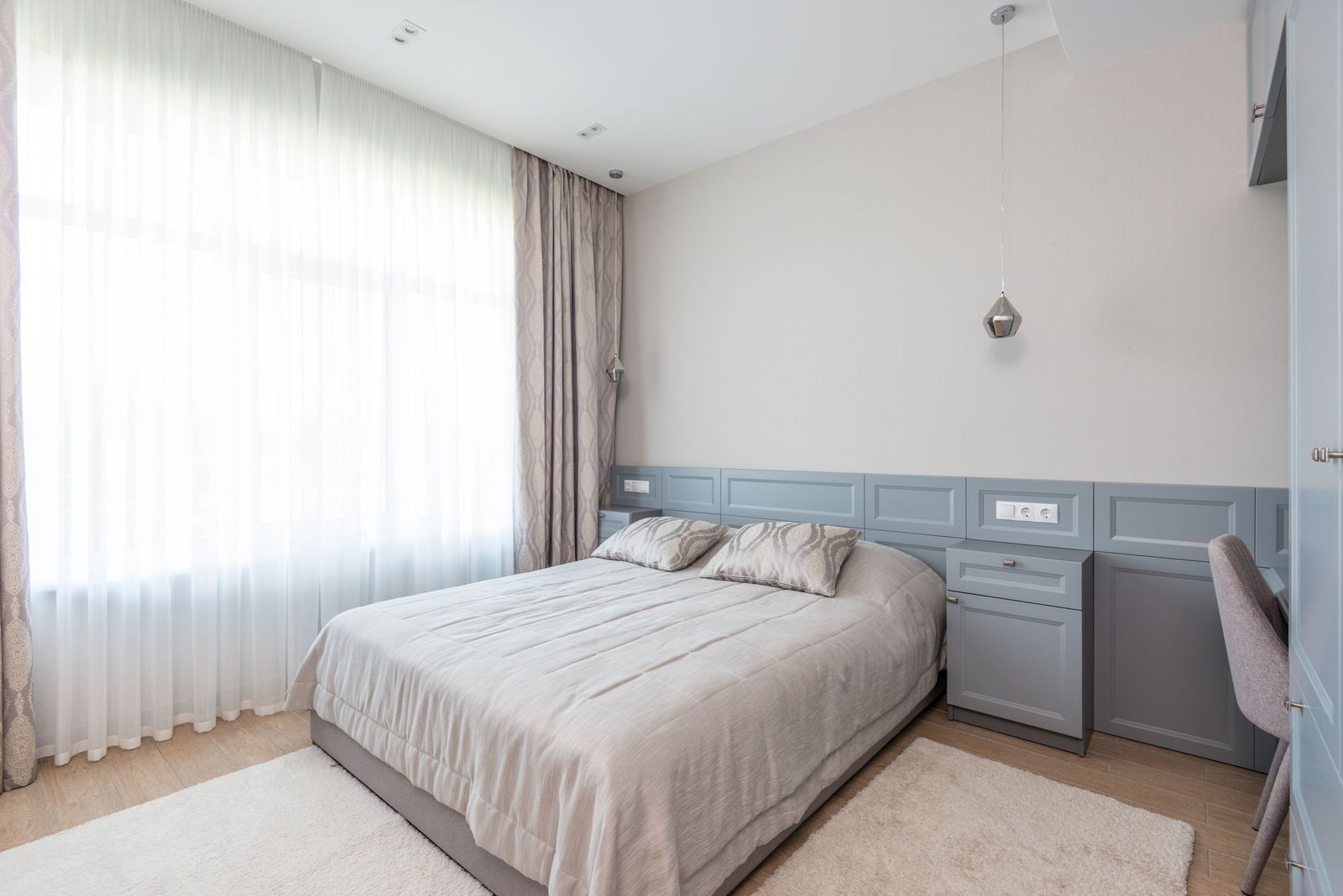
Watch the light as you rearrange. Keep the window as clear as possible, because natural light makes a small room feel bigger than any furniture choice. Heavy curtains and furniture blocking a window shrink a room visually, while a clear window and a mirror opposite it can make the same room feel open.
Handle Sentimental Items Without Guilt
Sentimental items stall more decluttering projects than any other category. Letters, gifts, childhood keepsakes, and photos carry feelings, and sorting them while tired leads to either keeping everything in a pile or throwing away something you regret.
Give sentimental items their own zone and their own time. Put them in one box during the main sort, and deal with them in a separate calm session. Keep the best examples, not every example. Five letters from a friend tell the story as well as fifty, and they fit in a small box you can actually keep on a shelf.
Photograph items you love but cannot store, especially bulky keepsakes and children’s artwork. A photo preserves the memory without taking closet space, and it is easier to enjoy than a box in storage. For items you keep, choose one beautiful box or basket and let that be the limit. When the box is full, something must leave before something new enters, which keeps the collection meaningful instead of endless.
Build the Ten Minute Weekly Reset
A decluttered room stays decluttered because of a habit, not because of a single weekend effort. The habit that works best in a small bedroom is a ten minute reset, once a week, at the same time. Set a timer and do five things: clear the bed, clear the floor, return items to their zones, wipe the nightstand and dresser top, and take laundry to the basket.
Do not reorganize during the reset. The reset is maintenance, not a project. If you start reorganizing, ten minutes becomes an hour and you will avoid the habit next week. Keep it short, keep it regular, and the room will stay close to its best state with very little effort.
Pair the reset with something you already do, like Sunday evening before the week starts, or Saturday morning before breakfast. Habits stick when they attach to an existing routine. Priya does her reset on Sunday evenings, and she says it takes less time than scrolling through her phone while deciding whether to start. A calm bedroom also makes it easier to stay focused working from home with kids, because the room itself stops competing for attention.
Add one more small habit for daily life: a two minute evening tidy. Before bed, put tomorrow clothes on a hook, return books to the nightstand, and drop dirty clothes in the basket. Two minutes at night saves ten minutes in the morning, and it means you wake up to a calm room instead of yesterday mess.
What to Do With Things That Do Not Fit
After sorting, you may still have items with no good home. Before you throw anything away, try three options. First, move it to a better home in another room, like books to a living room shelf or tools to a utility space. Second, store it properly for its season, like winter coats in an under bed box during summer. Third, lend or share it, like a rarely used item a family member would enjoy.
Only after those options should you consider donating or discarding, and then do it calmly, item by item. Donation is a kind choice when an item is useful and you genuinely have no place for it. Discarding is right for broken items and things that have served their purpose. Neither choice needs guilt, and neither needs to happen in a rush on sorting day.
If a whole category still does not fit, that is useful information. It tells you the room has a capacity, and something must change: more storage, a different room for that category, or fewer items in that category over time. Capacity is not failure. It is the reality of a small room, and working with it beats fighting it.
Frequently Asked Questions
Can I declutter a small bedroom without getting rid of anything?
Yes, if the problem is organization rather than volume. Sorting by zone, giving everything a home, and using existing storage can transform a room without discarding a single useful item. Discarding only becomes necessary when items genuinely exceed the room capacity.
How long does it take to declutter a small bedroom?
Most small bedrooms take one focused weekend, working zone by zone. Each zone takes twenty to forty minutes, and the weekly reset afterwards takes about ten minutes. Working by zone keeps the project manageable and gives you finished areas to enjoy along the way.
What is the best storage for a small bedroom?
The best storage is the storage you already own: under bed boxes, closet shelves, door hooks, and baskets. Buy organizers only after sorting, when you know exactly what you need. One well chosen basket beats five organizers bought in advance.
How do I stop the room getting messy again?
Use a ten minute weekly reset and a two minute evening tidy. Keep the floor clear as a standing rule, and give every new item a home the day it enters the room. Maintenance habits matter more than the initial sort.
What should I do with sentimental items I cannot store?
Keep the best examples in one dedicated box, and photograph bulky keepsakes before letting them go. A photo preserves the memory without taking closet space, and a limited box keeps the collection meaningful.
Conclusion
Decluttering a small bedroom without throwing everything away is not a compromise. It is the smarter version of decluttering, because it respects what you own and what you can afford to replace. Sort by zone, clear the bed and floor first, use the storage you already have, fix the flat surfaces, organize the closet by use, move furniture with purpose, and protect the result with a ten minute weekly reset.
Priya kept her books, her clothes, and her plant. She lost nothing she valued, and she gained a room she enjoys walking into. Her floor is clear, her surfaces are calm, and her mornings are simpler, because everything she needs is where she expects it to be. Start with the bed, finish one zone, and let the calm spread from there. Your room does not need to be empty to feel peaceful. It just needs everything to have a place.