
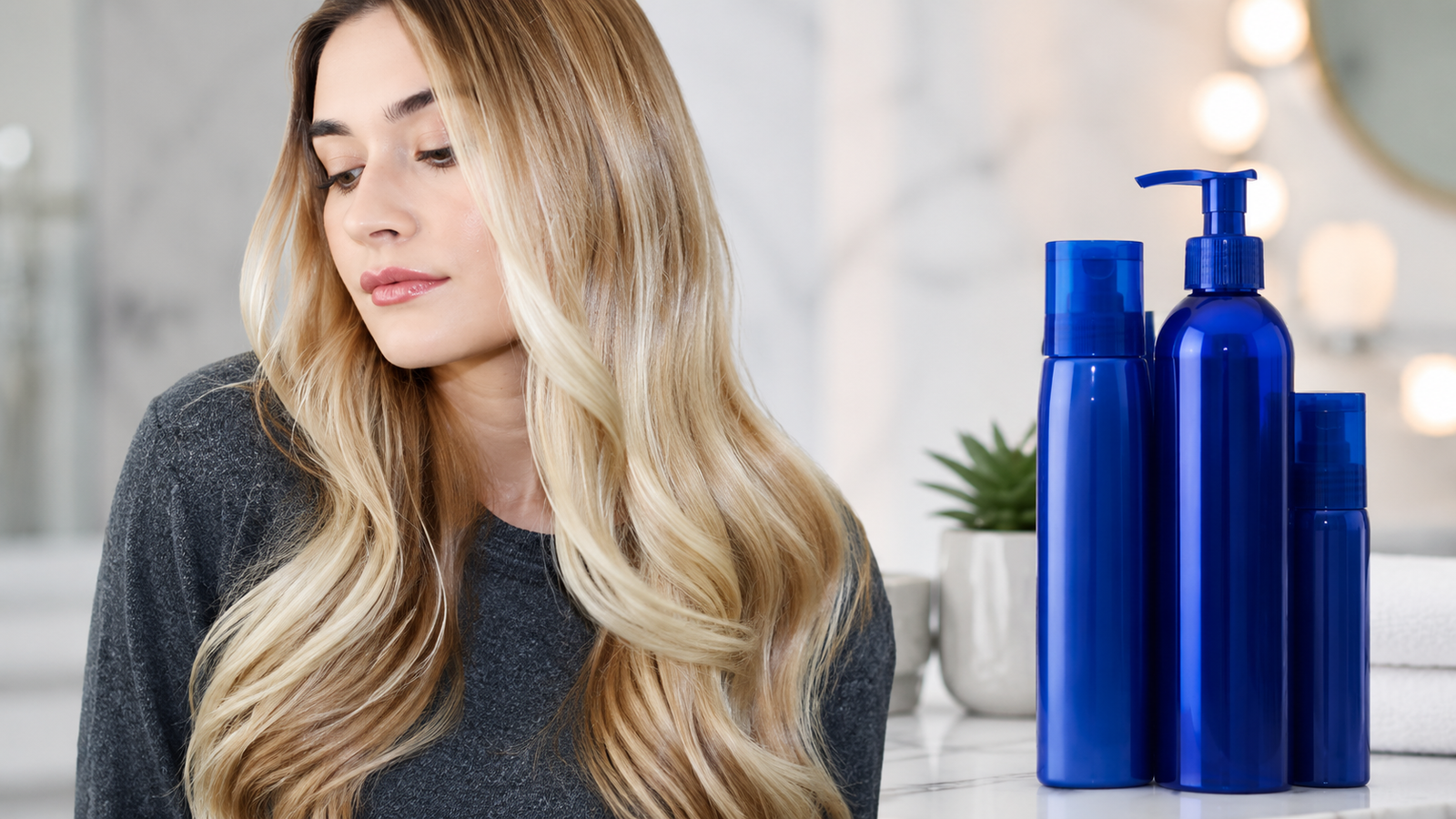
If your brunette hair has started looking a little orange or coppery between salon visits, you are not imagining it. That warmth is a natural part of how hair color fades, and blue shampoo is one of the simplest ways to fix it at home. This guide walks through exactly what blue shampoo does, who really needs it, and how to use it correctly so you get consistent, salon fresh results without any guesswork.
What Is Blue Shampoo
Blue shampoo is a toning product formulated with blue pigments that deposit onto the hair shaft during washing. Instead of just cleansing, it leaves behind a thin layer of color that cancels out unwanted warm tones.
Most regular shampoos are built purely for cleaning. Blue shampoo is different because it does double duty: it washes hair while also correcting color. This is why it is often described as a pigment depositing shampoo rather than a standard cleanser.
The pigments used are typically cobalt or indigo based. They are strong enough to neutralize brassiness but light enough that they will not permanently change your natural or dyed hair color when used correctly.
The Color Theory Behind Blue Shampoo
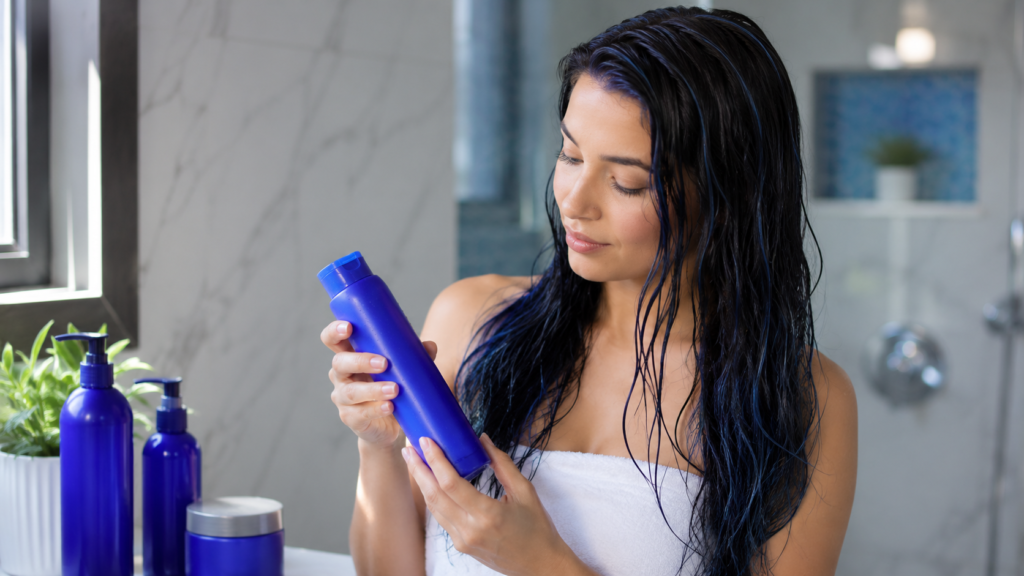
To understand why blue shampoo works, it helps to think back to the color wheel from art class. Colors that sit directly opposite each other on the wheel cancel each other out when combined.
Blue and orange sit opposite one another. That is the entire secret behind blue shampoo. Brunette hair naturally carries warm undertones of red, copper, and orange, and these become more visible as hair color fades or as hair is lightened through highlights or balayage.
When you apply a blue toning shampoo, the blue pigment blends with the orange pigment in your hair and visually neutralizes it. The result is a cooler, more balanced brunette shade that looks freshly colored rather than faded and brassy.
This is also why blue shampoo will not turn your hair blue. Unless you are using far too much product or leaving it on for an extended period, the blue pigment is simply cancelling out warmth rather than adding a new visible tone.
Blue Shampoo Versus Purple Shampoo
This is one of the most common points of confusion, and for good reason. Both products work on the same color correcting principle, but they are designed for different starting points.
Purple shampoo targets yellow and pale orange brassiness. It works best on blonde, platinum, or gray hair, where the underlying pigment that shows through is yellow.
Blue shampoo targets deeper orange, red, and copper brassiness. It works best on brunette hair, including light brown, medium brown, and dark brown shades, along with lightened or highlighted brunette hair.
A simple way to remember the difference is to think about how light or dark your base color is. Lighter hair tends to fade into yellow tones, while darker hair tends to fade into orange and red tones. Choosing the right product comes down to matching the pigment to the tone you actually see in the mirror.
Can You Use Blue Shampoo on Blonde Hair
Generally, no. Blue shampoo is not recommended for very light blonde or platinum hair. Because those strands have so little natural pigment left, the blue dye can grab onto the hair too strongly and leave behind a gray, ashy, or faintly blue cast instead of a clean, neutral tone.
If your hair includes both dark roots and lightened ends, it is worth being selective about where you apply blue shampoo, focusing it on the darker sections rather than saturating the lighter pieces.
Who Actually Needs Blue Shampoo
Blue shampoo is best suited to a fairly specific group of people, and understanding whether you fall into it will save you time and money.
You are a good candidate for blue shampoo if you have:
- Natural brunette hair that looks dull, warm, or slightly orange after a few weeks
- Color treated brown hair that has started to fade into copper or red tones
- Highlighted or balayage brunette hair where the base color is turning brassy
- A cool toned brunette shade from the salon that you want to maintain at home
You are likely not a good candidate if you have platinum blonde, very light ash blonde, or freshly bleached hair, since purple shampoo will serve you better in those cases.
How Often Should You Use Blue Shampoo
This is where a lot of guidance online gets vague or contradictory. Here is a clearer way to think about it.
Blue shampoo is a toning treatment, not a daily cleanser. Using it once or twice a week is generally enough to keep brassiness under control without overloading your hair with pigment.
If you use it too often, the pigment can build up faster than it fades, which may leave your hair looking muddy, overly cool, or slightly dull instead of vibrant. If you use it too rarely, you will notice the orange and copper tones creeping back in before your next wash.
A practical approach is to start with once a week, then adjust based on how quickly your hair returns to its brassy state. Darker hair and hair exposed to hard water or frequent sun tends to need more frequent toning than hair that is protected and washed less often.
How to Use Blue Shampoo Step by Step
Getting the technique right matters just as much as choosing the right product. Follow these steps for consistent results.
- Wet your hair thoroughly. Damp hair helps the pigment distribute evenly rather than concentrating in one spot.
- Apply more product than usual. Unlike regular shampoo, which you can focus mostly on the scalp, blue shampoo needs to coat your hair from roots to ends for even toning.
- Massage it through evenly. Work the shampoo through every section of your hair, paying close attention to areas that tend to fade fastest, such as the mid lengths and ends.
- Leave it on for a few minutes. Depending on how brassy your hair is, leave the shampoo on for two to ten minutes. Lighter brown hair generally needs less time, while darker or more brassy hair benefits from a longer wait.
- Rinse with cool water. Cooler water helps seal the hair cuticle and can help lock in the toning effect a little longer.
- Follow with a matching conditioner. If your blue shampoo has a companion conditioner, use it to reinforce the tone and add moisture back into your hair.
What to Look for in a Good Formula
Not all blue shampoos are created equal, and the ingredient list can tell you a lot about how a formula will treat your hair over time.
Look for these qualities when choosing a product:
- Sulfate free cleansers, which are gentler on color treated hair and help pigment last longer between washes
- Moisturizing agents such as argan oil, coconut derived cleansers, or hyaluronic acid, since toning shampoos can be drying if used often
- Bond building or strengthening ingredients, particularly helpful if your hair has been lightened or highlighted
- A clear pigment concentration, so you have a sense of how strong the toning effect will be
Avoid formulas that rely heavily on harsh sulfates as the primary cleanser, since these can strip both your natural oils and your recent color treatment more quickly than necessary.
Hair Porosity and Previous Treatments
One detail that often gets overlooked is how your hair’s porosity affects the way blue shampoo performs. Porosity refers to how easily your hair absorbs and holds onto moisture and pigment.
High porosity hair, which is common after bleaching, chemical relaxing, or frequent heat styling, tends to absorb pigment quickly and strongly. If this describes your hair, start with a shorter application time to avoid over toning.
Low porosity hair, which has a tighter cuticle structure, may need a slightly longer application time for the pigment to take effect. This is more common in hair that has not been chemically treated.
If you have recently had a keratin treatment, relaxer, or another chemical service, it is worth doing a strand test before applying blue shampoo to your whole head. Chemically treated hair does not always respond to toning the same way untreated hair does.
Troubleshooting Common Mistakes
Even with the right product, small mistakes can lead to disappointing results. Here are the most common issues and how to fix them.
Hair looks ashy or gray instead of brassy free. This usually means the shampoo was left on too long or used too frequently. Switch to a color safe clarifying shampoo to remove some of the built up pigment, then reduce how often you tone.
Brassiness returns almost immediately. This can happen if you are not using enough product or not distributing it evenly through all of your hair, especially the ends, which tend to be the most porous and fastest to fade.
Hair feels dry or straw like after repeated use. Toning shampoos can be more drying than daily formulas. Pair your routine with a deep conditioning treatment once a week to keep hair balanced.
Color looks patchy or uneven. This is often a sign that the shampoo was not massaged through thoroughly enough. Take extra time during application to work the product section by section.
Blue Shampoo and Your Salon Budget
Beyond the color benefits, there is a practical financial reason many brunettes keep blue shampoo in their routine. Professional toning services at the salon can be a meaningful ongoing expense, especially if brassiness tends to show up every few weeks.
Using a blue shampoo consistently at home can stretch the time between color appointments, since it keeps your tone looking fresh in between visits. It will not replace a full color service, but it can meaningfully reduce how often you need one purely for toning touch ups.
Over the course of a year, this small addition to your shower routine can add up to real savings, particularly for anyone maintaining a cool toned brunette shade.
Conclusion
Blue shampoo is a simple, effective way to keep brunette hair looking rich, cool, and free of unwanted orange or copper tones. It works by using color theory: blue pigment neutralizes the warm undertones that naturally surface as brown hair fades or lightens.
The key to getting good results is matching the product to your hair color, using it only once or twice a week, applying it correctly from roots to ends, and paying attention to your hair’s individual porosity and history. Used thoughtfully, blue shampoo can extend the life of your color, protect your investment in salon visits, and keep your brunette shade looking consistently vibrant between appointments.
Frequently Asked Questions
Will blue shampoo turn my hair blue?
No. When used correctly, blue shampoo neutralizes orange and red tones rather than adding a visible blue color. Overuse or extended application time is what can cause an unwanted tint.
Can I use blue shampoo every day?
It is not recommended. Daily use can lead to pigment buildup, which may leave hair looking dull or overly cool. Once or twice a week is generally enough.
What is the difference between blue shampoo and purple shampoo?
Purple shampoo neutralizes yellow tones and works best on blonde or gray hair. Blue shampoo neutralizes orange and red tones and works best on brunette hair.
Does blue shampoo lighten hair?
No. Blue shampoo only deposits temporary pigment to correct tone. It cannot lift or lighten your natural hair color.
How long should I leave blue shampoo in my hair?
This depends on how brassy your hair is and how dark your base color is. A general range is two to ten minutes, with darker or more brassy hair typically needing more time.