

Payday arrives, the money lands in your account, and two weeks later you are staring at the balance wondering where it all went. Nothing big happened. No emergency, no huge purchase. Just a slow leak of small spends: coffee here, a delivery there, a subscription you forgot about, a top up that felt tiny at the time. This is the most common money problem in the United States, and it has a simple fix. You do not need a budgeting app, a spreadsheet degree, or a finance guru. You need to know how to track your spending without a budgeting app, using tools you already own, in about ten minutes a week.
This guide shows you three methods that actually work: the notebook method, the spreadsheet method, and the phone check method. It also shows you how to turn the numbers into decisions, how to catch the leaks that matter, and how to keep the habit alive past the first month. The goal is not perfect accounting. The goal is knowing your number at all times, so every purchase becomes a choice instead of a surprise.
Why Tracking Beats Budgeting
Most budgeting advice fails because it starts with a plan and ignores the person. A budget tells you what you should spend. Tracking tells you what you actually spend. That difference matters, because the gap between the two is where the money disappears.
Research on spending behavior points to a simple idea: awareness changes behavior more than rules do. When you write down a purchase, you pause for a few seconds and notice it. That pause is the whole mechanism. People who track their spending for even one month usually find one or two surprises, often a subscription, a food delivery habit, or a small daily purchase that adds up to real money. A daily coffee at $5 becomes $150 a month. A food delivery habit at $25 a week becomes $100 a month. These are not moral failures. They are invisible totals, and tracking makes them visible.
Apps promise to do this automatically, but they come with their own costs. They need your bank login, they charge monthly fees, they send notifications, and they sort your spending into categories you did not choose. Many people quit apps within a few weeks because the setup feels like work. A notebook or a simple spreadsheet has no setup, no subscription, and no privacy trade. You write down what you spent, and the number is yours.
How to Track Your Spending Without a Budgeting App With a Notebook
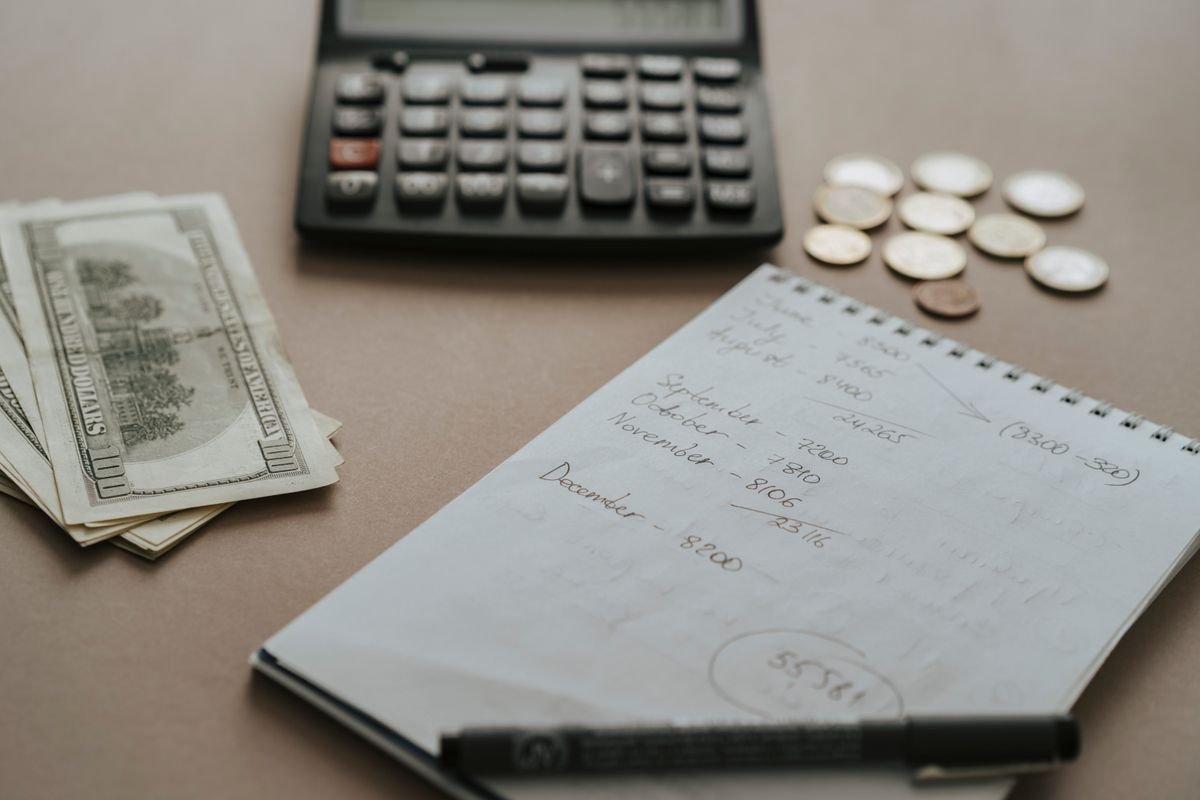
The notebook method is the simplest way to track your spending without a budgeting app, and it is the one most people stick with. All you need is a small notebook and a pen.
Set up the notebook in five minutes
Draw four columns on a fresh page: date, what you bought, category, and amount. Keep the categories short. Six is enough for most people: housing and bills, groceries, eating out, transport, fun, and everything else. Too many categories make logging feel like paperwork. Too few make the totals useless. Six gives you a clear picture without a chore.
Log every purchase the day you make it
Write down each purchase on the day it happens. A coffee, a bus fare, a grocery run, a subscription renewal. Two minutes in the evening is enough if you keep your receipts in one pocket and empty it each night. If you pay by card, check your banking app in the evening and copy the amounts across. The rule is simple: one place, every purchase, same day. Money you forget to write down is money you cannot see, and the habit breaks the moment you start guessing.
Do a weekly review
Once a week, add up each category. It takes about five minutes with a phone calculator. Then ask three questions. Which category surprised you? What could you easily reduce next week? What did you buy that you do not remember wanting? Write the answers under the totals. That short note is the most valuable part of the method, because it turns numbers into decisions. If eating out cost $180 and groceries cost $120, the fix is not a lecture. The fix is cooking two more dinners at home next week.
The notebook has one more advantage: it is private and distraction free. There are no ads, no upsells, and no notifications. You open it, write four numbers, and close it. Many people find that the physical act of writing makes spending feel real in a way that tapping a screen never does.
Method 2: The Spreadsheet Method
If you like totals and charts, a spreadsheet gives you the same method with automatic math. Google Sheets is free and works on any device. Excel works too if you already have it.
Build a one page tracker
Create a sheet with the same four columns as the notebook: date, what you bought, category, and amount. Add a small summary box at the top with one row per category and a SUMIF formula that adds up each category automatically. That is the whole build. You do not need a template with fifty tabs. A single page you actually open beats a complex system you avoid.
Log purchases in one daily check
Open the sheet once a day, usually in the evening, and add the day purchases. If you shop online, copy the amounts from your email confirmations. If you pay cash, keep the receipts and enter them the same night. The sheet does the adding, so your only job is entering honest numbers. At the end of the month, the category totals tell you exactly where the money went, and a simple bar chart makes the biggest category impossible to ignore.
Use the spreadsheet for the monthly review
The monthly review is where the spreadsheet earns its keep. Compare this month with last month. Did transport fall because you worked from home more? Did eating out rise because of a busy week? Look for the single biggest change and decide one action for next month. One action, not ten. Change one thing, watch the number move, and repeat. That slow loop is how tracking turns into saving.
A spreadsheet also handles shared money well. Couples and housemates can share one sheet, so everyone sees the same totals. Add a column for who paid, and the monthly split becomes a five minute job instead of an argument.
Method 3: The Phone Check Method
If you will not keep a notebook and you will not open a spreadsheet, use the phone check method. It takes ten minutes a week and needs no new tools at all.
Once a week, open your banking app and look at the last seven days of transactions. Write down the total you spent and the three biggest purchases. That is the whole method. You will not catch every coffee, but you will catch the pattern. If the three biggest purchases are all food delivery, you have found your leak. If a subscription renewed and you had forgotten it, you have found money to reclaim.
Pair the phone check with one extra habit: check your balance before any purchase over $50. This single pause stops most impulse buys, because it forces you to compare the price with what is actually in the account. People who do this for a month often report that their spending falls without any other change, simply because the pause makes the choice conscious.
The phone check method is the weakest of the three for detail, but it is the strongest for consistency, because it asks so little. If you have failed at every tracking system before, start here. Ten minutes a week is enough to change the picture.

How to Find Your Safe to Spend Number
Tracking tells you where the money went. The safe to spend number tells you what you can spend right now. It is the simplest calculation in personal finance, and it takes one minute.
Write down four numbers: the cash in your spending accounts, the bills due before your next payday, the amount you want to save this pay period, and a small cushion for surprises, say $100. Subtract the last three from the first. The result is your safe to spend number. If you have $3,400 in cash, $1,240 in bills, $400 for savings, and a $500 cushion, your safe to spend number is $1,260. That is what you can spend freely until payday without touching a bill or a goal.
Check this number on payday and glance at it midweek. It answers the only question that matters before a purchase: can I afford this right now? A budget app tries to answer that question with categories and alerts. A single number answers it faster, and you can do the math on a napkin.
If your safe to spend number is negative, that is useful information, not a reason to quit. It means the bills and the savings goal exceed the cash available, and something has to move. Usually the fastest fix is a short pause on non essential spending until payday, plus a hard look at the biggest bill category. The number does not judge you. It just tells the truth.
Common Leaks Worth Hunting
When you track for a month, a few leaks show up again and again. Here are the ones to check first.
- Subscriptions you forgot. Streaming services, cloud storage, apps with free trials that converted to paid plans. Check your bank statement for any charge you cannot name in five seconds.
- Food delivery fees. The meal is one cost. The delivery fee, the service fee, and the tip are often half as much again.
- Small daily purchases. Coffee, snacks, bottled water, and parking add up faster than any single big purchase.
- Automatic renewals. Annual charges for software, memberships, and insurance that renew silently. Put renewal dates in your calendar.
- Duplicate spending. Buying something you already own because you forgot you had it, especially pantry food, toiletries, and phone accessories.
- Interest and fees. Late fees, overdraft fees, and credit card interest are pure loss. A single late fee can exceed a week of coffee.
Fixing one leak is worth more than a month of perfect tracking. Cancel the subscription you do not use. Cook two more meals a week. Carry a water bottle. Each fix is small, but the savings repeat every month.
How to Keep the Habit Alive
Most tracking systems die in week three. The setup excitement fades, a busy day breaks the streak, and the notebook sits unopened. Here is how to keep it alive.
First, keep the system tiny. If logging takes more than two minutes a day, simplify it. Drop the categories to four. Log only the total each day instead of every item. A rough system you use beats a perfect system you abandon.
Second, tie logging to something you already do. Log purchases while the coffee brews in the morning, or while you wait for dinner to cook. Habits stick when they ride on an existing routine.
Third, review with kindness. The point of tracking is information, not punishment. If a week goes badly, write it down and move on. A bad week in the notebook is still data, and data is what makes next week better. People who quit tracking usually quit after a week they are embarrassed about. That is exactly the week the notebook is most useful.
Fourth, celebrate the wins. When your eating out total falls by $40 in a month, notice it. Move that $40 to savings the same day, so the win becomes visible. Small rewards keep habits alive far better than guilt.

When an App Actually Makes Sense
Honesty requires saying this: apps are not useless. If you run a small business, juggle multiple accounts, or need automatic categorization for taxes, an app or a spreadsheet with bank imports can save real time. The advice here is not anti app. It is anti complexity for people who just want to know where their money goes. If you try the notebook for a month and you hate writing, try an app. If you try an app and you hate the notifications, come back to the notebook. The best system is the one you still use in March, not the one with the most features in January.
Conclusion
Learning how to track your spending without a budgeting app comes down to one habit and one number. The habit is writing down what you spend, every day, in one place you trust, whether that place is a notebook, a spreadsheet, or a weekly phone check. The number is your safe to spend figure: cash minus bills minus savings minus a cushion. Together they replace guesswork with clarity, and clarity is what turns small leaks into real savings.
Start tonight. Take a notebook or open a blank spreadsheet, write down what you spent today, and add up the week so far. You may be surprised, and that surprise is the most valuable thing a tracking system can give you. For more money clarity, our guide on how to write a request for a refund email helps you recover money you are owed, and our guide on how to save money on groceries as a single person cuts the biggest weekly bill most people have.
Frequently Asked Questions
Can I track my spending without a budgeting app?
Yes. A notebook, a simple spreadsheet, or a weekly phone check all work. The method matters far less than the habit of recording every purchase in one place.
How much time does tracking take each week?
About ten minutes. Two minutes a day to log purchases, plus five minutes once a week to add up categories and review the totals.
What categories should I use?
Start with six: housing and bills, groceries, eating out, transport, fun, and everything else. Fewer categories keep logging quick, and six is enough to spot the leaks.
What if I miss a few days of logging?
Do not quit. Open your banking app, copy the missing purchases from the transaction list, and carry on. A gap in the data is not a failure, and guessing is worse than a short gap.
How long before tracking saves me money?
Most people see the first saving within a month, usually from cancelling a forgotten subscription or cutting one repeated purchase. The bigger savings build over three to six months as the habit sticks.