Picture this. You are 58 years old, standing at the edge of a small court in a Florida park, watching four people about your age laugh their way through a rally. The ball moves slowly enough to follow. Nobody is sprinting. Nobody is gasping for air. When the rally ends, everyone is smiling, and one of them waves you over and says, come and try it. That moment is how thousands of Americans over 50 discover pickleball every single week, and it is exactly where this guide begins. If you want to know how to start playing pickleball as a complete beginner over 50, you are in the right place, and the honest answer is simpler than you expect. You need a light paddle, proper court shoes, one beginner clinic, and a willingness to look slightly clumsy for your first three games. Everything else can wait.
This guide tells the full story. You will learn what pickleball actually is, what gear matters and what is a waste of money, the rules in plain language, a four week plan for your first month, and how to protect your knees, shoulders and back while you play. No jargon, no pressure, and no need to have played any racket sport before.
How to start playing pickleball as a complete beginner over 50: the short answer
Start with a beginner clinic or an open play session at your local YMCA, park or recreation center. Borrow or rent a paddle for your first visit so you can feel the weight before you buy one. Wear court shoes, not running shoes. Learn the serve, the two bounce rule and the kitchen rule in your first session, then play doubles, because doubles means less running and more laughing. Keep your first sessions to about an hour, warm up for ten minutes, and drink water before you feel thirsty. That is the whole recipe. The rest of this guide fills in the details so your first month feels easy instead of confusing.
Why pickleball fits life after 50 so well
Pickleball was invented in 1965 on Bainbridge Island in Washington, when three fathers wanted a backyard game their bored children could play. Sixty years later it has become the fastest growing sport in the United States, and its biggest group of players is adults over 50. That is not an accident. The sport was almost designed for this stage of life.
First, the court is small. A pickleball court measures 20 feet wide by 44 feet long, about a quarter of the size of a tennis court. You cover far less ground on every point, which means your knees and hips work less hard and you can play a full game without feeling wiped out. Second, the ball is light and full of holes, so it travels slowly through the air. You have time to watch it, move into position and swing without rushing. Third, the paddle is short and light, usually between 7 and 8 ounces, so it puts far less strain on your elbow and shoulder than a tennis racket. And fourth, most games are doubles, so you share the court with a partner and the social side is built into the game itself.
There is also a mental benefit that regular players talk about more than the exercise. Pickleball is a thinking game. Placement beats power almost every time, so a careful 62 year old who puts the ball where opponents are not standing will beat a strong 30 year old who hits everything hard. That levels the playing field in a way few sports manage, and it keeps the game interesting for years.
What pickleball actually is
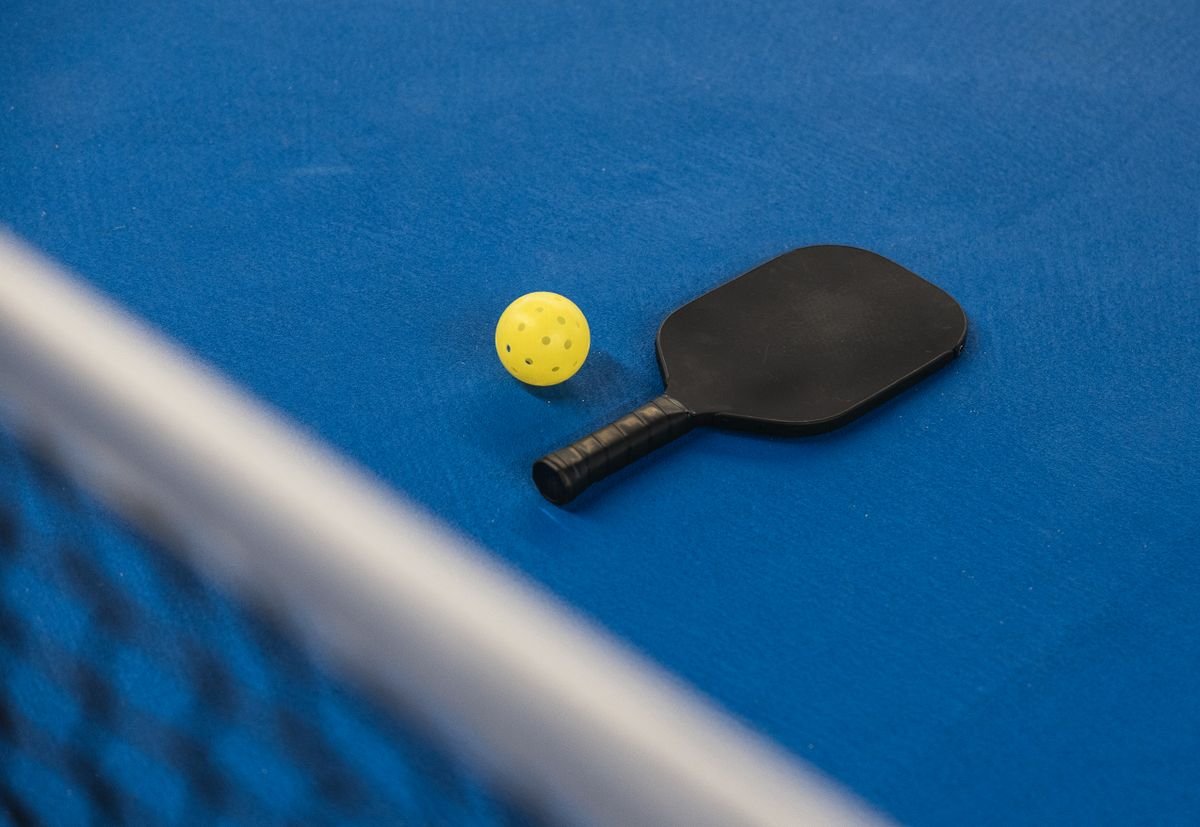
If you have never seen a game, here is the picture. Two or four players stand on opposite sides of a net that is 36 inches high at the sidelines and 34 inches high in the middle. They hit a plastic ball with holes back and forth over the net using solid paddles. The ball must bounce once on each side after the serve before anyone is allowed to volley, which means hit it out of the air. That is the two bounce rule, and it is the single most important rule for beginners.
There is a seven foot zone on each side of the net called the kitchen, or the non volley zone. You cannot volley while standing inside it. You can step into it to hit a ball after it bounces, but you must step out again before you volley. This rule stops players from crowding the net and smashing every ball, and it is the reason rallies last longer and the game feels friendlier than tennis.
Games are usually played to 11 points, and you must win by 2. Only the serving team can score. Serves are underhand, hit diagonally into the opposite service box, and the server must keep one foot behind the baseline. That sounds like a lot to remember, and it is, for about twenty minutes. After your first clinic, the rules start to feel natural, because you learn them by doing, not by reading.
One more thing surprises most newcomers. The ball makes a distinctive popping sound when it hits a paddle, and courts are often noisy with chatter and laughter. Pickleball is a social sport first and a competitive sport second, especially at the recreational level where you will be playing.
The gear you need, and what you can skip
You do not need to spend much to start. A sensible beginner setup costs between 100 and 150 dollars in total, and you can start for far less if you borrow a paddle for your first session. Here is what actually matters.
A light paddle
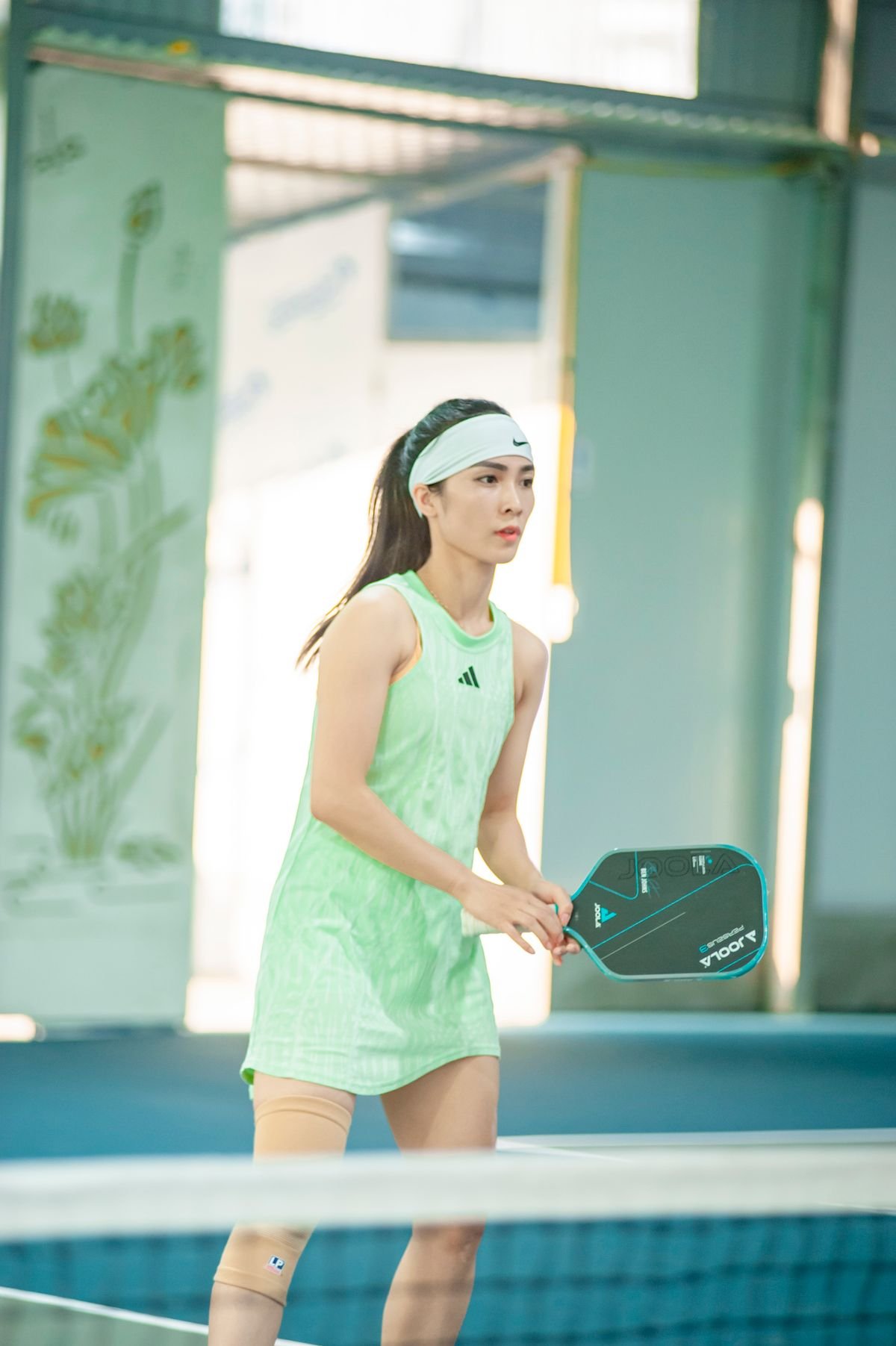
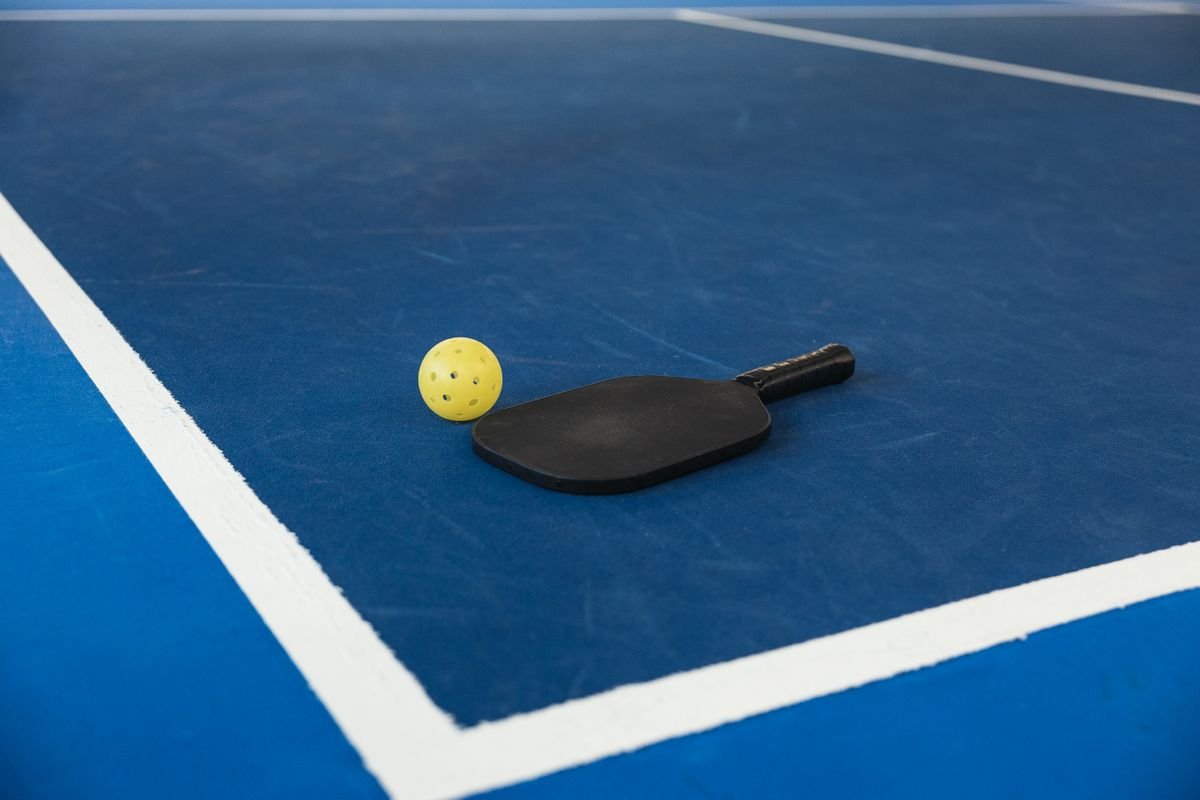
Your paddle is the one purchase worth thinking about. Look for a paddle that weighs between 7.2 and 7.8 ounces, with a polymer core and a grip around 4.25 inches. A paddle heavier than 8 ounces will tire your arm quickly and is the most common cause of elbow soreness in new players. A grip that is too thin makes you squeeze harder, which tires your forearm, so if you have arthritis or a weaker grip, a slightly thicker handle is more comfortable. Do not buy an expensive paddle until you know you enjoy the sport. A composite paddle in the 30 to 60 dollar range is perfectly good for your first six to twelve months.
Court shoes, not running shoes
This is the one item you should not compromise on. Running shoes are built for forward motion. Pickleball involves constant side to side movement, quick stops and short lunges, and running shoes offer almost no lateral support. The wrong shoes are one of the leading causes of rolled ankles on court. Buy real court shoes with a flat sole, good lateral support and a non marking tread. Tennis shoes or pickleball specific shoes both work, and several reliable pairs cost between 50 and 100 dollars.
Balls and the indoor outdoor difference
Outdoor balls have about 40 smaller holes and are harder, because they need to stand up to wind. Indoor balls have about 26 larger holes, are softer and bounce more slowly, which gives you more time to react. If you play indoors at a gym or community center, use indoor balls. If you play outside, use outdoor balls. A pack of six costs about 10 dollars.
What to skip for now
Skip the fancy paddle bag, the vibration dampeners, the grip tape collection and the expensive branded clothing. Skip a second paddle until you have played at least ten sessions. Comfortable athletic clothes you already own are fine. Bring a water bottle, a small towel and sunscreen if you play outdoors. That is everything you need.
Learn the rules in one afternoon
Most beginners learn the rules in a single clinic, and many recreation centers offer a free or cheap beginner orientation that covers them all. If you would rather learn before you arrive, here are the essentials in plain language.
The serve starts every rally. Stand behind the baseline, drop the ball and hit it underhand in an upward arc, diagonally into the opposite service box. The ball must clear the net and land in the service box. If it lands outside the box, in the net or in the kitchen, it is a fault and the serve passes to your partner or to the other team.
After the serve, each side must let the ball bounce once before hitting it. That is the two bounce rule. The receiving team lets the serve bounce, returns it, and then the serving team must let that return bounce too. After those two bounces, players can volley or let the ball bounce, as they prefer.
The kitchen rule is the one beginners forget most often, and it causes the most friendly arguments on court. You cannot volley while any part of your body is inside the seven foot non volley zone or touching its line. You can stand in the kitchen to play a ball that has bounced, but step out before you volley. If your momentum carries you into the kitchen after a volley, that is also a fault, so plant your feet carefully near the line.
Scoring confuses everyone at first, so do not worry about it. Only the serving team scores points. In doubles, each player on a team serves in turn before the serve passes to the other team, except at the very start of the game when only the first server serves. Games go to 11 points and you must win by 2. Most open play groups will happily explain the score as you go, and after three or four games you will be calling it yourself without thinking.
Your first month, week by week
A little structure makes the first month far more enjoyable than simply turning up and hoping for the best. Here is a simple plan that works for most new players over 50.
Week one: one clinic and one open play session
Book a beginner clinic at your local YMCA, park district or pickleball club. A single group clinic teaches you the rules, the basic shots and court etiquette far faster than figuring it out alone. Then attend one open play session, which is also called drop in play. Open play is where recreational players show up and rotate in for games, and it is the fastest way to build skills and meet the local community. Play for about an hour and stop while you still feel good.
Week two: practise the three shots that matter
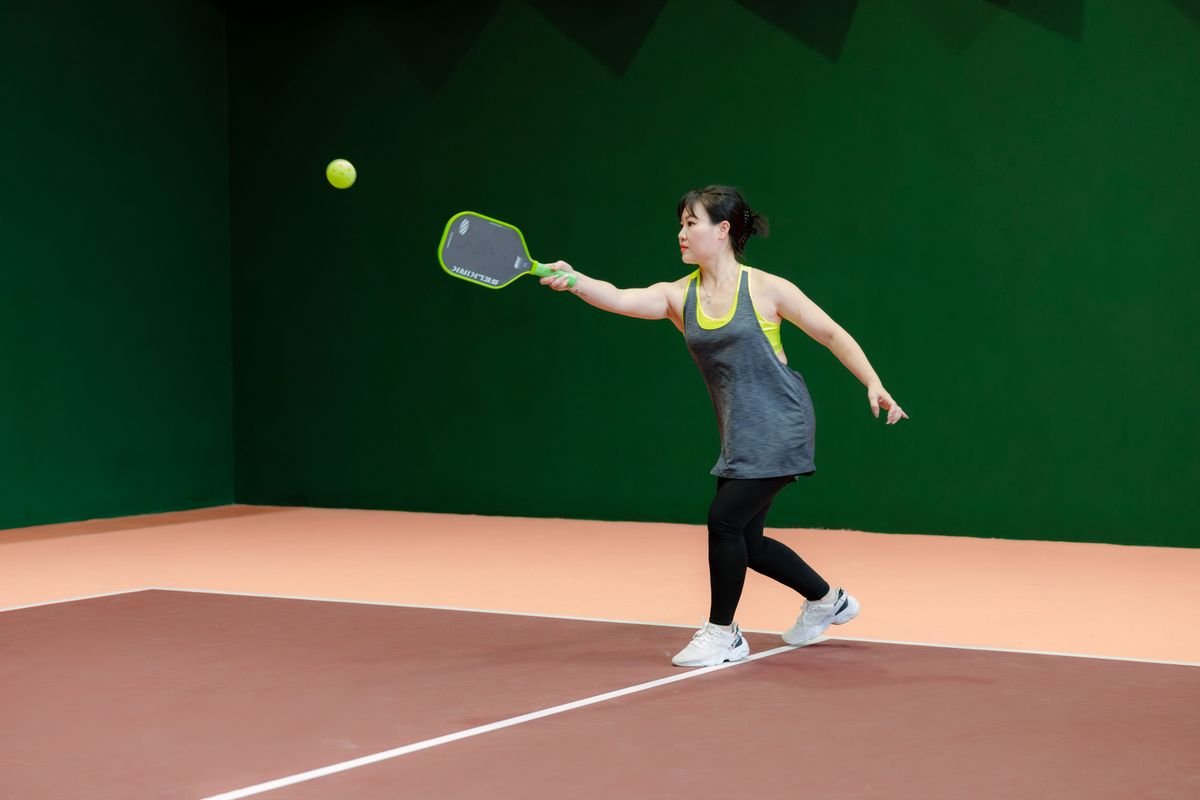
You only need three shots to enjoy your first games. The serve, a soft dink into the kitchen, and a steady groundstroke from the baseline. Spend ten minutes before open play practising the dink, which is a gentle shot that arcs just over the net and lands in the kitchen. The dink is the heart of pickleball, and players who learn it early improve faster than players who only hit hard. Keep sessions to an hour, two or three times a week, and build up gradually.
Week three: play doubles and learn positioning
In doubles, the best place to stand is near the kitchen line, side by side with your partner, after the two bounce rule has been satisfied. Move together as a pair, like a wall. Call the ball early, using simple words like mine or yours, so you and your partner never both chase the same shot. If you are unsure, let your partner take balls down the middle with their forehand, which is usually the stronger shot.
Week four: join a league or a regular group
By now you will know whether you love the game, and most people do. A recreational league gives you consistent partners, structure and a reason to practise. Many areas run 50 plus, 60 plus and 70 plus age division leagues, so you will play against people at a similar stage of life. If a league feels too formal, simply become a regular at the same open play session each week. Familiar faces, a regular game and a standing invitation are what turn pickleball from an activity into a habit.
Stay safe on court after 50
Pickleball is gentle compared with most racket sports, but it is still a sport, and a little care goes a long way. The most common injuries among older beginners are ankle sprains, knee strains, tennis elbow and falls, and almost all of them are preventable.
Always warm up for ten minutes before you play. Walk briskly for a few minutes, then do easy leg swings, arm circles and gentle side steps. A proper warm up raises your body temperature, loosens your joints and prepares your muscles for quick movements. Skipping it is the single biggest mistake new players make, especially in the morning when muscles are stiff. A good warm up also protects your legs, and if you have ever dealt with leg pain from activity, our guide on how to stop shin splints when running downhill explains the same principles of gradual loading and proper footwear that apply on court.
Never backpedal. If someone lobs the ball over your head, turn sideways and shuffle, or let your partner take it. Backpedalling is the most common cause of falls in pickleball, and a fall at 60 hurts far more than a lost point. Play within your range, avoid overreaching for balls outside your comfortable reach, and sit out a rally if you feel dizzy, short of breath or unusually tired.
Stay hydrated and avoid the hottest part of the day if you play outdoors. Drink water before your session, keep a bottle at the side of the court, and sip between games. Dehydration can bring on headaches and fatigue that spoil an otherwise lovely morning, and if you are prone to headaches after exercise, you may find our guide on how to get rid of a tension headache without medicine useful for simple relief strategies that do not involve medication.
Finally, talk to your doctor before you start if you have not exercised in a while, or if you have heart, blood pressure, joint or balance issues. This guide offers general tips, not medical advice. If you feel chest pain, dizziness, unusual shortness of breath or joint pain that will not settle, stop playing and see a healthcare professional.
Finding games and people near you
The hardest part of starting pickleball is often finding where to play, and the good news is that courts are now almost everywhere in the United States. Start with your local parks and recreation department, which usually lists courts, open play times and beginner clinics on its website. YMCAs and community centers are another excellent starting point, and many offer free introductory sessions for members. Churches, retirement communities and homeowners associations increasingly run their own groups too.
Online tools help as well. USA Pickleball, the sport’s national governing body, keeps a directory of places to play, and apps like Playtime Scheduler let you find open play sessions in your area and sign up in advance. Local Facebook groups are often the liveliest source of information, with players posting about new courts, social games and spare paddle offers. Ask at a sporting goods store as well, since staff usually know the local scene.
When you arrive, introduce yourself as a beginner. Pickleball culture is famously welcoming, and experienced players expect newcomers and enjoy helping them. Most groups rotate partners between games, so you will meet several people in your first session. Bring a smile, a willingness to learn and a sense of humour about your early mistakes, and you will be invited back. The social side is a genuine health benefit in itself, and group activity keeps people coming back long after the novelty fades. If you enjoy exercising with others, our list of the best group exercises at home offers more ways to stay active with friends between court sessions.
Common beginner mistakes, and how to avoid them
Every beginner makes the same handful of mistakes, and knowing them in advance saves you weeks of frustration. First, do not try to hit every ball hard. Power feels satisfying, but placement wins rallies. A soft, well placed dink is worth far more than a hard drive that sails out of bounds. Second, do not stand at the baseline all game. The kitchen line is where most points are won, so move up after the two bounce rule is satisfied and hold your position there.
Third, do not use running shoes. We have said it before, and it bears repeating, because court shoes are the cheapest injury insurance you can buy. Fourth, do not skip the warm up, and do not play for three hours on your first day. Enthusiasm is wonderful, but your body needs time to adapt, and an hour is plenty at the start. Fifth, do not rate yourself too highly when you join a group. Play one level lower than you think you belong, and you will enjoy better matches, less frustration and faster improvement.
Finally, do not worry about looking foolish. Every player on every court was a beginner once, and most of them remember their first week vividly. The people who improve fastest are not the most athletic. They are the ones who show up regularly, ask questions and laugh at their own mistakes.
Conclusion: your first game is closer than you think
Learning how to start playing pickleball as a complete beginner over 50 comes down to three simple ideas. The sport is genuinely easy to learn, because the court is small, the ball is slow and the rules fit on a single page. The gear is simple and affordable, with a light paddle and proper court shoes mattering far more than anything expensive. And the community does most of the work for you, because clinics, open play and welcoming regulars turn a first visit into a weekly habit. Your first game is probably one phone call to your local recreation center away, and your only real regret is likely to be that you did not start a year earlier. Pick up a paddle, find a beginner session this week, and give yourself the gift of a sport you can enjoy for decades.
Frequently asked questions
Is pickleball good exercise for people over 50?
Yes. It provides moderate aerobic exercise, improves balance, coordination and agility, and strengthens leg and core muscles, all on a small court that limits joint stress. An hour of doubles burns roughly 350 to 450 calories, and because it is fun, most players exercise longer than they would in a gym.
Do I need to have played tennis to learn pickleball?
No. Many of the best senior players never played tennis. The paddle is shorter and lighter, the ball moves more slowly, and the rules are simpler. A background in any racket sport helps slightly, but complete beginners often learn faster because they have no bad habits to unlearn.
How much does it cost to start playing pickleball after 50?
A beginner setup of a paddle, balls and court shoes costs about 100 to 150 dollars. Many recreation centers lend paddles for free at beginner clinics, and open play sessions usually cost between 3 and 10 dollars. Court shoes are the one item worth buying first.
Is pickleball hard on knees and joints?
It is far gentler than tennis, running or basketball, because the court is small and the ball is light. Most joint problems come from the wrong shoes, skipping the warm up, or backpedalling for lobs. Court shoes, a ten minute warm up and sensible movement keep the risk low for most players.
Where can I find beginner pickleball lessons near me?
Check your local parks and recreation department, YMCA or community center first, as most run beginner clinics and open play. USA Pickleball keeps a directory of places to play, and apps like Playtime Scheduler list open sessions in your area. Local Facebook groups are also a lively source of games and lessons.