When Sara moved into her first apartment in Denver, the pantry was a single cabinet above the stove. Two shelves, one narrow door, and a habit of swallowing groceries whole. She would buy pasta on sale, slide it onto a shelf, and forget it existed. Cans tumbled forward every time she reached for the rice. One Saturday she found three open bags of flour, two of them stale, and a can of soup that had expired in 2023. She had spent good money on food she never ate, and she decided that weekend that the cabinet had to change. She gave herself a budget of 60 dollars and one afternoon. By Sunday night, every item had a place, she could see what she owned at a glance, and she had spent only 23 dollars. This guide follows the same method she used, and it works because it starts with decisions, not shopping.
Learning how to organize a small pantry on a budget is mostly about honesty. A small pantry punishes guesswork. Every inch matters, so every item has to earn its spot. The good news is that the fix costs far less than most people expect. The expensive part of pantry organization is not the containers. It is the habit of buying storage before knowing what needs storing. Do the thinking first, spend second, and a small pantry can feel twice as big without a single renovation.
How to Organize a Small Pantry on a Budget: The Method That Works
The method has three main points, and they matter in this order. First, empty the pantry completely and take stock of what you actually own. Second, group food by how you use it and give each group a fixed zone. Third, use free containers first and buy only the few organizers that solve a named problem. Skip any of these steps and the system falls apart within a month. Follow them in order and the pantry mostly takes care of itself.
This approach works for renters, for shared kitchens, and for anyone whose pantry is one cabinet or a narrow closet. It does not need matching containers, a label maker, or a weekend of crafting. It needs one afternoon, a trash bag, a marker, and the willingness to throw away food that will never get eaten.
Start With a Full Empty Out and a Real Inventory
Take everything out. Every shelf, every bag, every jar. It feels dramatic, and that is the point. You cannot judge what you own while half of it hides behind the front row. Lay it all on the kitchen counter and the table. Wipe each shelf while it is bare. A damp cloth and a little dish soap are enough, and clean shelves make the fresh start feel real.
Now sort into four piles. Keep, donate, toss, and relocate. Keep means food you will eat in the next month. Donate means unopened food you will not use, which can go to a local food bank. Toss means anything expired, stale, or open and forgotten. Relocate means items that do not belong in a pantry at all, like cleaning supplies, batteries, or pet food. The relocate pile is usually bigger than people expect. Pantries collect strays, and every stray takes space from food.
Check every date as you sort. The average American pantry holds 80 to 150 dollars of expired food at any given time, and most of it expired quietly months ago. Sara found soup, crackers, and a bag of brown sugar that had turned into a brick. Throwing it away stung, but keeping it was worse. Expired food is not a bargain. It is clutter that blocks food you would actually cook with.
Count duplicates while you sort. Three open boxes of the same pasta, two half used bags of rice, four jars of peanut butter with a spoonful left in each. Combine what you can, use up the small amounts first, and write the duplicates on a list. That list is your shopping ban. You do not buy pasta again until the pantry says you are out. The same keep, donate, and toss thinking works beyond the kitchen, and if your closet needs the same honest clear out, our guide on how to declutter your closet in one weekend follows the same method.
Before anything goes back, measure the shelves. Write down the width, the depth, and the clear height between shelves. A shelf that is 16 inches deep takes one 15 inch bin or two rows of jars. A shelf with only 10 inches of clearance cannot hold a tall cereal container. Measurements stop the most common budget mistake, which is buying organizers that do not fit and cannot be returned once opened. Keep the numbers on your phone. You will use them in the store.
Group Food by How You Use It, Not by Type
Most people organize a pantry by food type. All the cans together, all the pasta together, all the snacks together. It looks tidy in a photo, and it fails in real life. You do not cook by food type. You cook by meal. Breakfast things get used together. Baking things get used together. A taco night pulls from three different type groups. When food is grouped by use, you grab one zone and dinner is half planned.
Think about your own week. What do you reach for every morning? Coffee, tea, oats, cereal, honey, peanut butter. That is a breakfast zone. What do you grab for quick dinners? Pasta, jarred sauce, canned beans, rice, taco seasoning. That is a dinner zone. Baking supplies, snacks, canned goods, oils and sauces, and backup stock each get their own zone. Five or six zones cover almost every household.
The Five Zones That Work in Almost Any Small Pantry
Put daily items between waist and shoulder height, roughly 30 to 60 inches from the floor. This is the easy reach zone, and it belongs to breakfast and everyday cooking. Heavy items go low. Cans, large bags of rice, and bottles of oil are easier to lift from a low shelf than from above your head. Light and rarely used items go high. Holiday baking supplies, the extra slow cooker liner box, the specialty flour you use twice a year. Kids snacks go on a low shelf they can reach without climbing, which also keeps small hands out of the baking supplies.
Give each zone a clear edge. A zone can be one shelf, half a shelf, or a single bin. The edge matters more than the size. When zones blur, food drifts. When zones hold, anyone in the house can put groceries away correctly, including a partner, a roommate, or a teenager who has never read an organization article in their life.
Small spaces reward this kind of thinking everywhere, not just in the kitchen. The same zone logic that sorts a pantry can make a cramped room feel larger, and our guide on how to make a small living room feel bigger without renovating shows how grouping by use changes a whole room.
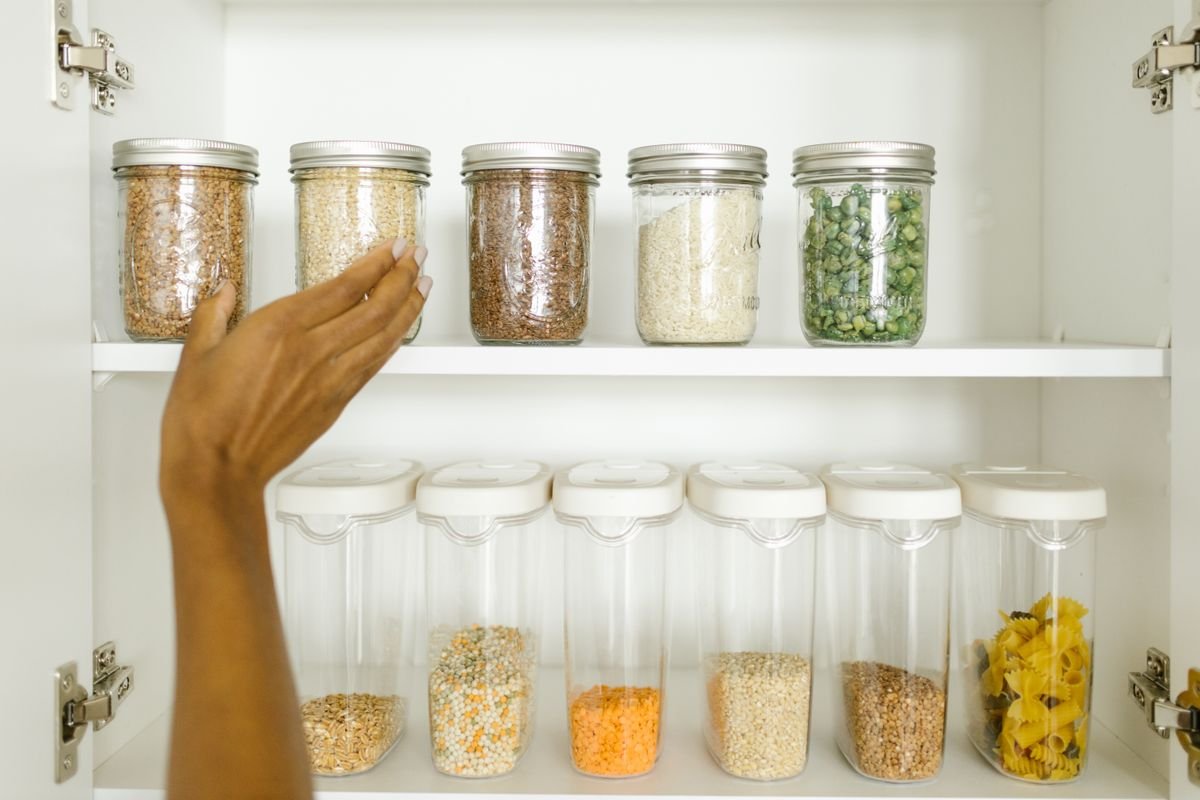
One more rule makes zones stick. Keep only one of each staple open at a time. One open bag of rice, one open box of pasta, one open jar of peanut butter. Backups live in a separate backup zone, usually the highest or lowest shelf. When the open one runs out, you promote a backup. This single rule stops the duplicate sprawl that fills small pantries with half used bags.
Use Free Containers First Before You Buy Anything
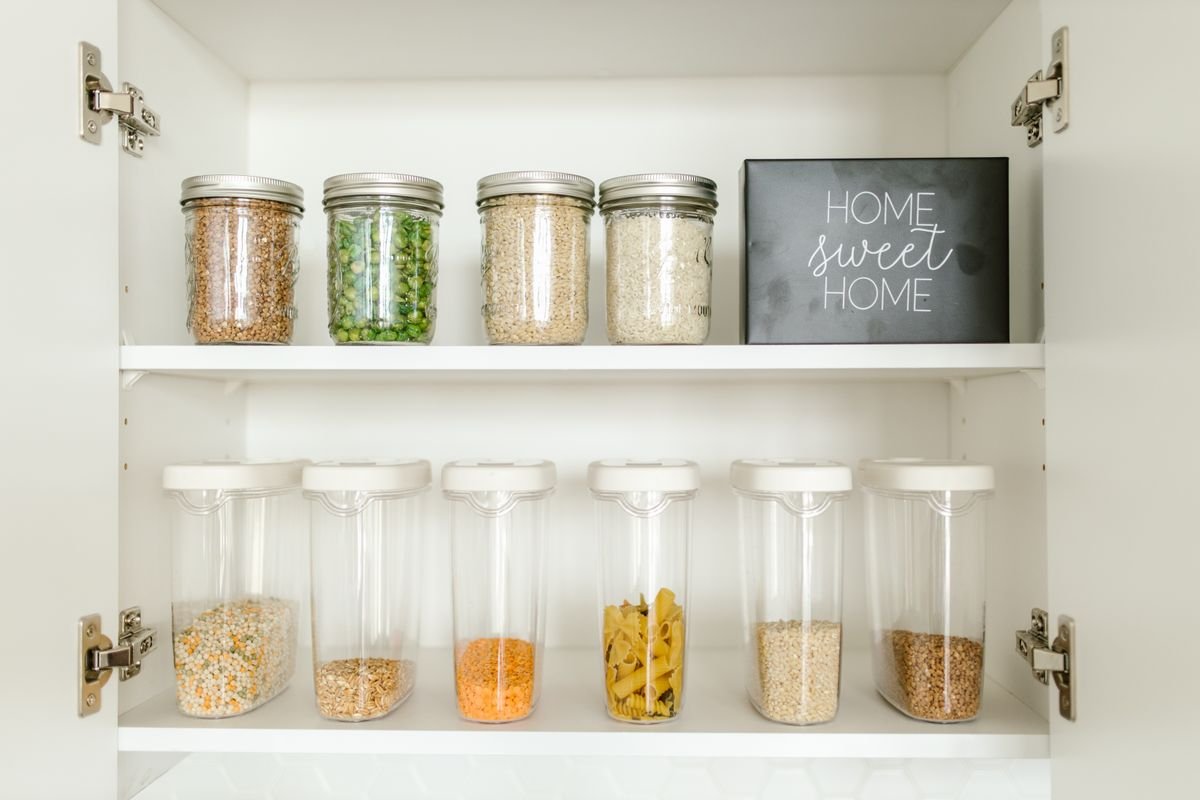
Here is where the budget part gets real. Before you spend a dollar, raid your own house. Clean glass jars from pasta sauce, pickles, and jam make excellent storage for rice, oats, lentils, and flour. A washed jar with a tight lid is airtight enough for dry goods, and it costs nothing. Cardboard boxes from deliveries can be cut down to tray height and used as bins for packets and small bags. A shoebox makes a fine pull out drawer on a deep shelf. A cereal box cut on a slant holds spice packets upright.
Test the system with free containers for a week before buying anything. Live with the zones. Notice what actually annoys you. Maybe cans keep sliding to the back. Maybe spice jars vanish behind the cereal. Maybe the snack bags pile up and fall. Each annoyance points to one specific purchase. A purchase without an annoyance behind it is decoration, and decoration is how pantry budgets disappear.
Sara spent her first pass with jars she already owned and two cut down delivery boxes. The pantry already looked better, and she could see exactly what was missing. She needed one riser for the cans and one turntable for the deep corner. That was it. Two purchases, 23 dollars total, and the system worked. If she had shopped first, she would have come home with a matching set of containers for problems she did not have.
Buy Only the Organizers That Fix a Named Problem
When you do shop, buy for the problem, not for the photo. A shelf riser costs 8 to 15 dollars for a pack of two and doubles the usable space on a tall shelf by lifting the back row of cans so you can read the labels. A turntable costs 10 to 20 dollars and turns a deep corner from a black hole into a spin and grab spot. Clear bins with handles cost 3 to 6 dollars each and act like drawers on deep shelves, so you pull the whole category forward instead of digging.
Uniform containers earn their money only for staples you buy in bulk. Flour, sugar, rice, oats, and pasta stay fresher in airtight containers, and you can see at a glance when you are running low. A set of four or five costs 25 to 40 dollars. Buy them for the staples you use every week, not for everything. Decanting a spice you use twice a year into a matching jar is a hobby, not organization. It looks lovely and helps nobody.
Skip the label maker on the first pass. Masking tape and a marker cost almost nothing, and they are easy to change when zones shift. Skip matching baskets in three sizes, skip the over door rack until you know the door can hold it, and skip the fancy spice rack until you have counted your spices. Every skipped purchase is money that stays in your grocery budget, where it does more good.
A realistic budget for a genuinely small pantry is 20 to 100 dollars, spent over weeks rather than in one trip. The free tier alone improves most pantries by a third, because emptying, sorting, and zoning cost nothing and fix the biggest problems. The 10 to 30 dollar tier adds one or two risers and a few bins. The 50 to 100 dollar tier adds matching containers for staples and a turntable. Start at the free tier and climb only when a named problem tells you to.
Label Everything So the System Survives Real Life
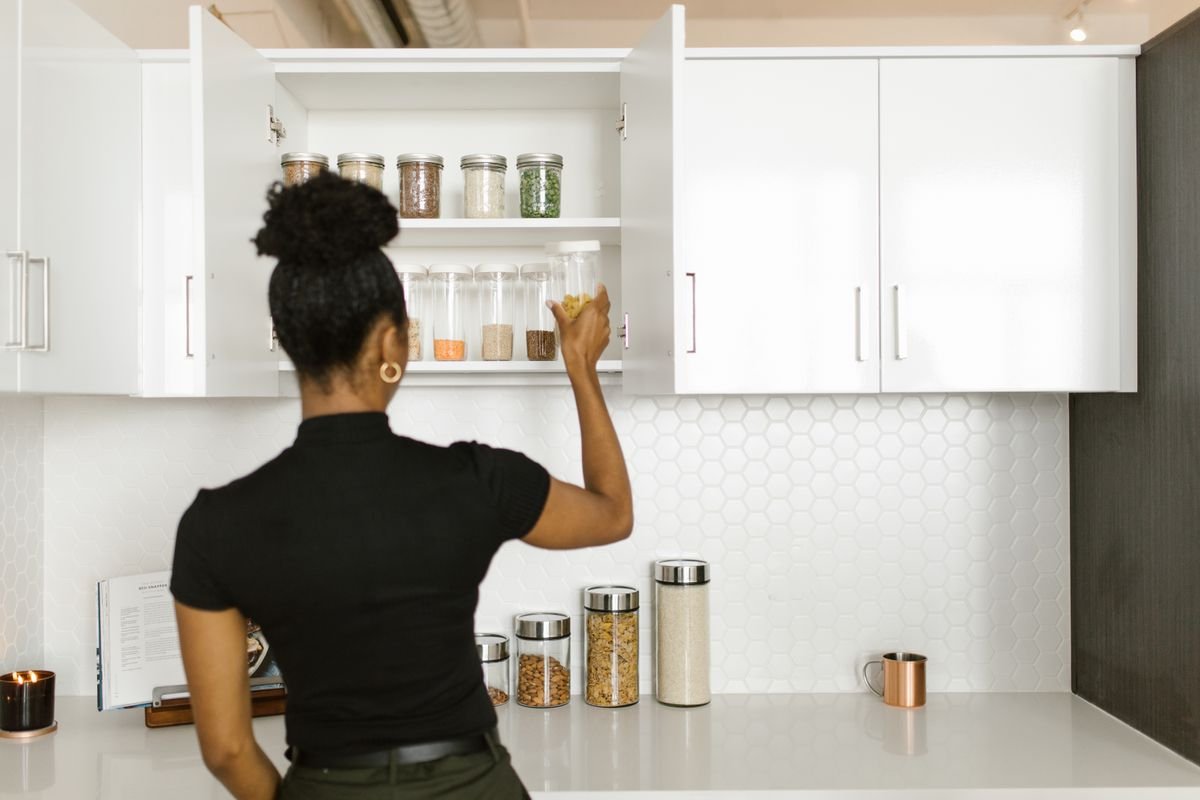
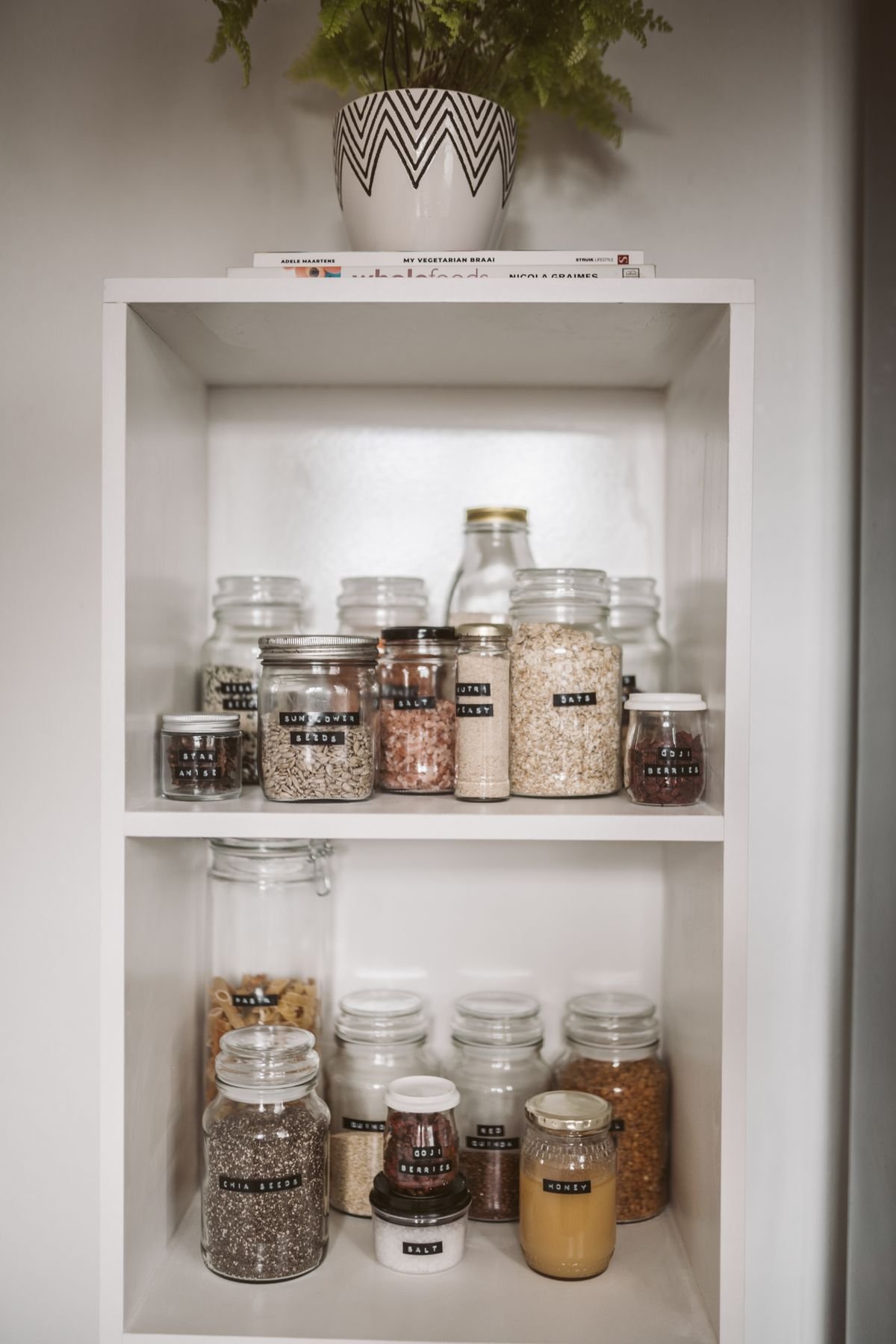
Labels are the difference between a pantry that stays organized and one that slides back into chaos by February. Label the bin, not just the jar. Label the shelf edge too, so food goes back where it belongs even when someone else puts the groceries away. A label that says breakfast on a bin tells a tired person at 7 in the morning exactly where the oats live.
Write the date you decanted something onto the label. Flour bought in November and decanted in January is not the same as flour decanted last week. A small date keeps you honest about freshness, and it stops the mystery jar problem where nobody knows what is inside or how long it has been there. For spices, write the month you opened them. Ground spices lose their punch after about a year, and a date tells you when to replace them instead of guessing.
Keep labels simple and big enough to read from a step back. One or two words beat a paragraph. Rice, oats, baking, snacks, cans. If a label needs a sentence to make sense, the zone is too complicated. Simplify the zone instead of lengthening the label.
Keep It Working With a Five Minute Weekly Reset
Organization is not a one time event. It is a habit that takes five minutes a week. Pick a day, Sunday evening works for most people, and run the reset. Pull forward anything that drifted to the back. Toss anything that expired. Move new groceries behind older ones so the oldest gets used first. Check the shopping list against what is actually on the shelves. Five minutes, once a week, and the pantry never needs another dramatic empty out.
Tie the reset to something you already do. Sara does hers while the kettle boils for Sunday tea. The pantry reset and the meal plan happen together, and the plan gets easier because she can see what she owns. If you plan meals from the pantry instead of from memory, you waste less food and spend less at the store. Our guide on how to plan a weekly meal prep routine for a small household pairs well with the reset, because both start with an honest look at what is already in the house.
When groceries come home, put them away by zone, not by bag. New items go behind older ones. Open only one of each staple. If something does not have a zone, it does not go on a shelf. It waits on the counter until you decide where it lives. This rule sounds strict, and it is the rule that keeps the system alive. A pantry with a rule for strays stays organized. A pantry without one fills up again in a month.
What to Skip When Money Is Tight
Some pantry purchases look essential in a store and do nothing at home. Matching containers for every single item top the list. You do not need a uniform jar for the bag of chocolate chips you buy twice a year. Skip the specialty organizers sold for one food, like a single use egg holder or a gadget that stacks cans in a spiral. A simple riser does the same job for less money and works for more foods.
Skip buying in bulk to fill new containers. New bins invite new shopping, and a pantry organized on a budget should shrink your grocery bill, not grow it. Buy food because you have a meal planned for it, not because a container has empty space. Empty space in a pantry is not a failure. It is room to see what you own.
Skip the full matching set sold as a kit. Kits bundle pieces you need with pieces you do not, and the pieces you do not need become clutter in a different form. Buy one piece, live with it for two weeks, then decide if you need another. Slow buying beats fast buying every time in a small space.
A Simple 50 Dollar Starter Shopping List
If your free pass showed you need a few things, here is a sensible starter list that stays near 50 dollars at a discount store or online. Two shelf risers for 15 dollars. One turntable for 12 dollars. Three clear bins with handles for 15 dollars. A roll of masking tape and a marker for 5 dollars. That leaves a few dollars spare for one extra bin or a small set of spice jars if your spices are the problem.
Adjust the list to your named problems. Deep shelves need bins more than risers. Tall shelves need risers more than bins. A pantry full of spices needs a small stepped spice rack, which costs about 10 dollars, more than it needs a turntable. Your measurements and your annoyance list decide the purchase, not a generic list. Use this list as a starting point and cross off anything that does not match a problem you actually have.
Conclusion
Sara still has the same single cabinet above the stove in Denver. Nothing about the kitchen changed except the system inside it. She knows what she owns, she cooks from the pantry before she shops, and she has not found an expired can since that first clear out. The total spend was 23 dollars and one afternoon. That is the real lesson of learning how to organize a small pantry on a budget. The budget is not the hard part. The honest empty out is. Empty the shelves, sort with a clear head, group food by how you cook, use free containers first, and buy only what fixes a named problem. Do that, keep the five minute weekly reset, and a small pantry stops being a daily frustration and starts being the easiest room in the house to manage.
Frequently Asked Questions
How much does it cost to organize a small pantry?
Most small pantries can be organized for 20 to 100 dollars. The free first pass with jars and boxes you already own often fixes the biggest problems, and one or two risers plus a few bins cover the rest.
What containers work best in a small pantry?
Clear bins with handles work best for deep shelves, and airtight glass jars work best for staples you buy in bulk like rice, oats, flour, and pasta. Use free jars first and buy containers only for staples you use every week.
How do I organize a pantry with deep shelves?
Use bins as pull out drawers, one category per bin, so you slide the whole group forward instead of digging. Add a turntable for corners and a riser for cans, and keep only one of each staple open at a time.
Should I take everything out of the pantry first?
Yes. Emptying every shelf is the only way to see duplicates, expired food, and items that do not belong in the pantry. Sort on the counter, wipe the shelves, measure them, and put back only what earns a zone.
How often should I clean out my pantry?
Do a full clear out once or twice a year, and run a five minute reset once a week. The weekly reset pulls items forward, tosses expired food, and keeps new groceries behind older stock.