Maya sets three alarms every morning and still drags herself out of bed feeling like she never slept at all. She works as a nurse in Chicago, and she hates the idea of wearing a watch to bed. The strap itches, the glow wakes her up, and one more gadget tracking her life feels like too much. She still wants answers. She wants to know why some nights leave her clear headed while others leave her foggy by lunch. If that sounds familiar, here is the good news. You can learn how to track sleep quality without a wearable device, and you can do it with a notebook, a pen, and two minutes each morning.
This guide shows you the exact method. You will keep a simple paper diary for two weeks, you will rate how you feel at 10am, and you will look for patterns instead of chasing a nightly score. The stance here is simple. Start with the diary. Buy a device only when the diary raises a question that only a device can answer.
What Sleep Quality Really Means
Most people talk about sleep as if it were one number, usually hours in bed. Hours matter, but they tell only part of the story. Sleep quality means how well your sleep restores you. Eight hours in bed can still leave you groggy, while seven hours can leave you sharp. The difference sits in how fast you fall asleep, how often you wake up, and how you feel the next day. A wearable tries to guess those things from movement and heart rate. Your own notes capture them directly, and your own notes cost nothing.
The Centers for Disease Control and Prevention, known as the CDC, advises adults to get seven or more hours of sleep each night on a regular basis. That guidance is a starting point, not a verdict. Some people feel great on seven hours, others need eight or nine. Think of sleep quality as four questions you can answer every morning. Did you fall asleep without a long struggle. Did you stay asleep with few wake ups. Did you wake up feeling rested. Did your energy hold up through the afternoon. If you can answer those questions honestly for two weeks, you know more about your sleep than any single night of gadget data can tell you.
Why a Diary Beats a Gadget for Most People
A gadget promises answers without effort. You wear it, you sync it, and a score appears. The trouble starts when the score and your body disagree. You feel great and the app says your sleep was poor. You feel awful and the app gives you a high score. Now you trust a number more than your own body, and that is a strange trade. A diary keeps the judgment with you, where it belongs.
A diary also costs nothing, needs no charging, never loses signal, and never wakes you up with a buzz at 3am. It records the things a sensor cannot see. A sensor cannot tell that you argued with your partner, that you drank two glasses of wine, or that you finished a stressful project at midnight. Your diary can, and those details are usually the reason a night went well or badly. Writing down your sleep each morning takes about two minutes, and that small act builds awareness. You start to notice the link between a late coffee and a restless night. A gadget collects data while you sleep. A diary teaches you while you are awake.
How to Track Sleep Quality Without a Wearable Device Using a Paper Diary
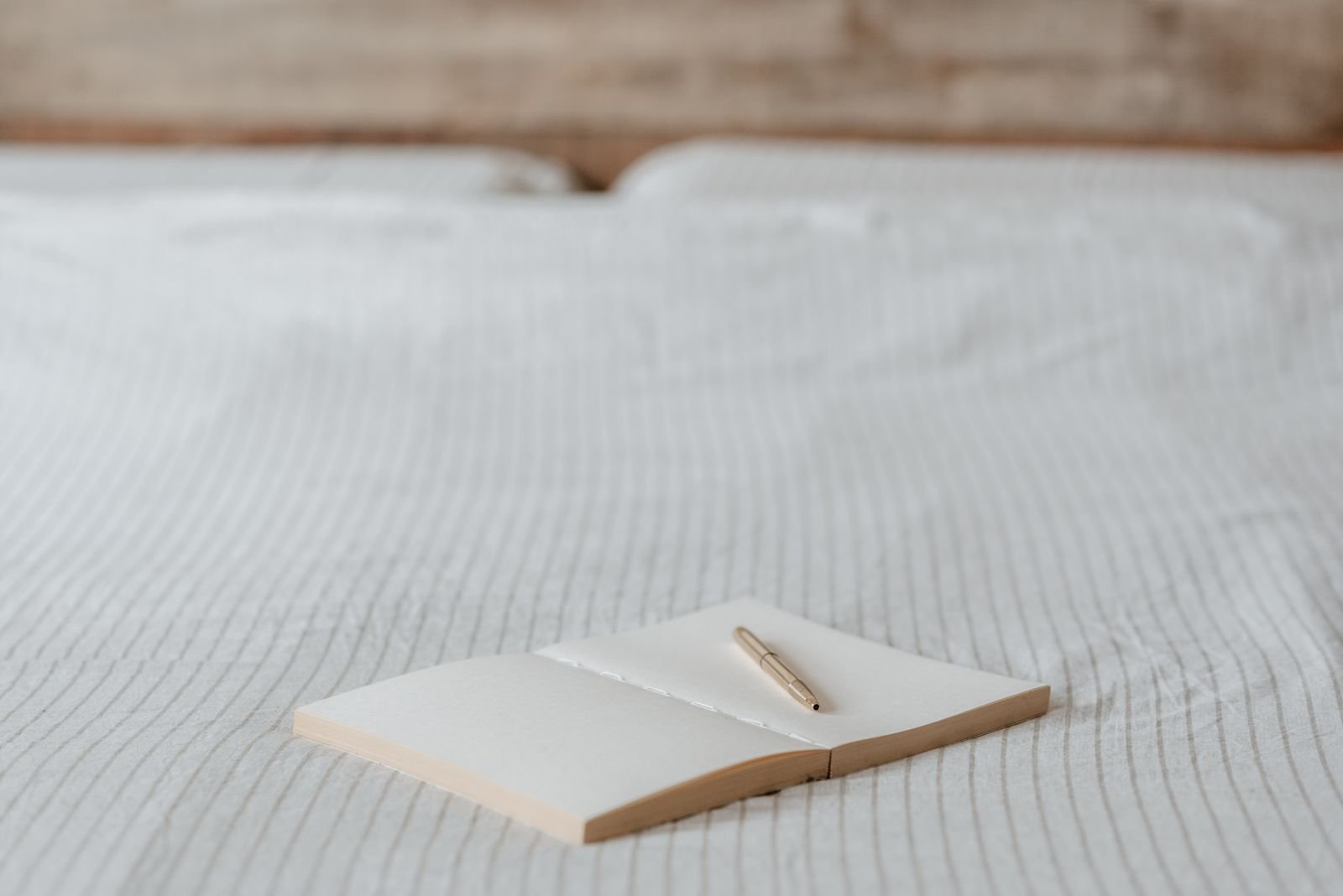
Keep a notebook and a pen on your nightstand, and write five short lines each morning as soon as you wake up. Do it before you check your phone, while the night is fresh in your mind. Aim for honest notes, written every day for two weeks. Two weeks is long enough to see a pattern and short enough to stick with.
Pick a notebook you actually like using. Pick a notebook you actually like using. Put the pen on top of it every night so you never have to hunt for it in the morning.
The Five Lines to Write Each Morning
Each entry needs only five lines. Keep them short. Here is what to record.
- Bedtime and wake time. Write the time you got into bed and the time you got up. This gives you time in bed, which is the frame for everything else.
- How long it took to fall asleep. Guess in minutes. Ten minutes, thirty minutes, an hour. A rough guess is fine. You are looking for a pattern, not a laboratory result.
- Wake ups during the night. Note how many times you woke up and how long you stayed awake.
- Morning rating from 1 to 5. Give the night a simple score. A 1 means you feel awful, a 5 means you feel great. Rate how rested you feel, not how long you slept.
- What happened yesterday. Note caffeine, alcohol, exercise, stress, and screens. One short line is enough, such as coffee at 4pm, two glasses of wine, no exercise, stressful day, phone in bed.
That fifth line is where the diary earns its keep. A gadget can measure your movement, but it cannot measure your day. Your sleep is shaped by your day, so your notes must cover both. Be honest in the fifth line. The diary is private, and it only helps you if it tells the truth.
The 10am Check That Tells the Truth
Your morning rating matters, but it can mislead you. Some people wake up groggy and feel fine by 10am, while others crash by midmorning. That is why the diary needs a second check. At 10am, ask yourself one question. How do I feel right now. Give it a quick rating from 1 to 5, and write it next to your morning rating.
The 10am check is the most honest measure in the whole diary. Morning grogginess fades within an hour, and what remains at 10am is closer to real sleep quality. If your 10am rating is high most days, your sleep is doing its job. If it is low most days, something needs to change. If you often wake up with a stiff neck, that ache will drag your 10am rating down too, so note it. Our guide to waking up with a stiff neck covers simple fixes for that exact problem.

Reading Your Diary After Two Weeks
After fourteen entries, read the diary as a whole. Do not judge single nights. Look for patterns. Three patterns matter most, and each one points to a different fix.
Your Average Time in Bed and Time Asleep
First, work out your average time in bed. Add up time in bed for all fourteen nights and divide by fourteen. Then subtract the time it took to fall asleep and the time you spent awake, to estimate time asleep. Now compare that average with how you felt. Look at your best nights, the ones rated 4 or 5 at 10am, and check how long you slept on those nights. That number is your personal target. Trust your own best nights more than any general rule.
Also check your sleep efficiency in plain terms. If you spend eight hours in bed and sleep for seven of them, that is healthy. If you spend nine hours in bed and sleep for only six, you spend a third of the night awake, which is a sign to tighten your sleep window. Go to bed a little later, get up at the same time each morning, and let sleep pressure build.
Weekend Drift and Why It Matters
Second, compare your weekday nights with your weekend nights. Many people keep a steady schedule all week and then sleep in by two hours on Saturday and Sunday. That shift feels like a reward, but it works like a small dose of jet lag every single weekend. Your body clock shifts later, Monday morning feels brutal, and the whole week starts on the back foot. Check your Monday 10am ratings. If Mondays score lower than other weekdays, weekend drift is a likely cause.
Keep your wake time within an hour of your weekday time, even on weekends. You can still rest on a Saturday, just get out of bed near your usual time so your body clock stays steady. If you work night shifts, keep your sleep window as steady as your shifts allow. Your body clock cares about regularity far more than the exact hour you sleep.
Triggers That Show Up Again and Again
Third, scan the fifth line of each entry for repeats. Circle every night with late caffeine, alcohol, heavy screen use, or high stress. Then check the ratings on those nights against the rest. The difference is often striking.
Caffeine is the most common trigger people find. Coffee at 4pm can still disturb sleep at midnight. If your restless nights cluster on days with afternoon coffee, try moving your last cup to noon for a week and watch the diary. Alcohol is the second classic trigger. A glass of wine may help you fall asleep, but it often leads to wake ups later in the night. Racing thoughts are the third trigger. If stressful days lead to long times to fall asleep, write tomorrow’s tasks on paper before bed, so your brain can let go of them. Our guide to stop overthinking at night walks through calm methods that work without a gadget. Fix one trigger at a time. Pick the clearest link to bad nights, change only that for a week, and check the diary again.
Free Phone Apps That Estimate Sleep From Sound and Movement
If the paper diary feels too simple, a free phone app can add a second layer of information without anything on your wrist. These apps sit on your nightstand and use the phone microphone and motion sensors to guess when you fall asleep, when you wake up, and when you snore or talk in your sleep. They cost nothing to try, but know what they can and cannot do before you trust them.
The best use of a sleep app is to confirm what your diary already says. If your diary says you woke up three times and the app recorded long noisy gaps in the same hours, the two sources agree, and you can trust the picture. If the app says you slept soundly but your diary says you lay awake for an hour, trust the diary. The app can only hear sounds, and silence does not always mean sleep.
Sound based apps have clear limits. A partner who snores will be recorded as if you snored. A dog moving on the bed, a truck passing outside, or a fan cycling on and off can all be logged as movement or noise. Use the chart as a rough sketch, not as a medical record. There are practical limits too. The app needs your phone on the nightstand, plugged in, with the microphone on all night. Read the privacy settings before you use any sleep app, and turn off any sharing or cloud upload you do not want. A free app often earns its money from your data, so check what it collects and where it goes.
One more honest point. A sleep app can make sleep worse for some people, because checking a low score each morning creates worry, and worry harms sleep. If you feel anxious about the number, delete the app and go back to the paper diary. Record your morning rating first, then glance at the app if you like, and look for broad agreement, not fine detail.
Under Mattress Sensors: A Middle Option
Between a paper diary and a wrist device sits a third option that many people never hear about. An under mattress sensor is a thin pad or strip that slides under your mattress and tracks movement, breathing, and heart rate through the night. You wear nothing, charge nothing on your body, and forget it is there.
These sensors usually cost between 100 and 200 dollars in the United States, and many work without a monthly fee. Set up takes a few minutes. You slide the pad under the mattress at chest height, plug it in, and connect it to your phone once. After that it records automatically each night and shows a morning summary of time in bed, time asleep, and wake ups.
The numbers are still estimates, not medical measurements. A restless partner, a pet on the bed, or a very thick mattress can affect the reading. But the estimates are often steadier than a phone app, because the sensor sits in the same place every night. For tracking trends across weeks, that steadiness matters.
Before you buy one, ask what question it would answer. If your diary already shows that late coffee ruins your sleep, a sensor will only confirm what you know, at a cost of 100 dollars or more. If your diary shows a pattern you cannot explain, such as regular wake ups at 3am, a sensor can add useful detail about that hour. Check the return policy, and keep the diary going beside the sensor for two weeks. If the two disagree most mornings, trust your feelings and return the sensor.
What Wearables Add and What They Get Wrong
A wearable adds three things once you have a diary and a pattern. It measures heart rate all night, it tracks trends without any effort from you, and it can wake you with a gentle vibration at a light moment in your sleep. For some people those benefits are worth the cost and the discomfort of wearing a device to bed.
The heart rate data is the most useful part. A steady resting heart rate with a clear dip in the early hours is a good sign. A heart rate that stays high all night can point to stress, illness, alcohol, or a room that is too warm. If your resting heart rate climbs for several nights in a row, something is going on, and your diary may already hold the clue.
What wearables get wrong is sleep stages. Most wrist devices estimate light, deep, and dream sleep from movement and heart rate, and those estimates are rough. Studies that compare wrist devices with sleep lab equipment find them decent at telling sleep from wakefulness, but weak at telling one stage from another. If a device says you got only twenty minutes of deep sleep, do not rearrange your life around that number. Ask how you felt at 10am instead.
Wearables also bring their own problems. The strap can irritate skin, the glow can wake a light sleeper, and the battery needs charging every few days. A good tracker costs well over 100 dollars, and some charge a monthly fee. People who check their sleep score every morning can develop anxiety about sleep itself, and that anxiety makes sleep worse. None of this means you should never buy one. Buy one when your diary raises a question that only continuous heart rate data can answer. Do not buy one because an advertisement promised better sleep. A device tracks sleep. It does not create it.
A Simple Four Week Plan to Learn Your Sleep
Here is the whole method as a four week plan you can start tonight. Each week has one job, and each job builds on the last.
Week One: Baseline Only
In week one, change nothing. Keep the diary, write the five lines each morning, and add the 10am check. Live your normal life and keep your normal bedtime. The goal is a true picture of your sleep as it is right now.
Week Two: Change One Thing
In week two, pick the clearest trigger from week one and change only that. If late coffee looks like the problem, move your last cup to noon. If screens look like the problem, put your phone to charge outside the bedroom. Keep the diary going, and watch the 10am ratings.
Week Three: Test a Second Change
In week three, keep the change that worked and test a second one. Add a morning walk in sunlight, which helps set your body clock. Or add a short wind down routine, with dim lights and no news after 9pm. If you work late on screens, read our guide to sleep better after late night screen work for a routine that fits a real working life. Compare week three with week one. The gap between the two weeks is your progress, measured in your own words.
Week Four: Review and Decide
In week four, sit down with all four weeks of notes and make three decisions. First, your personal sleep target, based on your best nights. Second, which habits will you keep for good, because the diary proved they work. Third, do you need a device at all. If a mystery remains, such as regular wake ups you cannot explain, that is the moment to consider a phone app, an under mattress sensor, or a wearable, and you will buy it with a clear question in mind.
When to See a Doctor
A diary can teach you a lot, but it cannot diagnose a medical problem, and some sleep problems need a doctor. See your primary care doctor promptly if any of the following show up in your notes. Loud snoring with gasping or pauses in breathing. Falling asleep during the day without warning, including while driving. Morning headaches that appear most days. Sleep problems that last more than three weeks despite a steady schedule.
Take the diary with you to the appointment. It turns a vague complaint into a clear record. The doctor may suggest a home sleep test, a small set of sensors you wear for one night at home, or a stay in a sleep lab. Both are painless, and both can catch problems such as sleep apnea that a diary can only hint at. Do not wait if you feel unsafe. Falling asleep at the wheel is an emergency, not a habit to track. Pull over, rest, and call your doctor the same day.
Conclusion
You do not need a gadget on your wrist to understand your sleep. You need a notebook, a pen, and two honest minutes each morning. Learning how to track sleep quality without a wearable device starts with the two week diary, and pays off when the pattern shows you what to change. The pattern matters more than any single night.
Start tonight. Put the notebook on your nightstand, and write your five lines when you wake up. After two weeks, read the story your sleep has been telling you. Change one thing, watch the ratings, and keep what works. Buy a device only when the diary raises a question that only a device can answer.
Frequently Asked Questions
Can I track sleep quality without any device at all? Yes. A paper diary with bedtime, wake time, wake ups, a morning rating, and a short note about your day gives you most of what a wearable reports. Add a 10am rating, and you have a complete picture without spending anything.
How long should I keep a sleep diary? Keep it for at least two weeks to see a real pattern. Four weeks is better, because it lets you test one change at a time. After four weeks, most people can stop daily notes and check in only when something changes.
Are free sleep apps accurate? Free apps give rough estimates, not medical measurements. They can confirm bedtime and wake time and record snoring, but they cannot measure sleep stages reliably. Use them beside a diary, and trust the diary when the two disagree.
Do I need a wearable if my diary shows a clear pattern? Usually not. If the diary shows that late coffee or weekend drift is the problem, fix that first. Consider a wearable only when the diary raises a question that needs continuous heart rate data, such as unexplained wake ups.
When should I see a doctor about poor sleep? See your primary care doctor if you snore loudly with gasping, fall asleep without warning during the day, wake with headaches most mornings, or still sleep poorly after three weeks of a steady schedule. Take your diary to the visit.