
If you have found yourself typing “what is BPD” into a search bar, chances are you are looking for real answers, not clinical jargon. Maybe a doctor mentioned the term during an appointment. Maybe you recognized some of the symptoms in yourself or in someone you love. Whatever brought you here, you deserve a clear and honest explanation.
Borderline personality disorder, often shortened to BPD, is a mental health condition that affects how a person manages emotions, relationships, and their sense of self. It is more common than many people realize, and it is also more treatable than the stigma around it suggests.
This guide walks through what BPD actually is, what causes it, how it is diagnosed, and what real recovery can look like. No fear mongering, no oversimplified checklists. Just a grounded, compassionate look at the condition.
What Is BPD, Exactly?
BPD stands for borderline personality disorder, a condition that shapes how someone experiences emotions, views themselves, and connects with other people. It falls under a group of conditions psychiatrists call Cluster B personality disorders, which are marked by intense, unpredictable emotions and impulsive behavior.
At its core, BPD is a disorder of emotional regulation. People with BPD often feel emotions more quickly, more intensely, and for longer than others do. A minor disagreement can feel like a full blown crisis. A perceived slight can trigger overwhelming fear of being abandoned.
This is not a character flaw or a matter of being “too sensitive.” Research shows that the brains of people with BPD process emotional information differently, particularly in the areas responsible for regulating fear and stress responses. Understanding BPD starts with recognizing that these reactions, while intense, are real symptoms of a diagnosable medical condition.
Roughly one to two percent of adults in the United States live with BPD, and it typically becomes noticeable in the teenage years or early adulthood. Women are diagnosed more often than men, though many researchers believe BPD in men is frequently misdiagnosed as depression or PTSD instead.
Core Symptoms of Borderline Personality Disorder
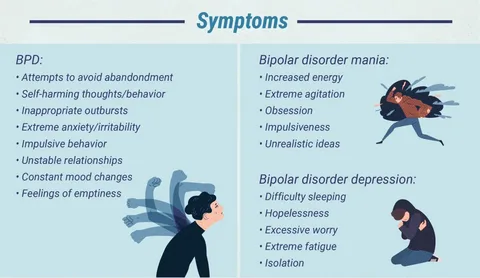
Clinicians use the Diagnostic and Statistical Manual of Mental Disorders, known as the DSM 5, to diagnose BPD. A person typically needs to show at least five of the following patterns, and those patterns need to be persistent, not just an occasional bad day.
Fear of Abandonment
People with BPD often have an intense, sometimes overwhelming fear of being left alone. This can lead to frantic efforts to keep people close, even in situations where abandonment was never actually likely.
Unstable, Intense Relationships
Relationships may swing between idealization and devaluation. A partner or friend might be seen as perfect one week and then viewed as uncaring or even cruel the next, often triggered by something relatively small.
Identity Disturbance
Many people with BPD describe an unstable or shifting sense of self. Their goals, values, and even their interests can change dramatically depending on who they are around or what they are going through emotionally.
Impulsivity
This can show up as reckless spending, risky sex, substance use, binge eating, or dangerous driving. These behaviors are often attempts to escape emotional pain in the moment, even when the person knows the consequences could be harmful.
Rapid Mood Swings
Unlike bipolar disorder, where mood episodes tend to last days or weeks, mood shifts in BPD often last a few hours and rarely more than a couple of days. A person might go from feeling fine to feeling desperate and back again within the same afternoon.
Chronic Feelings of Emptiness
A persistent sense of boredom, numbness, or having nothing inside is common. Many people describe it as feeling hollow, disconnected from purpose, or unsure of who they really are underneath their emotions.
Intense or Difficult to Control Anger
Anger in BPD can be sudden and disproportionate to the situation, followed by guilt or shame once it passes. It is not that the person wants to react this way, it is that the emotional brakes are harder to apply in the moment.
Self Harm or Suicidal Behavior
BPD carries a significantly elevated risk of self harming behavior and suicidal thoughts. This is one of the most serious aspects of the condition and one reason early treatment matters so much.
Dissociation Under Stress
During periods of extreme stress, some people with BPD experience dissociation, which can feel like being disconnected from their body, their surroundings, or reality itself.
Not everyone with BPD experiences every symptom, and severity varies widely from person to person. Two people with the same diagnosis can look completely different day to day.
What Causes BPD?
There is no single cause of borderline personality disorder. Instead, most experts describe it as the result of a combination of genetic vulnerability and environmental experiences, sometimes called the biosocial model.
Genetics and brain biology. Having a close family member with BPD increases the likelihood of developing it, suggesting a hereditary component. Brain imaging studies have also found differences in the amygdala and prefrontal cortex, regions involved in emotional regulation and impulse control, among people with BPD.
Childhood experiences. Many, though not all, people with BPD report a history of childhood trauma, neglect, or inconsistent caregiving. Experiences like emotional invalidation, where a child’s feelings are repeatedly dismissed or punished, are believed to play a significant role in how emotional regulation develops.
Temperament. Some children are simply born more emotionally sensitive or reactive than others. When that natural sensitivity meets an invalidating environment, the risk of developing BPD appears to increase.
It is worth being clear that BPD is not caused by bad parenting alone, nor is it something anyone chooses or brings on themselves. It develops from a complex mix of nature and environment that researchers are still working to fully understand.
Quiet BPD: When Symptoms Turn Inward
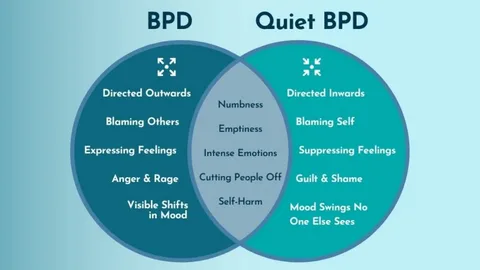
Most descriptions of BPD focus on outward behaviors like explosive anger or visible impulsivity. But a lesser known presentation, often called quiet BPD or high functioning BPD, involves turning those same intense emotions inward instead of outward.
Someone with quiet BPD might appear calm, accomplished, and put together on the outside, while privately experiencing the same fear of abandonment, emptiness, and identity confusion as anyone else with the condition. Instead of lashing out, they may withdraw, self isolate, or direct anger and blame toward themselves.
This presentation is not an official DSM category, but it is widely discussed among clinicians and people with lived experience because it often goes unrecognized. Someone with quiet BPD may struggle for years without a diagnosis simply because their symptoms do not match the stereotype most people associate with the condition.
How Is BPD Diagnosed?
There is no blood test or brain scan that can confirm BPD. Diagnosis is made by a licensed mental health professional, typically a psychiatrist or psychologist, through a detailed clinical interview.
During this process, the provider will usually:
- Ask about your emotional patterns, relationships, and behaviors over time, not just recent events
- Explore your family and personal medical history
- Rule out other conditions that share overlapping symptoms
- Compare what they learn against the DSM 5 criteria, which requires at least five of the nine core symptoms
Because BPD often overlaps with depression, anxiety, PTSD, and substance use disorders, an accurate diagnosis can take time. Providers generally avoid diagnosing BPD before age eighteen, since personality is still developing during adolescence, though exceptions are sometimes made when symptoms are severe and long lasting.
BPD vs Other Conditions
BPD is frequently confused with other mental health conditions, which can delay proper treatment. Here is how it compares to some of the most commonly mixed up diagnoses.
| Condition | Key Difference From BPD |
|---|---|
| Bipolar Disorder | Mood episodes last days to weeks and are less tied to external triggers. BPD mood shifts are faster, often hours, and usually triggered by relationship stress. |
| Complex PTSD | Centers around trauma memories, hypervigilance, and avoidance. BPD centers more on identity instability and fear of abandonment, though trauma can contribute to both. |
| Narcissistic Personality Disorder | Involves a more stable, though inflated, sense of self and less fear of abandonment. BPD involves a fragile, shifting self image and intense attachment fears. |
| Generalized Anxiety Disorder | Anxiety is more constant and less tied to interpersonal triggers. BPD anxiety often spikes around relationship conflict or perceived rejection. |
If you recognize some symptoms in this article but are not sure which condition fits, that uncertainty is completely normal. A proper evaluation from a mental health professional is the only reliable way to know for sure.
Treatment Options That Actually Help
Here is some genuinely encouraging news: BPD responds well to treatment. Many people see meaningful symptom reduction, often within a year or two of consistent therapy.
Dialectical behavior therapy, or DBT, is considered the gold standard treatment. Developed specifically for BPD, it teaches practical skills in four areas: mindfulness, distress tolerance, emotional regulation, and interpersonal effectiveness.
Cognitive behavioral therapy, or CBT, helps identify and reshape the thought patterns that fuel impulsive reactions and emotional spirals.
Mentalization based therapy focuses on helping people better understand their own mental states and the mental states of others, which can reduce misreading of relationships.
Schema therapy works on identifying deep rooted patterns formed in childhood and replacing them with healthier ways of relating to yourself and others.
Medication is not a primary treatment for BPD itself, but it can help manage co-occurring conditions like depression or anxiety when prescribed alongside therapy.
Treatment is rarely a quick fix, and setbacks are a normal part of the process. What matters most is consistency and finding a therapist who has genuine experience treating BPD specifically.
Supporting a Loved One With BPD
If someone you care about has BPD, your support can make a real difference, but it helps to approach it with a few things in mind.
- Try to separate the behavior from the person. Intense reactions are often symptoms, not personal attacks.
- Set clear, consistent boundaries. Structure actually helps reduce anxiety for someone with BPD, even if it does not feel that way in the moment.
- Avoid taking sudden mood shifts personally. They usually pass faster than they feel like they will.
- Encourage professional treatment without forcing it. Gentle, repeated encouragement tends to work better than ultimatums.
- Take care of your own mental health too. Supporting someone with BPD can be emotionally demanding, and therapy or support groups for family members can help.
Patience matters here, but so does honesty. A relationship built on walking on eggshells is not sustainable for either person long term.
Living With BPD: Outlook and Hope
One of the most outdated myths about BPD is that it is untreatable or permanent. That is simply not true anymore. Long term studies following people with BPD have found that a large majority experience significant symptom reduction over time, and many no longer meet the diagnostic criteria years after starting treatment.
Symptoms also tend to naturally soften with age for many people, often becoming noticeably less intense by their forties. Combined with effective therapy, this means the outlook for someone newly diagnosed with BPD today is genuinely hopeful.
Living with BPD does not mean living without stability, close relationships, or a strong sense of self. It means learning skills that many people never had to learn in the first place, and building a life that works with your emotional wiring rather than against it.
Conclusion
So, what is BPD in simple terms? It is a mental health condition that affects emotional regulation, self image, and relationships, shaped by a mix of genetics, brain function, and life experience. It is not a personality flaw, and it is not something anyone chooses.
The key takeaways worth remembering are that BPD symptoms exist on a spectrum, treatments like DBT genuinely work, and recovery is a realistic outcome rather than a rare exception. Whether you are trying to understand your own experience or support someone you love, the most important next step is the same: reach out to a qualified mental health professional who can offer an accurate diagnosis and a treatment plan built around your specific needs.
If you or someone you know is struggling with thoughts of suicide or self harm, you do not have to face it alone. In the United States, you can call or text 988 to reach the Suicide and Crisis Lifeline, available 24 hours a day.
FAQ
Is BPD a form of bipolar disorder?
No. They are separate conditions. BPD mood shifts are faster, often lasting hours, and are usually triggered by relationship stress, while bipolar mood episodes tend to last days or weeks and are less dependent on external triggers.
Can BPD go away completely?
Many people experience significant, lasting symptom reduction with treatment, and some no longer meet the diagnostic criteria after several years. It is best described as highly manageable rather than something that simply disappears on its own.
What triggers BPD episodes?
Common triggers include perceived rejection, conflict in close relationships, feeling criticized, or fear of being abandoned. Triggers vary from person to person and often become easier to recognize with therapy.
Can men have BPD?
Yes. BPD affects men too, though it is diagnosed less often in men, partly because symptoms are sometimes misread as depression, anger issues, or PTSD instead.
What is the difference between BPD and quiet BPD?
Quiet BPD involves the same core symptoms but directed inward through withdrawal and self blame rather than outward through visible conflict or impulsivity. It is not a separate official diagnosis, but a commonly recognized presentation of the same condition.