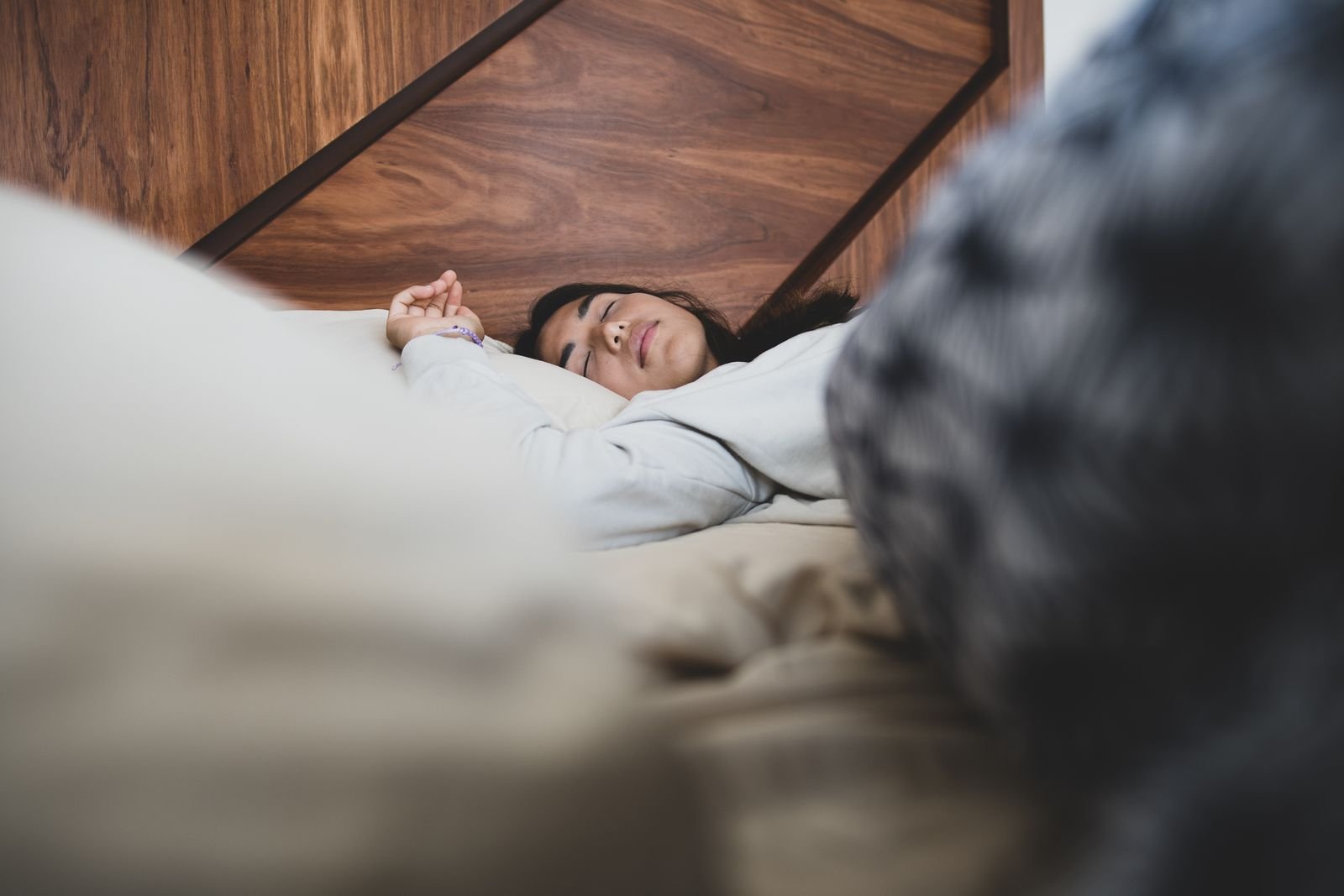

Maya is a project manager in Chicago, and for months her workdays ended the same way. Around three in the afternoon, a dull pressure would settle across her forehead, as if someone had wrapped a tight band around her head and was slowly pulling it tighter. Her neck would stiffen, her shoulders would creep up toward her ears, and the spreadsheet in front of her would blur at the edges. She kept a bottle of painkillers in her desk drawer, and most weeks she reached for it three or four times. Then one Tuesday she ran out, the pharmacy was a twenty minute walk away, and she had a client call in ten minutes. So she tried something different. She pressed a warm towel against the back of her neck, drank a full glass of water, stood up and rolled her shoulders, and pressed the fleshy spot between her thumb and forefinger for two minutes. By the time the call started, the band had loosened. It was not gone completely, but it had faded enough that she could think clearly again. That afternoon changed how she deals with headaches, and it is the reason this guide exists. If you want to know how to get rid of a tension headache without medicine, you do not need a complicated plan or expensive equipment. You need a short routine that works in the moment, plus a few small changes that stop the next one from starting.
A tension headache is the most common kind of headache in the world. The World Health Organization estimates that more than half of all adults get one in any given year, and a meaningful share of those people get them weekly. The cause is usually mechanical rather than mysterious. The small muscles around the skull, neck and shoulders stay contracted for hours, often because of stress, poor posture, too little sleep or too much screen time. Those tight muscles pull on the scalp and the base of the skull, and the result is that familiar dull, pressing ache on both sides of the head. The good news is that the same mechanical cause points to a mechanical fix. Loosen the muscles, improve blood flow, calm the nervous system, and the pain usually eases. The three main points of this guide are simple. First, a fifteen minute routine can bring real relief right now. Second, fixing your desk setup removes the trigger that keeps bringing the headache back. Third, a few daily habits make the headaches rarer over time. None of this replaces medical care when something is seriously wrong, and the red flags are covered near the end, but for the ordinary tension headache that arrives after a long day at a desk, these steps work.
How to Get Rid of a Tension Headache Without Medicine in 15 Minutes
When a tension headache has already started, speed matters. The routine below takes about fifteen minutes and uses things you already have at home or at the office. Work through the steps in order, and give each one a fair chance before moving on. Most people feel the pressure start to lift within the first five minutes.
Start with water and a short walk
Dehydration is one of the most common and most overlooked headache triggers. Even mild fluid loss can make the brain more sensitive to pain, and many people go hours without drinking anything while they work. Drink one or two full glasses of water as soon as the headache starts, sipped over a few minutes rather than gulped all at once. Then stand up and walk for five minutes, even if it is only around the office or up and down the stairs at home. Gentle movement increases blood flow, releases endorphins that act on the same pain pathways as some medicines, and loosens the neck and shoulder muscles that feed the headache. A short walk will not fix a migraine, but for a tension headache it is one of the most reliable first moves there is.
Choose heat or cold, and use it properly
Temperature therapy is one of the fastest ways to interrupt muscle tension, but heat and cold do different jobs. For a tension headache, warmth usually works better, because the problem is tight muscle. A warm towel, a heating pad or a hot shower aimed at the base of the skull relaxes the muscles that are pulling on your scalp. Hold the warmth against the back of your neck and your upper shoulders for fifteen minutes. If the pain feels sharp or throbbing instead of dull and pressing, try cold instead. A cold pack wrapped in a thin towel on the forehead or the back of the neck narrows blood vessels and dulls pain signals. Some people get the best result by alternating the two, fifteen minutes of warmth followed by fifteen minutes of cold. Whichever you choose, never put ice directly on bare skin, and never fall asleep with a heating pad switched on.

Try acupressure on your hand
One of the quickest drug free options is firm pressure on the fleshy spot between your thumb and index finger, known in acupressure as the LI4 point. To find it, squeeze your thumb and index finger together and look for the highest point of the muscle that bulges up. Press firmly on that spot with your opposite thumb and hold for two to three minutes, then switch hands. The pressure can feel tender, and that is normal. This point is widely used in headache clinics as a first line non drug technique, and many people feel the tension ease while they are still holding it. Avoid this point if you are pregnant, as it is traditionally listed as one to skip during pregnancy. A second useful spot is the base of the skull. Place both thumbs in the hollows just below the back of your head, on either side of the spine, and press upward gently for a minute while you breathe slowly.
Breathe slowly and drop your shoulders
When a headache builds, breathing usually becomes shallow and fast, and the shoulders rise without you noticing. Sit down, plant both feet flat on the floor, and let your shoulders drop away from your ears. Breathe in slowly through your nose for a count of four, hold for a count of four, and breathe out through your mouth for a count of six. Repeat that cycle six times. The longer exhale activates the part of your nervous system that counteracts the stress response, and the slower rhythm gives the tight muscles around your neck a chance to let go. Progressive muscle relaxation works on the same idea. Tense the muscles in your shoulders hard for five seconds, then release them completely and notice the difference. Move up through your neck, jaw and face, tensing each group briefly and then letting it go. Many people carry tension in their jaw without realising it, so finish by letting your teeth part slightly with your lips closed, and let your tongue rest lightly behind your upper teeth.
Loosen the Muscles That Cause the Pain
Fast relief is only half the job. A tension headache comes from muscles that have been held tight for hours, and those muscles need regular loosening or the pain comes back the next day. The routine below takes about ten minutes and works best done once in the middle of the workday and once in the evening. You do not need any equipment, and every move can be done in a chair.
Start with chin tucks. Sit tall, look straight ahead, and gently pull your chin straight back, as if you are making a double chin. Hold for five seconds and repeat ten times. This strengthens the deep muscles at the front of the neck and takes pressure off the muscles at the back that are usually doing all the work. Next, do shoulder rolls. Lift both shoulders up toward your ears, roll them back in a slow circle, and lower them. Repeat ten times, then reverse the direction. Then try a seated spinal twist. Sit tall with both feet flat, place your right hand on the back of your chair, and gently rotate your upper body to the right. Hold for fifteen to twenty seconds, breathe normally, and repeat on the left side. Finish with a neck stretch. Tilt your right ear toward your right shoulder until you feel a gentle stretch down the left side of your neck. Hold for twenty seconds, then switch sides. Never force a stretch, and never jerk your head. The goal is a mild pull, not pain.
Self massage helps too, and it is simpler than it sounds. Use the fingers of your right hand to press into the muscle between your neck and your left shoulder, the upper trapezius, and hold firm pressure on any tender spot for thirty seconds. A tennis ball against a wall works even better. Stand with your back to the wall, place the ball between your shoulder blade and the wall, and lean into it until you find the sore spot. Hold the pressure there for thirty seconds, breathe slowly, and move the ball to the next spot. Two minutes of this kind of pressure on the upper traps reliably eases the referred pain that shows up as a headache. If your jaw is part of the problem, place your fingertips on the chewing muscles at the sides of your jaw and make small slow circles for a minute on each side. People who clench their teeth during the day often find that this one move makes a real difference.
Fix the Desk Setup That Keeps Bringing It Back
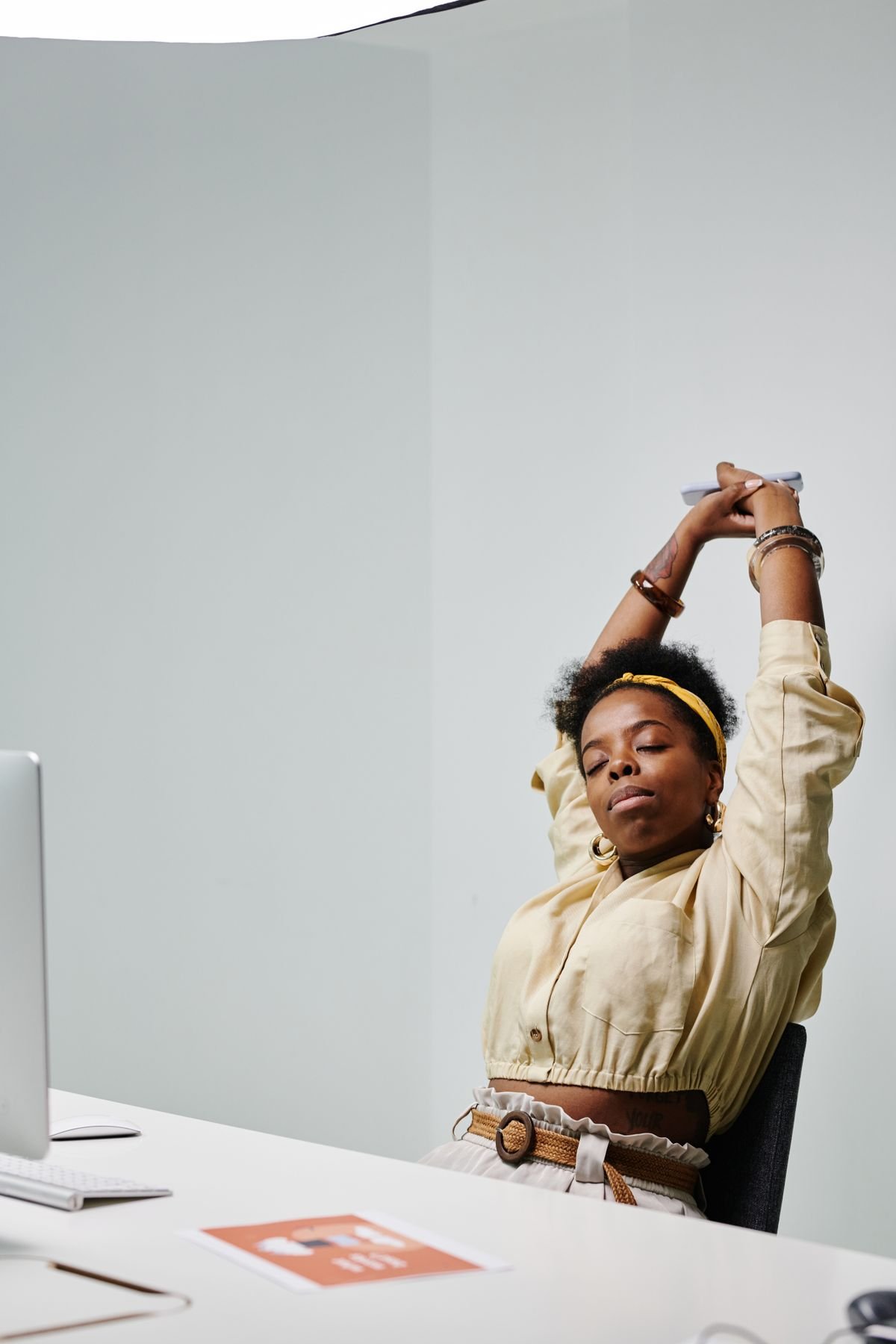
Maya discovered that her afternoon headaches were not random. They arrived on the days she spent longest at her laptop without a break, and they were worst on the days she worked from the sofa with the laptop on her knees. Her desk was the trigger, and fixing it did more for her headaches than any single remedy. The same is true for most desk workers. If your screen sits too low, your head drifts forward, and the muscles at the back of your neck work overtime to hold it up. If your chair offers no lower back support, your whole spine compensates, and the tension climbs upward into your shoulders and head.
Start with the screen. Position it so your eyes hit the centre of the screen when you look straight ahead, and keep it roughly an arm’s length away. If you use a laptop, a simple laptop stand or a stack of books under it makes a real difference. Your keyboard should sit so your elbows bend at about ninety degrees, and your feet should rest flat on the floor or on a footrest. Your chair should support the natural inward curve of your lower back. If it does not, a rolled up towel placed behind your lower back works as a quick fix. One practical upgrade is worth considering if you spend hours typing: dictating some of your writing instead of typing it all. Our guide to using voice typing to write faster shows how speaking your first drafts can cut down on screen hunching and give your neck a break during long writing sessions.
Breaks matter as much as posture. Research from Penn State University found that lower back and neck pain from sitting could be eased simply by switching positions every fifteen minutes. You do not need a formal workout. Stand up, stretch, walk to the kitchen for a glass of water, or take a phone call standing up. Set a quiet reminder on your phone or work calendar until the habit sticks. The rule Maya uses is simple: every twenty minutes, she looks at something across the room for twenty seconds and stands up at least once an hour. It sounds small, and it is, but over a full workday it adds up to dozens of small resets for the muscles that would otherwise stay locked in one position until three in the afternoon.
Workload is the other half of the desk problem. Headaches often follow the weeks when everything feels urgent at once, and that is a sign to look at how the work itself is organised. Learning to prioritise tasks using the Eisenhower matrix helped Maya stop treating every email as an emergency, and the calmer pace showed up directly in fewer headaches. Boundaries matter too. Saying no to one extra meeting, or telling a client that a reply will come tomorrow rather than tonight, is not laziness. It is the same kind of muscle care as a stretch break, just applied to your schedule. Our article on how to set boundaries with clients walks through the exact wording that keeps the relationship warm while protecting your time and your health.
Daily Habits That Stop the Next One
Once the immediate pain has eased and the desk is fixed, the next question is prevention. Tension headaches are strongly linked to a handful of daily habits, and small changes in each one compound over a few weeks. None of these habits is dramatic on its own, but together they change the pattern.
Sleep comes first. Poor sleep is one of the strongest and most overlooked headache triggers. Go to bed and wake up at roughly the same time every day, even on weekends, and keep the bedroom cool, dark and quiet. Avoid screens for at least thirty minutes before bed if they interfere with falling asleep, and avoid heavy meals in the three hours before sleep. If you wake up with a headache, your pillow may be part of the problem. A pillow that is too high or too flat can hold your neck at an awkward angle all night, so try a different height for a week and see if the morning headaches fade. Caffeine is a double edged sword. A small cup of coffee can help an early headache, but too much caffeine, or caffeine late in the day, disturbs sleep and can trigger rebound headaches the next morning. Keep it to the morning, and keep the amount modest.

Food and drink play a quieter role. Skipping meals lets blood sugar drop, and low blood sugar is a recognised headache trigger, so eat regular meals with protein and complex carbohydrates rather than going hours on coffee alone. Some people find that a warm cup of herbal tea in the evening helps them unwind, and chamomile or peppermint tea are popular choices. Peppermint oil is one of the better studied natural remedies in this area. In clinical trials, a diluted peppermint oil solution rubbed across the forehead and temples produced measurable pain relief for tension headaches. Mix a few drops into a carrier oil such as coconut or almond oil before putting it on your skin, and keep it away from your eyes. Magnesium rich foods such as spinach, almonds and oats are also worth including in your meals, since low magnesium has been linked to increased muscle tension.
The afternoon slump deserves attention too, because it often arrives with the headache. If your energy crashes after lunch, the headache that follows may be part of the same pattern of dehydration, poor sleep and a heavy midday meal. Our guide on how to stop feeling sleepy after lunch at work without coffee covers the small changes that steady afternoon energy, from lighter lunches to short walks and better hydration, and the same changes help with headaches. Finally, keep a simple headache diary for two weeks. Note the time the headache starts, what you were doing, how much water you drank, how you slept, and what helped. Patterns appear quickly. Maya discovered from her diary that her worst headaches followed nights when she stayed up late answering emails, which made the fix obvious even if it was not easy.
When a Headache Needs a Doctor
Most tension headaches are harmless and respond to the steps above, but some headaches are warning signs and should never be treated at home. Seek medical care promptly if the pain is sudden and severe, unlike any headache you have had before, or if it comes with fever, confusion, weakness, numbness, trouble speaking, vision changes, or a stiff neck. See a doctor soon if your headaches are becoming more frequent, if they are changing in pattern, if they wake you from sleep, if they follow a head injury, or if you find yourself needing painkillers more than two or three days a week. Frequent use of painkillers can cause rebound headaches, where the medicine itself starts to trigger the pain, and that cycle needs professional help to break. If you grind your teeth at night, snore heavily, or wake up with a sore jaw, mention it to your dentist or doctor, because an underlying sleep issue may be driving the headaches. This guide is general information, not medical advice, and your own doctor is the right person to judge your situation.
Conclusion
Learning how to get rid of a tension headache without medicine comes down to three things. Loosen the muscles that are causing the pain, fix the setup that keeps tightening them, and build daily habits that make the headaches rarer. The fifteen minute routine of water, movement, warmth and acupressure handles the headache you have right now. The desk stretches and the screen at the right height handle the headache that would have arrived tomorrow. Better sleep, regular meals, modest caffeine and a calmer workload handle the pattern over the coming weeks. Maya still gets a headache now and then, usually after a long deadline week, but it no longer runs her afternoons. She knows what to do in the first five minutes, and she knows the small changes that keep it from coming back. Try the routine the next time the band tightens across your forehead, keep a short diary for two weeks, and see which triggers show up for you. The relief is often closer than the medicine cabinet.
Frequently Asked Questions
How long does a tension headache last without medicine?
Most tension headaches fade within thirty minutes to a few hours once the muscles relax. A headache that lasts longer than a day, keeps returning daily, or keeps getting worse should be checked by a doctor.
What is the fastest way to get rid of a tension headache without medicine?
Warmth on the back of the neck, a full glass of water, a five minute walk, and firm pressure on the LI4 point between thumb and forefinger together usually bring relief within fifteen minutes.
Is heat or cold better for a tension headache?
Warmth usually works better, because a tension headache comes from tight muscles and heat relaxes them. Cold works better if the pain feels sharp or throbbing, and some people get the best result by alternating the two.
Can poor posture really cause a tension headache?
Yes. A screen that sits too low pulls the head forward, and the neck muscles work overtime to hold it up. Over hours that strain spreads into the shoulders and scalp, which is exactly how a tension headache starts.
When should I see a doctor about a tension headache?
See a doctor promptly for a sudden severe headache, or one that comes with fever, confusion, weakness, vision changes or a stiff neck. See a doctor soon if headaches are becoming more frequent or you need painkillers more than two or three days a week.