Picture this. It is mid January, you are flying from Chicago to Boston for a week, and the airline wants 40 dollars each way to check a bag. You look at your closet and see the problem right away. A winter coat, thick sweaters, boots, scarves, gloves and thermal layers take up three times the space of summer clothes. How can all of that fit in one small bag that has to slide into the overhead bin?
It can fit, and you do not need to be a packing expert to make it work. The trick is not buying a bigger bag or leaving half your wardrobe at home. The trick is changing how you think about winter clothes. Once you learn how to pack a carry on for a winter trip, you will wonder why you ever paid to check a bag in summer, let alone in winter.
This guide walks you through a simple system that works for a 7 day trip in real cold weather. It is built on three ideas that do the heavy lifting: wear the bulky pieces on the plane, pack thin layers instead of thick ones, and build a small capsule wardrobe where every piece works with every other piece. Follow those three ideas and a week of winter clothes fits in a standard carry on with room to spare.
Why winter packing feels impossible
Winter clothes fight you in two ways at once. First, they are bulky. A parka can fill half a suitcase by itself, and a pair of insulated boots eats the space of three pairs of summer shoes. Second, they are heavy. Many international flights weigh carry on bags at the gate, and the limit is often 22 pounds or less. Even on US domestic flights, where the bag is rarely weighed, you still have to lift it into the overhead bin yourself, so weight matters.
The second problem is fear. Cold weather punishes a packing mistake in a way warm weather never does. Forget a swimsuit in July and you buy one at the hotel shop. Forget a warm layer in January and you spend the week shivering or buying an overpriced coat at the airport. So most people pack for every possible version of cold: the heavy coat and the medium coat, three sweaters just in case, two pairs of boots, and enough scarves for a small shop. The bag fills up before the trip even starts.
The fix is to stop packing for every possible version of cold and start packing for the actual trip. Check the forecast for your destination, not the worst weather you can imagine. A week in Boston in January is cold, but it is a known kind of cold. You need one good outer layer, a set of thin warm layers, and a plan for washing a few things halfway through. That is the whole secret, and the rest of this guide shows you how to put it into practice.
The three rules that make it work
Every good winter packing system comes back to the same three rules. Learn them once and you can use them for any cold weather trip, from a long weekend in Denver to a week in Minneapolis.
- Wear the bulky pieces. Your coat, your boots and your thickest sweater travel on your body, not in your bag. This one move frees up more space than any packing gadget ever will.
- Pack thin layers, not thick ones. Three thin layers keep you as warm as one thick sweater and take up a fraction of the space. They also handle a wider range of temperatures, so you stay comfortable indoors and outdoors.
- Build a capsule, not a closet. Pick a small set of clothes in matching colors where every top works with every bottom. Seven outfits come from a handful of pieces instead of seven separate outfits.
Keep those three rules in mind as you read the rest of this guide. Each section below puts one of them to work.
Start with the right bag
Before you pack a single thing, check the size your airline allows. Most US airlines allow a carry on of 22 by 14 by 9 inches, including wheels and handles. That is the size to shop for if you are buying a new bag. A bag that is even one inch too tall in any direction can be forced into the checked pile at the gate, and that is exactly the fee you are trying to avoid.
Weigh your empty bag too. A heavy hard shell case can weigh 8 or 9 pounds before you put anything in it, which leaves you very little room for clothes on a flight with a weight limit. A light soft sided bag or a well made polycarbonate case in the 5 to 7 pound range gives you much more usable capacity. If you already own a heavy bag, it is still usable on US domestic flights, where weight is rarely checked, but it is a real handicap on international routes.
Do not forget the personal item. Most airlines allow one carry on plus one personal item, such as a backpack or a large tote, that fits under the seat in front of you. Use it with a plan. The personal item should hold your travel day essentials: phone and charger, medications, a snack, lip balm, a book, and the warm layer you will want the moment you land. Keep it separate from the main bag so you never have to open the overhead bin during the flight.
Wear your bulkiest layers on the plane
This is the single most effective packing move in winter travel, and it costs nothing. On travel day, wear your winter coat, your insulated boots, your thickest sweater and your scarf. Stuff your hat and gloves into your coat pockets. Everything bulky rides on your body, where it takes up zero luggage space, and you can take the coat off and drape it over your lap once you are seated.
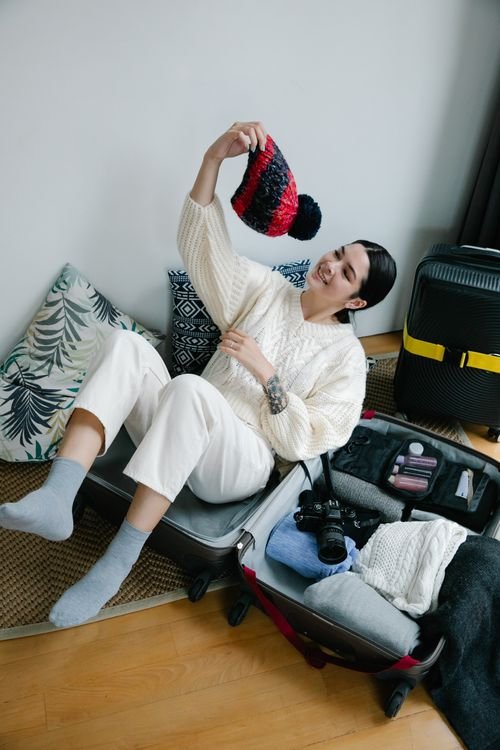
Some travelers worry that wearing a heavy coat on the plane will be uncomfortable. In practice it is fine for the short walk through the airport and the boarding process. Once you reach your seat, the coat comes off and becomes a blanket or a pillow. Many frequent flyers say the coat is the most useful thing they bring on a winter flight, because cabins run cold and a good coat beats a thin airline blanket every time.
Check your airline policy before you fly, because a coat usually does not count against your bag allowance. Several US airlines state clearly that an outer garment does not count as a personal item. That means your heaviest piece of clothing travels free, and your bag stays light. Boots work the same way. Wear the heavy pair and pack only a light second pair of shoes, such as flat sneakers or loafers that fold nearly flat.
Build a capsule wardrobe of thin layers
The heart of learning how to pack a carry on for a winter trip is the layering system. Instead of one thick sweater, you pack three thin layers that work together. A base layer sits against your skin and moves moisture away from your body. A mid layer traps warm air. An outer layer blocks wind and rain. Three thin layers usually keep you as warm as one thick one, they pack far smaller, and you can peel one off when you step into a heated shop or restaurant.
Choose fabrics that earn their space. Merino wool and good synthetic blends are thin, warm and dry overnight after a quick sink wash. Cotton stays damp, feels cold against your skin, and takes up more room for the same warmth, so leave the heavy cotton sweatshirts at home. A merino base layer top weighs almost nothing and can be worn two days in a row without anyone noticing.
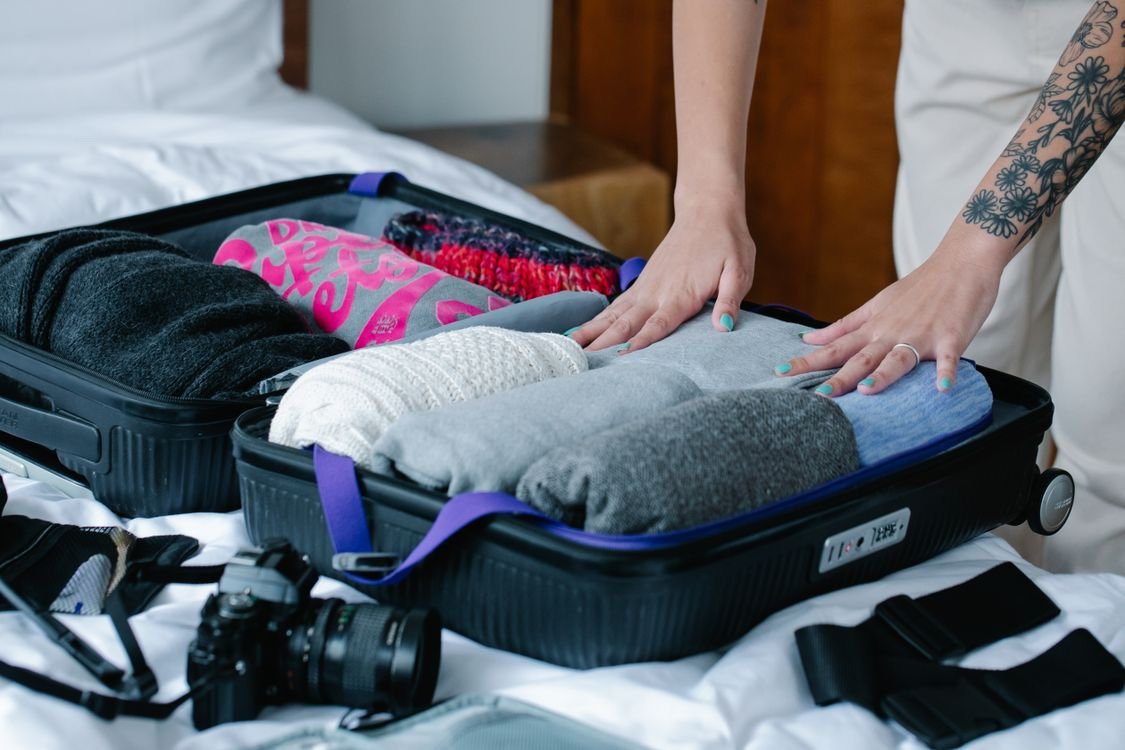
Build the capsule around one color family so every piece matches. Pick dark bottoms, such as one pair of jeans and one pair of dark trousers, then choose tops in colors that all work with those bottoms. Two base layer tops, three mid layer tops, one sweater and one packable insulated vest give you a different outfit every day of a 7 day trip. Add one smart outfit if your trip includes a dinner or a meeting, and keep it simple: one blazer that works with the trousers you already packed.
If the trip is for work, the same capsule idea still applies, and you only need to add one dress shirt and a pair of dress shoes in a shoe bag. For a deeper look at keeping formal clothes neat in a small bag, see our guide on how to pack business clothes in a carry on without wrinkles.
How to pack a carry on for a winter trip step by step
How you put clothes in the bag matters as much as what you put in it. Start by laying out everything you plan to bring on the bed, then remove at least a third of it. Most people overpack by exactly that amount, and the edit is easier when you can see the whole pile at once. If an item does not match at least two other pieces in your capsule, it stays home.
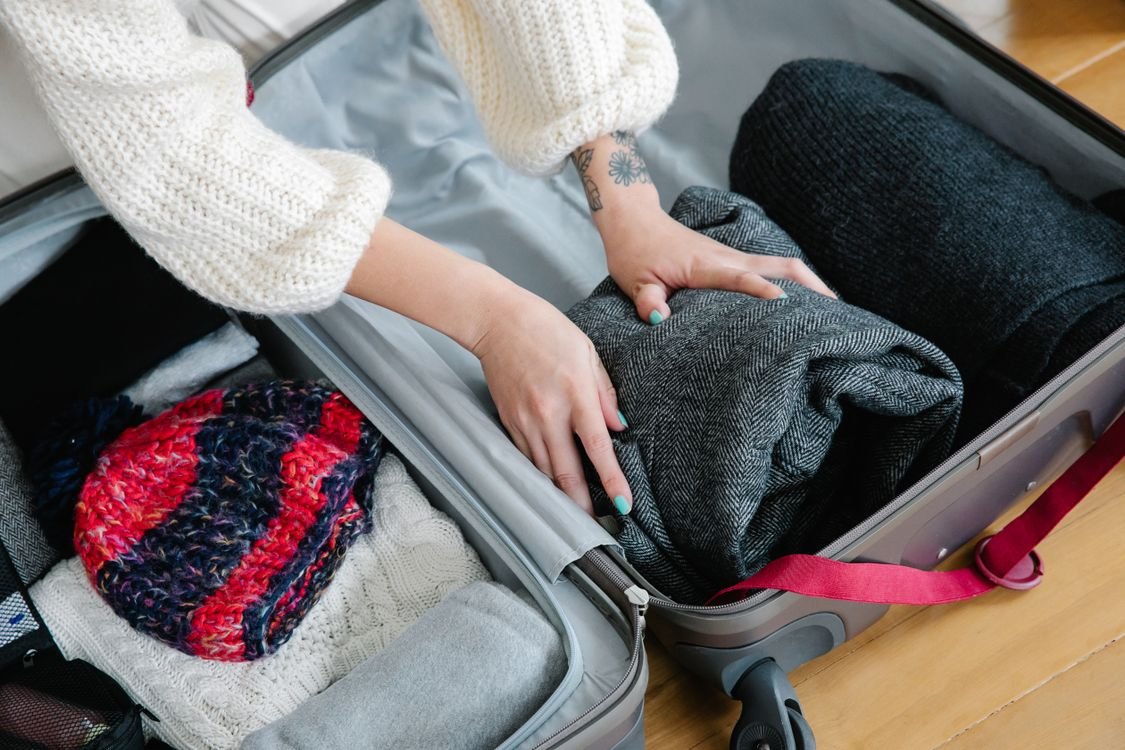
Roll soft clothes instead of folding them. Rolling squeezes the air out of knitwear and base layers, and rolled pieces fit into the gaps around bulkier items. Fold only the pieces that crease badly, such as a dress shirt or a blazer, and lay those flat on top of everything else at the end.
Packing cubes help, but they are not magic. A set of three or four cubes keeps categories separate so you can find a clean pair of socks without unpacking the whole bag. Compression cubes squeeze a little harder and work well for sweaters and fleece. Vacuum bags compress the most, but they need a pump or a vacuum to repack, which makes them a poor choice if you need to repack in a hotel room. For most winter trips, rolling plus two or three cubes is the sweet spot.
Pack in a fixed order so the bag stays organized all week. Heavy items go near the wheels at the bottom of the case, which keeps it stable when you roll it. Toiletries go in a clear bag on top for easy access at security. The outfit for your first evening goes on the very top, so you can change the moment you arrive without digging through the whole suitcase.
A 7 day winter carry on packing list
Here is the full list for a week in a cold city, based on the capsule above. It assumes one quick sink wash of base layers halfway through the trip, which takes ten minutes and keeps the list short.
- Worn on the plane: winter coat, insulated boots, thickest sweater, scarf, hat and gloves in coat pockets, merino base layer under your shirt, wool socks
- In the bag: 2 merino base layer tops, 1 pair of thermal bottoms, 3 mid layer tops, 1 sweater or fleece, 1 packable insulated vest, 1 pair of jeans, 1 pair of dark trousers, 1 rain or wind shell
- Underwear and sleep: 5 pairs of underwear, 5 pairs of wool socks, 1 set of sleepwear that can double as a base layer
- Second shoes: 1 pair of light flat sneakers or loafers in a shoe bag
- Accessories: 1 spare pair of gloves, 1 extra scarf only if it matches everything, lip balm with sun protection, moisturizer, hand cream, sunscreen for bright snow days, medications, phone charger and adapter
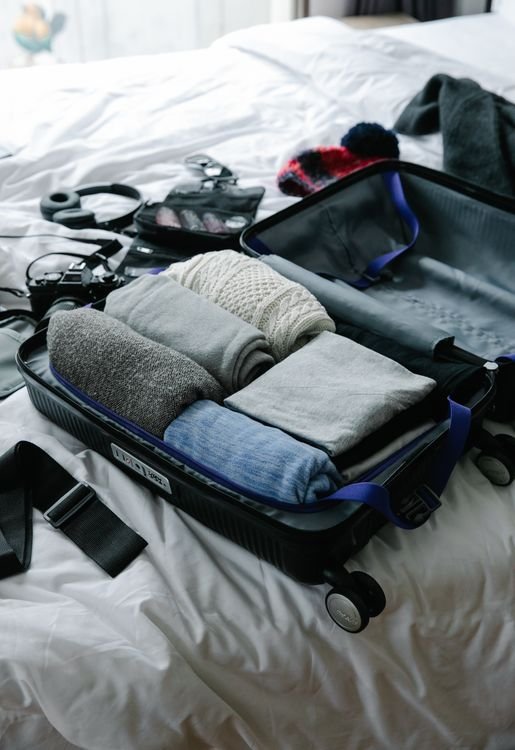
That list looks short, and that is the point. Every item earns its place by working with the rest of the capsule, and nothing in the bag is there just in case. If your trip runs longer than a week, do a load of laundry at a laundromat or in the hotel sink instead of packing more clothes. A 7 day capsule plus one wash covers a two week trip with the same small bag.
Toiletries and the liquids rule
Winter air dries out skin fast, so toiletries deserve a little more thought than they get in summer. Pack lip balm, moisturizer and hand cream, and do not skip sunscreen. Snow reflects sunlight, and a bright day on a ski slope or a snowy street can burn skin faster than most people expect.
The liquids rule still applies. Each liquid must be in a container of 3.4 ounces or less, and all of them must fit in one clear quart size bag. Solid alternatives save a lot of space and trouble: shampoo bars, solid deodorant and toothpaste tablets cut liquid volume sharply and never leak. For the full method, see our guide on how to pack toiletries in a carry on without leaking.
Keep the toiletry bag at the top of your suitcase so it comes out in one motion at security. Put anything that could leak inside a small zip bag of its own, and keep medications in your personal item rather than the overhead bag, so you can reach them during the flight without standing up.
Mistakes that fill your bag for no reason
Most winter bags are overpacked in the same few ways. Watch for these mistakes and your bag will close on the first try.
The first mistake is packing two coats. One good winter coat, worn on the plane, is enough for a city trip. A second coat takes up a huge amount of space and you will reach for the warmer one every day anyway. If you need a lighter layer for indoors, the packable vest already covers it.
The second mistake is packing a separate outfit for every day. Seven outfits do not need seven tops and seven bottoms. A capsule of ten pieces makes more than twenty combinations, and nobody at your destination is tracking what you wore on Tuesday. Rewearing a sweater with a different base layer underneath looks like a new outfit.
The third mistake is packing shoes for every occasion. Two pairs are enough for most winter trips: the boots on your feet and one light pair in the bag. A third pair, especially another heavy pair, is the fastest way to fill a carry on. And the fourth mistake is folding everything when rolling would save space. Rolled knitwear also arrives with fewer creases, which is a bonus if you want to keep your clothes free of wrinkles while you travel.
What to do if your bag is overweight at the gate
Even a well packed bag can tip over a weight limit on an international flight, so have a plan before you reach the gate. The first step is to wear more. Put on the packable vest over your sweater, slip the second pair of gloves into your coat pockets, and carry the book in your hand instead of in the bag. A few pounds move from the bag to your body in under a minute.
The second step is to shift weight into your personal item. Move the charger, the book, the snacks and the toiletry bag under the seat. Gate staff almost never weigh the personal item, and the under seat space is yours to use. The third step, if you are still over, is to remove the heaviest single item and carry it. A laptop, a camera or a thick book carried in your hand is not part of the bag weight.
Do a trial weigh at home with a bathroom scale or a small luggage scale. Weigh the packed bag the night before you fly, not at the airport. If it is over the limit, you still have time to remove one sweater or swap a heavy book for a phone app. At the gate, the same decision costs you a fee or a stressful repack in front of a queue.
Conclusion
Learning how to pack a carry on for a winter trip comes down to three habits: wear the bulky pieces, pack thin layers, and build a small capsule where every piece matches. Those three habits turn a pile of winter clothes that looks impossible into a neat 7 day kit that fits in a standard carry on and lifts easily into the overhead bin.
Start your next winter trip the same way. Lay out the capsule, edit it down by a third, wear the coat and boots on the plane, and weigh the bag the night before. You will skip the checked bag fee, skip the wait at the carousel, and walk out of the airport while everyone else is still watching the belt go round. That is the real reward of packing light in winter, and once you feel it, you will never go back to checking a bag for a week in the cold.
Frequently asked questions
Can I pack a winter coat in a carry on?
Yes, but wear it instead of packing it. A winter coat takes up half a carry on when folded, and it travels free on your body. Wear it through the airport, take it off once seated, and use it as a blanket on the flight.
How many days of winter clothes fit in a carry on?
Seven days fit comfortably with the capsule system in this guide, and a two week trip works with one sink wash or laundromat visit halfway through. The key is thin layers and a small set of matching pieces rather than a separate outfit for each day.
Do airlines weigh carry on bags?
Most US domestic airlines do not weigh carry on bags, but many international carriers do, with limits often around 22 pounds. Always check your airline before you fly, and weigh your packed bag at home the night before.
What is the best way to pack sweaters so they take up less space?
Roll them tightly instead of folding, and use compression cubes for fleece and bulky knits. Thin merino or synthetic layers pack far smaller than thick cotton sweaters, so choose fabrics that compress well.
Should I bring a second pair of boots on a winter trip?
No, one pair of insulated boots worn on the plane is enough for most trips. Pack only a light pair of flat shoes for indoors. A second pair of boots is the fastest way to fill a carry on for no real benefit.