
Every morning at 8:40, Maya sat down to work and lost the first twenty minutes of her day. Not to email. Not to meetings. To searching. Her notebook was under a stack of mail. Her charger was tangled behind the monitor. The pen she needed was somewhere, just not where her hand expected it to be. By the time she found everything, her focus was gone and her first real task started late.
That slow start is more common than most remote workers admit. A messy desk does not just look untidy. It creates small decisions all day long. Where is that form? Which cable is this? Is that pile urgent or old? Each question steals a little attention, and attention is the one resource a workday never gives back. Learning how to declutter your home office desk for productivity is not about making the space look pretty for a photo. It is about removing friction so your brain can get straight to the work that matters.
Maya fixed her desk in one weekend. She did not buy a new desk, and she did not spend a fortune on organizers. She cleared everything, sorted with a simple system, built zones that matched how she actually worked, and set up a five minute reset she still uses every evening. This guide follows that same plan, so you can do the same thing, even if your desk is small, your budget is tight, or your clutter has been building for months.
How to Declutter Your Home Office Desk for Productivity in One Weekend
A cluttered desk costs you in ways that are easy to miss. The obvious cost is lost time. Twenty minutes a morning adds up to more than an hour and a half each week. That is time you could spend finishing early, taking a real lunch break, or simply ending the day less tired.
The hidden cost is mental load. Every visible item on your desk is a tiny open loop. An unpaid bill whispers about money. An unfinished report whispers about deadlines. A stack of random papers whispers that something might be important, even when most of it is junk. Your brain keeps scanning those signals in the background, which makes deep work harder. A clear desk does not make you smarter, but it does give your attention fewer places to wander.
The Weekend Clear Out
Set aside two to three hours on a Saturday or Sunday. This is not a tidying session where you shuffle piles from one side of the desk to the other. It is a full clear out. Take everything off the desk surface, including the monitor stand extras, the mug collection, the cables you no longer recognize, and the drawer contents if your desk has drawers. Put it all on a bed, a table, or the floor nearby. Yes, it will look worse before it looks better. That is the point. You cannot design a workspace while the old mess is still sitting in the way.
Before anything goes back, decide what your desk is actually for. Maya writes reports, joins video calls, and reviews printed contracts twice a week. Her desk needed a laptop, a notebook, a pen, and a small tray for contracts. It did not need a printer, a stack of old magazines, or three phone chargers. Write your own short list of daily essentials. If an item is not on that list, it does not earn a permanent spot on the desk, no matter how useful it seems in theory.
Sort With Keep Relocate Remove
Sorting is where most decluttering attempts stall, because every item invites a debate. Keep the debate short with three piles and a timer. Give yourself about thirty seconds per item. If you hesitate longer than that, the item probably does not belong on your desk.
The keep pile is small and strict. It holds only things you use at least once a week for work. Your laptop, your main notebook, your favorite pen, your headphones, and your current project folder belong here. Be honest about duplicates. You do not need four pens on the desk when one pen plus one spare in a drawer will do.
The relocate pile holds things that are useful but belong somewhere else. Books go back to a shelf. Charging cables for devices you rarely use go into a labeled box in a closet. The remove pile is for trash, recycling, and donations. Old receipts, dried out pens, broken cables, and manuals for devices you replaced years ago all go here. Bag the remove pile immediately and take it out of the room. If it sits in a corner for a week, it will creep back onto the desk.
For paper, add one extra rule. If a paper is not actionable this week and not a record you must keep, scan it or recycle it. Most people keep paper out of fear, not need. A quick phone scan takes ten seconds and frees you from a pile that would otherwise sit on your desk for months. For a fuller system to handle the scans, see this guide on how to create a digital filing system for small business, which shows how to name and store files so you can actually find them later.
Build Zones That Match Your Work
A zone system sounds fancy, but it is simply giving every area of your desk one job. When each zone has a purpose, putting things away becomes automatic, and you stop dumping everything in the middle of the desk.
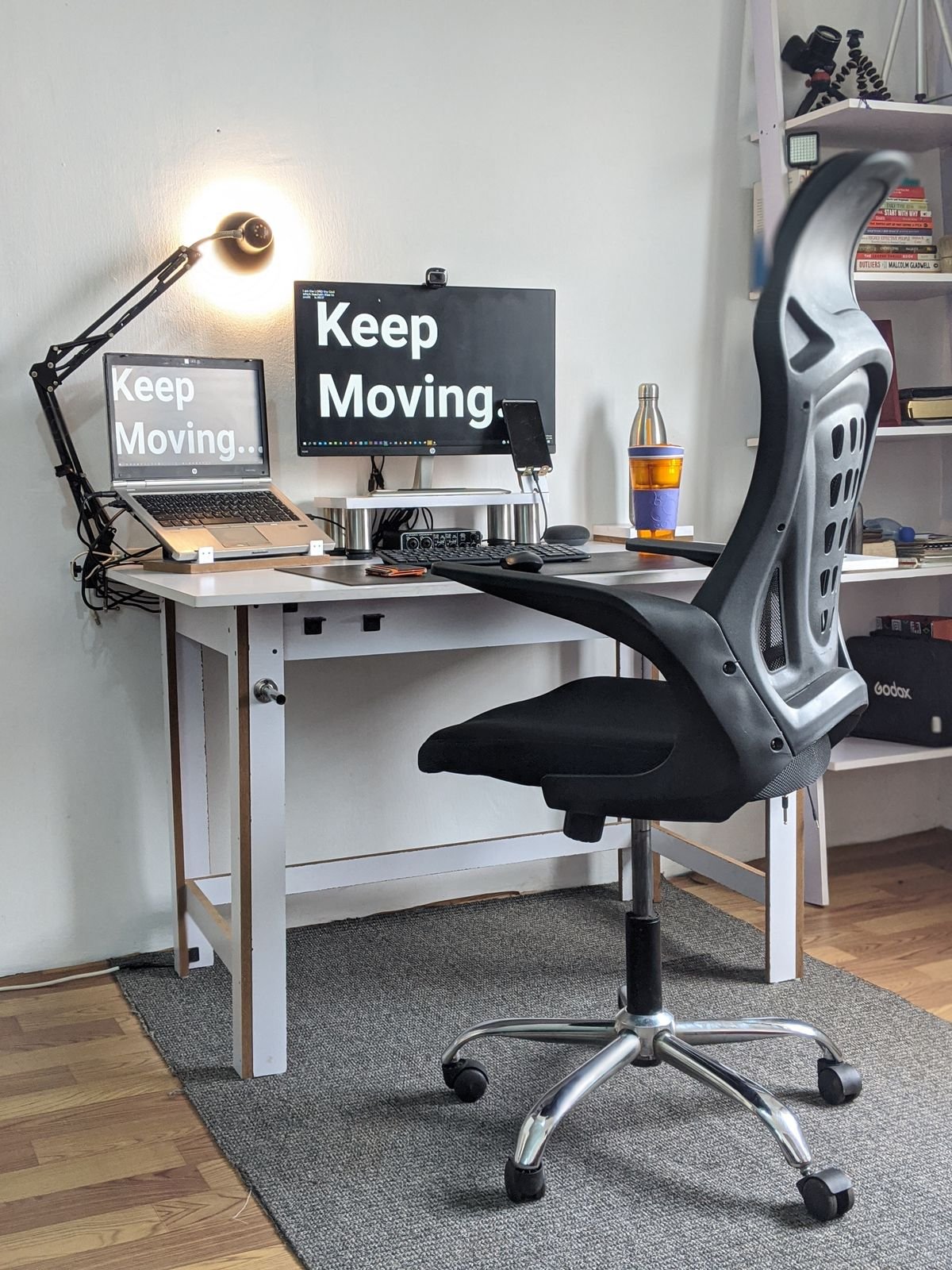
Start with the primary zone, the space directly in front of you between your elbows. This is for active work only: your laptop or keyboard, your current notebook, and nothing else. Next, set up a reference zone to one side, usually your nondominant side. This holds the one or two things you glance at during work, like a small tray for today’s papers or a stand for a tablet showing your calendar. Keep it to a single tray or a single stand. A reference zone that spreads across half the desk is just clutter with a nicer name.
Then create a tools zone at the back or in a drawer. Pens, sticky notes, a stapler, and scissors live here, close enough to reach but not in your line of sight all day. Finally, protect a clear zone. Leave at least a small patch of empty desk surface at all times, even if it is just the size of a sheet of paper.
Tame the Cables Before They Tame You
Cables are the most stubborn form of desk clutter because they multiply quietly. A laptop charger, a monitor cable, a phone cable, a headphone cable, and a lamp cable can turn into a tangled nest behind the desk within weeks. That nest is not just ugly. It makes cleaning hard, it pulls devices off the desk when snagged, and it wastes time every time you need to unplug one thing to plug in another.
Start by unplugging everything and identifying each cable. Label both ends with small tags or colored tape if you have several lookalike chargers. Coil the excess length of each cable with a reusable tie so only the length you need reaches your device. Route cables along the back edge of the desk, not across the middle. If drilling is not an option in a rented home, you can still get a clean result with adhesive clips and a fabric cable sleeve. For a renter friendly approach, read this guide on how to hide cables behind desk without drilling, which walks through clips, sleeves, and trays that leave no marks.
Set Up a Paper Inbox That Actually Empties
Paper is the number one reason desks refill after a clear out. Mail arrives daily, and printed documents pile up because nobody decided where they should live. The fix is a single inbox with a strict rule: paper goes in the inbox, and the inbox gets emptied on a schedule.
Choose one tray, one folder, or one wall pocket near your desk, and make it the only place incoming paper is allowed to land. Not the desk surface. Not a second pile by the monitor. One inbox. Then empty it twice a week, on days you choose in advance. Maya empties hers on Wednesday and Sunday evenings. Each item gets one of three fates: act on it now if it takes under two minutes, file it or scan it if it is a record, or recycle it if it is not needed. An inbox that fills up and never empties is just a tidier name for a pile.
The Five Minute Daily Reset
A weekend clear out will not last without a daily habit, but that habit does not need to be long. Five minutes at the end of your workday is enough, and it pays for itself the next morning when you sit down to a clean desk.
Set a timer and work through a short routine in the same order every day. First, clear the desk surface of anything that is not a permanent resident. Put papers in the inbox, return tools to their zone, and take mugs and plates to the kitchen. Second, check tomorrow’s top priority and place only what you need for that task in the primary zone. Third, do a quick digital reset at the same time. Close unused browser tabs, save open files, and write tomorrow’s first task on a sticky note or in your planner. If you also want a smarter way to choose that first task each morning, this guide on how to prioritize tasks using the Eisenhower matrix shows a simple urgent versus important sort that pairs well with a clear desk.
Small Desk Adaptations That Work
Not everyone has a large desk or a spare room. If your workspace is a corner of a bedroom, a kitchen table, or a desk barely wider than your laptop, the same principles still apply, but the tactics change.
Go vertical first. A wall shelf above the desk, a monitor riser with storage underneath, or a pegboard for tools can add usable space without adding floor space. Just keep vertical storage to one shelf or one board. A wall covered in shelves can become clutter at eye level, which defeats the purpose. Use portable storage for anything that must leave the desk at night. If you share a table with family meals, a single caddy that holds your laptop, notebook, and pens lets you set up in two minutes and pack away in two minutes.
What It Costs and What to Skip
You can declutter a desk for almost nothing. A trash bag, a recycling box, a cloth, and an hour of honest sorting cost zero dollars. If you want to add organizers, a realistic budget is 20 to 60 dollars for the basics: a desk tray or inbox for 10 to 20 dollars, a cable management kit for 10 to 15 dollars, a drawer organizer for 8 to 15 dollars, and a pen cup or small caddy for 5 to 10 dollars. Buy these after the clear out, not before. Buying organizers first often means buying containers for clutter you were about to remove.

Frequently Asked Questions
How long does it take to declutter a home office desk properly?
Most desks take two to three hours for a full clear out, sorting, and zone setup. Very cluttered desks or desks with years of paper may take a full afternoon. The daily reset that keeps it clear takes about five minutes each evening.
What should I do with papers I might need later?
Scan papers you might need and store the scans in a clearly named digital folder, then recycle the original unless it is a legal document, a signed contract, or a tax record you must keep in paper form. If you are unsure, put it in a dated box for ninety days and recycle the box if you never opened it.
How do I keep my desk clear if other people use the same room?
Agree on one rule: the desk surface is a work zone, not shared storage. Give other household members a basket or shelf of their own for their items, and pack your work into a caddy if the desk doubles as a shared table. A clear boundary, kindly explained, works better than repeated tidying in silence.
Is a completely empty desk better for productivity?
Not necessarily. A completely bare desk can feel cold and uninspiring. The goal is a desk with only what you use and one or two items you enjoy, like a plant or a photo. Empty space for active work matters more than total emptiness.
What if my desk gets messy again after a week?
That is normal, and it does not mean the system failed. Mess returns when the daily reset slips, not when the zones are wrong. Restart the five minute reset for one week, empty the paper inbox twice, and check whether one zone has started collecting items it was not designed for. Adjust that zone and keep going.
Conclusion
Maya still works at the same desk, in the same room, with the same job. What changed was not her furniture or her workload. It was a weekend spent clearing everything, sorting with a firm keep relocate remove rule, building zones that matched her real tasks, taming her cables, and starting a paper inbox that empties twice a week. The five minute reset each evening keeps the whole system alive, and her mornings no longer begin with a twenty minute search.
Your desk can do the same for you. Start this weekend with the full clear out, even if you only have two hours. Sort honestly, zone by how you work, and set up the daily reset before the weekend ends. If you follow how to declutter your home office desk for productivity in this guide, you will sit down each morning, find what you need, and start work without delay. A productive desk is not a perfect desk. It is a desk that lets you begin on time, every single morning.